
Loading, please wait...
LOT 0837
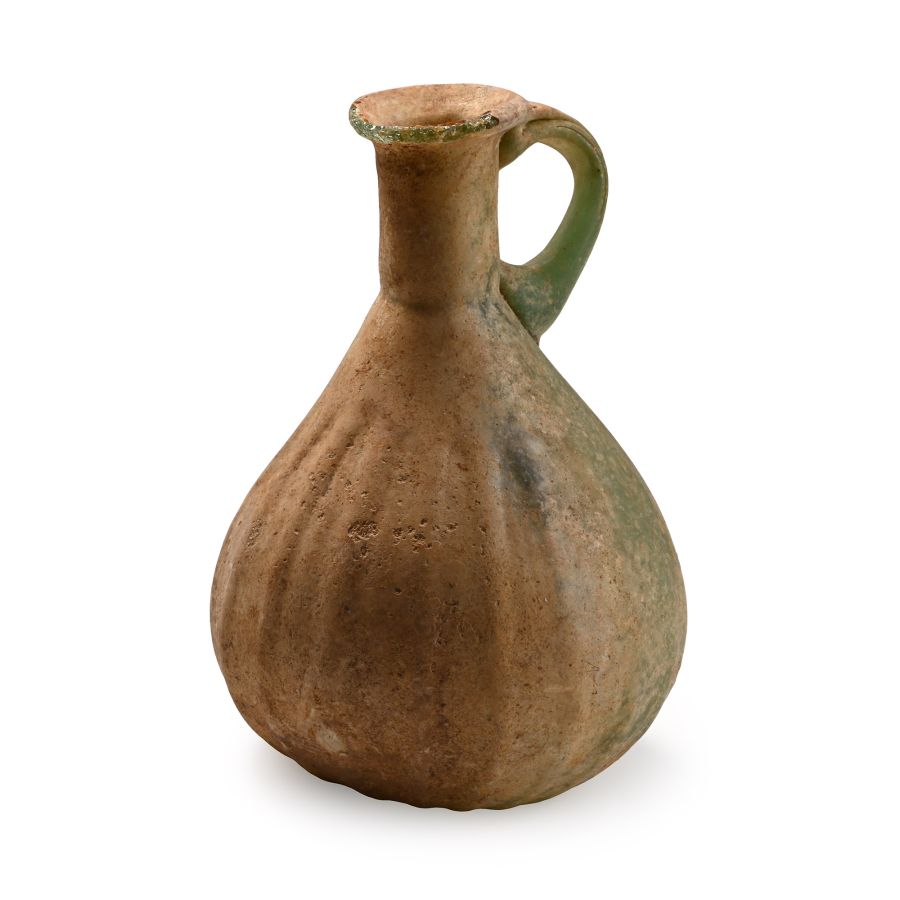
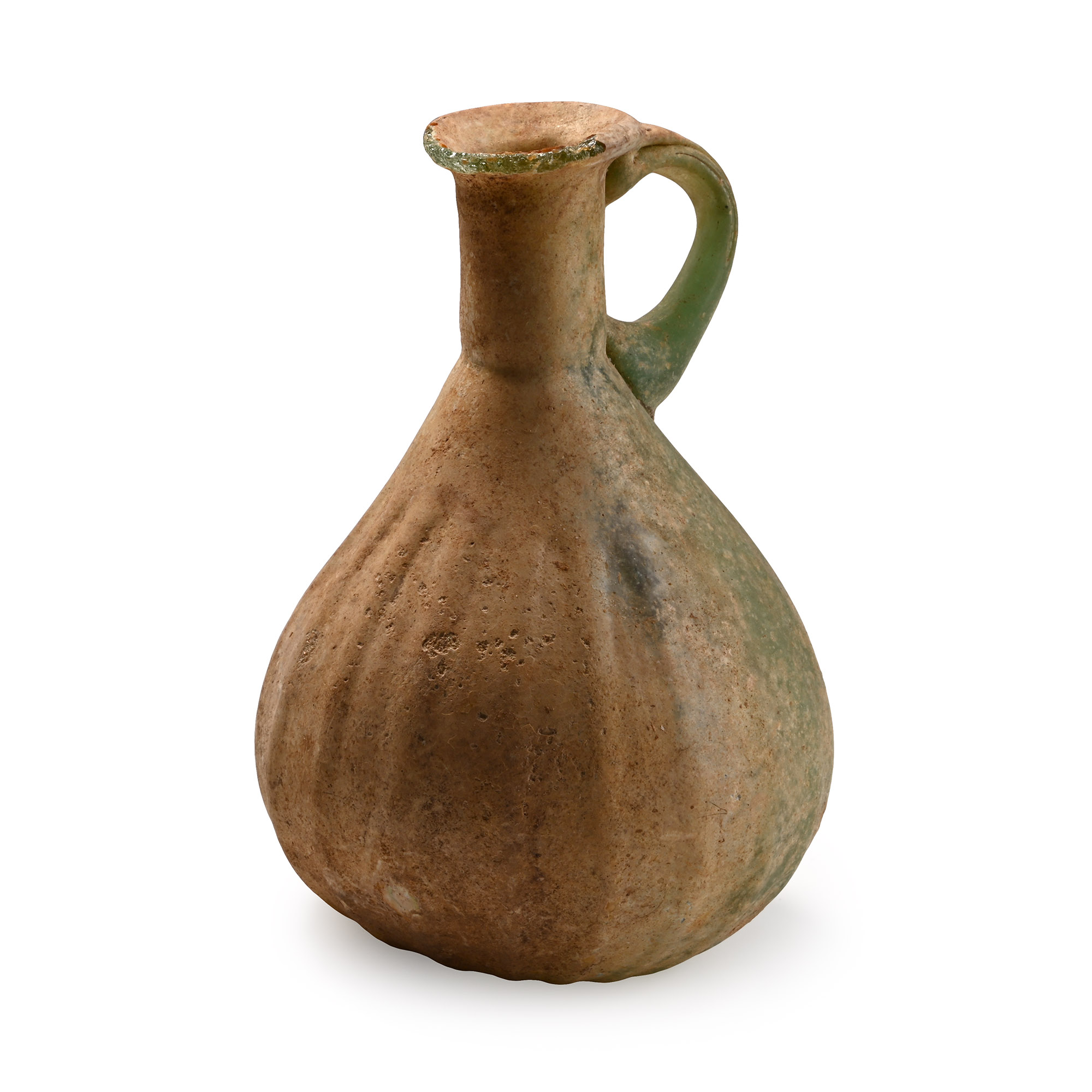
Eastern Roman or Parthian Green Glass Sprinkler Pitcher
1ST-3RD CENTURY A.D.
5 1/4 in. (191 grams, 13.5 cm).
A single-handled mould-blown pitcher, doubling as a sprinkler flask, the inner diaphragm at the junction of the neck and body with a small piercing to restrict the flow of liquid from the vessel; twenty individual ribs which radiate upwards from the pontil mark on the base towards the neck; flared and rolled rim, handle applied separately at the end of the process, formed from folded glass creating a scrollwork effect; one face of the pitcher shows the original rich green glass colour, while the other side has an area of milky oxidation.
ProvenanceOriginally in an old English collection.
Ex property of a Florida, USA, gentleman.
Cf. Brouwer, M., Glass from Antiquity, National Museum of Antiquities, Leiden, 1992, pp. 64-65, for similar pitchers.
FootnotesScholars sometimes call this rare type a 'squash glass', the reason for which is apparent when viewing the piece from beneath. The body of these vessels was produced by means of optical blowing, resulting in internal vertical ribs evenly distributed along the vessel wall.
CONDITIONTimeLine Auctions follows a vetting process to ensure the authenticity and legality of all items, reinforcing our commitment to integrity and responsible trading. Each antiquity, antique, and coin lot undergoes thorough examination by a vetting committee of at least ten external specialists, professional trade association members, scientists, and archaeologists: Our Vetting Process
AUCTIONS:
TimeLine is a leading auction house specialising in antiquities, ancient art, collectables, natural history, coins, medals, and books. Our auctions offer museums, collectors, historians, and enthusiasts the opportunity to acquire unique and historically significant pieces.
LOT 0837
Eastern Roman or Parthian Green Glass Sprinkler Pitcher
Estimate £150 - 200€170 - 230 (for guidance only)$200 - 270 (for guidance only)
-
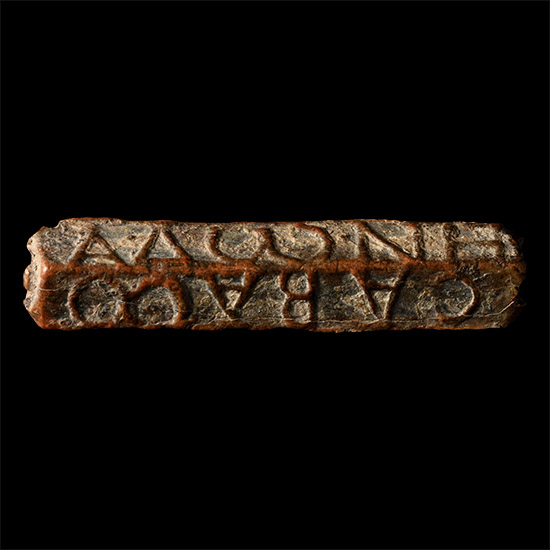
Roman Inscribed Magical Bead
1st century A.D.Sold for (Inc. bp): £644
Tubular bead, square in section with longitudinal piercing; reserved text to each face: (1) Xω·ωX (2) EIAω (3) CABAOO (4) AΔωNH. 6.29 grams, 33 mm
From the London collection of the late Mr S.M., 1969-1999.
The form 'AΔωNH' (Adōne) 'O Lord' is used in Christian inscriptions. -
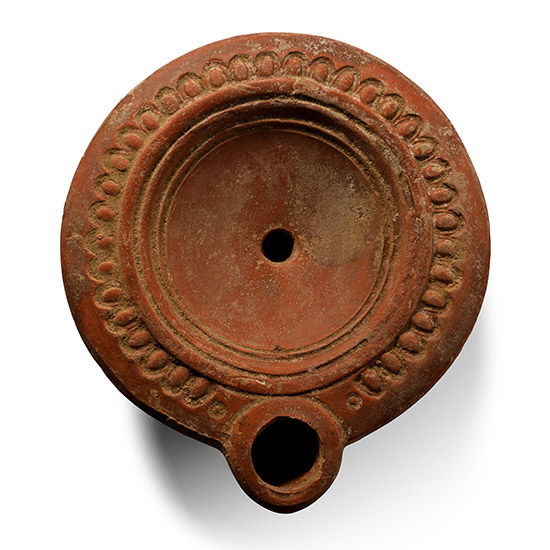
Roman Terracotta Oil Lamp
Cyprus, circa 2nd century A.D.Sold for (Inc. bp): £221
Round body with plain discus with pelletted border, label on the base '2nd c. AD M10'. 45.1 grams, 86 mm
Private collection, Oxfordshire, UK, by direct descent from the collection of Judge George Cyril Griffith-Williams (1893-1983), Supreme Court Judge of the Colony of Cyprus; items having been collected in the 1930s and 1940s in Cyprus during his tenure there. -
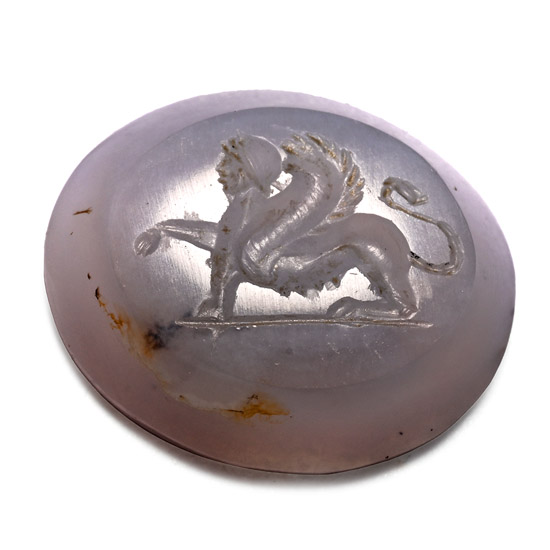
Roman Chalcedony Gemstone with Sphinx
2nd-3rd century A.D.Sold for (Inc. bp): £130
With intaglio sphinx advancing on a baseline; supplied with a museum-quality impression. 1.11 grams, 14.49 mm
From the private collection of a European gentleman (1942-2024), formed since the 1970s.
