
Loading, please wait...
LOT 0149
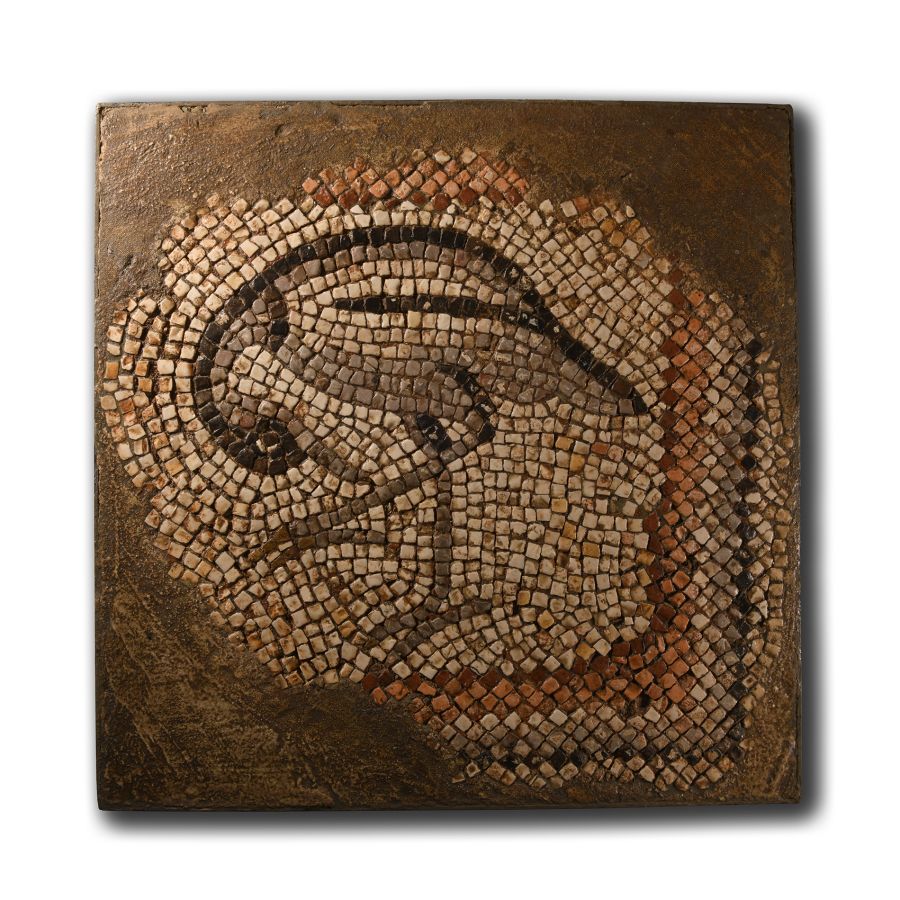
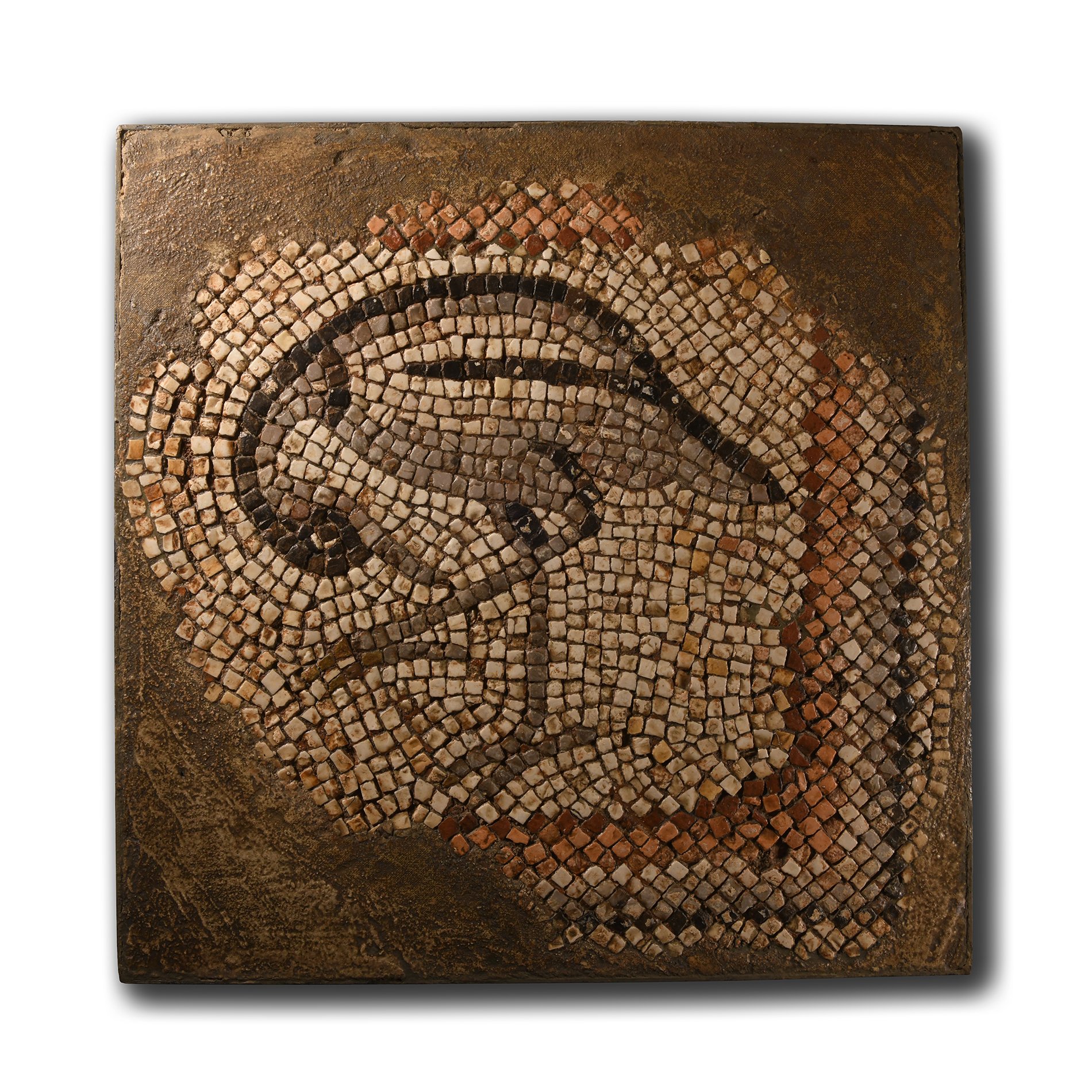
Eastern Roman Mosaic Depicting a Bird
4TH CENTURY A.D.
15 7/8 x 15 7/8 in. (10.35 kg, 40.3 x 40.3 cm).
In a rectangular matrix; cream, olive, pink and other tesserae depicting a bird advancing with head bowed, with banded frame. [No Reserve]
ProvenanceFormer collection of Mr Pierre Bart (1889-1964), official of the French mandate in Syria and Lebanon (1919-1936) and delegate to the Lebanese government until 1946. Transmitted by descent.
CONDITIONTimeLine Auctions follows a vetting process to ensure the authenticity and legality of all items, reinforcing our commitment to integrity and responsible trading. Each antiquity, antique, and coin lot undergoes thorough examination by a vetting committee of at least ten external specialists, professional trade association members, scientists, and archaeologists: Our Vetting Process
AUCTIONS:
TimeLine is a leading auction house specialising in antiquities, ancient art, collectables, natural history, coins, medals, and books. Our auctions offer museums, collectors, historians, and enthusiasts the opportunity to acquire unique and historically significant pieces.
-
.jpg)
Roman Mercury Gemstone
Circa 2nd century A.D.Sold for (Inc. bp): £715
With intaglio figure of Mercury seated on a throne with coin-purse and caduceus, on a baseline; supplied with a museum-quality impression. 1.73 grams, 18 mm
From the collection of a Swiss gentleman formed in Europe from 1970-1980s; thence by descent from the family in London. -
.jpg)
Eastern Roman Gemstone with Ibex
2nd-3rd century A.D.Estimate: £150 - 200 (+bp*)
Opening Bid: £75
Lapis lazuli gemstone with intaglio pair of standing ibexes. 1.08 grams, 16.24 mm
Found Southern England. Acquired on the UK art market in the 1980s. From an East Anglian private collection. -
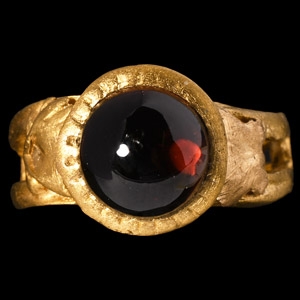
'The Great Chart' Roman Gold Ring
3rd-4th century A.D.Sold for (Inc. bp): £1,430
The hoop circular in plan and rectangular in cross-section, the sides divide into two segments which separate gradually to form triangular shoulders, on one of the shoulders applied scallop shells with one replaced, four pellets to the base of the bezel; the deep tubular bezel and everted rim decorated with radiating lines, reset with a cabochon garnet. 4.57 grams, 22.24 mm overall, 14.67 mm internal diameter (approximate size British F, USA 2 3/4, Europe 3.67, Japan 3)
Found whilst searching with a metal detector near Great Chart with Singleton, near Ashford, Kent, UK, by Mr Keith Collins on Thursday 5th November 2020. Accompanied by a copy of the British Museum's Portable Antiquities Scheme (PAS) report with record no.KENT-2D4C88. Accompanied by a copy of the British Museum's report on a find of potential treasure for H M Coroner with Treasure reference 2021T808, subsequently disclaimed.
Roman rings with circular hoops are categorised by Guiraud (1998) in her typology as Type 4, those with tubular bezels Types 4a- 4d, Type 4c is shown flanked by two pairs of spherical pellets, and with decorative shoulders (p.189, fig.29), however our example is more consistent with Type 4h.
