
Loading, please wait...
LOT 0163
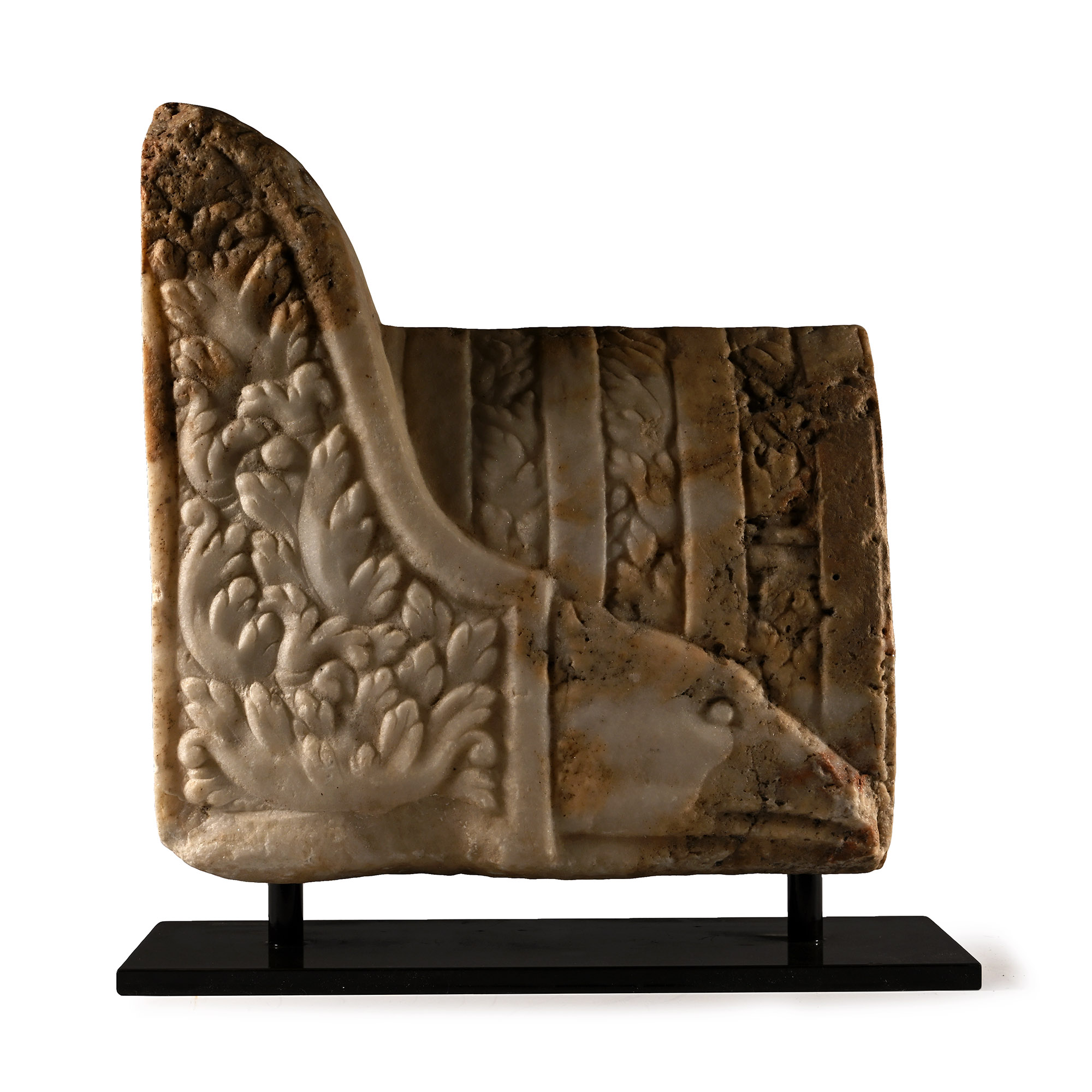
Eastern Roman Marble Fragments from a Sarcophagus
3RD-4TH CENTURY A.D.
8 1/2 - 11 3/4 in. (36.8 kg total, 21.6-30 cm including stand).
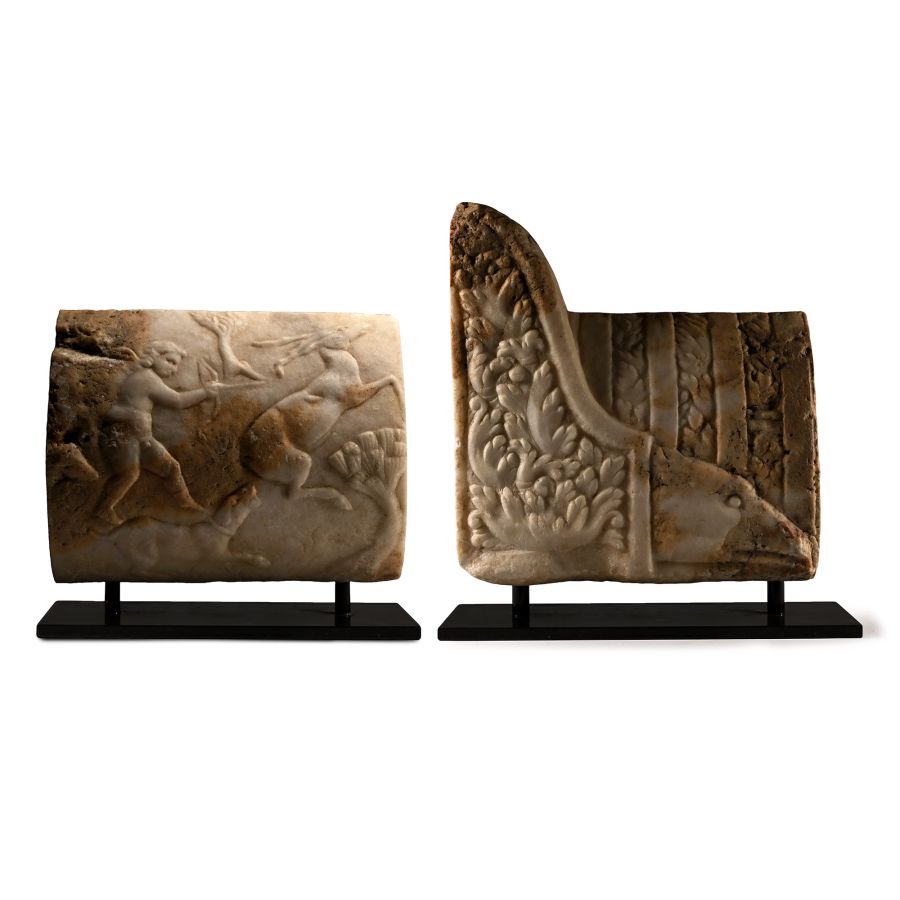
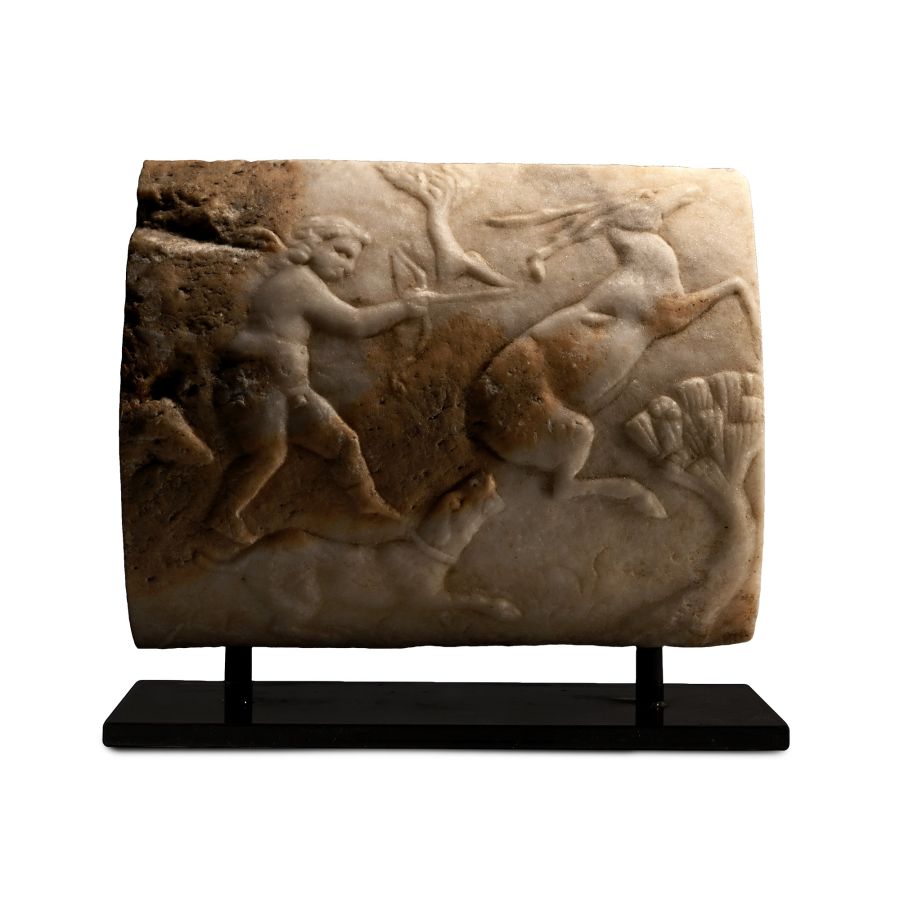
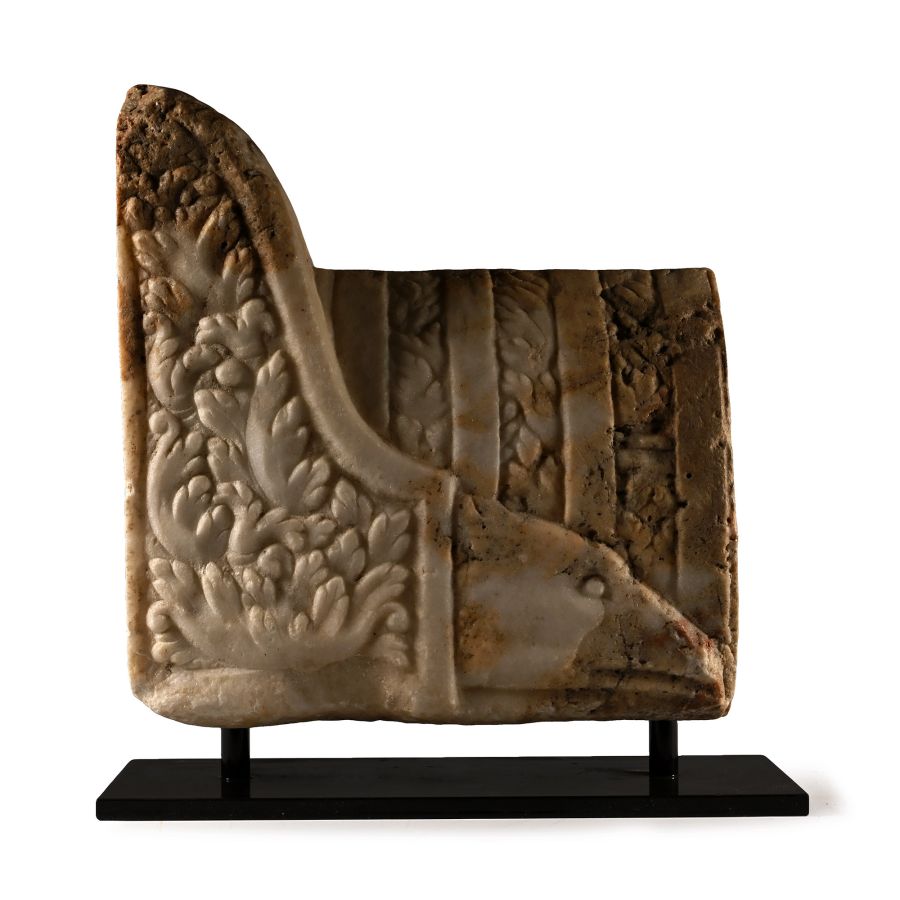
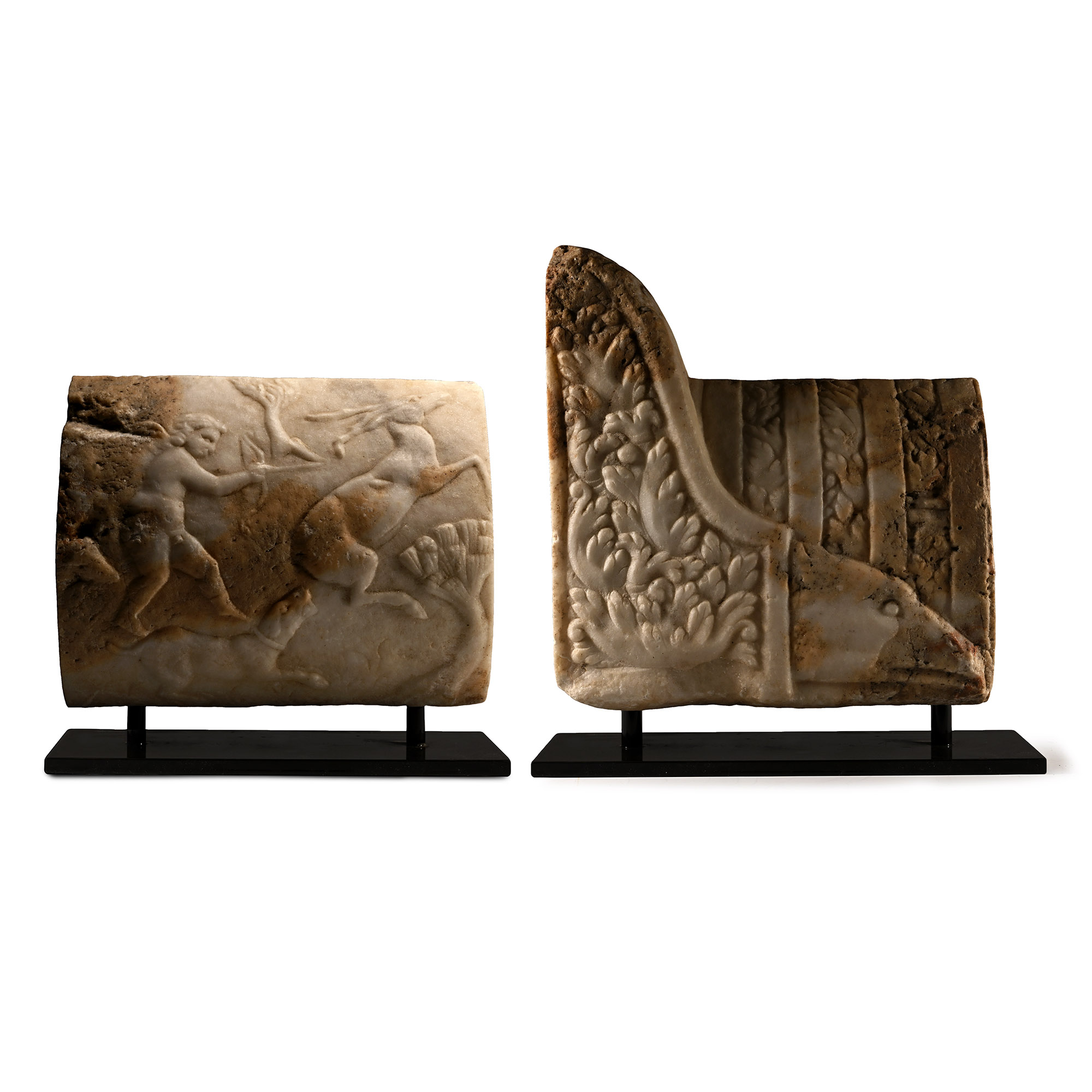
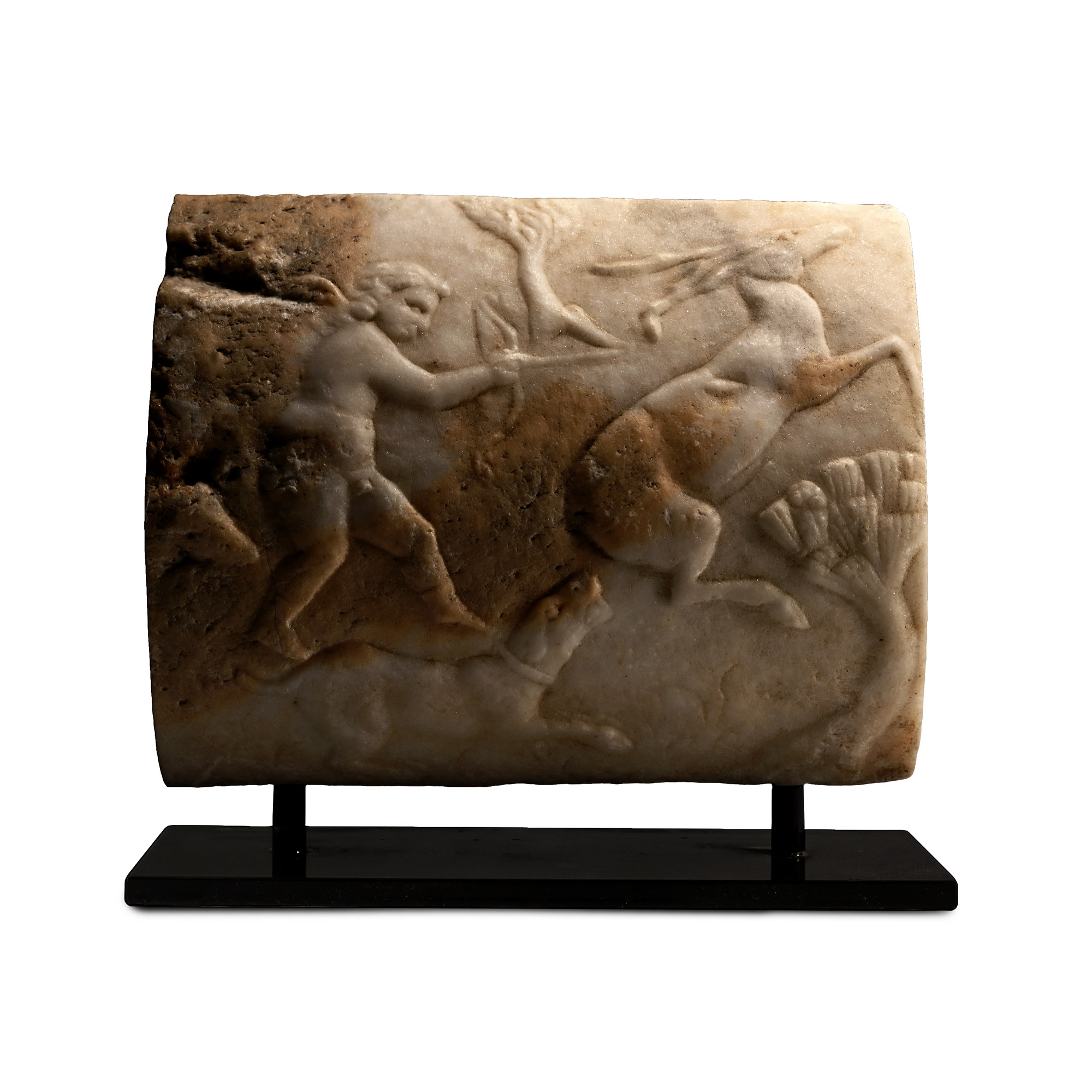
Two rectangular fragments from a sarcophagus in classical style, comprising: an element serving as a corner, with the left part raised and decorated inside with floral and vegetal ornaments, enclosed within a border, on the base a griffin's head in low-relief; the body decorated with vertical streaks alternating with vegetal elements; a second element consisting of a slightly convex body, with a sculpted decoration in low-relief depicting a putto armed with a bow and his dog hunting a rearing deer; vegetal elements in the background. [2]
Provenancewith Hermann Historica, Munchen, 19 October 2005, no.197.
Private collection, UK.
This lot has been checked against the Interpol Database of stolen works of art and is accompanied by search certificate number no.12760-237142.
This lot has been cleared against the Art Loss Register database, and is accompanied by an illustrated lot declaration signed by the Head of the Antiquities Department, Dr Raffaele D'Amato.
Cf. for a relief in similar style representing a deer hunting in Mut i Arbos, J., ‘The symbolism of Love and Death in the Coliseum by Alma-Tadema’ in Polysèmes, 29, 2003, pp.1-21, fig.9.
FootnotesMany sarcophagi from Roman times depict hunting scenes. As a rule, the main figure among the hunters is on the sarcophagus itself, riding a horse; other hunters may also be on horseback. Non-standard types could have been chosen for the depiction of the hunt, like erotes hunting animals. The popularity of scenes depicting figures such as playful erotes and mythological couples lasted until the early 4th century, eventually waning in favour of scenes that displayed the aristocrat’s wealth and property.
CONDITIONTimeLine Auctions follows a vetting process to ensure the authenticity and legality of all items, reinforcing our commitment to integrity and responsible trading. Each antiquity, antique, and coin lot undergoes thorough examination by a vetting committee of at least ten external specialists, professional trade association members, scientists, and archaeologists: Our Vetting Process
AUCTIONS:
TimeLine is a leading auction house specialising in antiquities, ancient art, collectables, natural history, coins, medals, and books. Our auctions offer museums, collectors, historians, and enthusiasts the opportunity to acquire unique and historically significant pieces.
LOT 0163
Eastern Roman Marble Fragments from a Sarcophagus
Estimate £7,000 - 9,000€8,120 - 10,440 (for guidance only)$9,450 - 12,150 (for guidance only)
-
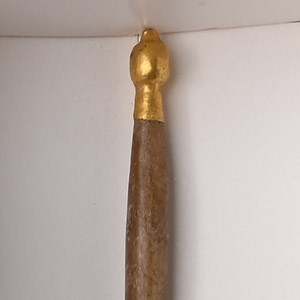
Roman Bone Pin with Gold Terminal
3rd century A.D.Sold for (Inc. bp): £143
Round in section and tapering to each end, with knop finial and applied gilding. 1.99 grams, 74 mm
Acquired from Coincraft, London, UK. From the private collection of Kenneth Machin (1936-2020), Buckinghamshire, UK; his collection of antiquities and natural history was formed since 1948; thence by descent. Accompanied by a Coincraft certificate of authenticity. This lot is accompanied by an illustrated lot declaration signed by the Head of the Antiquities Department, Dr Raffaele D'Amato. -
.jpg)
Roman Silver-Gilt Statuette of Fortuna
1st-2nd century A.D.Sold for (Inc. bp): £780
Modelled in the round and finely detailed, the goddess standing with a cornucopia in the crook of her left arm, wearing a floor-length palla. 18.48 grams, 39 mm
Acquired in the late 1980s-early 1990s. Private collection, London, UK. This lot is accompanied by an illustrated lot declaration signed by the Head of the Antiquities Department, Dr Raffaele D'Amato. -
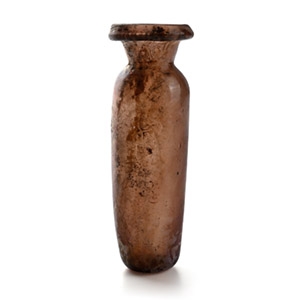
Roman Aubergine Glass Flask
1st-4th century A.D.Estimate: £300 - 400 (+bp*)
Opening Bid: £150
Core formed with rounded base, everted rim. 39 grams, 10.5 cm
Ex Mayfair, London, UK, gallery, 1990s-2000s. From an important collection of glass, the property of a London gentleman. This lot is accompanied by an illustrated lot declaration signed by the Head of the Antiquities Department, Dr Raffaele D'Amato.
