
Loading, please wait...
LOT 0126
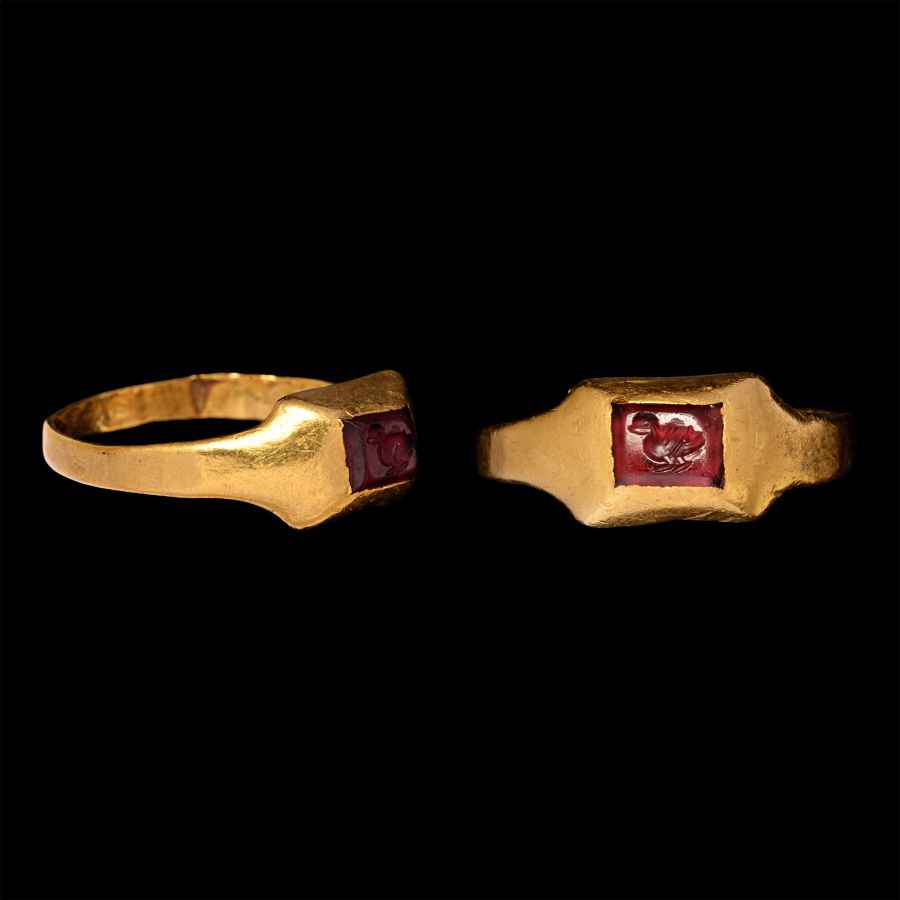
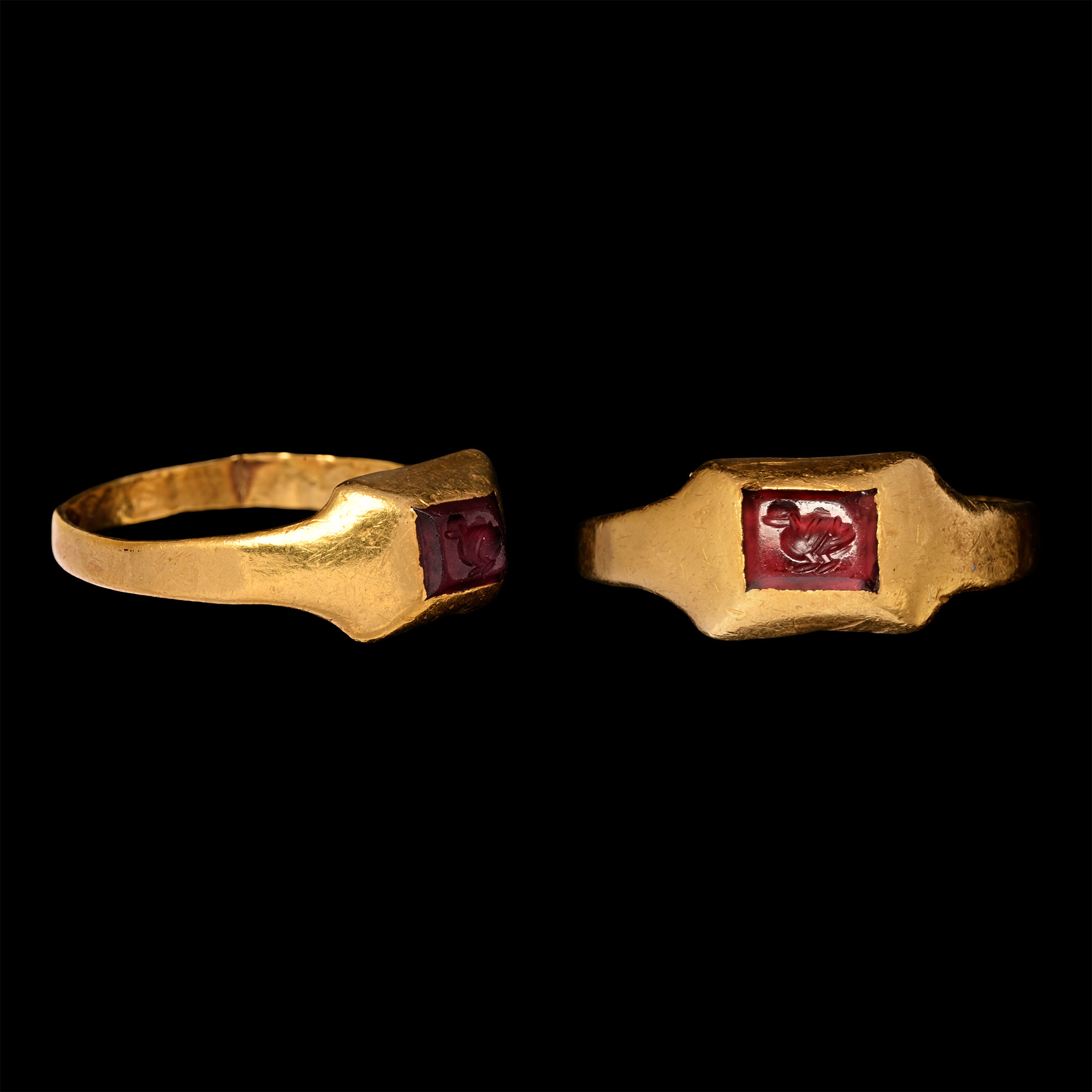
Eastern Roman Gold Ring with Duck Gemstone
4TH-5TH CENTURY A.D.
1 in. (3.85 grams, 23.13 mm overall, 18.91 mm internal diameter (approximate size British Q 1/2, USA 8 1/4, Europe 18.12, Japan 17)).
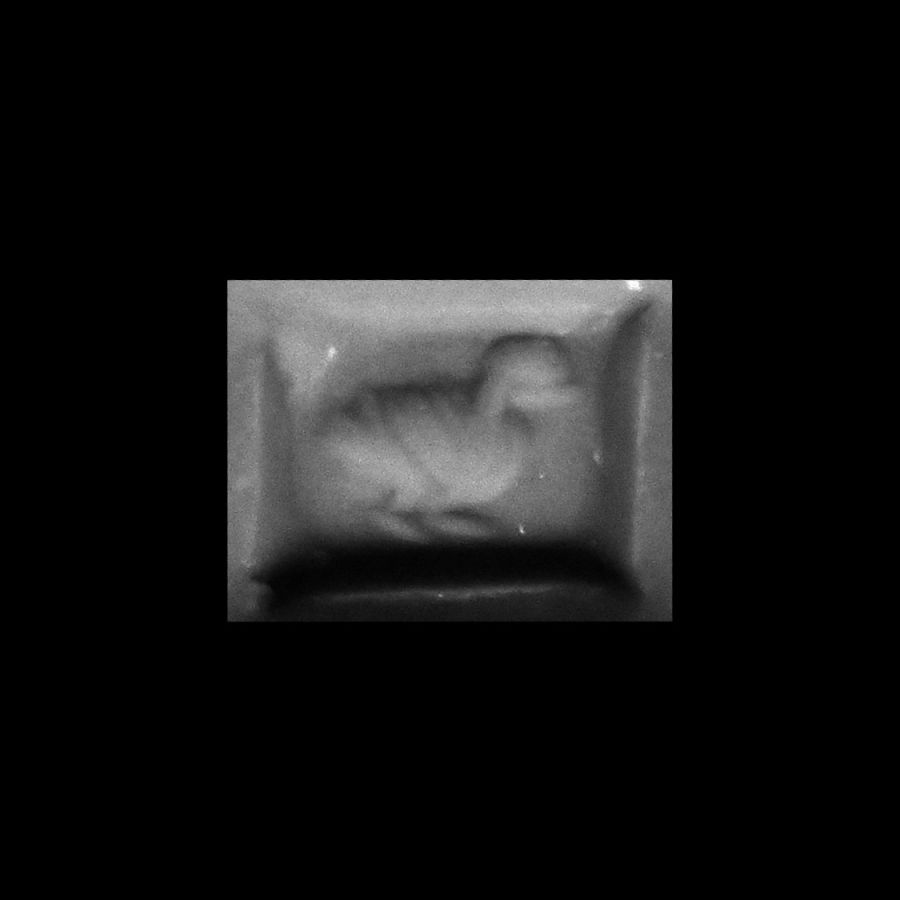
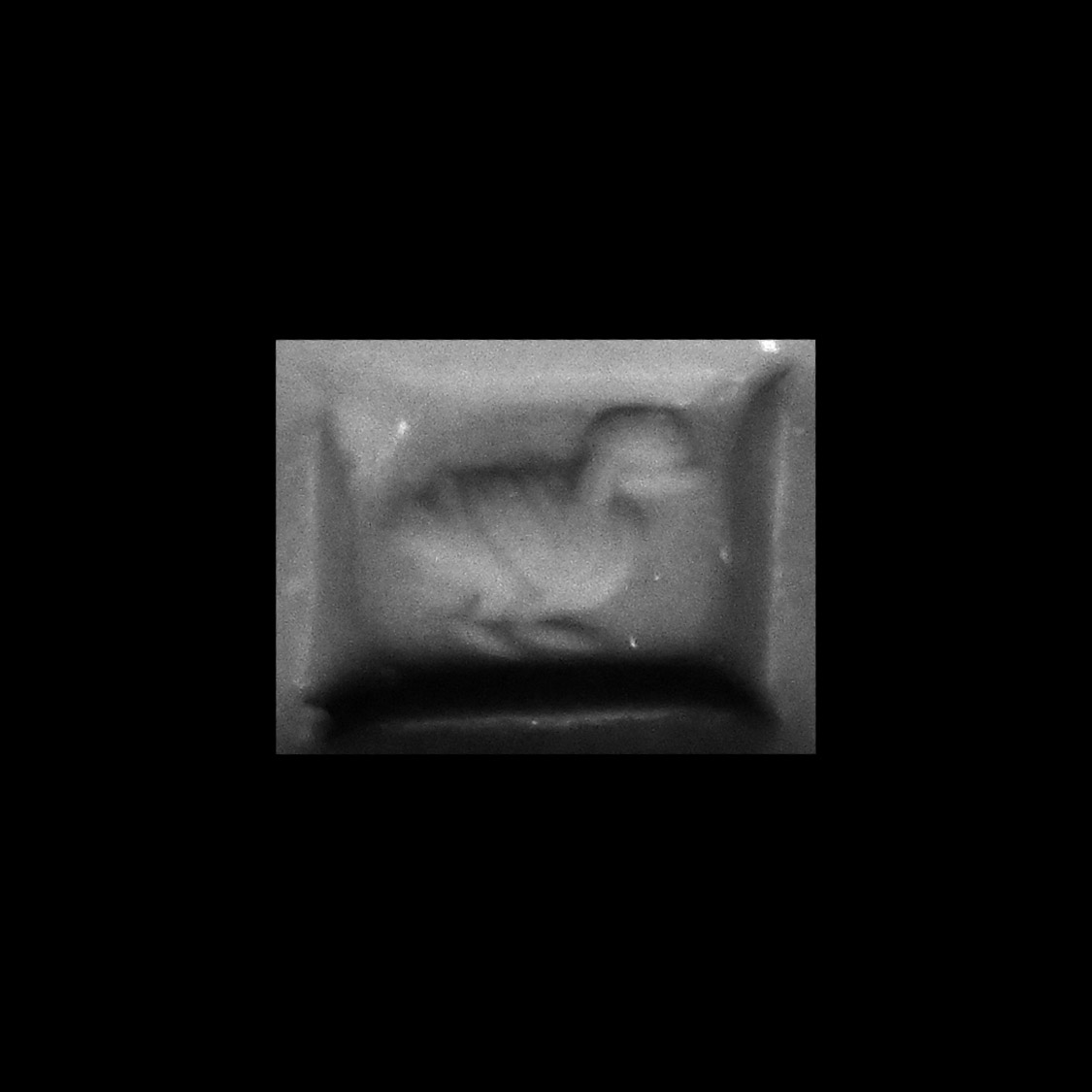
Comprising a flat-section hoop and a raised rectangular bezel, the tapering bezel set with a garnet intaglio engraved with a standing duck; supplied with a museum-quality impression.
ProvenancePrivate English collection.
Private collection, London, UK.
This lot has been checked against the Interpol Database of stolen works of art and is accompanied by search certificate number no.12940-245981.
Cf. Spier, J., Ancient gems and finger rings: catalogue of the collections, The J. Paul Getty Museum, Malibu, 1992, p. 60, no. 116, for a similarly shaped intaglio (probably from a ring) with a duck motif, dated to the 4th century BC and thought to have Persian influence. For the ring shape and discussion, see Ogden, J.M., Gold Jewellery in Ptolemaic, Roman and Byzantine Egypt, 2 vols. PhD thesis, Durham, 1990, V.1, p. 136; V.2, p. 38, fig. 156.
CONDITIONTimeLine Auctions follows a vetting process to ensure the authenticity and legality of all items, reinforcing our commitment to integrity and responsible trading. Each antiquity, antique, and coin lot undergoes thorough examination by a vetting committee of at least ten external specialists, professional trade association members, scientists, and archaeologists: Our Vetting Process
AUCTIONS:
TimeLine is a leading auction house specialising in antiquities, ancient art, collectables, natural history, coins, medals, and books. Our auctions offer museums, collectors, historians, and enthusiasts the opportunity to acquire unique and historically significant pieces.
-
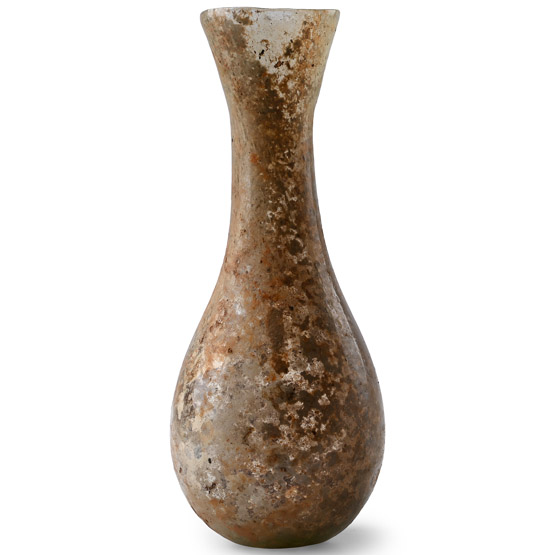
Roman Piriform Glass Flask
Circa 1st-4th century A.D.Sold for (Inc. bp): £140
With piriform body on a flat base, tubular neck and tapering flat rim. 37 grams, 14.2 cm
From a London, UK, collection of glass, 1970-2000s. -
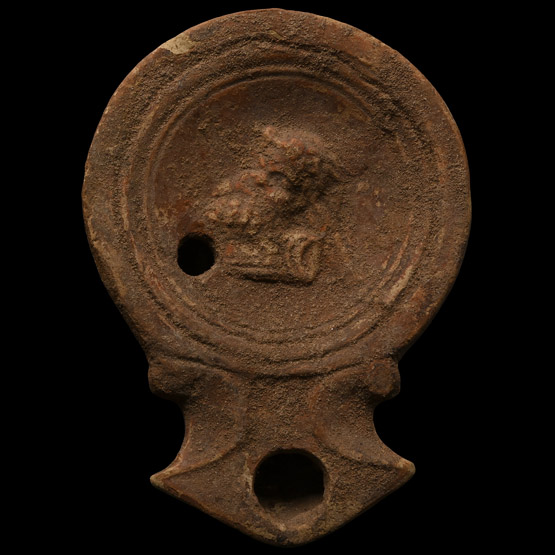
Roman Terracotta Oil Lamp with Bacchus
1st century A.D.Sold for (Inc. bp): £572
Broad discoid body and volute scroll flanking the nozzle; discus with a bearded male bust with a crown of ivy leaves. 45 grams, 94 mm
From the Lloyd and Jeanne Raport collection, Washington, D.C. and Florida, USA, formed between 1972-2000. Acquired through Bonhams, London, UK. -
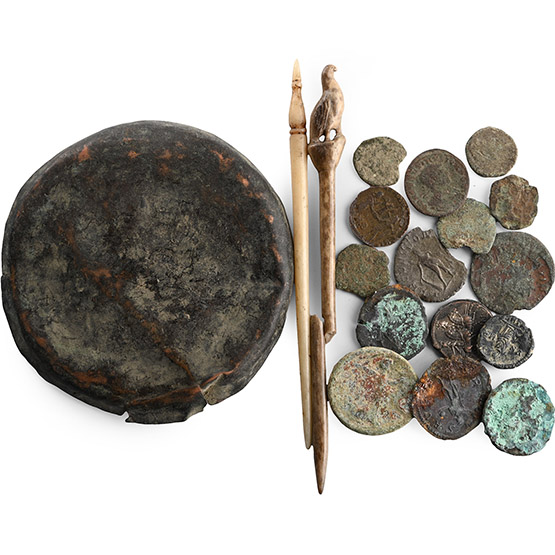
Roman Bronze and Other Artefact and Coin Group
1st-4th century A.D.Sold for (Inc. bp): £124
Comprising several bronze coins, two bone pins (one broken) and a flat discoid mount with upturned rim. 76.7 grams total, 1.4-10.6 cm
UK gallery, early 2000s.
