
Loading, please wait...
LOT 0733
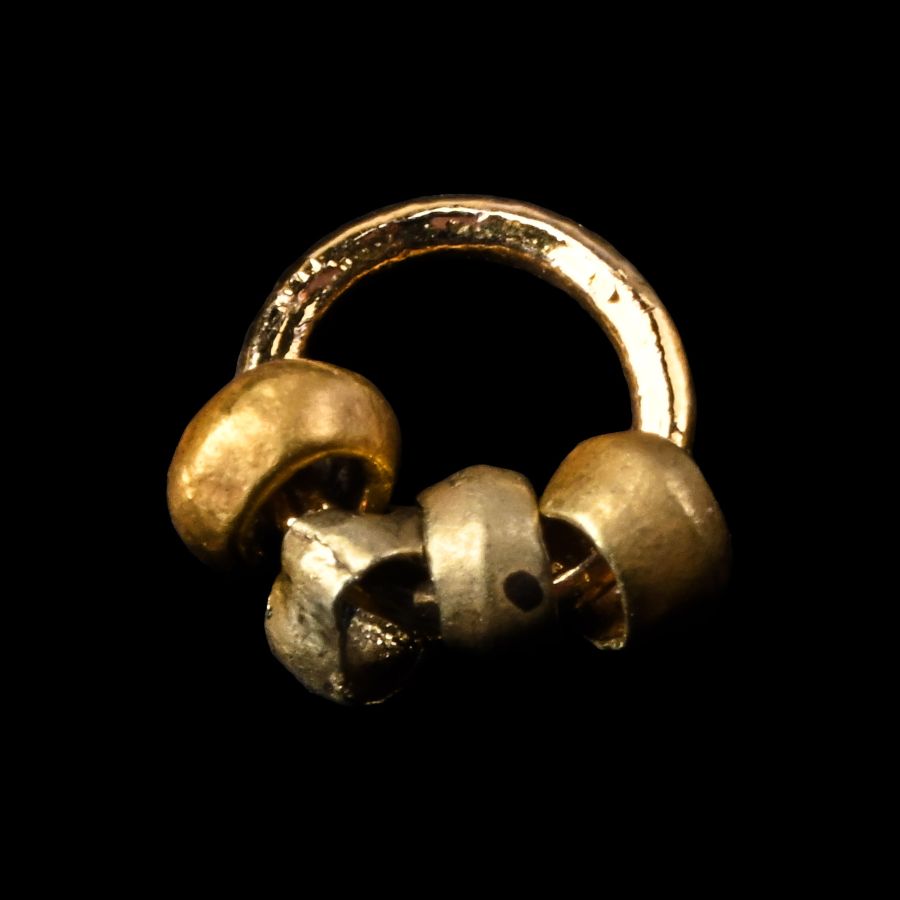
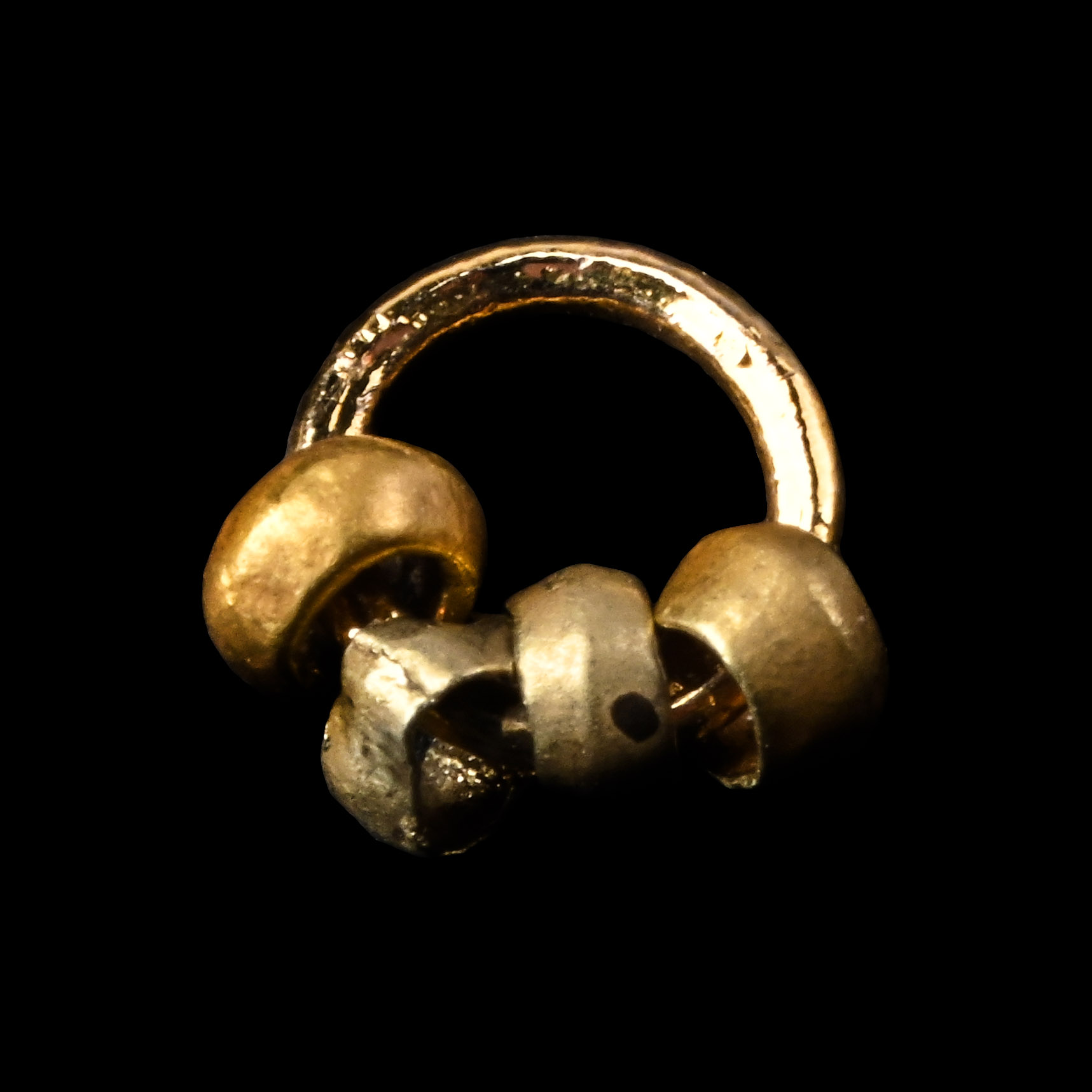
Eastern Roman Gold Bead Group on Loop
3RD CENTURY B.C.-3RD CENTURY A.D.
1/8 in. (0.21 grams, 5 mm).
Comprising four annular beads on a later gold-coloured loop. [No Reserve]
ProvenanceEx private British collection, formed in the 1980s.
Property of a West Northamptonshire, UK, gentleman.
TimeLine Auctions follows a vetting process to ensure the authenticity and legality of all items, reinforcing our commitment to integrity and responsible trading. Each antiquity, antique, and coin lot undergoes thorough examination by a vetting committee of at least ten external specialists, professional trade association members, scientists, and archaeologists: Our Vetting Process
AUCTIONS:
TimeLine is a leading auction house specialising in antiquities, ancient art, collectables, natural history, coins, medals, and books. Our auctions offer museums, collectors, historians, and enthusiasts the opportunity to acquire unique and historically significant pieces.
-
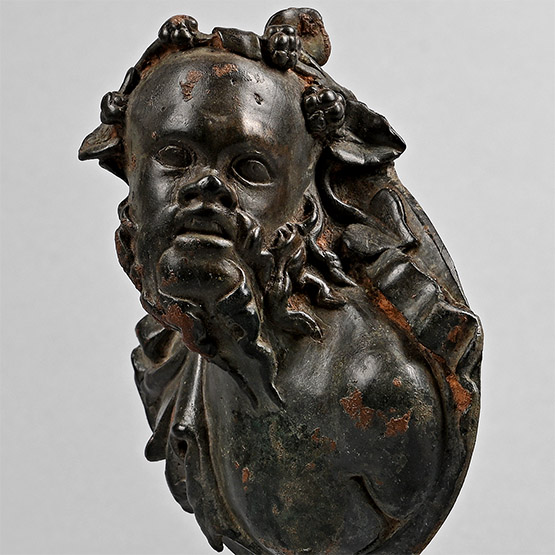
Roman Bronze Chariot Mount with Bust of Silenus
1st-2nd century A.D.Estimate: £15,000 - 20,000 (‡+bp*)
Opening Bid: £7,500
Ovoid in profile with hollow reverse, modelled in high-relief with pallium tied at his right shoulder and garland draped across his shoulders and wreath of ivy around his brow; mounted on a custom-made stand. 435 grams total, 13.5 cm including stand
Private Swiss collection, before 1976. with Bonhams Antiquities, London, 3rd October 2000, no.202. Private European collection. Accompanied by a copy of an Art Loss Register certificate, no.S00038120. Accompanied by copies of the relevant Bonhams catalogue pages. Accompanied by an academic report by Dr Raffaele D'Amato. This lot has been checked against the Interpol Database of stolen works of art and is accompanied by search certificate number no.13216-249243.
This type of mount was probably used as bridle holders and placed near the driver’s seat, on the wagon platform or as a central decoration on the back of the wagon. -
.jpg)
Roman Bronze Silvered Plate Brooch
Circa 2nd century A.D.Sold for (Inc. bp): £195
Cruciform in plan with trefoil finial to each arm, punched-point border and median line, applied bone disc to each lateral arm and a larger one in a recessed cell to the centre pin-lugs, pin and catch to reverse. 5.7 grams, 39 mm
Ex German art market, 2000s. Acquired from an EU collector living in London. From the collection of a Surrey, UK, gentleman. -
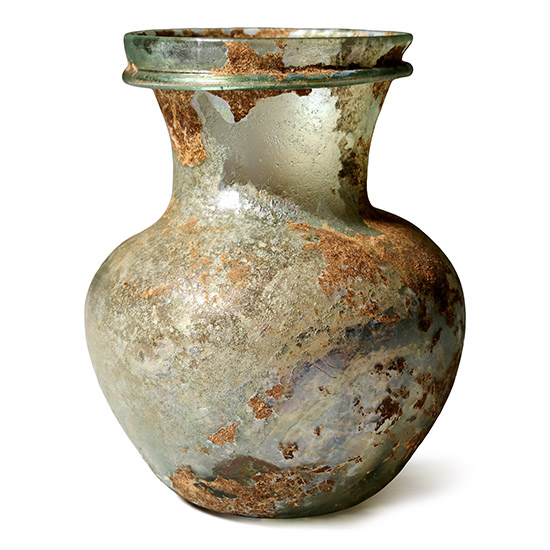
Roman Clear Glass Jar with Iridescence
2nd-3rd century A.D.Sold for (Inc. bp): £234
Squat in profile with trumpet-shaped neck and mouth, collar below the rim, dimple base; some iridescence. 29.6 grams, 85 mm
Private collection, 1990s-early 2000s.
