
Loading, please wait...
LOT 0203
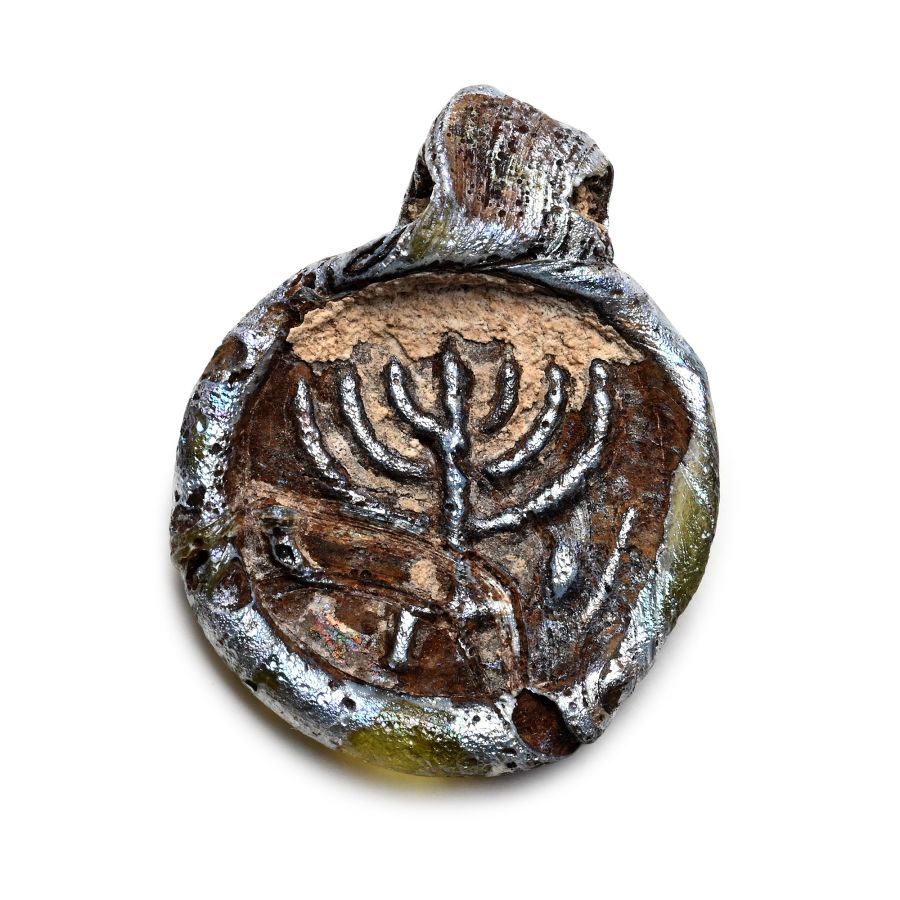
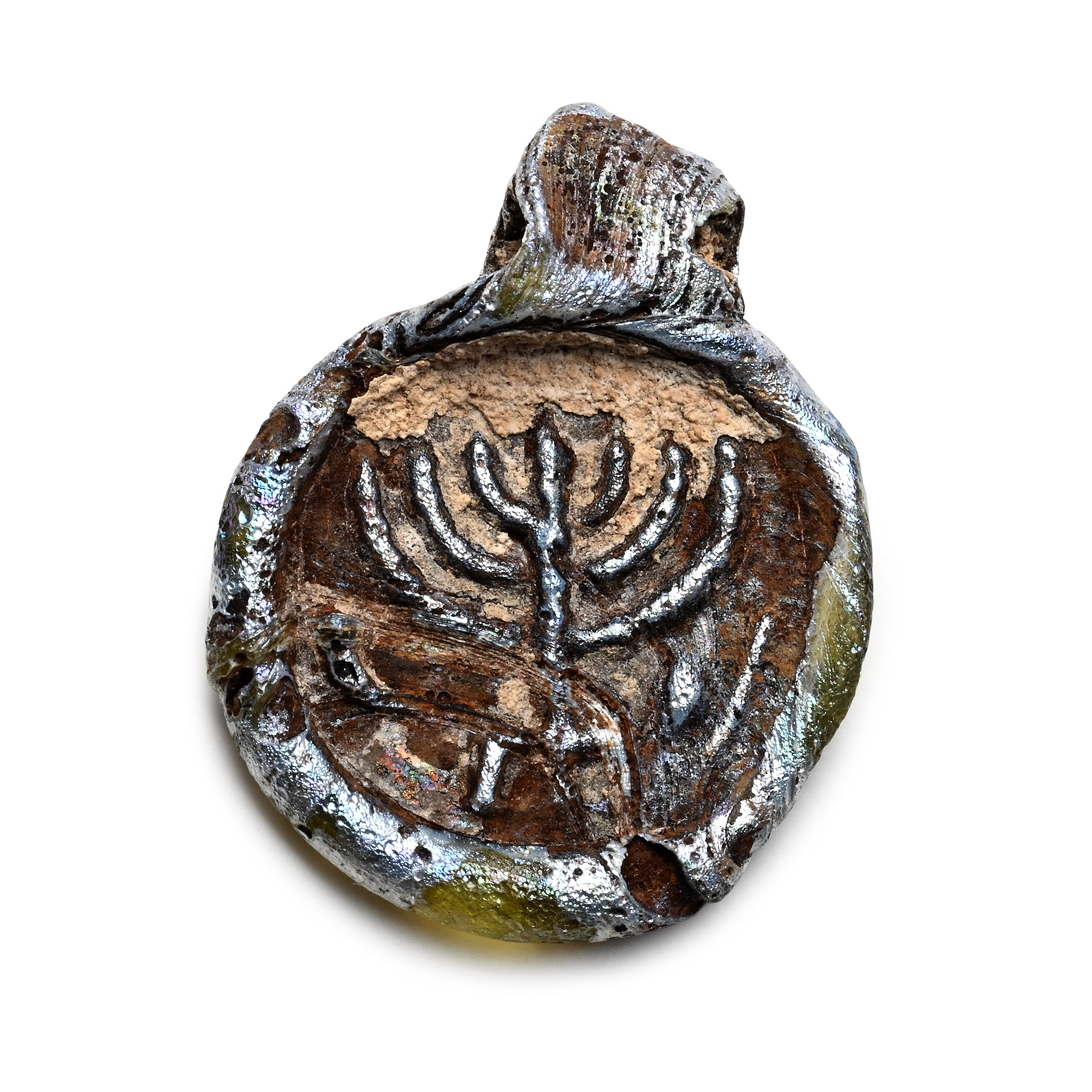
Eastern Roman Glass Pendant with Menorah
6TH-7TH CENTURY A.D.
7/8 in. (1.07 grams, 22 mm).
Discoid with impressed menorah motif, integral loop.
ProvenancePrivate collection, acquired in the late 1980s-early 1990s; thence by descent.
LiteratureCf. for similar glass pendants Wamser, L., Die Welt von Byzanz - Europas Östliches Erbe, München, 2004, items 304-307, for the type.
FootnotesGlass medallions were produced especially in Syria and decorated with imagery including Christian saints and monograms. The iconography of the Menorah was used by both Christian and Jewish communities, being for the Orthodox church a symbol of divine light, the seven gifts of the Holy Ghost and the church itself.
CONDITIONTimeLine Auctions follows a vetting process to ensure the authenticity and legality of all items, reinforcing our commitment to integrity and responsible trading. Each antiquity, antique, and coin lot undergoes thorough examination by a vetting committee of at least ten external specialists, professional trade association members, scientists, and archaeologists: Our Vetting Process
AUCTIONS:
TimeLine is a leading auction house specialising in antiquities, ancient art, collectables, natural history, coins, medals, and books. Our auctions offer museums, collectors, historians, and enthusiasts the opportunity to acquire unique and historically significant pieces.
-
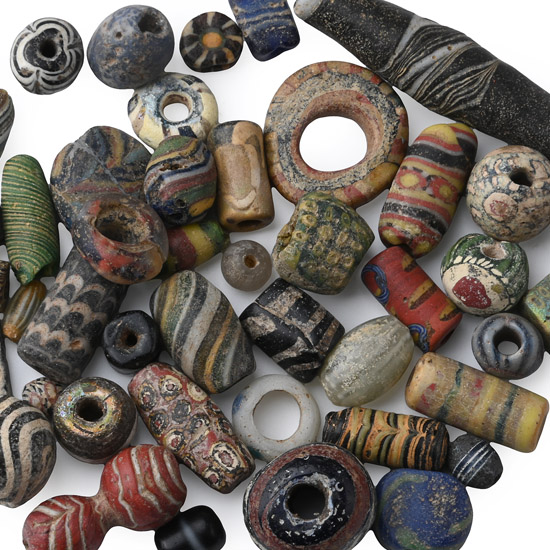
Roman Glass Bead Group
1st-4th century A.D.Sold for (Inc. bp): £364
Mixed group of polychrome beads, some with trails, some with eye motifs and some imitating banded agate. 48.28 grams total, 5.02-42.42 mm
From the private collection of a European gentleman (1942-2024), formed since the 1970s. -
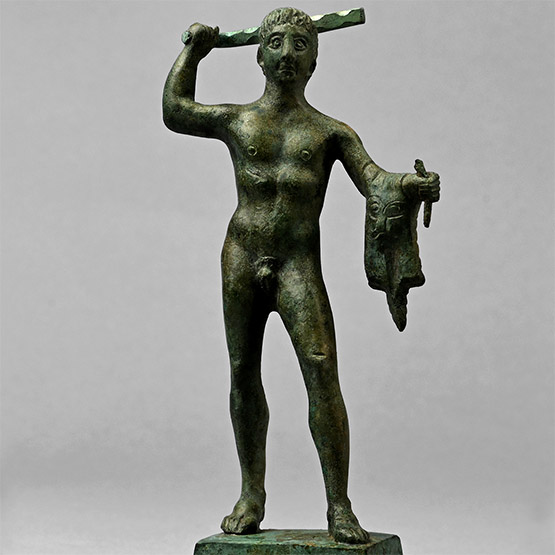
Roman Bronze Statuette of Hercules
Circa 2nd-3rd century A.D.Estimate: £5,000 - 7,000 (‡+bp*)
Opening Bid: £2,500
Modelled in the round with a lionskin mantle over his extended forearm, standing nude with a club raised over his shoulder; provided with a contemporary custom-made stand. 244 grams, 13.5 cm
Private collection, USA and Switzerland, before 1992; thence by descent. This lot has been checked against the Interpol Database of stolen works of art and is accompanied by search certificate number no.13195-249254.
This type of representation of Hercules, inspired by Etruscan or Italic models, was widespread in Gallo-Roman sanctuaries dedicated to the god, where several votive statues attributable to this type have been found. The musculature of the back is well-executed, as are the facial features and the details on the Nemean lion's skin. -
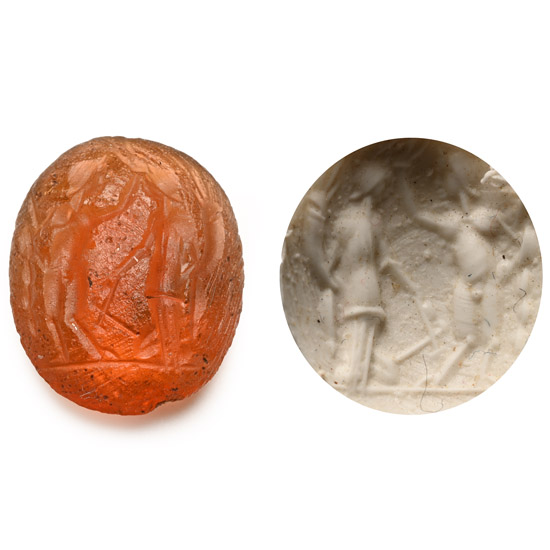
Roman Glass Gem with Fortuna
2nd-3rd century A.D.Sold for (Inc. bp): £85
Biconvex in profile with intaglio Fortuna standing holding a cornucopia beside a nude male; supplied with a museum-quality impression. 1.37 grams, 15.61 mm
From the private collection of a European gentleman (1942-2024), formed since the 1970s.
