
Loading, please wait...
LOT 0886
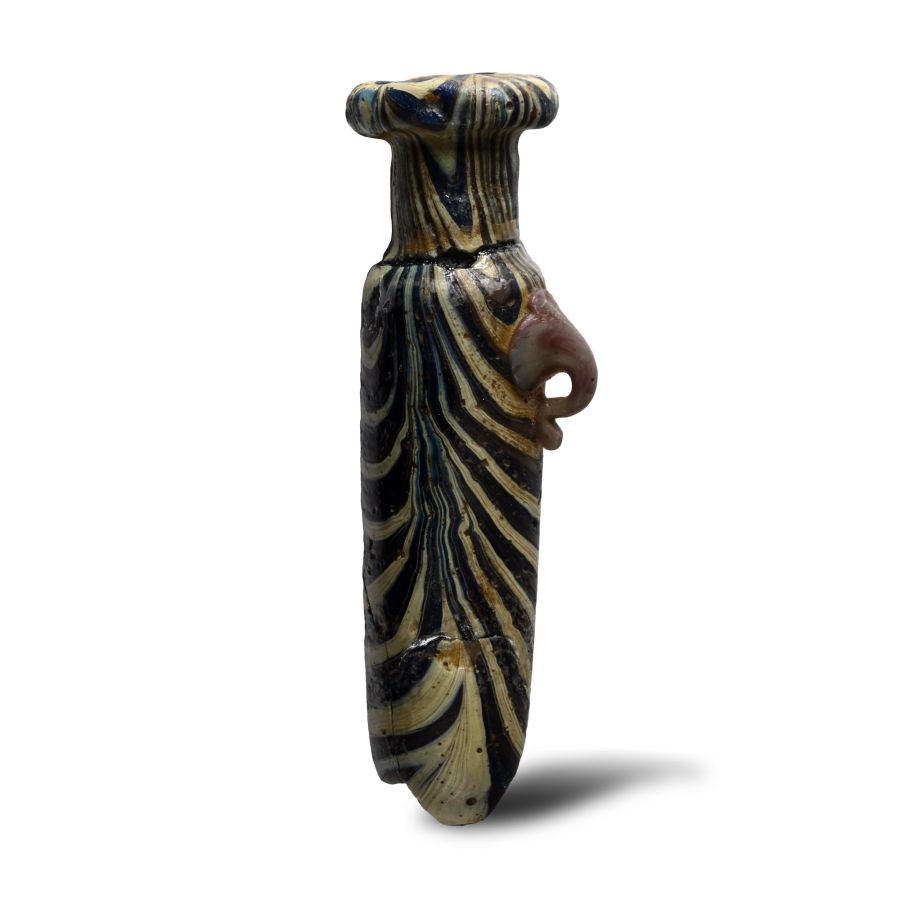
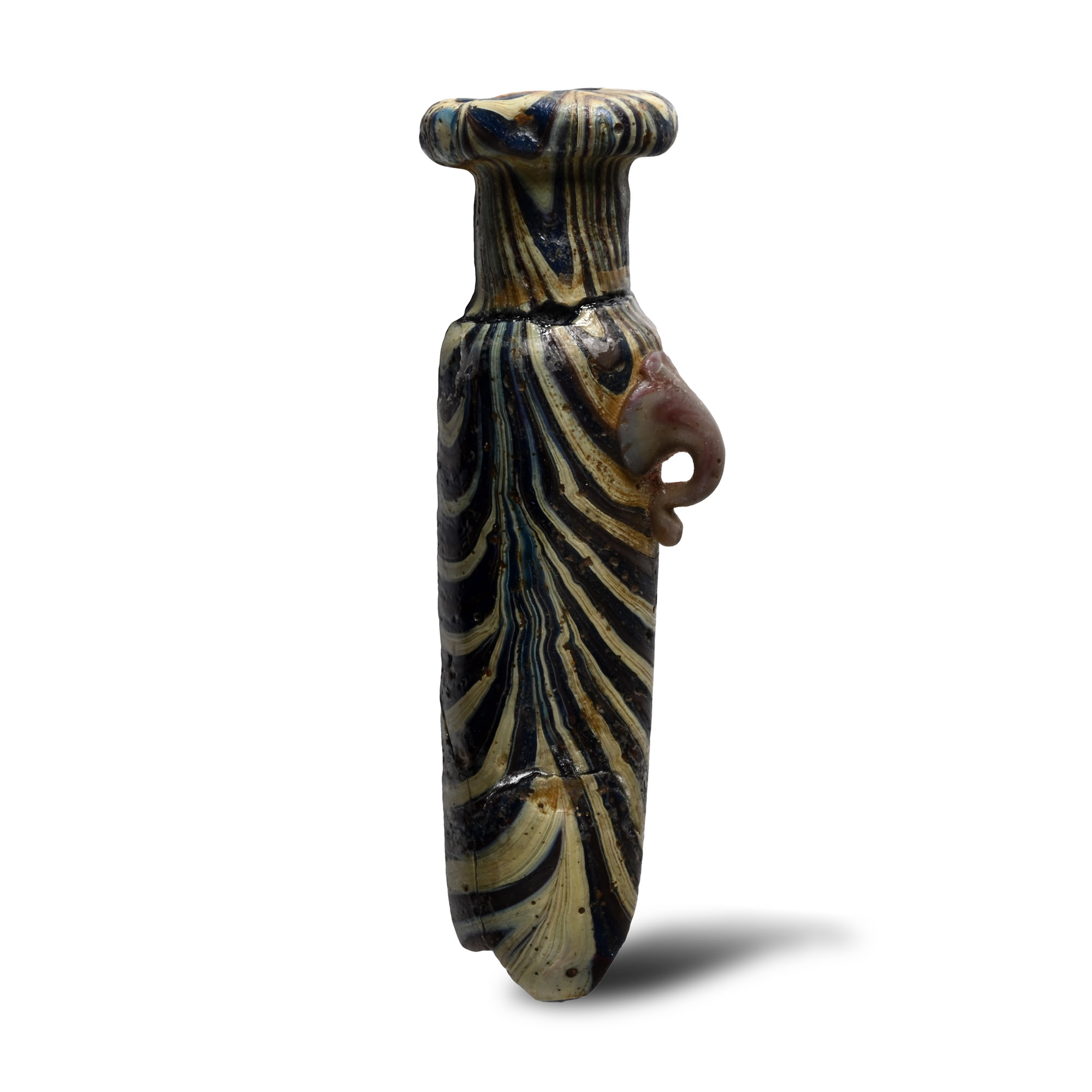
Eastern Roman Core-Formed Glass Alabastron Fragment
3RD-4TH CENTURY A.D.
2 1/2 in. (20.29 grams, 64 mm).
Modelled in blue and yellow glass with everted rim and loop handle to the shoulder; lower body and one handle absent.
ProvenanceFrom the collection of a gentleman, acquired on the London art market in the 1990s.
CONDITIONTimeLine Auctions follows a vetting process to ensure the authenticity and legality of all items, reinforcing our commitment to integrity and responsible trading. Each antiquity, antique, and coin lot undergoes thorough examination by a vetting committee of at least ten external specialists, professional trade association members, scientists, and archaeologists: Our Vetting Process
AUCTIONS:
TimeLine is a leading auction house specialising in antiquities, ancient art, collectables, natural history, coins, medals, and books. Our auctions offer museums, collectors, historians, and enthusiasts the opportunity to acquire unique and historically significant pieces.
-
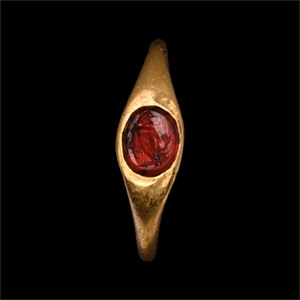
Roman Gold Ring with Warrior Holding Shield Gemstone
2nd-3rd century A.D.Sold for (Inc. bp): £650
Carnelian cloison with intaglio figure with helmet and shield; supplied with a museum-quality impression. 3.35 grams, 21.83 mm overall, 18.44 mm internal diameter (approximate size British N, USA 6 1/2, Europe 13.72, Japan 13)
Ex German art market, 2000s. Acquired from an EU collector living in London. From the collection of Surrey, UK, gentleman. -
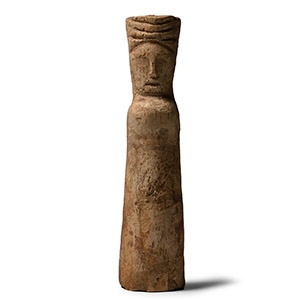
Roman Bone Female Pin Head
Eastern Roman, 3rd century B.C.-2nd century A.D.Estimate: £200 - 300 (+bp*)
Opening Bid: £80
With carved detailing to obverse, D-shaped face and chignon hairstyle, rounded bosom; old collector's label to reverse 'IV / 00 28'. 14.1 grams, 90 mm
with a London, UK gallery, 1971-early 2000s. -
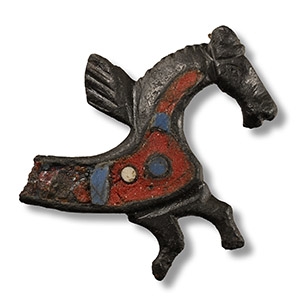
Romano-British Enamelled Bronze Hippocampus Brooch
Circa 2nd century A.D.Sold for (Inc. bp): £156
Plate brooch fragment with enamelled panels to the neck, shoulder and flank. 3.98 grams, 31 mm
Found near St Albans, Hertfordshire, UK.
