
Loading, please wait...
LOT 0136
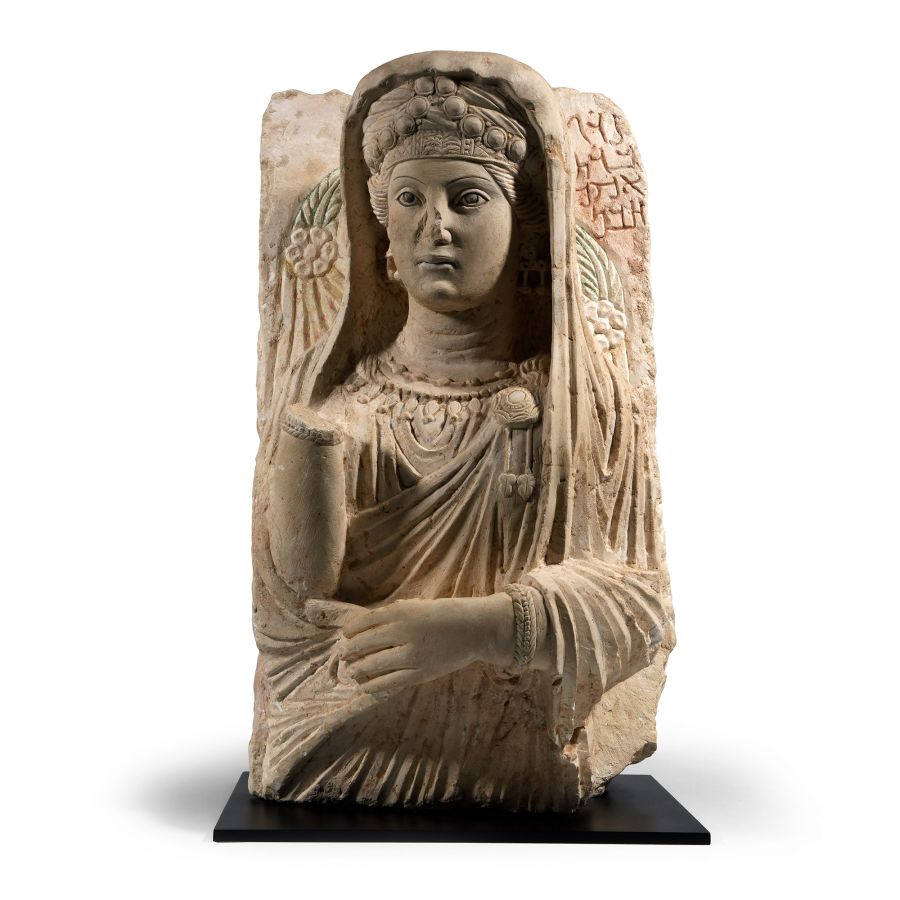
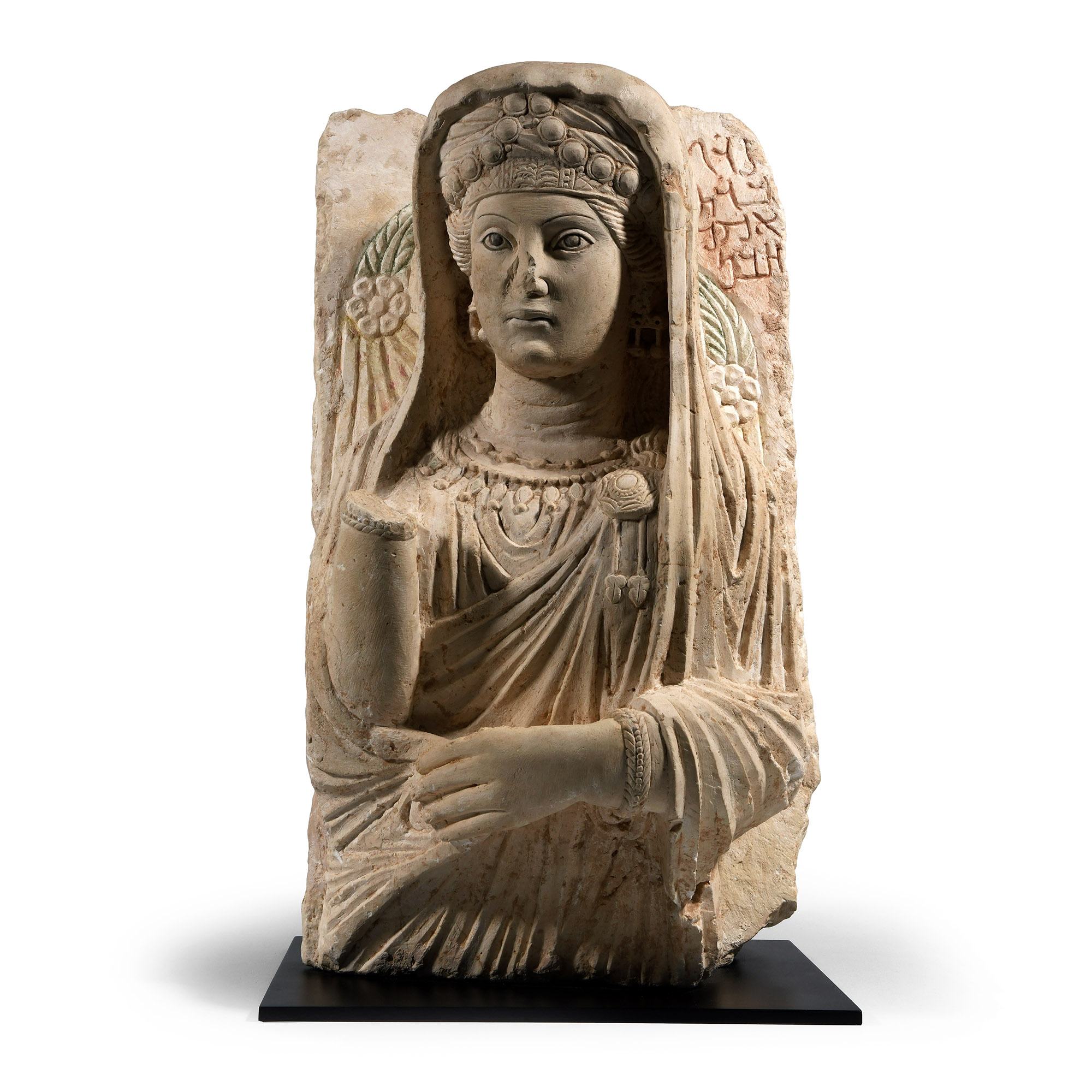
Eastern Roman Bust of the Daughter of Aqima
2ND-3RD CENTURY A.D.
22 1/2 in. (78.2 kg total, 57 cm high including stand).
Modelled in the round with a fragment of stand to the rear; the figure carefully carved to exhibit the delicate facial features and elaborate hairstyle; the palla drawn up over the head and falling over the shoulders to the upper arms; a diadem to the brow with foliage and tendril detailing; elaborate earrings with dangles; necklace of fusiform and tubular beads and a longer one below with piriform plaques; large disc brooch to the left breast with dangles; peplos-style dress draped across the body beneath the palla; left arm bent and hand passing across the body to grasp the hem of the palla with a herringbone bracelet at the wrist; the palla displayed pinned with rosettes to the rear panel; with inscription of thirteen Palmyrene characters above the left shoulder 'NRW' // BRT // 'QM' // ḤBL' meaning 'daughter of Aqima'; traces of red and green pigment; mounted on a custom-made stand by Colin Bowles Ltd.
ProvenanceFrom a private American collection, acquired in the 1970s.
Ex Leon Simard, a Trustee to the National Museum of Canada, prior to 1986.
Acquired from Summer Gallery, 29 May 1986.
with Archaelogia Gallery, Canada, 1986 to present.
Accompanied by an Art Loss Register certificate number S00237794, dated 3 November 2023.
Accompanied by an academic report by Dr Raffaele D’Amato.
This lot has been checked against the Interpol Database of stolen works of art and is accompanied by search certificate no.11825-207620.
Cf. Muzeum Narodowe w Warszawie, Sztuka Palmyry (Art of Palmyra),Warszawa, 1986, pls.17,23; Fortin, M., Syrie, terre de civilisations, Québec, 1999, pp.298-299; Gabucci, A. (Ed.), Zenobia, il sogno di una regina d'oriente, Milano, 2002, no.99; Heyn, M.K., ‘Status and Stasis: Looking at Women in the Palmyrene Tomb,’ in Raja R. and Kropp, A. (eds.), World of Palmyra. Palmyrenske Studier, Copenhagen, 2016, pp.197-209, figs.2-3; see also similar bust of a Palmyrene noblewoman Aqmat ( inscribed: 'Aqmat daughter of Hagagu, descendant of Zebida, descendant of Ma'an. Alas!') now in the collection of the British Museum under accession number 102612.
FootnotesThe sculpture is a good example of 2nd-3rd century A.D. Palmyrene female funerary portrait types. The amount of jewellery displayed in these portraits could be a direct reflection of the wealth of the family, and certainly they reflected the jewellery possessed by the owner of the grave. Particularly important is the gesture of the raised hand: the evidence from several sanctuaries in the city corroborates the connection between this gesture and the female gender. There is no indication that the raised arm was associated with worship in the funerary sphere.
CONDITIONTimeLine Auctions follows a vetting process to ensure the authenticity and legality of all items, reinforcing our commitment to integrity and responsible trading. Each antiquity, antique, and coin lot undergoes thorough examination by a vetting committee of at least ten external specialists, professional trade association members, scientists, and archaeologists: Our Vetting Process
AUCTIONS:
TimeLine is a leading auction house specialising in antiquities, ancient art, collectables, natural history, coins, medals, and books. Our auctions offer museums, collectors, historians, and enthusiasts the opportunity to acquire unique and historically significant pieces.
-
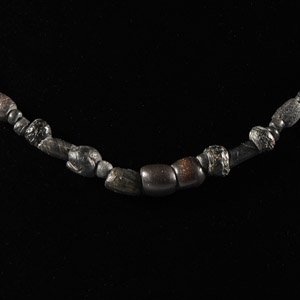
Roman Black Glass and Other Bead Necklace String
1st century A.D. and laterSold for (Inc. bp): £26
Restrung using alternating barrel-shaped beads with smaller oblate beads. 24 grams, 45 cm long
UK gallery, early 2000s. -
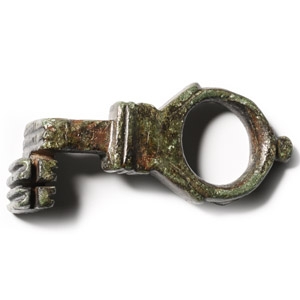
Roman Bronze Casket Key
Circa 1st-4th century A.D.Sold for (Inc. bp): £111
With large loop handle and short shank, knop above the loop. 33.2 grams, 58 mm
Acquired on the UK art market before 2000. Property of a Surrey, UK, collector. -
.jpg)
Late Roman Redware Oil Lamp With Daniel Standing
North African, 5th century A.D.Sold for (Inc. bp): £520
With a lug handle and oval elongated body, two central filling-holes flanking the image of prophet Daniel enclosed within a decorative shallow border; two thin concentric circles on the base, possibly a blurred potter’s mark to the middle. 196 grams, 14.5 cm
From the collection of the French archaeologist Suzanne Gozlan, 1921-2022.
The lamp belongs to the type Atlante X or Hayes II A. The so-called Christian lamps in Terra Sigillata Africana have been classified by Hayes into two major types, I and II. He has distinguished two classes in his type II, according to geographic place of manufacture or origin. Subtype II A group lamps from central Tunisia are characterised by a fine clay, glossy light orange slip, and carefully executed decoration using a great number of neatly drawn shoulder motives.
