
Loading, please wait...
LOT 0246
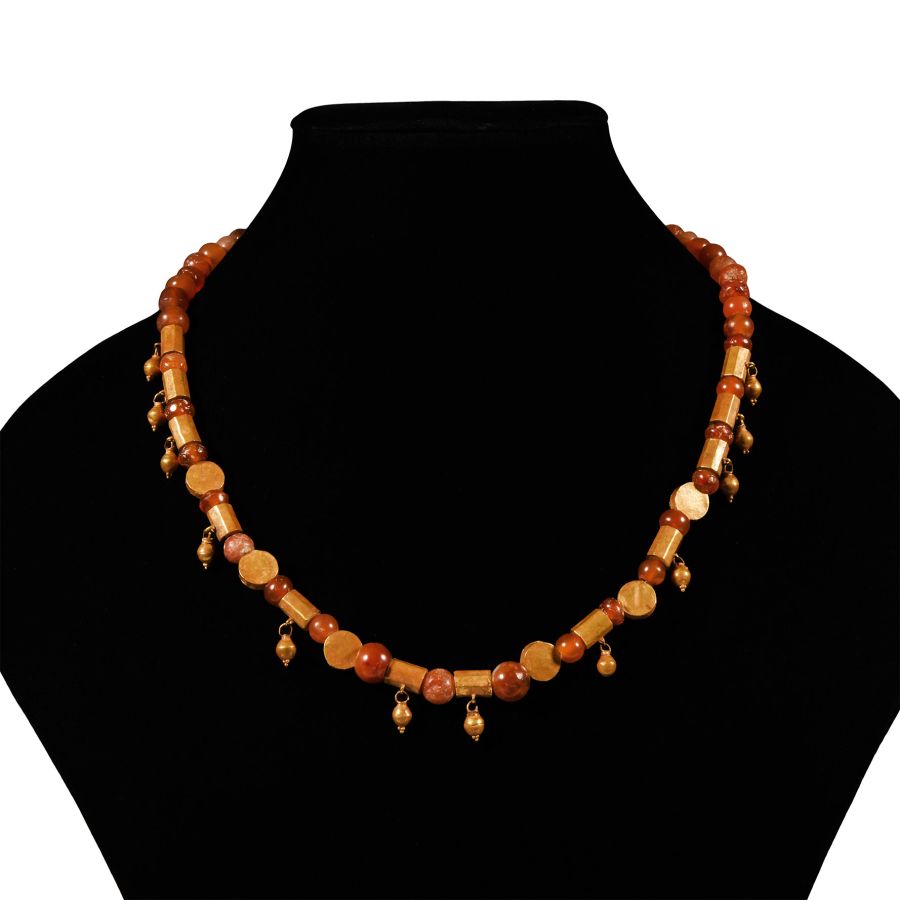
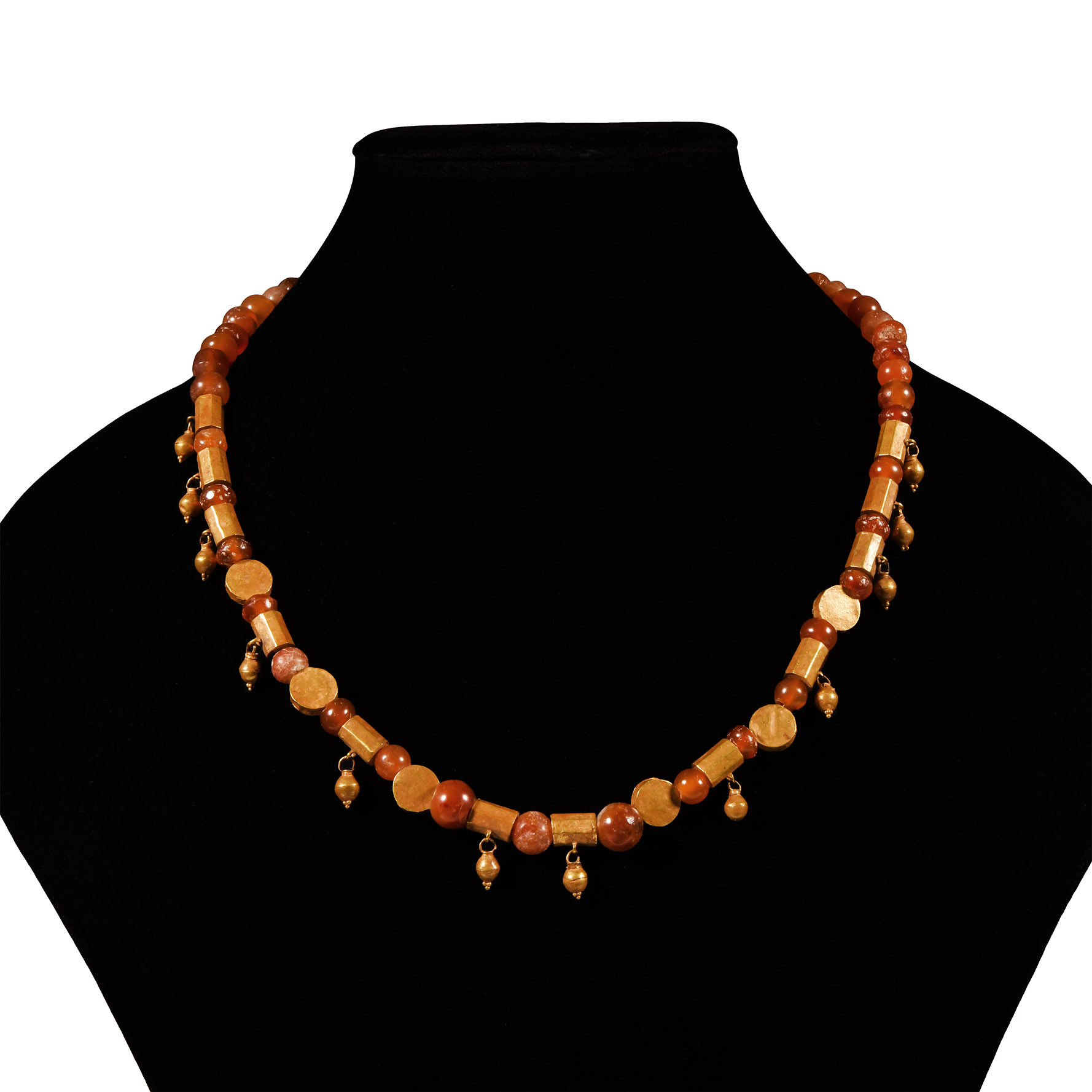
Eastern Parthian Carnelian and Gold Bead Necklace
1ST CENTURY B.C.-1ST CENTURY A.D.
18 1/4 in. (44 grams, 46.5 cm long).
Comprising: sheet-gold drum-shaped and octagonal-section beads with spherical pendants, graduated interstitial oval carnelian beads; restrung with modern clasp.
ProvenanceAcquired 1970s-1996.
Property of a North American collector.
London collection, 2016.
Cf. Marshall, F.H., Catalogue of the Jewellery, Greek, Etruscan and Roman, in the Department of Antiquities, British Museum, London, 1911, pl.XXIV (1545).
CONDITIONTimeLine Auctions follows a vetting process to ensure the authenticity and legality of all items, reinforcing our commitment to integrity and responsible trading. Each antiquity, antique, and coin lot undergoes thorough examination by a vetting committee of at least ten external specialists, professional trade association members, scientists, and archaeologists: Our Vetting Process
AUCTIONS:
TimeLine is a leading auction house specialising in antiquities, ancient art, collectables, natural history, coins, medals, and books. Our auctions offer museums, collectors, historians, and enthusiasts the opportunity to acquire unique and historically significant pieces.
LOT 0246
Eastern Parthian Carnelian and Gold Bead Necklace
Estimate £1,500 - 2,000€1,740 - 2,320 (for guidance only)$2,030 - 2,700 (for guidance only)
-
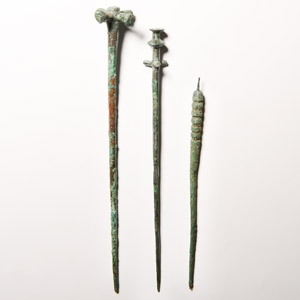
Luristan Bronze Pin Group
13th-7th century B.C.Sold for (Inc. bp): £72
A trio of pins composed of tapering round-section stems and decorative upper bodies and finials, including notched collars and projecting bosses. 48 grams total, 12.5-16.5 cm
Ex old English collection. London art market, 1980s. -
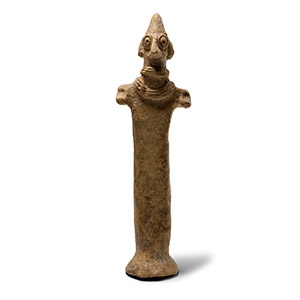
Western Asiatic Terracotta Idol
3rd-2nd millennium B.C.Estimate: £1,000 - 1,400 (‡+bp*)
Opening Bid: £500
Free-standing; modelled with a pinched, bird-like head and face with large applied circular eyes, two ornamental collars, stub arms and splayed foot. 43 grams, 14.1 cm high
Acquired in the 1970s. Ex European private collection. -
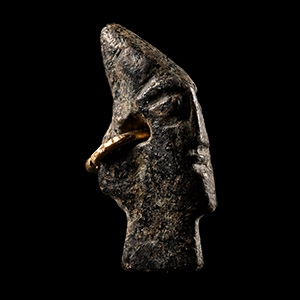
Syro-Neo-Hittite Bearded Figure Amulet and Gold Pendant Mount
Mid-1st millennium B.C.Estimate: £400 - 600 (+bp*)
Opening Bid: £160
Carved as a slender human head wearing a conical cap with stylised facial features, drilled for suspension and mounted on a later gold hoop. 4.14 grams, 28 mm
From a family collection formed 1900-1950; by descent circa 1980.
