
Loading, please wait...
LOT 0547
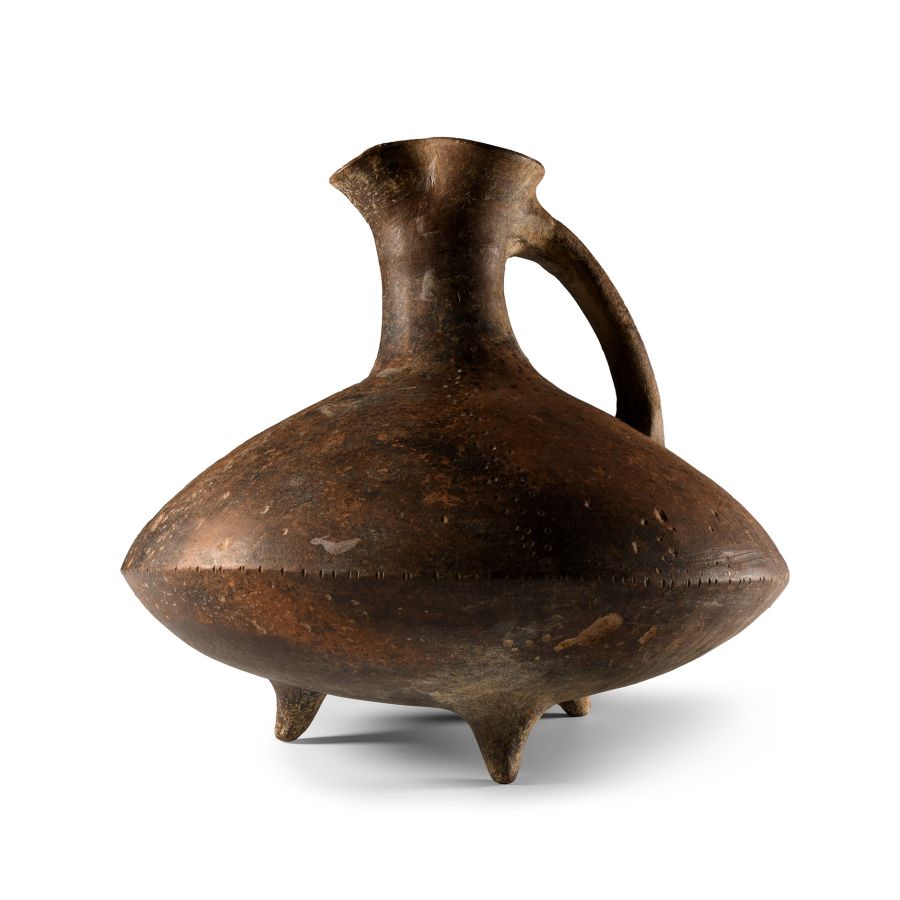
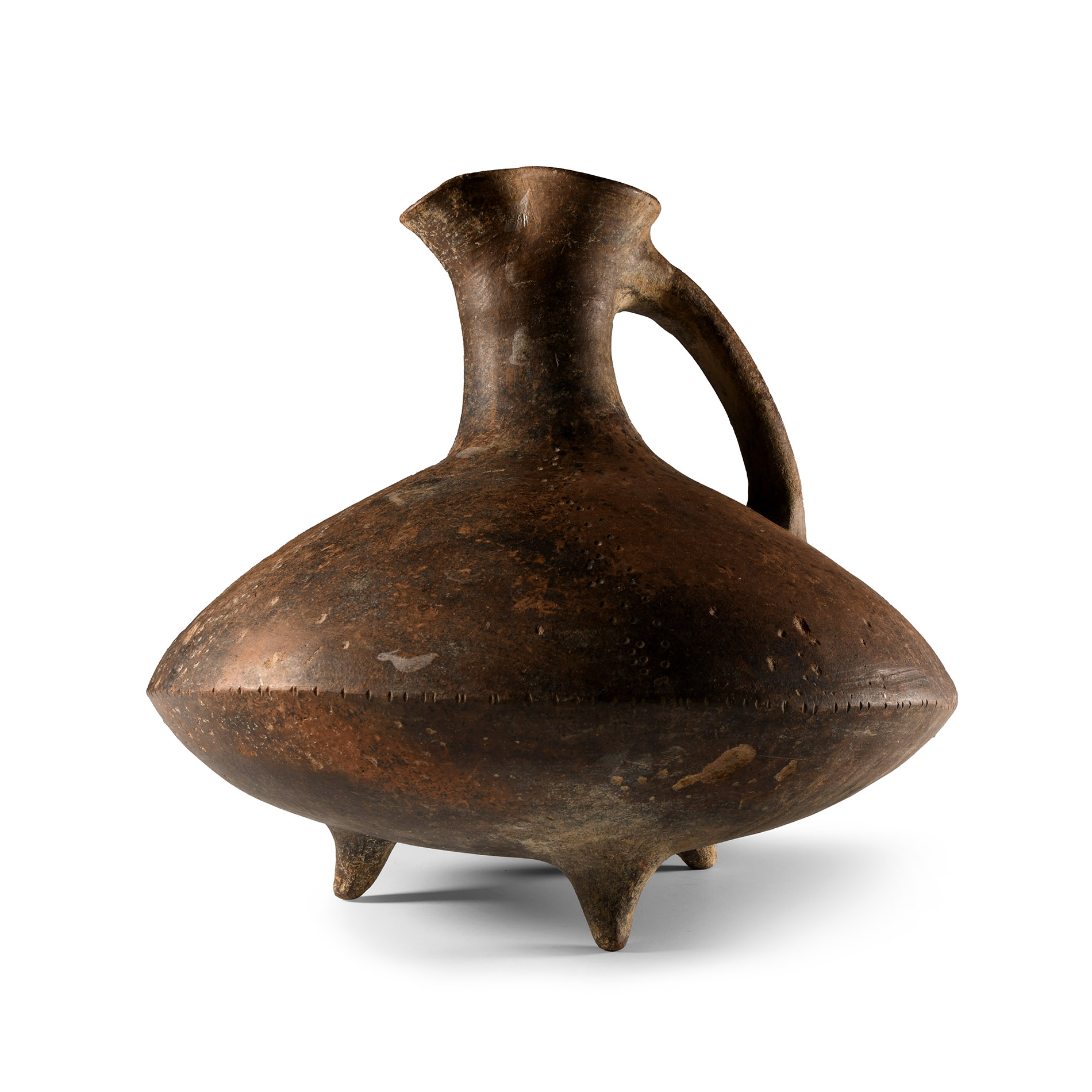
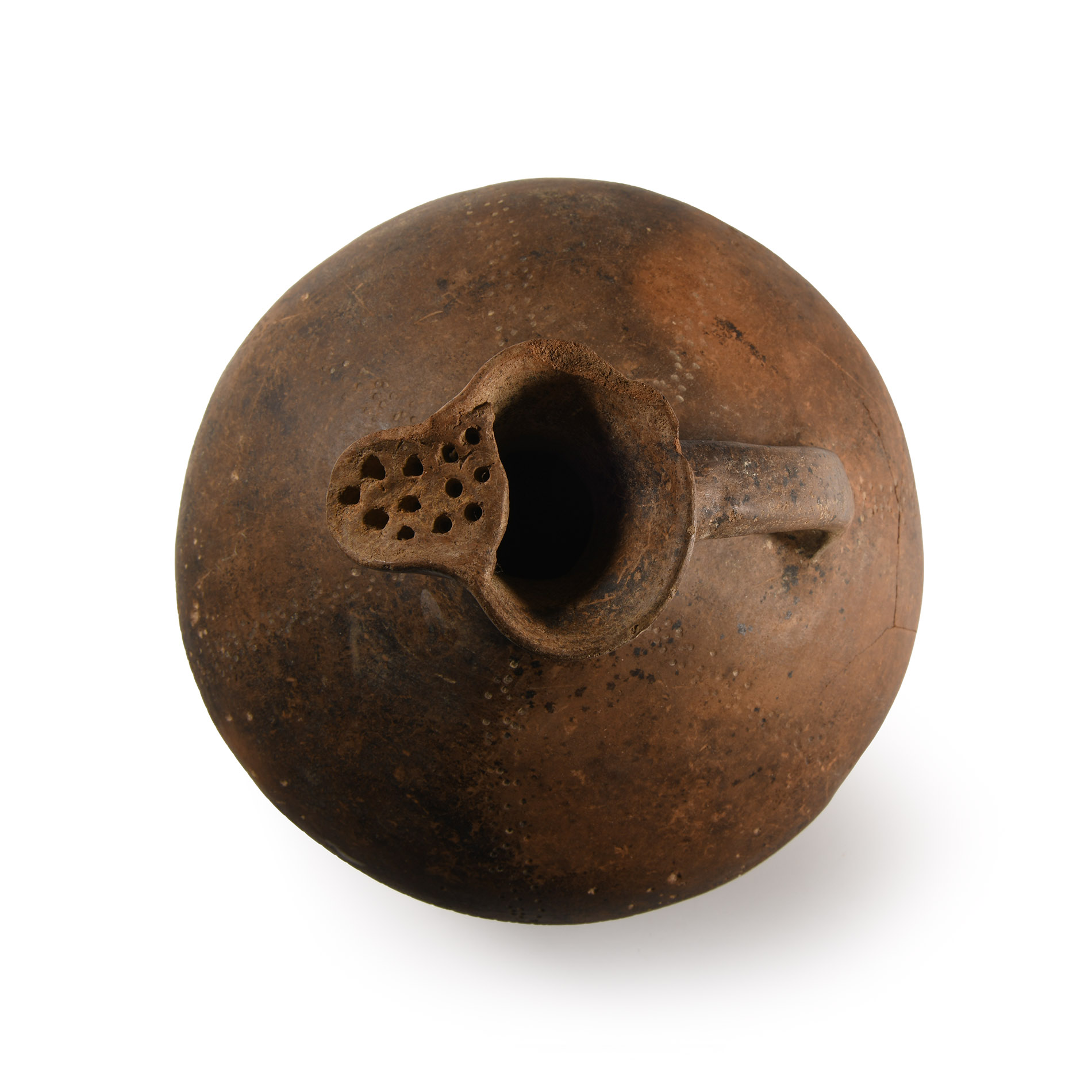
Eastern Mediterranean Tripod Footed Jug with Strainer
1ST MILLENNIUM B.C. OR LATER
9 1/2 in. (1.64 kg, 24 cm wide).
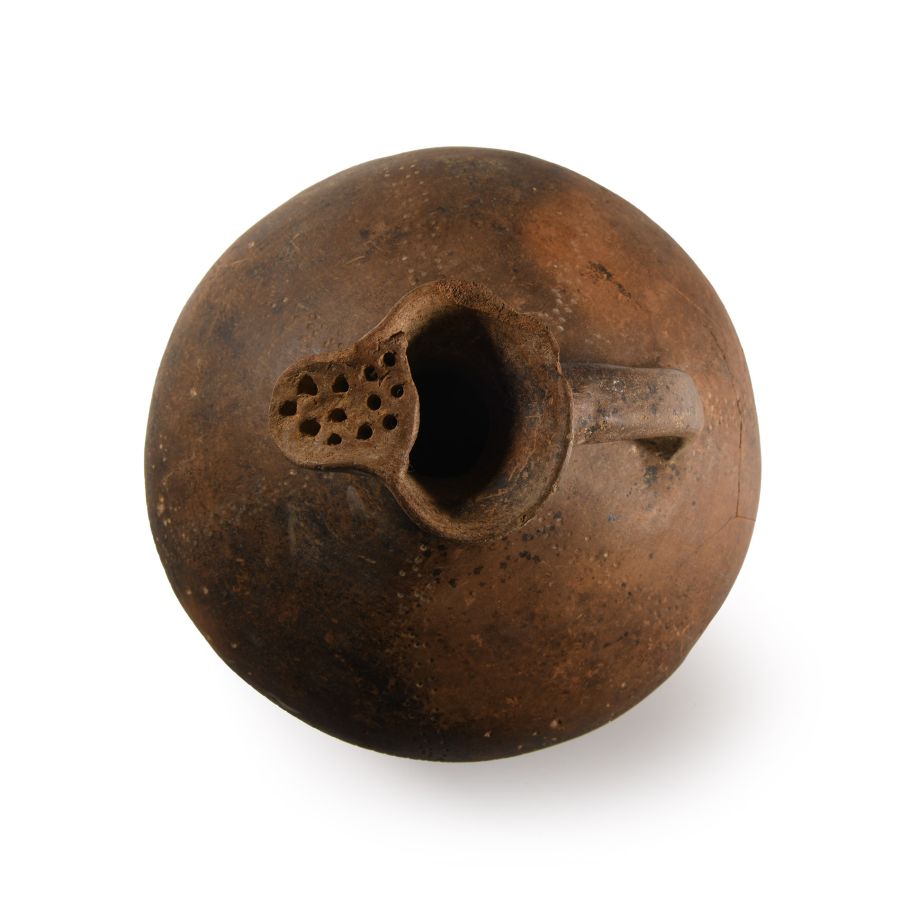
With a carinated body with conical feet to the base, a slender neck with trefoil mouth and pierced strainer panel to the spout, integral handle to the rear; displaying vertical notching to the equator and columns composed of shallow dimples to the upper body; chipped.
Provenancewith a London, UK, gallery, 1971-early 2000s.
CONDITIONTimeLine Auctions follows a vetting process to ensure the authenticity and legality of all items, reinforcing our commitment to integrity and responsible trading. Each antiquity, antique, and coin lot undergoes thorough examination by a vetting committee of at least ten external specialists, professional trade association members, scientists, and archaeologists: Our Vetting Process
AUCTIONS:
TimeLine is a leading auction house specialising in antiquities, ancient art, collectables, natural history, coins, medals, and books. Our auctions offer museums, collectors, historians, and enthusiasts the opportunity to acquire unique and historically significant pieces.
-
Etruscan Bucchero Chalice with Mythical Beasts, Animals, and Caryatid
Circa 7th-6th century B.C.Sold for (Inc. bp): £650
Blackware vessel comprising a broad bowl with frieze of animals (boar, lion, sphinx, horse); trumpet-shaped base with supporting caryatid; some restoration. 502 grams, 17 cm high
From the Steel family collection, 1950s-late 1990s. -
Greek Gold Vessel-Shaped Pendant
Circa 4th-3rd century B.C.Sold for (Inc. bp): £312
Conical sheet-gold dangle with applied rim and three suspension loops, filigree detailing beneath the rim, four vertical braided filigree bands to the sidewall, granule cluster finial. 2.25 grams, 26 mm
UK private collection formed before 2000. Ex North London, UK, gallery. -
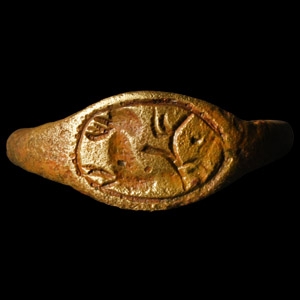
Hellenistic Bronze Ring with Stag
Circa 2nd-1st century B.C.Sold for (Inc. bp): £117
With square-section shoulders, ellipsoid bezel with incuse stag motif within a linear border. 5.81 grams, 25.58 mm overall, 18.10 mm internal diameter (approximate size British P, USA 7 1/2, Europe 16.23, Japan 15)
Ex old English collection. London art market, pre 2000. Property of a London, UK, gentleman.
