
Loading, please wait...
LOT 0579
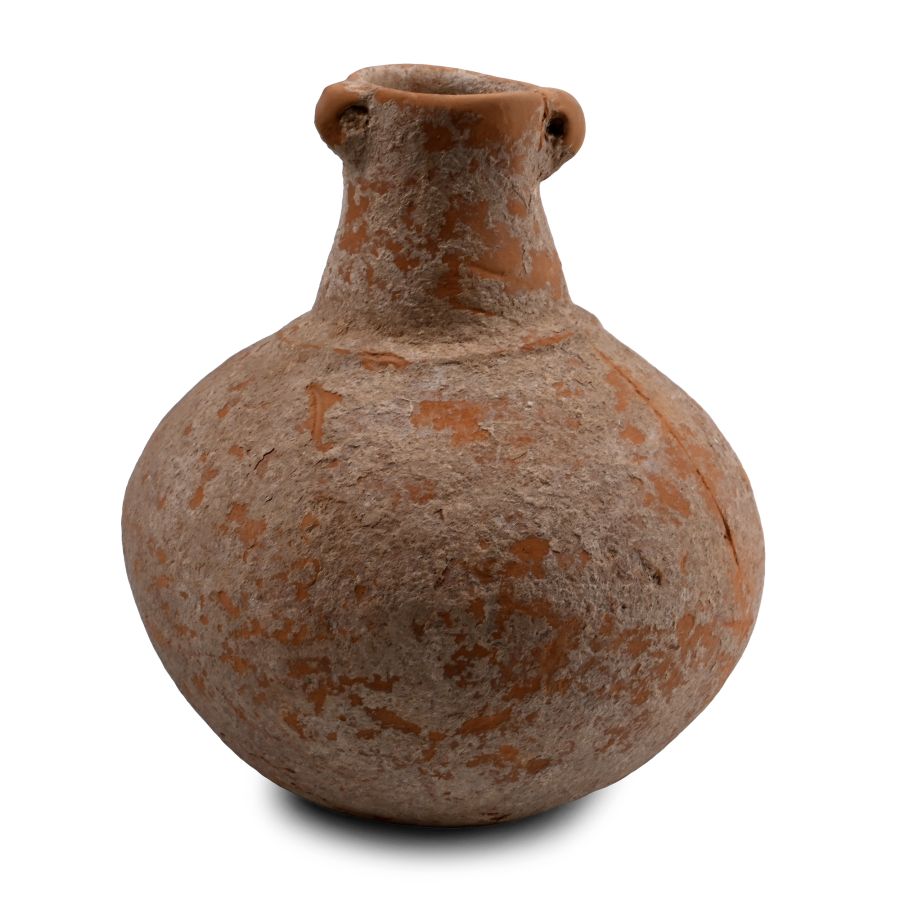
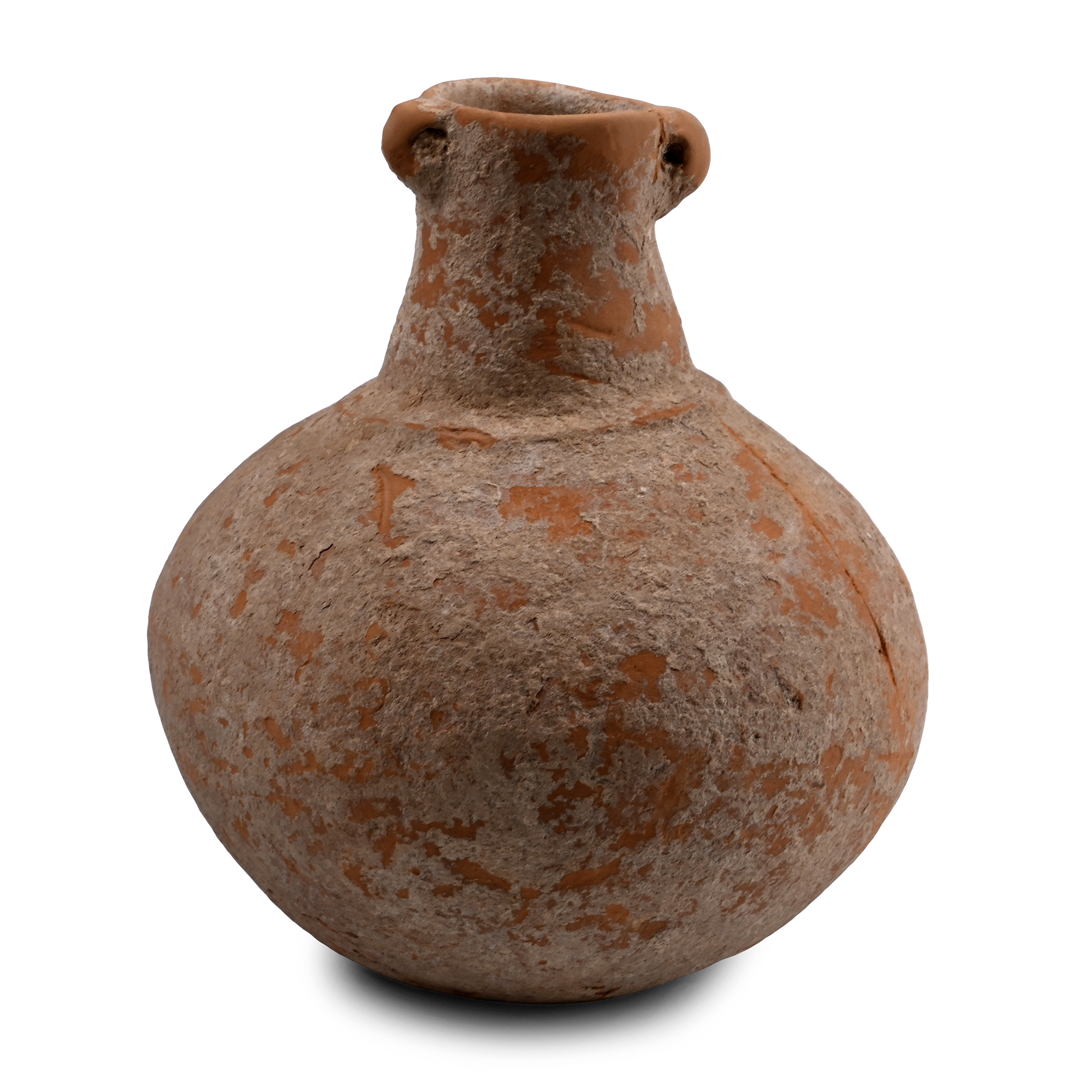
Eastern Mediterranean Terracotta Vessel
BRONZE AGE, 2ND-1ST MILLENNIUM B.C.
5 1/4 in. (265 grams, 13.5 cm).
Globular in profile with flat base and tapering neck, lateral pierced lugs at the mouth. [No Reserve]
ProvenanceAcquired on the UK art market before 2000.
Property of an Essex, UK, gentleman.
TimeLine Auctions follows a vetting process to ensure the authenticity and legality of all items, reinforcing our commitment to integrity and responsible trading. Each antiquity, antique, and coin lot undergoes thorough examination by a vetting committee of at least ten external specialists, professional trade association members, scientists, and archaeologists: Our Vetting Process
AUCTIONS:
TimeLine is a leading auction house specialising in antiquities, ancient art, collectables, natural history, coins, medals, and books. Our auctions offer museums, collectors, historians, and enthusiasts the opportunity to acquire unique and historically significant pieces.
-
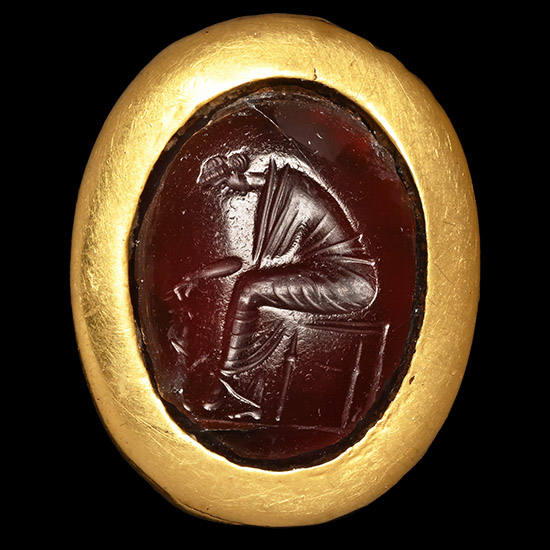
Greek Gold Ring with Garnet Gemstone
Hellenistic, 3rd-2nd century B.C.Estimate: £8,000 - 10,000 (+bp*)
Opening Bid: £4,000
Broad ellipsoid plaque with inset cabochon, intaglio seated figure in ankle-length robe feeding a cat. 16.11 grams, 26.13 mm overall, 20.19x14.09 mm internal diameter (approximate size British J, USA 4 3/4, Europe 8.69, Japan 8)
Ex David Lindhal, London, UK, circa 1997. From a privately held London, UK, collection from the 1980s-1990s. This lot has been checked against the Interpol Database of stolen works of art and is accompanied by search certificate number no.13279-253967. -
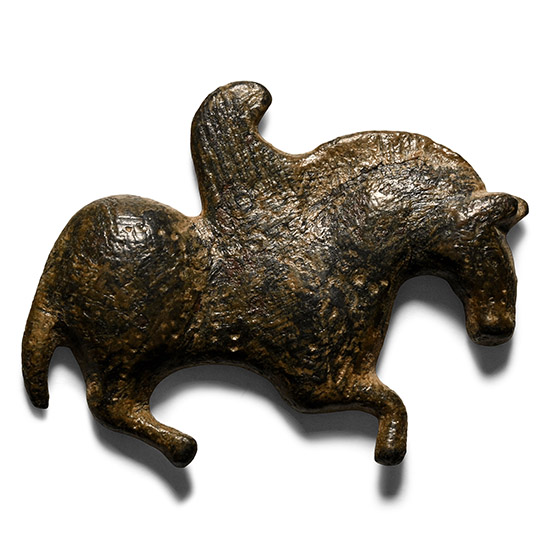
Greek Bronze Pegasus Belt Mount
Hellenistic, 2nd-1st century B.C.Sold for (Inc. bp): £117
The flying horse depicted in a dynamic pose with open wings. 6.71 grams, 34 mm
Ex German art market, 2000s. Acquired from an EU collector living in London. From the collection of a Surrey, UK, gentleman. -
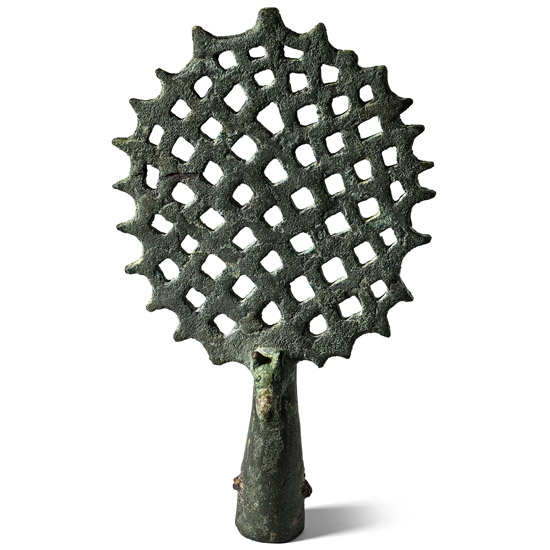
Scythian Bronze Finial with Animal Head
5th-4th century B.C.Estimate: £2,000 - 3,000 (+bp*)
Opening Bid: £1,000
Comprising an ellipsoid panel mounted on a conical socket; openwork lattice design with lozenge voids; socket with horse-head to one face, lateral lugs above the mouth. 570 grams, 24.6 cm
Private European collection, 1990s. Private collection, London, UK. Accompanied by an academic report by Dr Raffaele D'Amato. This lot has been checked against the Interpol Database of stolen works of art and is accompanied by search certificate number no.13278-254311.
Bronze pole tops, together with mirrors and horse trappings, were characteristic of Scythian art. Usually, Scythian warrior burials were accompanied by horses, the number of which corresponded to the status of the deceased (Galanina, 1997, p.54, fig.16). In the famous Chrertomlyk barrow, together with a deposit of 250 bridles, several openwork pole-tops were found, with figures of animals and birds, which could have been mounts for the harness or top of standards. However, they could also have been the upper part of staff poles decorating funeral wagons. Pole tops are one of the most significant objects used by the Scythians, and formed part of the ritual furnishings.
