
Loading, please wait...
LOT 0804
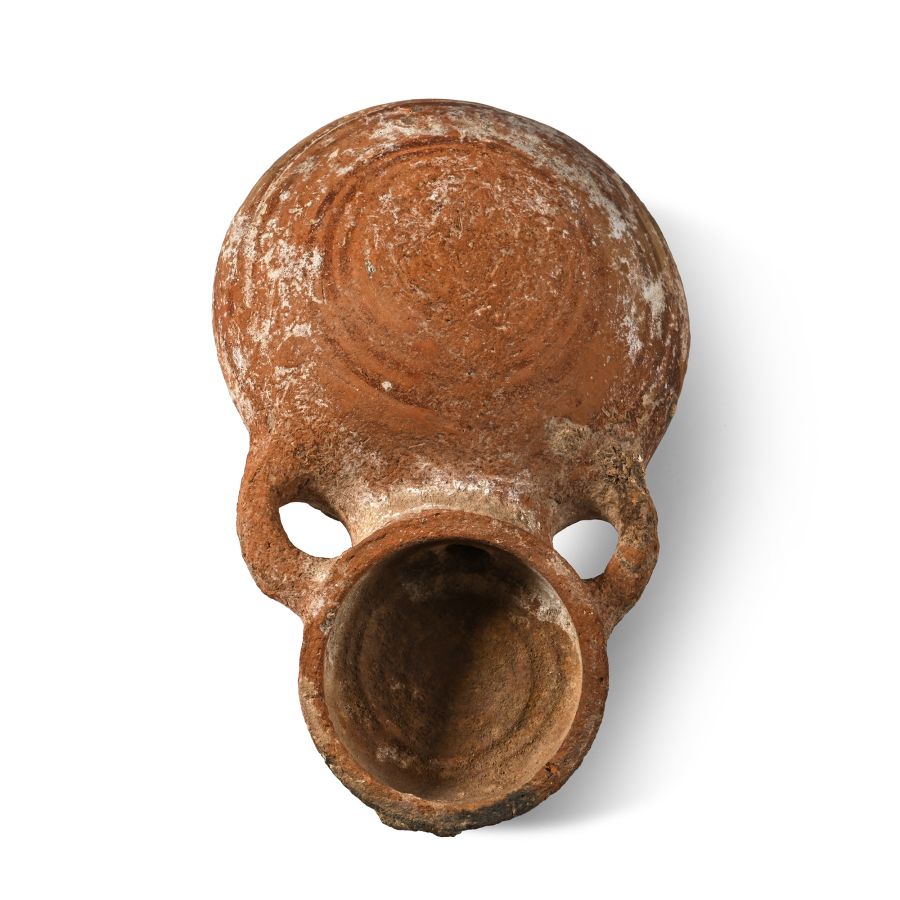
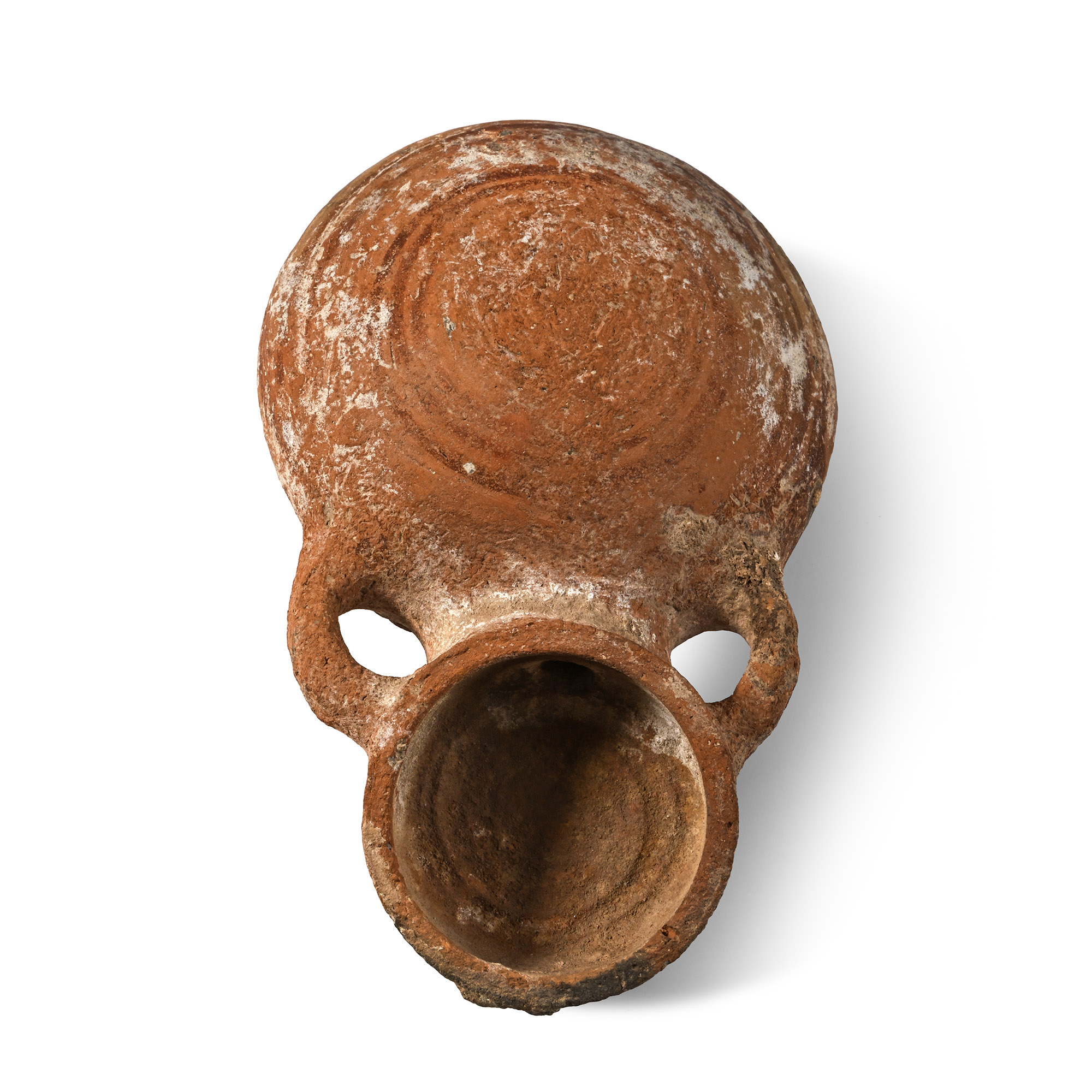
Eastern Mediterranean Painted Terracotta Flask with Dish
CYPRO-PHOENICIAN, 1050-850 B.C.
7 5/8 in. (381 grams, 19.5 cm).
Biconvex in section and discoid in plan with low-relief concentric rings to the tondo; two lateral strap handles supporting a deep cup finial. [No Reserve]
ProvenanceEx J.R. collection, Netherlands, since before 2000.
Private collection, Europe, acquired from the above.
TimeLine Auctions follows a vetting process to ensure the authenticity and legality of all items, reinforcing our commitment to integrity and responsible trading. Each antiquity, antique, and coin lot undergoes thorough examination by a vetting committee of at least ten external specialists, professional trade association members, scientists, and archaeologists: Our Vetting Process
AUCTIONS:
TimeLine is a leading auction house specialising in antiquities, ancient art, collectables, natural history, coins, medals, and books. Our auctions offer museums, collectors, historians, and enthusiasts the opportunity to acquire unique and historically significant pieces.
LOT 0804
Eastern Mediterranean Painted Terracotta Flask with Dish
Estimate £120 - 170€140 - 200 (for guidance only)$160 - 230 (for guidance only)
Opening Bid
£5 (EUR 6; USD 7) +BP*
-
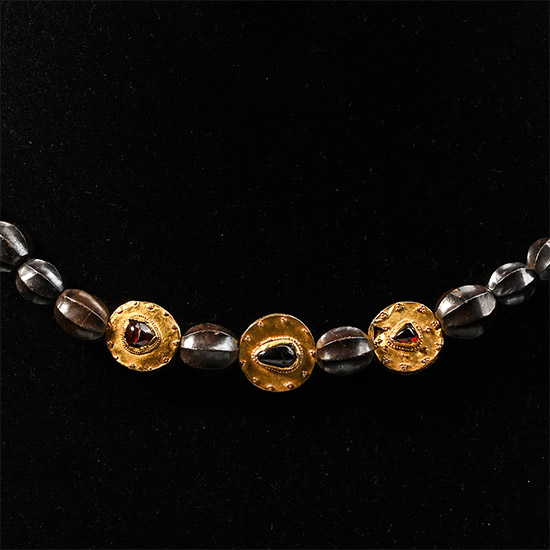
Graeco-Roman Necklace with Gold Beads
1st century B.C. and laterEstimate: £2,500 - 3,500 (‡+bp*)
Opening Bid: £1,250
Restrung group of fluted melon and other beads with three later hollow-formed gold drum-shaped panels, each with an inset cabochon garnet to the upper face, and granule clusters. 46.45 grams, 34 cm
Private collection, Jerusalem, assembled in the 1960s. with Holy Land Antiquities, Jerusalem. European private collection, acquired 2001. This lot has been checked against the Interpol Database of stolen works of art and is accompanied by search certificate number no.13141-246774.
In the Hellenistic and Roman periods there was a strong formal and chromatic diversity of glass beads used for necklaces and bracelets. The most common beads in forms were small biconical (lenticular), barrel-shaped, spherical and annular; the most common colours were dark blue, followed by green and yellow, and red. The succession of glass beads often imitates jewellery made of costly materials (gold, silver, semi-precious and precious stones). -
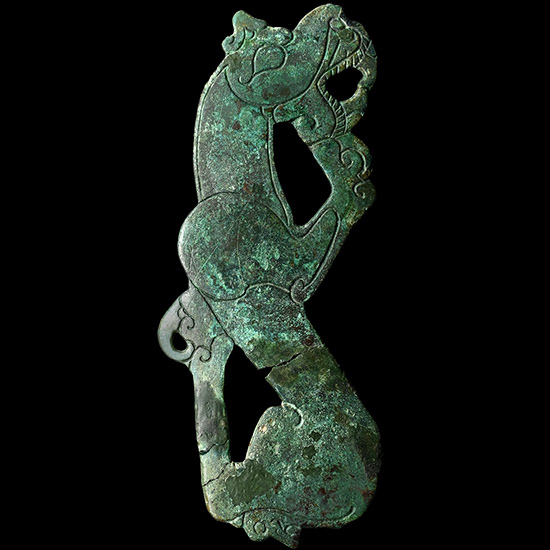
Large Scythian Bronze Contorted Beast Mount
Circa 5th-3rd century B.C.Estimate: £500 - 700 (+bp*)
Bids: 1 | Current Bid: £5
Of openwork construction with flat-section loop to the reverse; a monstrous pouncing carnivore in profile with gaping mouth, its teeth and fangs emphasised; the forelimb with powerful muscles to the shoulder; the hind leg shown rotated so that the foot connects at the rear of the shoulder; small profile beast-head beneath the rump. 72 grams, 13.2 cm
Private collection formed in Europe in the 1980s. Westminster collection, central London, UK. -
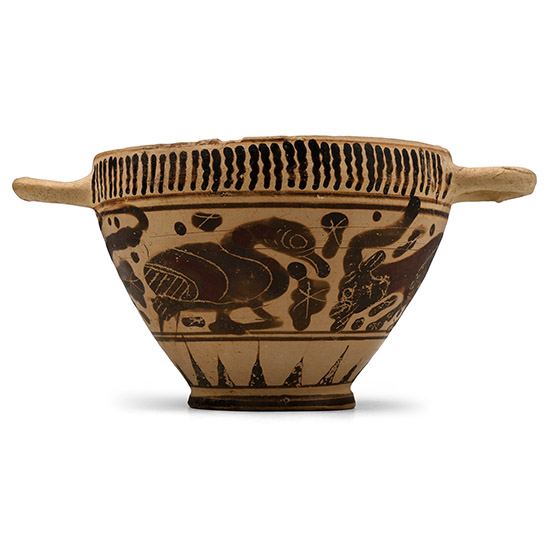
Greek White-Ground Kotyle with Panther, Goat and Swan
Corinthian, 6th century B.C.Estimate: £2,500 - 3,500 (‡+bp*)
Opening Bid: £1,250
Squat in profile with lateral loop handles, vertical stripes to the rim, frieze with a grazing goat, a panther to its rear and a perching swan. 102 grams, 15.1 cm
Ex private collection, Tokyo, Japan, since the 1980s. Private European collection, acquired in 2010. This lot has been checked against the Interpol Database of stolen works of art and is accompanied by a search certificate no.13227-249320.
In agreement with most scholars of the Corinthian pottery, Amyx and Payne used the term kotyle, rather than skyphos, to designate the distinctive group of deep cups with no offset lip, horizontal handles set near the rim, a convex tapering body and a narrow, echinoid foot.
