
Loading, please wait...
LOT 0065
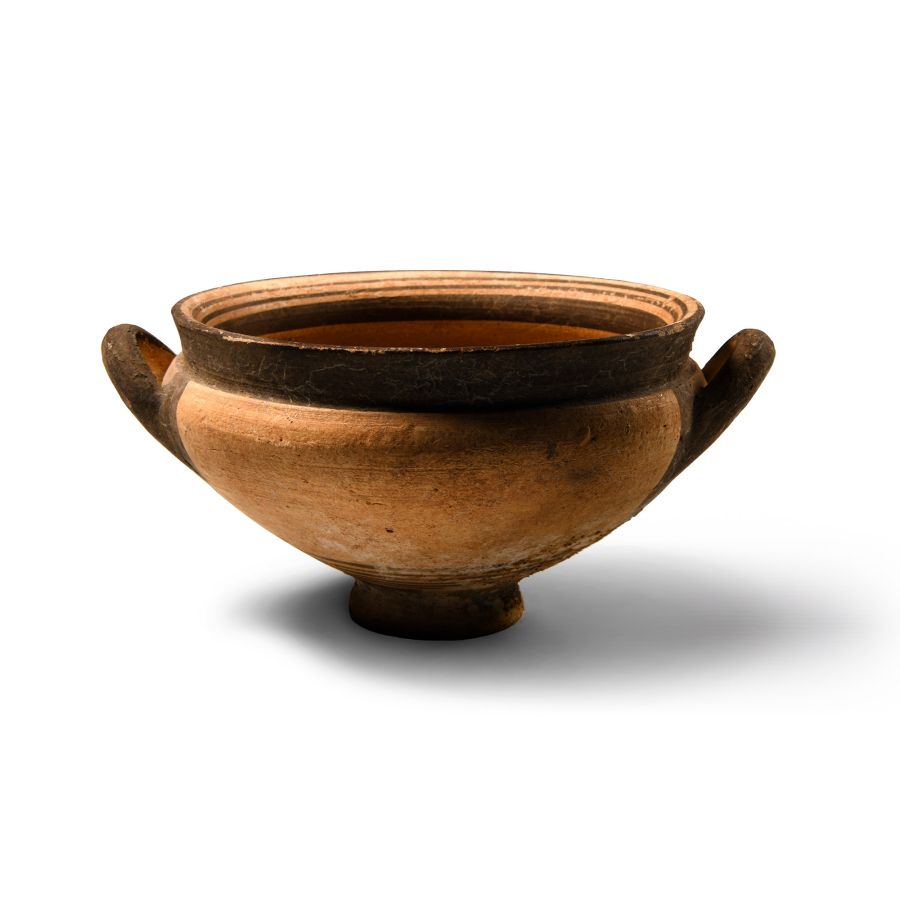
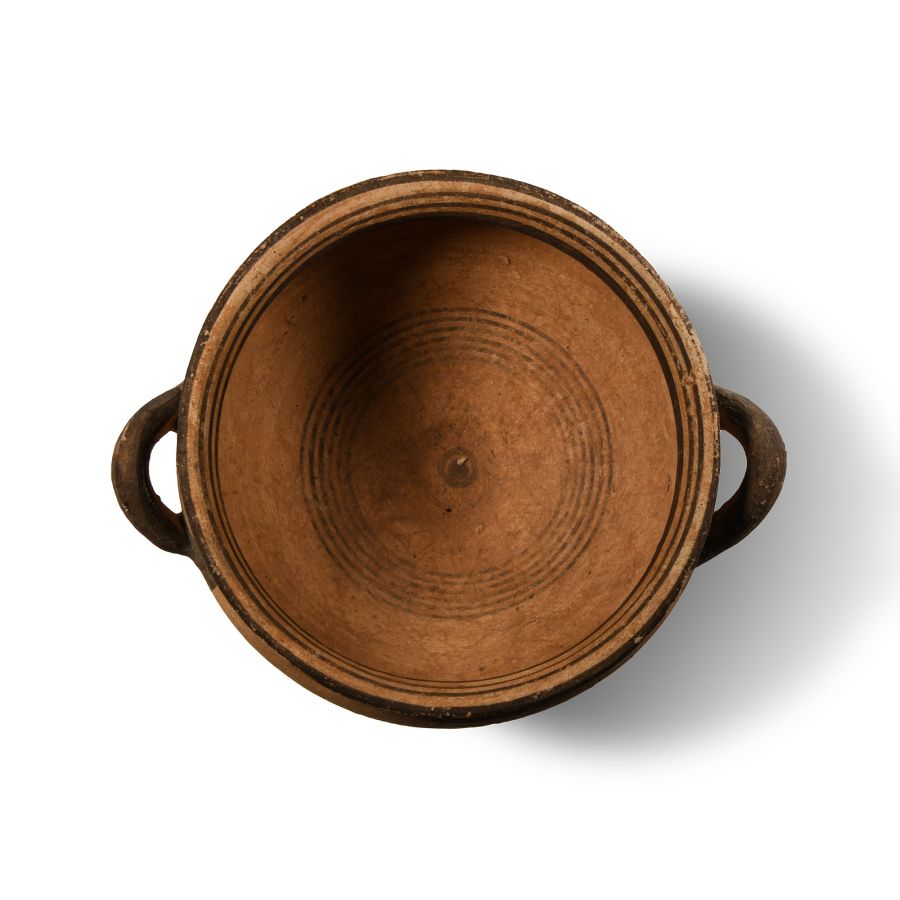
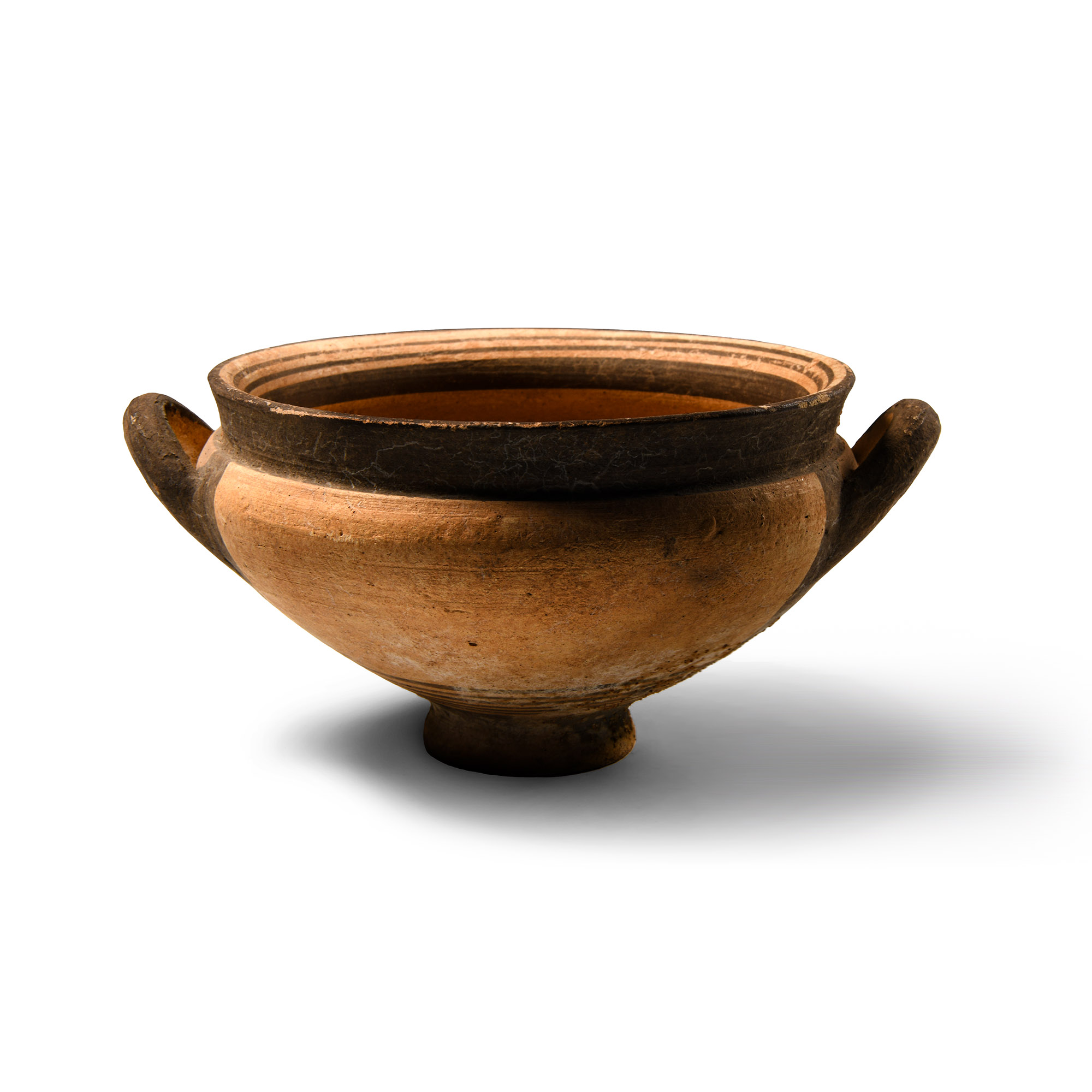
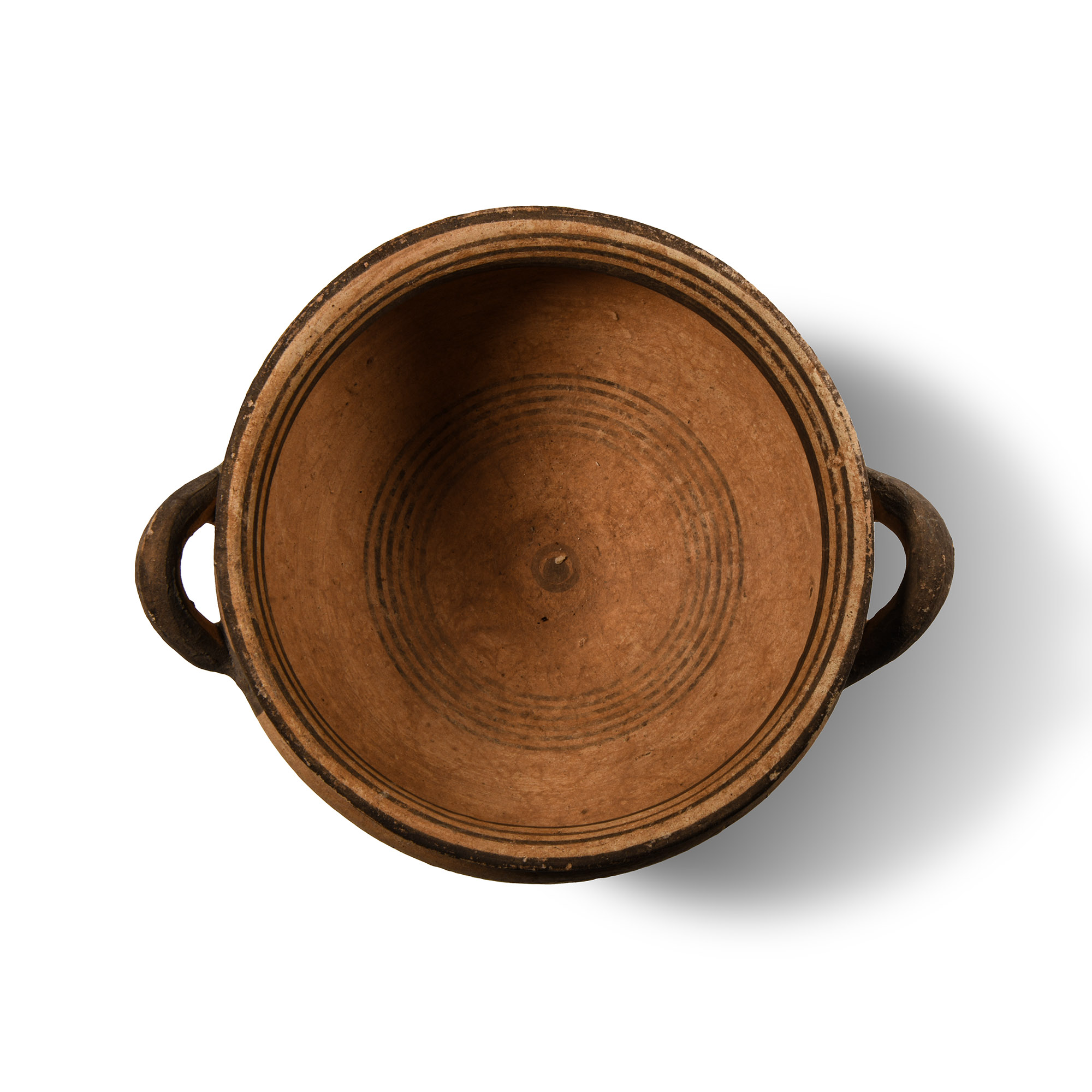
Eastern Mediterranean Painted Pottery Bowl with Handles
8TH CENTURY B.C.
6 1/8 in. (243 grams, 15.5 cm wide).
Conical in form with rounded shoulder, everted rim and two round-section handles; painted with concentric bands around the inner and outer faces.
ProvenanceAcquired in Europe before 1992.
European collection.
TimeLine Auctions follows a vetting process to ensure the authenticity and legality of all items, reinforcing our commitment to integrity and responsible trading. Each antiquity, antique, and coin lot undergoes thorough examination by a vetting committee of at least ten external specialists, professional trade association members, scientists, and archaeologists: Our Vetting Process
AUCTIONS:
TimeLine is a leading auction house specialising in antiquities, ancient art, collectables, natural history, coins, medals, and books. Our auctions offer museums, collectors, historians, and enthusiasts the opportunity to acquire unique and historically significant pieces.
LOT 0065
Eastern Mediterranean Painted Pottery Bowl with Handles
Estimate £600 - 800€700 - 930 (for guidance only)$810 - 1,080 (for guidance only)
-
Greek Black-Ware Dish with Shell Decoration
Circa 5th-4th century B.C.Sold for (Inc. bp): £169
Composed of a shallow bowl with D-section wall, broad convex stem and foot; interior stamped with seashell and geometric motifs. 118 grams, 10.7 cm wide
Private UK collection formed 1990s-2000s. Property of an East Sussex, UK, teacher. -
Greek Gold Pomegranate on Gold Chain
Circa 4th-3rd century B.C.Estimate: £350 - 450 (+bp*)
Opening Bid: £175
The fruit with granulated base and length of trichinopoly chain. 3.58 grams, 90 mm
From a late Japanese specialist collector, 1970-2000s. -
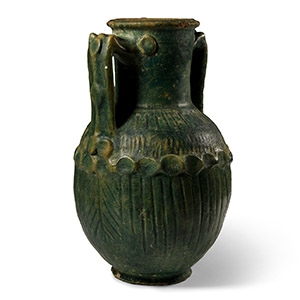
Parthian Green-Glazed Amphora
3rd century B.C.-2nd century A.D.Sold for (Inc. bp): £468
With broad columnar neck and everted rim, angled strap handles, vertical ribbing to the shoulder and body, bands of applied scooped discs to the handle and equator, feathered panels. 1.67 kg, 30 cm high
Hani Farsi collection, London, UK. Acquired Christie's, King Street, London, circa 1990. Ex central London gallery.
