
Loading, please wait...
LOT 1877
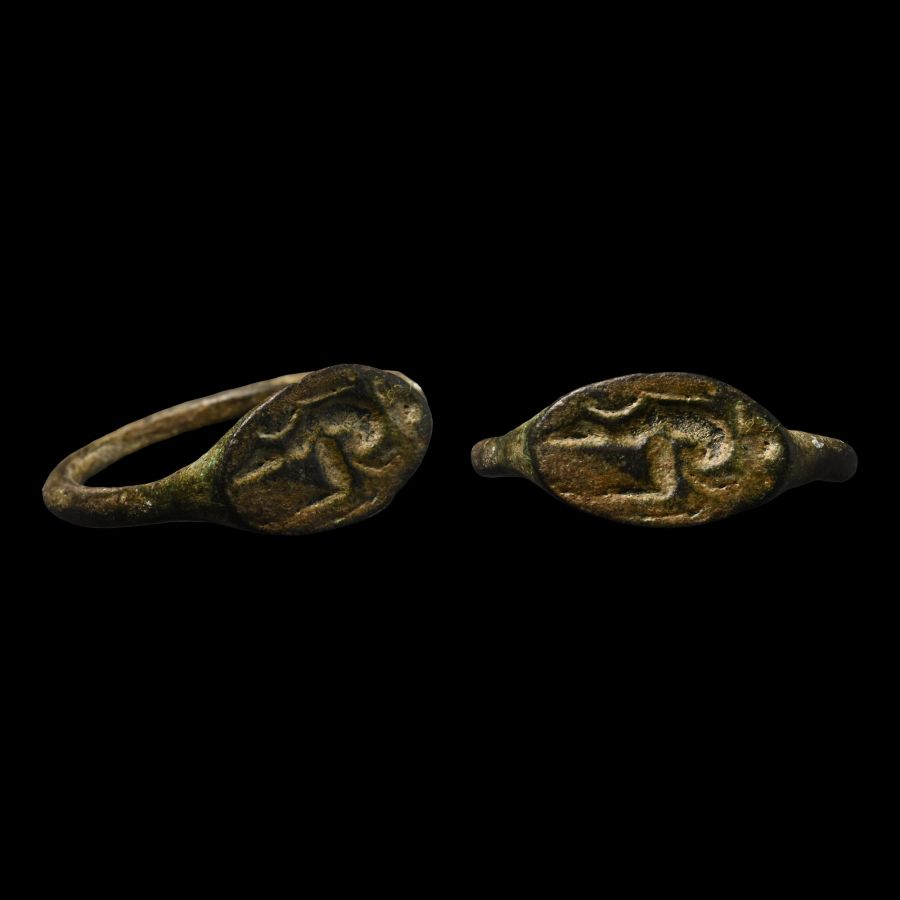
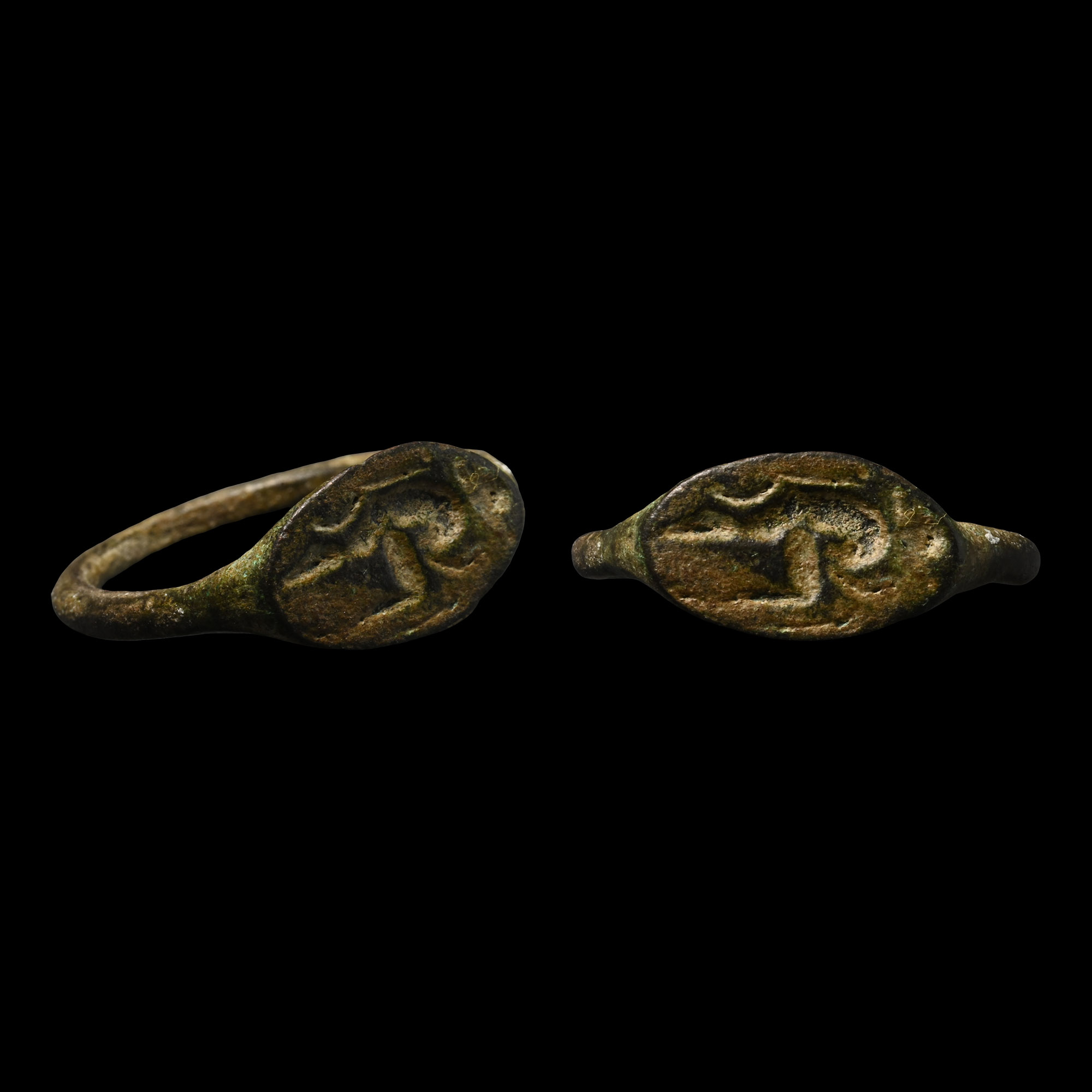
Eastern Medieval Ring with Figure
15TH CENTURY A.D.
1 in. (3.82 grams, 24.83 mm overall, 20.18 mm internal diameter (approximate size British V, USA 10 1/2, Europe 23.77, Japan 22)).
Comprising a slender hoop and a lentoid-shaped bezel with an incuse nude figure, standing with the weight on one leg and resting the bent elbow on the raised leg. [No Reserve]
ProvenanceAcquired on the UK and EU art market before 2000.
From the private collection of a Surrey, UK, gentleman.
Cf. Цуњак, М., Марковић-Николић, Љ., Античке и средњовековне некрополе Смедерева, (Ancient and Medieval Necropolises of Smederevo, in Serbian) Смедерево, 1997, pp.89-90, for similar rings.
FootnotesThese kind of rings, possibly used as signet rings, find their parallels with artefacts from Eastern Europe, especially in the area of Smederevo. Comparison elements support a date of the 15th century A.D.
CONDITIONTimeLine Auctions follows a vetting process to ensure the authenticity and legality of all items, reinforcing our commitment to integrity and responsible trading. Each antiquity, antique, and coin lot undergoes thorough examination by a vetting committee of at least ten external specialists, professional trade association members, scientists, and archaeologists: Our Vetting Process
AUCTIONS:
TimeLine is a leading auction house specialising in antiquities, ancient art, collectables, natural history, coins, medals, and books. Our auctions offer museums, collectors, historians, and enthusiasts the opportunity to acquire unique and historically significant pieces.
-
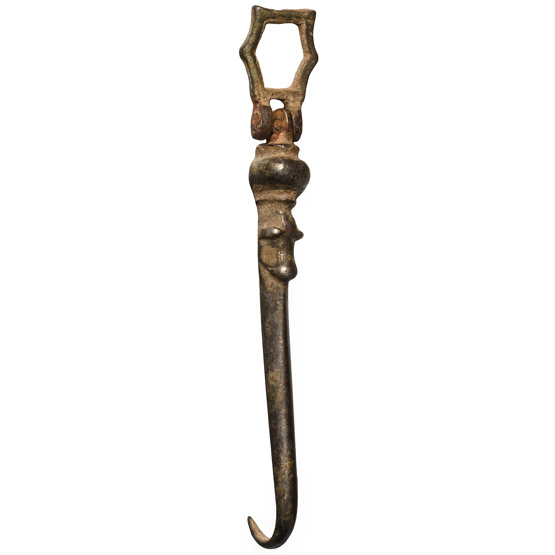
Medieval Articulated Silver Dress Hook
14th-15th century A.D.Estimate: £150 - 200 (‡+bp*)
Opening Bid: £80
Hinged loop to one end, the hook with a long shank and stylised beast-head below the shoulder. 4.23 grams, 58 mm
Private collection, Switzerland, 1992; thence by descent. Private collection since the late 1990s. -
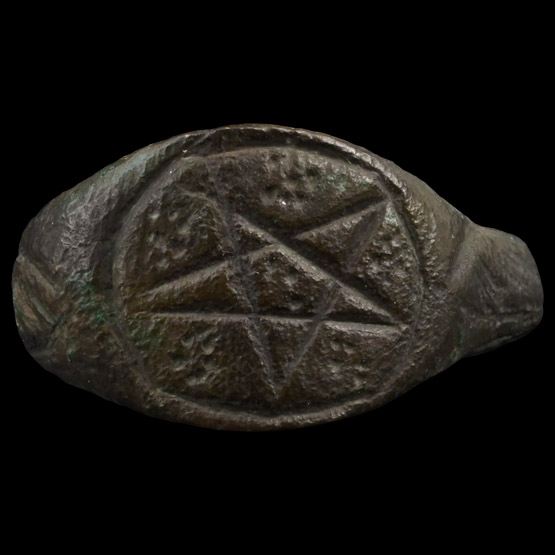
Medieval Bronze Ring with Pentagram
14th-16th century A.D.Sold for (Inc. bp): £111
With hatched panes to the hoop, ellipsoid bezel with incised pentagram reserved on a pointillé field. 4.11 grams, 24.04 mm overall, 20.95 x 18.74 mm internal diameter (approximate size British P, USA 7 1/2, Europe 16.23, Japan 15)
Ex German art market, 2000s. Acquired from an EU collector living in London. From the collection of a Surrey, UK, gentleman. -
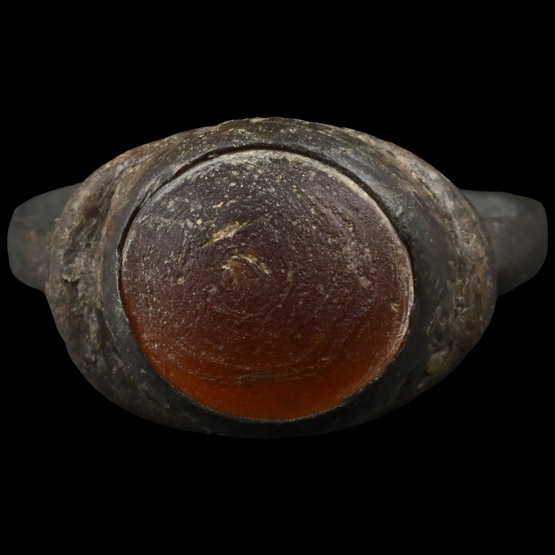
Medieval Bronze Ring with Cabochon
12th-14th century A.D.Sold for (Inc. bp): £98
Ellipsoid bezel with stepped cell and inset orange-red glass cabochon. 6.65 grams, 29.13 mm overall, 18.24 mm internal diameter (approximate size British P, USA 7 1/2, Europe 16.23, Japan 15)
Ex German art market, 2000s. Acquired from an EU collector living in London. From the collection of a Surrey, UK, gentleman.
