
Loading, please wait...
LOT 1905
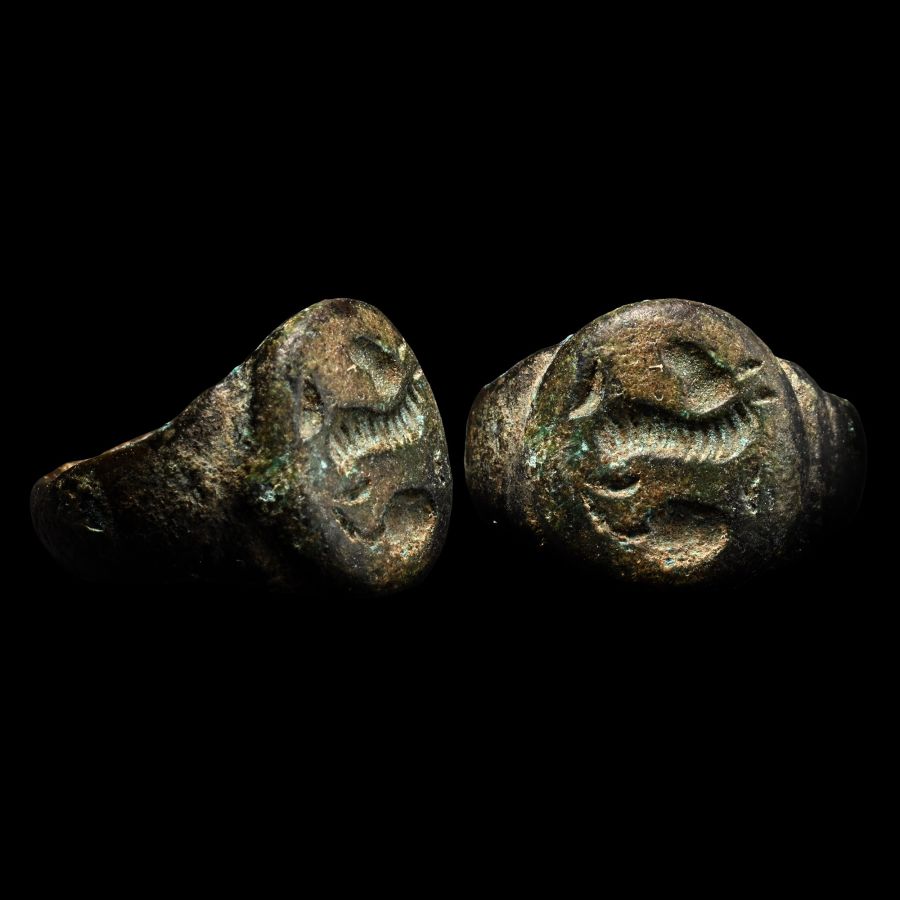
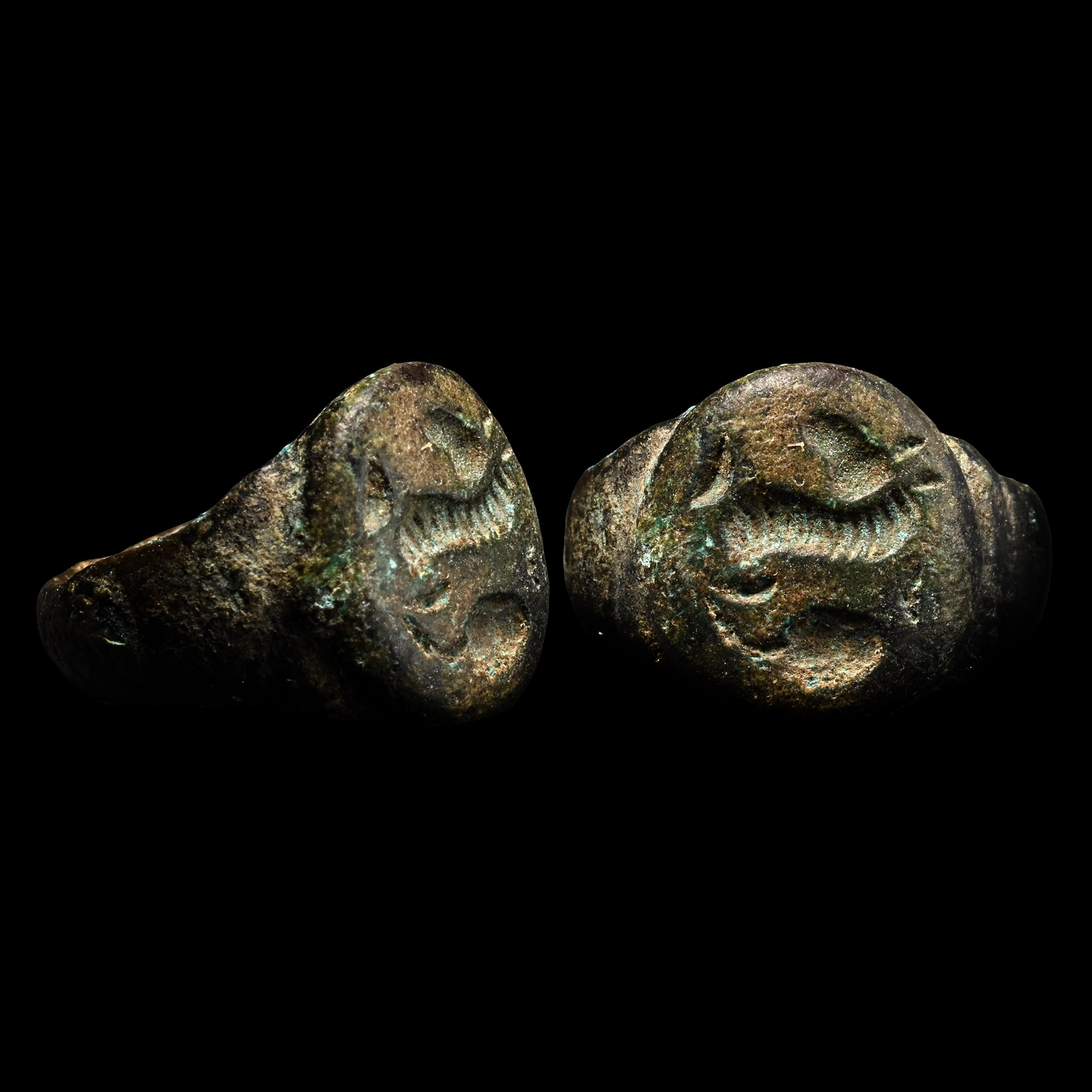
Eastern Medieval Bronze Ring with Zoomorphic Design
11TH-12TH CENTURY A.D.
3/4 in. (5.62 grams, 20.53 mm overall, 15.29 mm internal diameter (approximate size British G 1/2, USA 3 1/2, Europe 5.55, Japan 5)).
Slender hoop with expanding shoulders, a discoid bezel with incuse horse-head and the head of a rider behind, crescent above. [No Reserve]
ProvenanceAcquired on the UK and EU art market before 2000.
From the private collection of a Surrey, UK, gentleman.
Cf. Đurović, I., Средњовековни накит из збирки Народног музеја Крагујевац (Medieval jewelry from the collections of the National Museum Kragujevac, in Serbian), Крагујевац, 2012, fig.58, for the type.
FootnotesThese banded rings, made of bronze sheet with a flattened ellipsoidal bezel, could be decorated with geometric or animal ornaments executed by shallow carving. The animal repertoire was borrowed from the contemporary Romanesque art.
CONDITIONTimeLine Auctions follows a vetting process to ensure the authenticity and legality of all items, reinforcing our commitment to integrity and responsible trading. Each antiquity, antique, and coin lot undergoes thorough examination by a vetting committee of at least ten external specialists, professional trade association members, scientists, and archaeologists: Our Vetting Process
AUCTIONS:
TimeLine is a leading auction house specialising in antiquities, ancient art, collectables, natural history, coins, medals, and books. Our auctions offer museums, collectors, historians, and enthusiasts the opportunity to acquire unique and historically significant pieces.
-
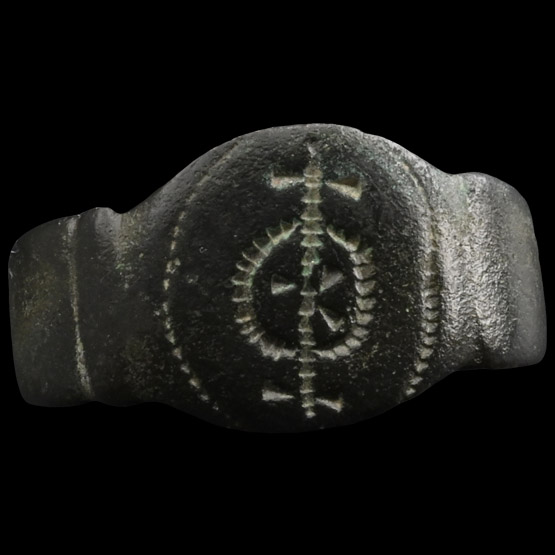
Medieval Bronze Ring with Magical Motif
Circa 15th-16th century A.D.Sold for (Inc. bp): £91
Flat-section hoop with transverse bars flanking the discoid bezel; punched-point phi motif. 2.00 grams, 19.38 mm overall, 16.1 x 17.7 mm internal diameter (approximate size British L 1/2, USA 6, Europe 11.24, Japan 10)
From an old English collection, 1980s. -
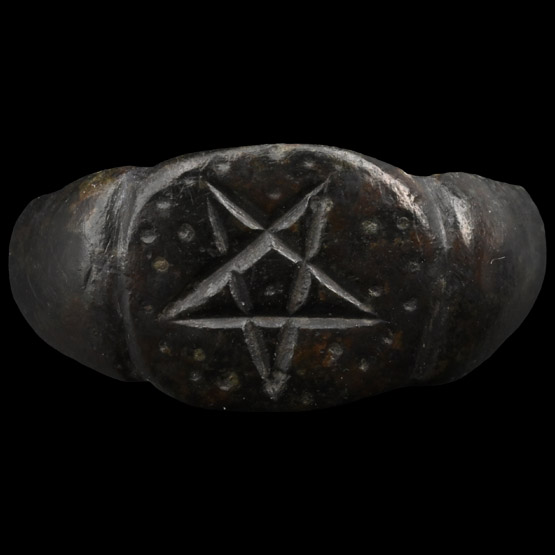
Medieval Bronze Ring with Pentagram
14th-16th century A.D.Sold for (Inc. bp): £98
With integral allipsoid plaque and impressed pentagram motif. 4.72 grams, 20.77 mm overall, 17.43 mm internal diameter (approximate size British M, USA 6, Europe 12.46, Japan 12)
Ex German art market, 2000s. Acquired from an EU collector living in London. From the collection of a Surrey, UK, gentleman. -
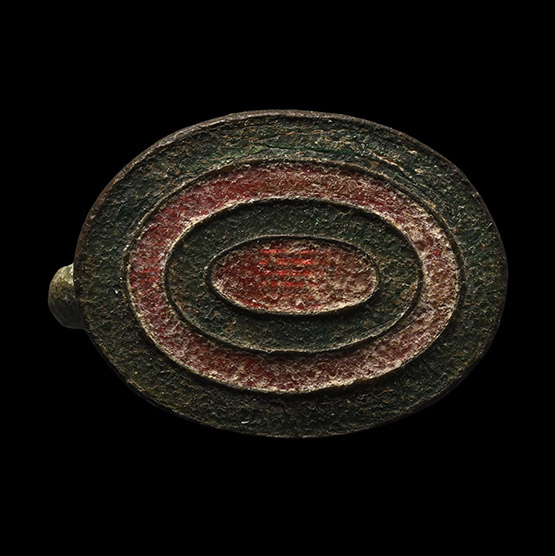
Eastern Medieval Enamelled Bronze Ring
11th-13th century A.D.Sold for (Inc. bp): £78
Comprising a round-section hoop and a large oval disc bezel; the bezel with concentric voids filled with enamel. 7.42 grams, 27.10 mm overall, 21.19 mm internal diameter (approximate size British S 1/2, USA 9 1/4, Europe 20.63, Japan 19)
Found UK. Acquired on the UK and EU art market before 2000. From the private collection of a Surrey, UK, gentleman.
This type of ring with a very large oval bezel finds a good parallel with a bronze specimen found in the area of Smederevo. The use of the enamel could suggest the continuation of the ancient Roman tradition in the territories under the Eastern Roman Empire.
