Loading, please wait...
LOT 0866
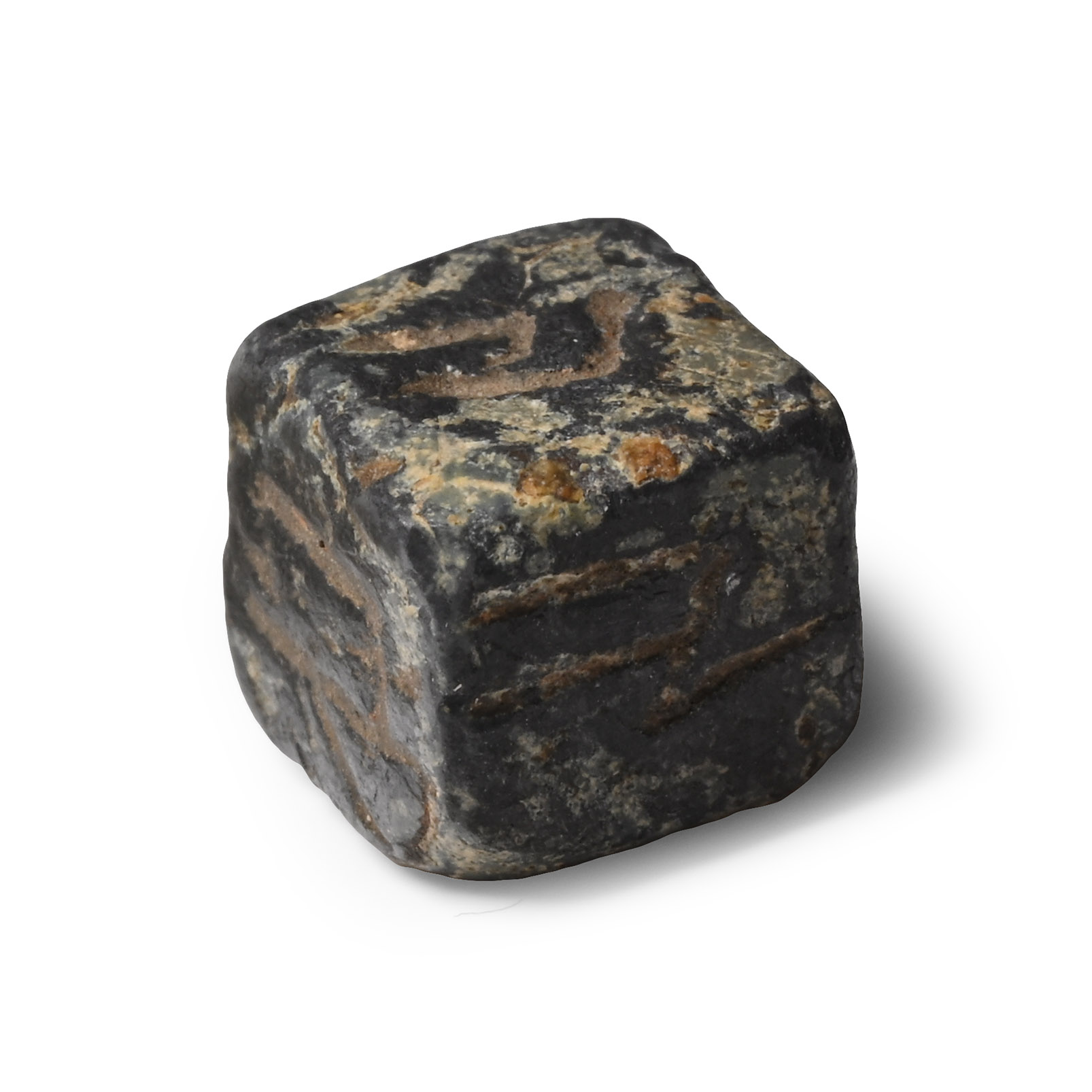
Eastern Levant AE Half Shekel Weight
BRONZE TO IRON II AGE, CIRCA 12TH-6TH CENTURIES B.C.
1/4 in. (3.4 grams, 7 mm).
In the form of a cube engraved on six sides. [No Reserve]
ProvenanceFrom the collection of a gentleman, acquired on the London art market in the 1990s.
LiteratureHendin, Ancient Scale Weights -; Pondera -; Rochesnard -; Elay & Elayi, Recherches -.
CONDITIONTimeLine Auctions follows a vetting process to ensure the authenticity and legality of all items, reinforcing our commitment to integrity and responsible trading. Each antiquity, antique, and coin lot undergoes thorough examination by a vetting committee of at least ten external specialists, professional trade association members, scientists, and archaeologists: Our Vetting Process
AUCTIONS:
TimeLine is a leading auction house specialising in antiquities, ancient art, collectables, natural history, coins, medals, and books. Our auctions offer museums, collectors, historians, and enthusiasts the opportunity to acquire unique and historically significant pieces.
-
Roman Lead Figure of Aphrodite Holding a Severed Swan's Head
1st-3rd century A.D.Estimate: £1,000 - 1,400 (‡+bp*)
Opening Bid: £500
Modelled in the round nude and and raising her right arm, holding the neck of the swan (her animal attribute); left arm descending towards her pubis, legs in contrapposto stance; gusseted drum-shaped base; repaired. 327 grams, 19.5 cm
Acquired in the mid 1980s-1990s. From the family collection of Mr S.A., Switzerland, thence by descent. Private collection since the late 1990s. This lot has been checked against the Interpol Database of stolen works of art and is accompanied by a search certificate number no.12099-218223.
Although the presence of the swan in this position is rather rare, iconographically, this image is part of the abundant series of statuettes of Aphrodite/Venus widely distributed during the Roman Imperial era. -
Large Roman Marble Relief of a Theatre Mask
2nd century A.D.Sold for (Inc. bp): £23,400
Carved fragment with a female tragedy theatre mask modelled in the half-round, features strongly delineated, eyes detailed with small cylindrical pupils; the hair sculpted on the upper part with rich locks fastened by a taenia, divided into regular rows falling stiffly on the forehead and down along the sides, bound by laces, open mouth in an expression of sorrow. 30 kg, 51 cm
Acquired in the mid 1980s-1990s. Private collection, Switzerland, thence by descent. Private collection, since the late 1990s. Accompanied by an academic report by Dr Raffaele D’Amato. This lot has been checked against the Interpol Database of stolen works of art and is accompanied by search certificate number no.12362-226705.
The mask is known to have been used in tragic theatre since the time of Aeschylus (first half of 5th century B.C.) and considered to be one of the iconic conventions of classical Greek theatre. Masks were also made for male members of the chorus, who play a part in the action and provide a commentary on the events in which they were caught up. The theme of decorative tragic masks as architectural elements passed from the Greek to the Roman culture and is largely visible in all the corners of the Roman Empire. However, these colossal heads are typical of the great architecture of temples and theatres of Roman Asia Minor, and the style and workmanship of this wonderful fragment of frame can be traced back to Hadrian’s era. The face suggests an architectural use, perhaps as a corbel or a lintel. -
Roman Bronze Grotesque Silenus on Dolphin Handle
Circa 2nd century A.D.Sold for (Inc. bp): £390
Formed as a dolphin with hollow-formed curved body attached at the mouth to the base; standing on the dolphin's lower back, a grotesque bearded figure of Silenus with a furry body, and with a rope tied around his waist, his arms spread holding a cymbal in each hand; stub to the rear where the dolphin's tail joined to form a loop; mounted on a custom-made stand. 370 grams total, 17.5 cm including stand
From a collection acquired on the UK art market from various auction houses and collections mostly before 2000. From an important Cambridgeshire estate; thence by descent.
Silenus is here represented as Papposilenus, a representation of Silenus that emphasises his old age, particularly as a stock character in satyr play or comedy. His costuming includes a body stocking tufted with hair (mallōtos chitōn) that seems to have come into use in the mid-5th century B.C.