
Loading, please wait...

LOT 0094
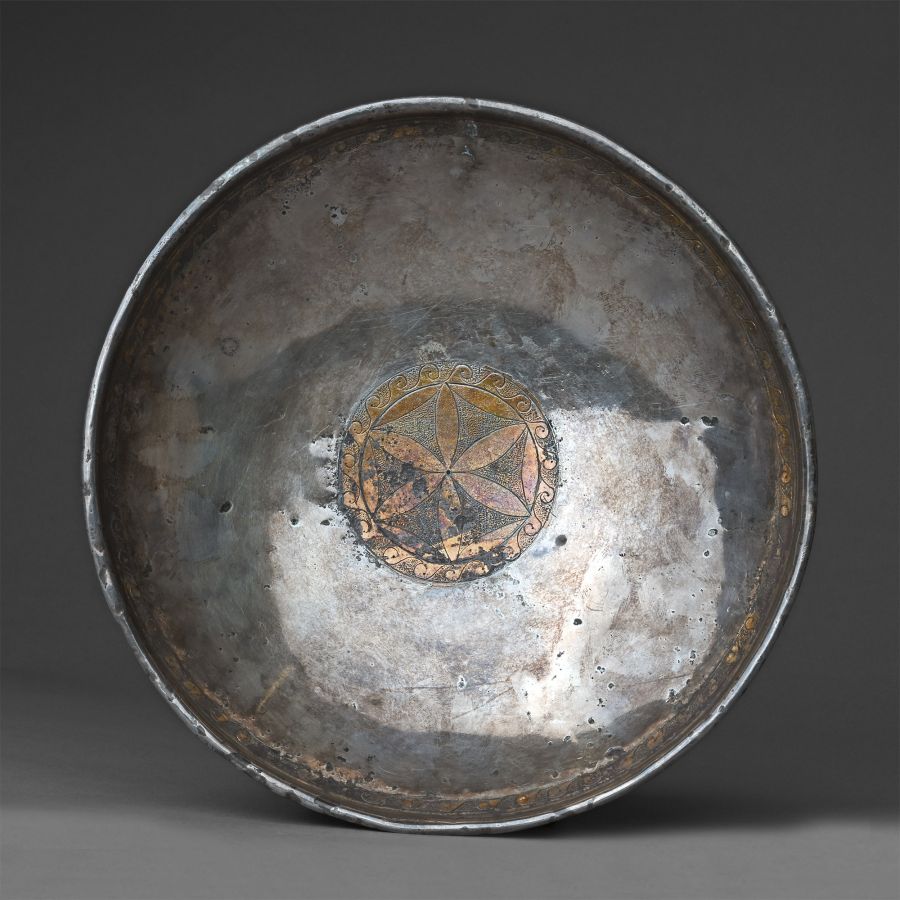
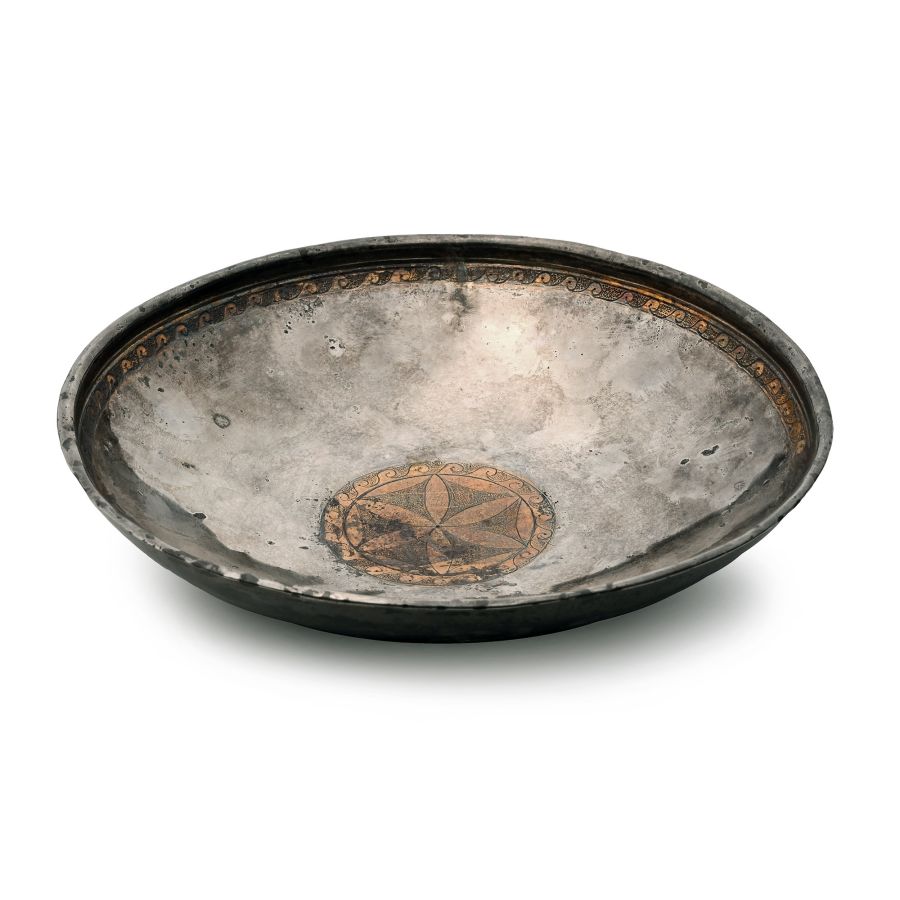
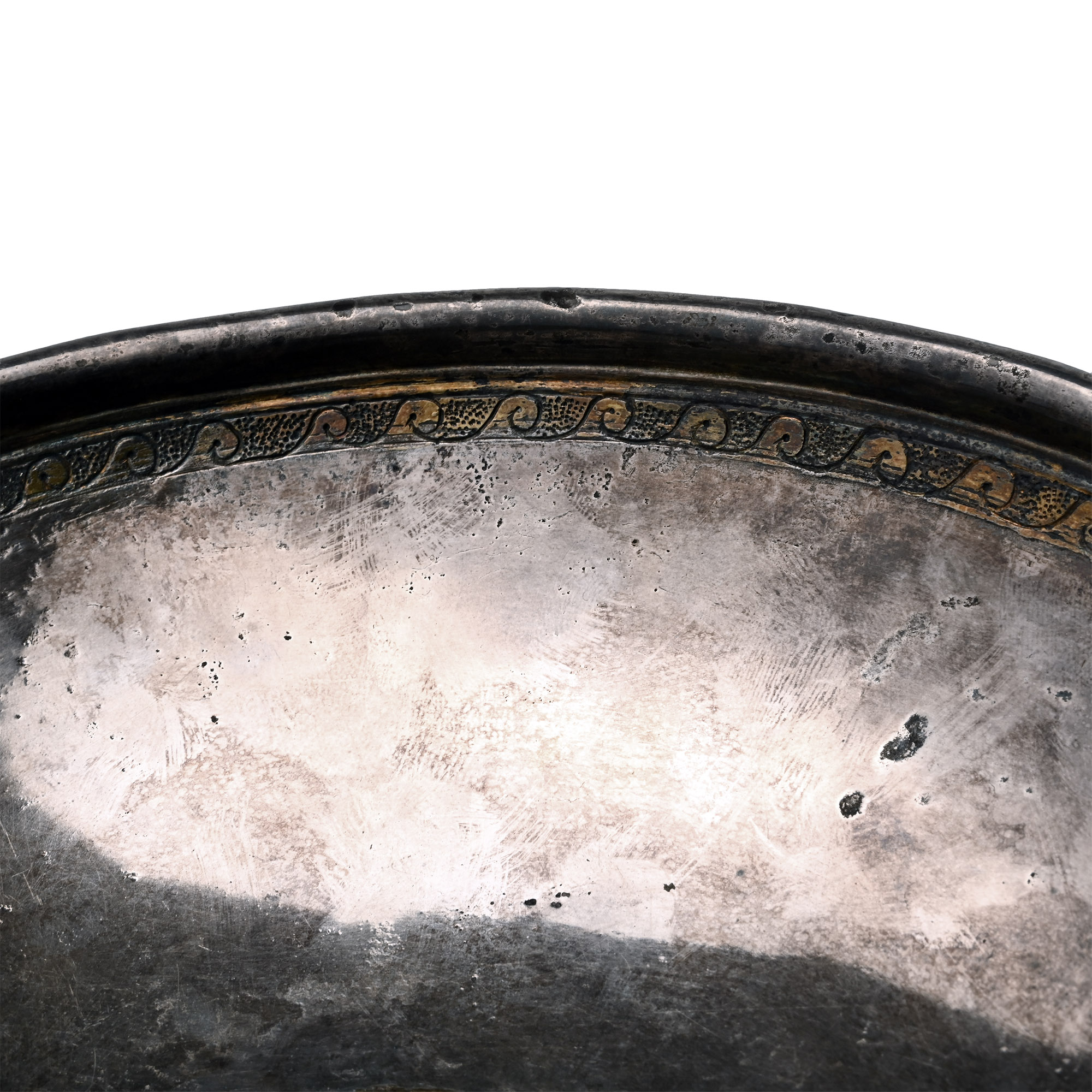
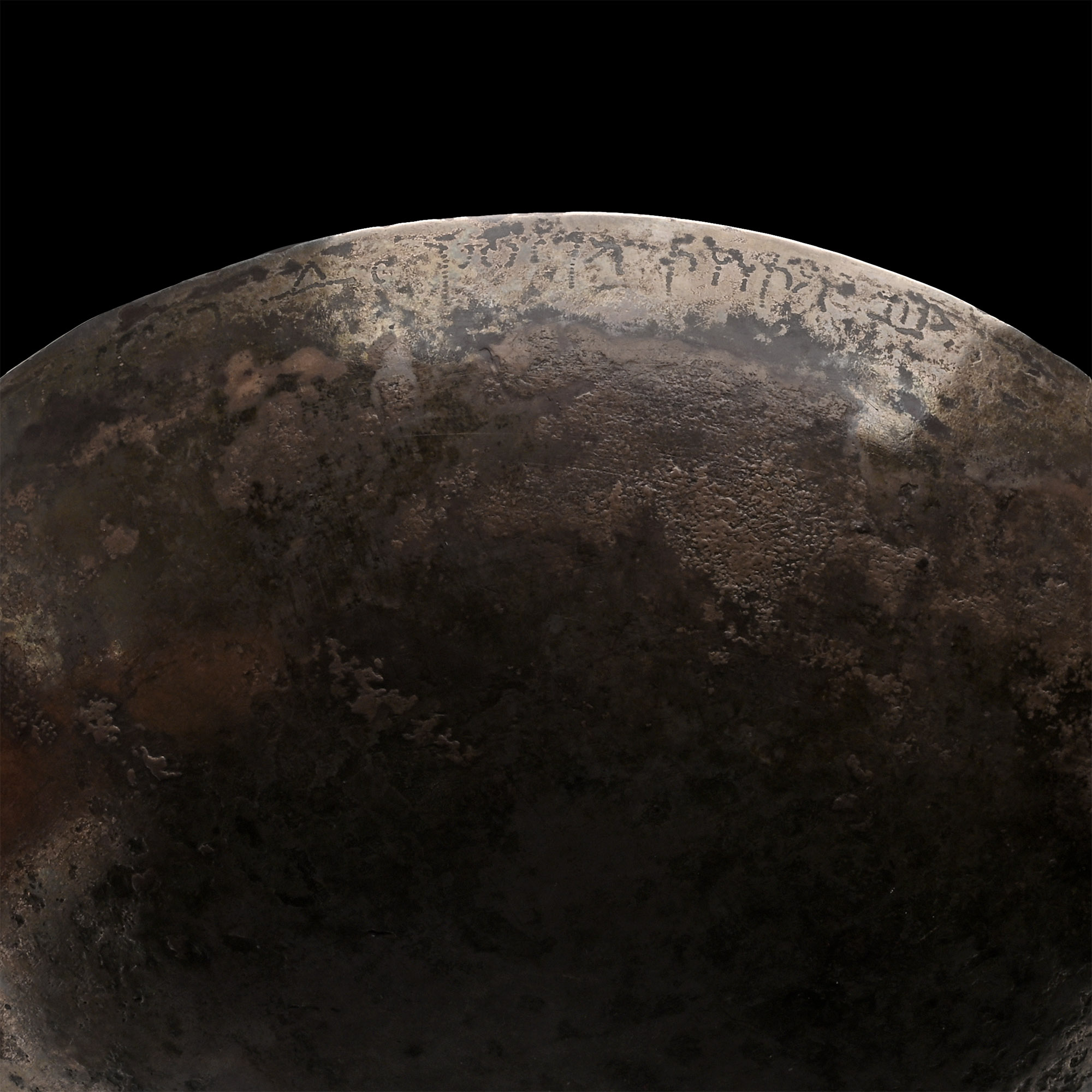
Eastern Greek Parcel-Gilt Bowl with Inscription
HELLENISTIC, LATE 2ND-EARLY 1ST CENTURY B.C.
8 1/8 in. (413 grams, 20.6 cm wide).
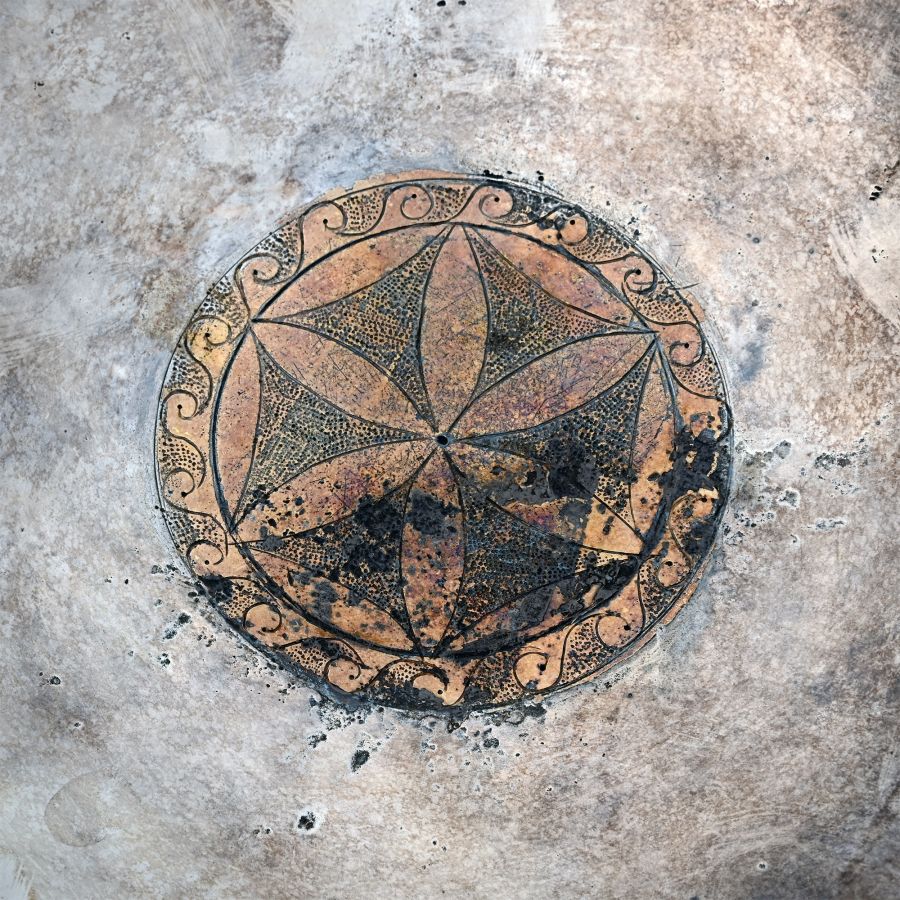
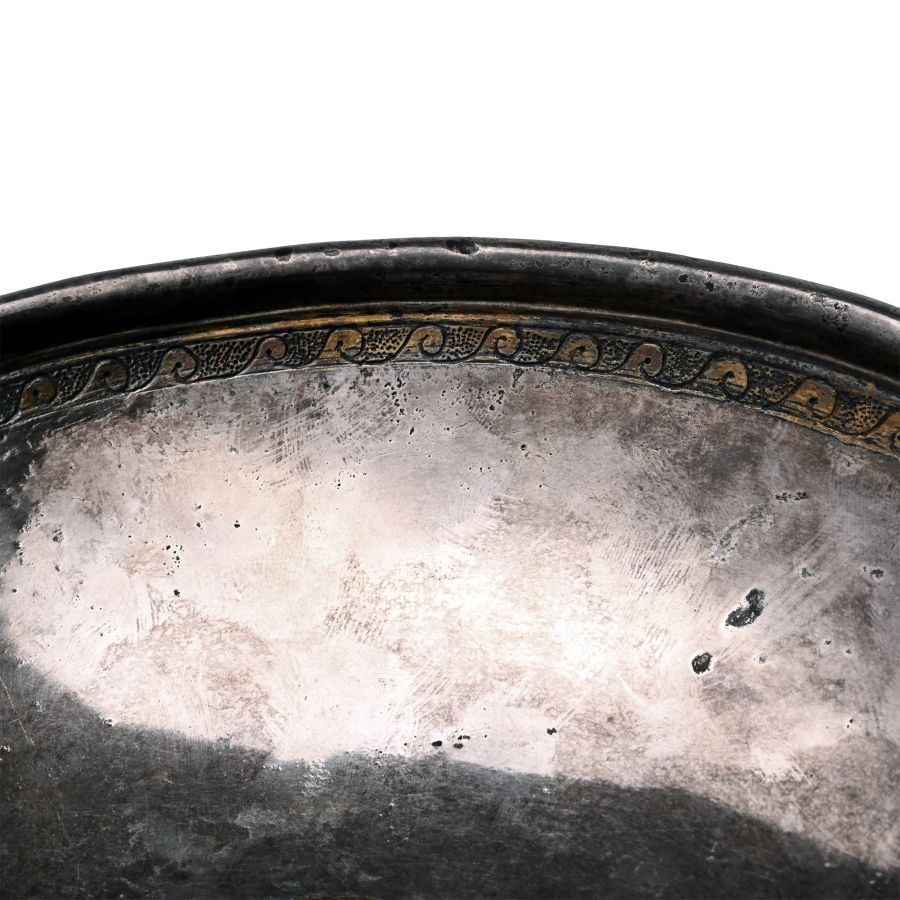
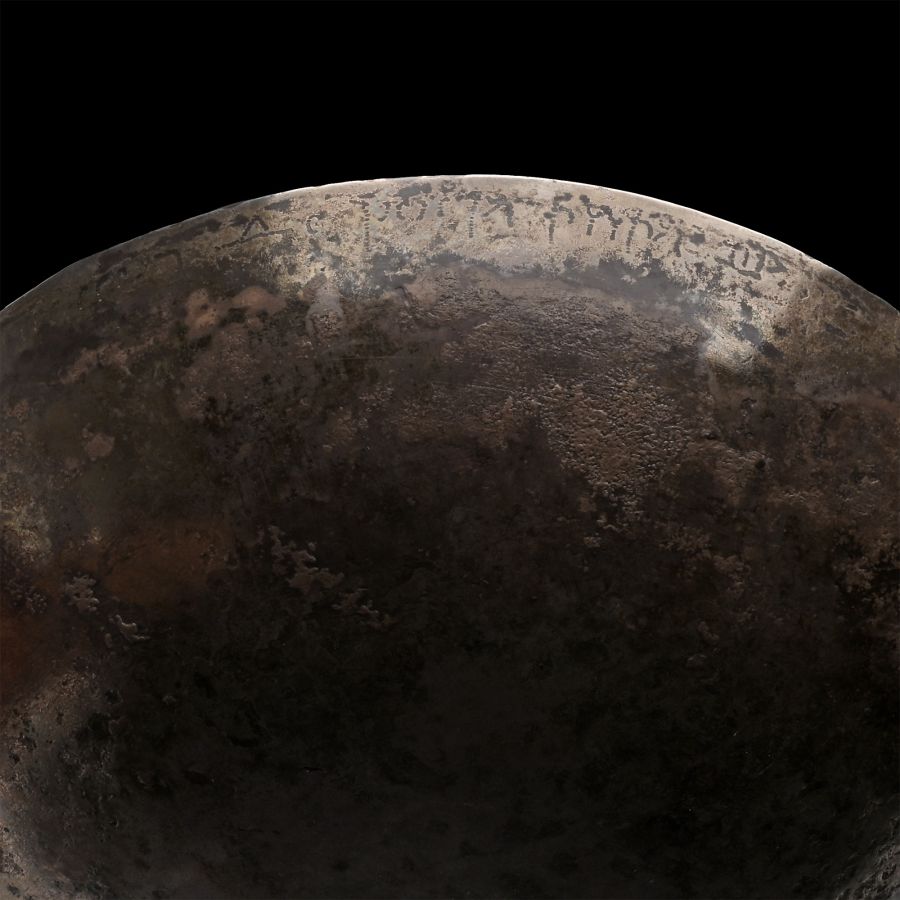
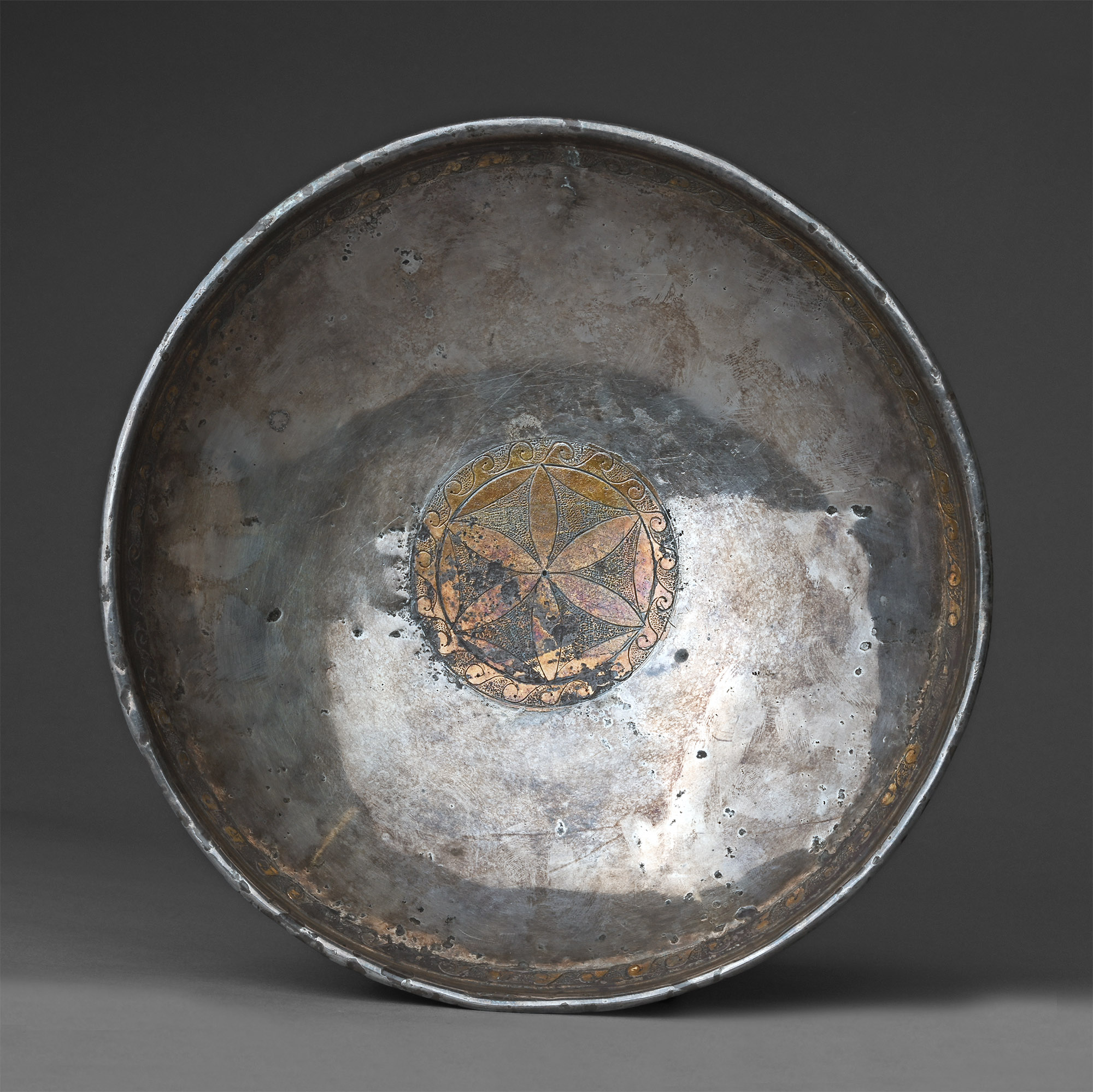
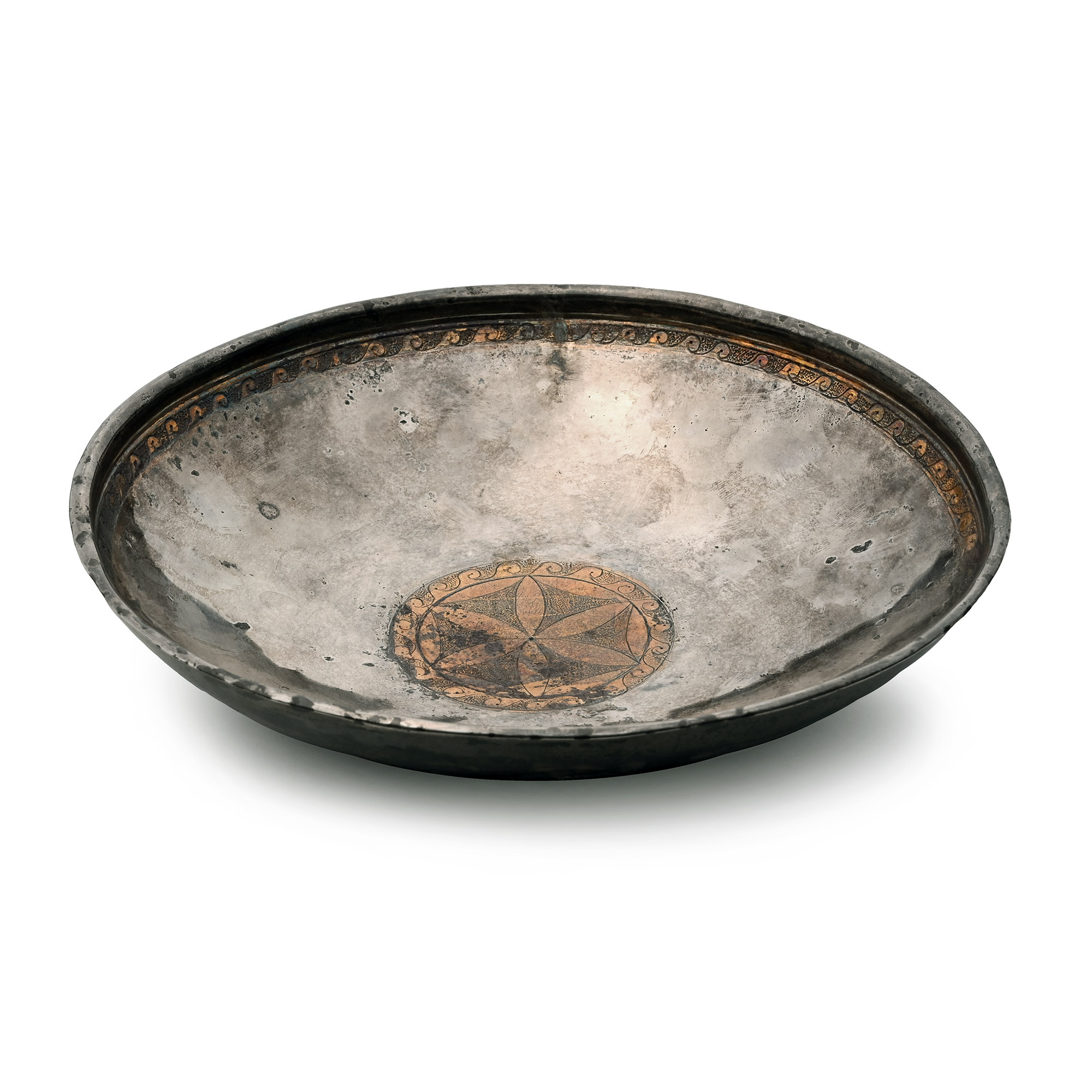
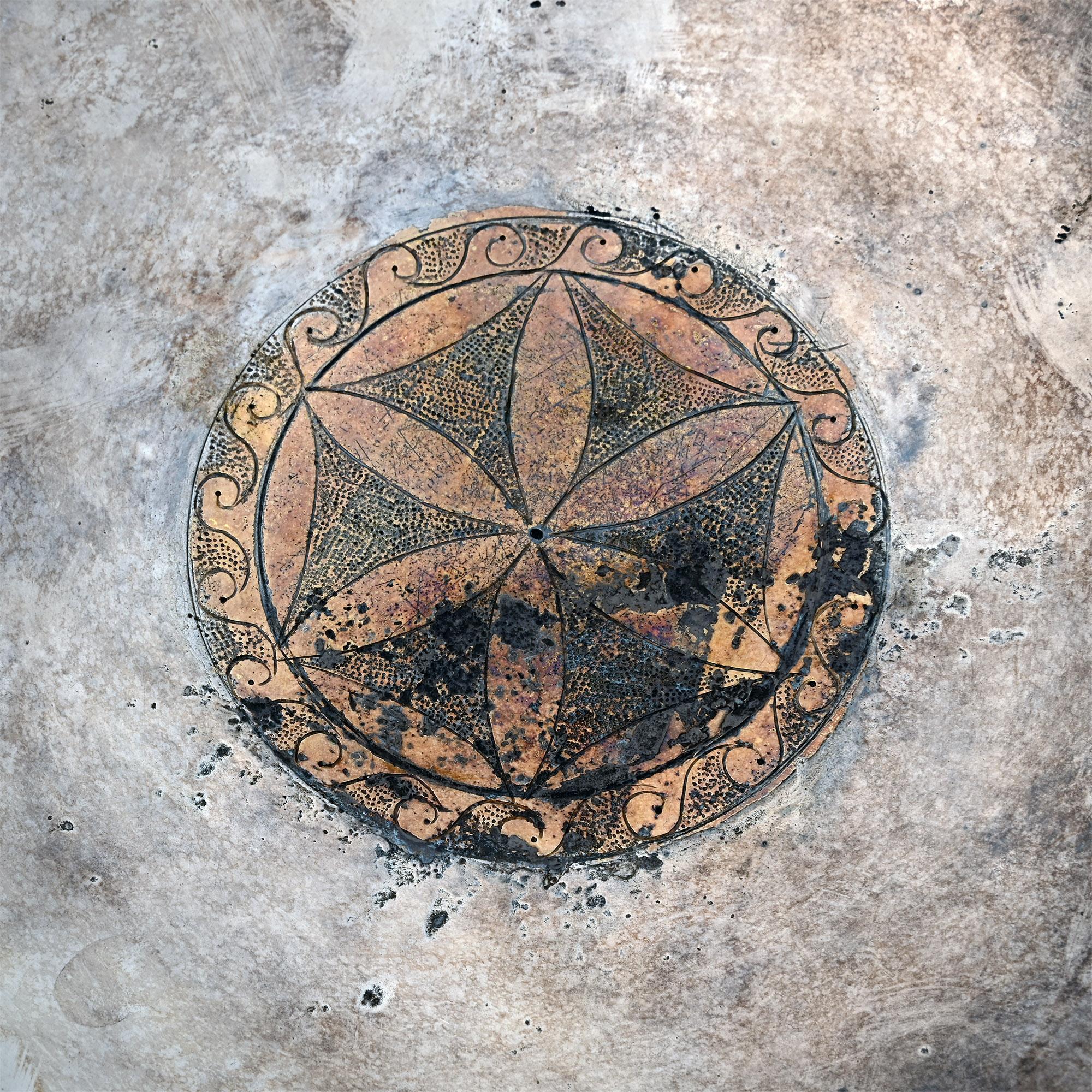
Broad and shallow with thick rolled rim; parcel-gilt band to the inner face below the rim of running scrolls on a pounced field; to the centre, a hexafoil reserved on a pounced field with border of running scrolls; pointillé cursive Aramaic inscription to the outer face.
ProvenancePrivate collection, London, 1990s or earlier.
with Gorny & Mosch, 22 June 2007, no.37.
with Christie's, New York, 5 December 2012, no.52.
Accompanied by copies of the relevant Gorny & Mosch and Christie's catalogue pages.
Accompanied by an academic report by Dr Raffaele D'Amato.
This lot has been checked against the Interpol Database of stolen works of art and is accompanied by search certificate number no.13217-250131.
Cf. Pfrommer, M., Metalwork from the Hellenized East: Catalogue of the Collections of the J. Paul Getty Museum, Malibu, 1993, figs.18 (see also a similar specimen in the British Museum, no.inv.134303) and pp.21ff and 140ff, for general discussion and parallels; Maierovskii III Burial-mound no. 4/2002, Burial no. 3B, Moscow, State Historical Museum, inv. no. 112873, list Б 2078/77, in Treister, M., 'Parthian and Early Sasanian “Imports” in the Burials of the Nomads of Eastern Europe (2nd Century BCE-3rd Century CE)' in Choref, M.M., Materials in Archaeology and History of Ancient and Medieval Crimea, Moscow, 2018, pp.118-210, fig.4, 1-3, for a bowl with very similar ornaments; Ebbinghaus, S., Feasting with gods, heroes, and kings, Cambridge, 2019, for discussion and sources of Hellenistic and Parthian vessels.
FootnotesThe bowl is related to a large group of Hellenistic silver vessels of similar shape, some with Aramaic inscriptions on the exterior beneath the rim, all thought to be of eastern origin, produced within the Seleucid Empire. Here, the Aramaic inscription, now mostly unreadable, reports the name of the maker and the weight of the bowl as 118 zuzim.
CONDITIONTimeLine Auctions follows a vetting process to ensure the authenticity and legality of all items, reinforcing our commitment to integrity and responsible trading. Each antiquity, antique, and coin lot undergoes thorough examination by a vetting committee of at least ten external specialists, professional trade association members, scientists, and archaeologists: Our Vetting Process
AUCTIONS:
TimeLine is a leading auction house specialising in antiquities, ancient art, collectables, natural history, coins, medals, and books. Our auctions offer museums, collectors, historians, and enthusiasts the opportunity to acquire unique and historically significant pieces.
LOT 0094
Eastern Greek Parcel-Gilt Bowl with Inscription
Estimate £5,000 - 7,000€5,800 - 8,120 (for guidance only)$6,750 - 9,450 (for guidance only)
Opening Bid
£2,500 (EUR 2,900; USD 3,375) ‡+BP*
-
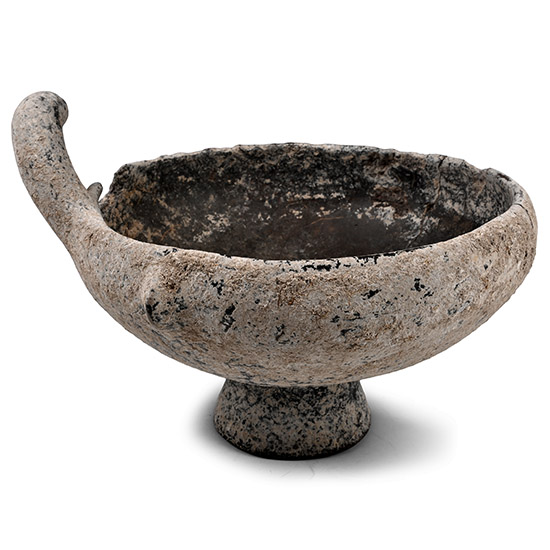
Villanovan Terracotta Stemmed Bowl with Handle
9th-8th century B.C.Estimate: £180 - 240 (‡+bp*)
Opening Bid: £90
Conical in profile with broad foot and inturned rim; single thick loop handle partly absent. 1.33 kg, 23.5 cm
Ex Prof. Kurt Alder, Riehen; thence by descent. -
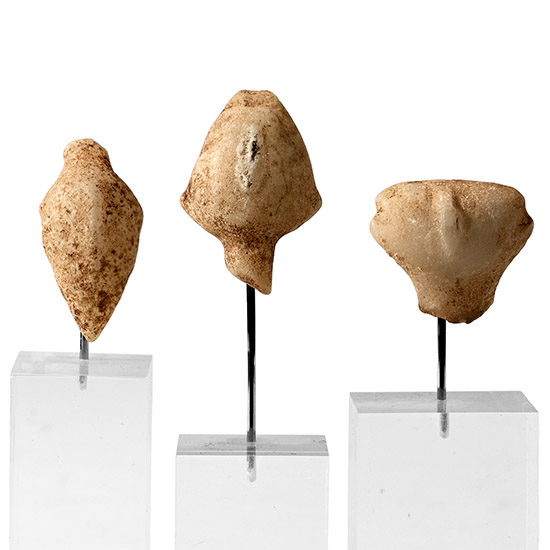
Kiliya Idol Head Collection
4th-3rd millennium B.C.Estimate: £1,000 - 1,400 (‡+bp*)
Opening Bid: £550
Group comprising: (a) horizontal oval face with long, straight nose and small ears; back of head flat, very slender neck; (b) pointed top of head, long straight nose, ears positioned low on the head, nose and top of head slightly worn; (c) head with pointed top curving backwards; slender neck and long straight nose, small ears; mounted on custom-made display stand. 79.7 grams total, 76-87 mm including stand
with Gorny & Mosch Auction, Munich, 11 July 2006, nos.612.1, 613.1 & 613.2. -
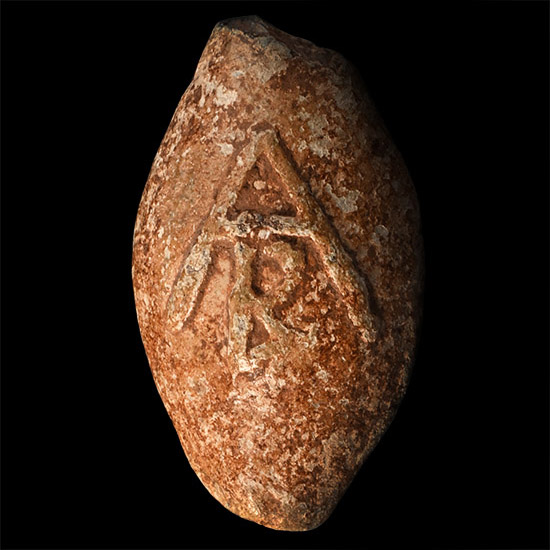
Greek Lead Slingshot of Alexander the Great, The Invincible
336-323 B.C.Estimate: £200 - 300 (+bp*)
Bids: 4 | Current Bid: £180
Biconical in profile with reserved monogram 'AB' for ΑΛΕΞΑΝΔΡΟΥ ΒΑΣΙΛΕΩΣ' (Αlexandrou Basileos) to the obverse and a laurel wreath to the reverse. 26.4 grams, 29 mm
Previously property of an Austrian collector, Vienna, Austria. From a German private collection, formed since the 1980s.
In the case of Alexander III, who never lost a battle, the laurel wreath began to be an important attribute already during his lifetime. This is best illustrated on coins, cf. a gold stater struck c. 330/325-320 (NAC auction 169, lot 74): Nike stands in the centre on the reverse holding a laurel wreath, with the name of Alexander behind the goddess on the right.
