
Loading, please wait...
LOT 0527
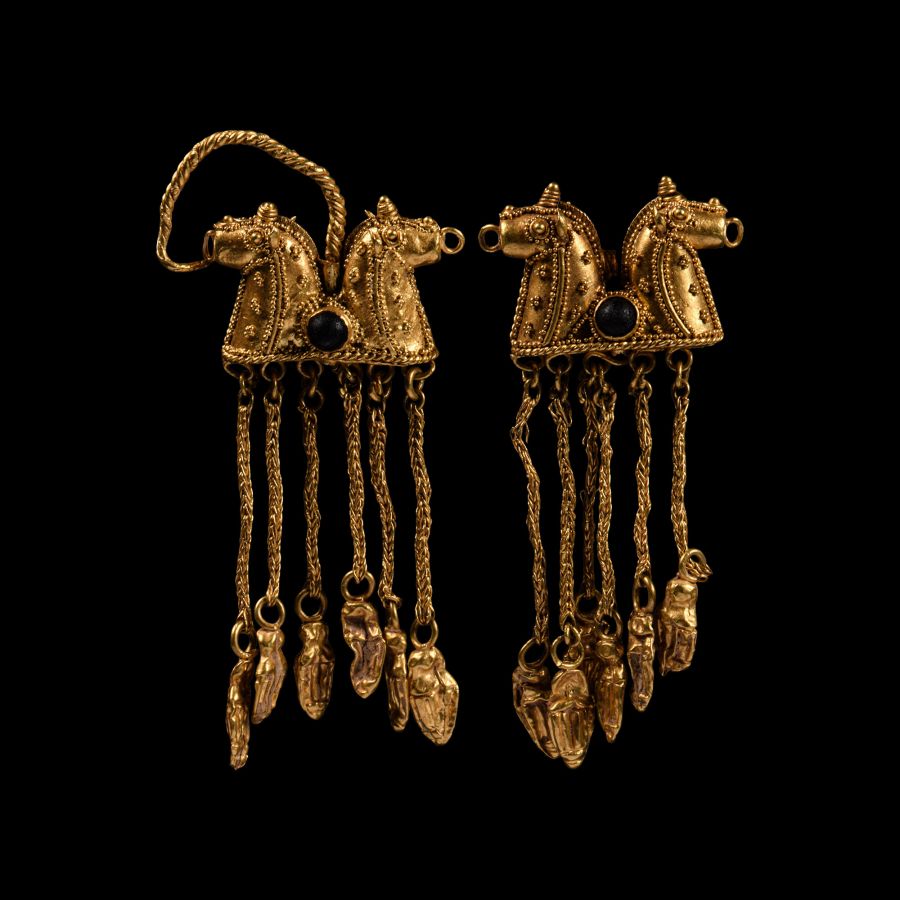
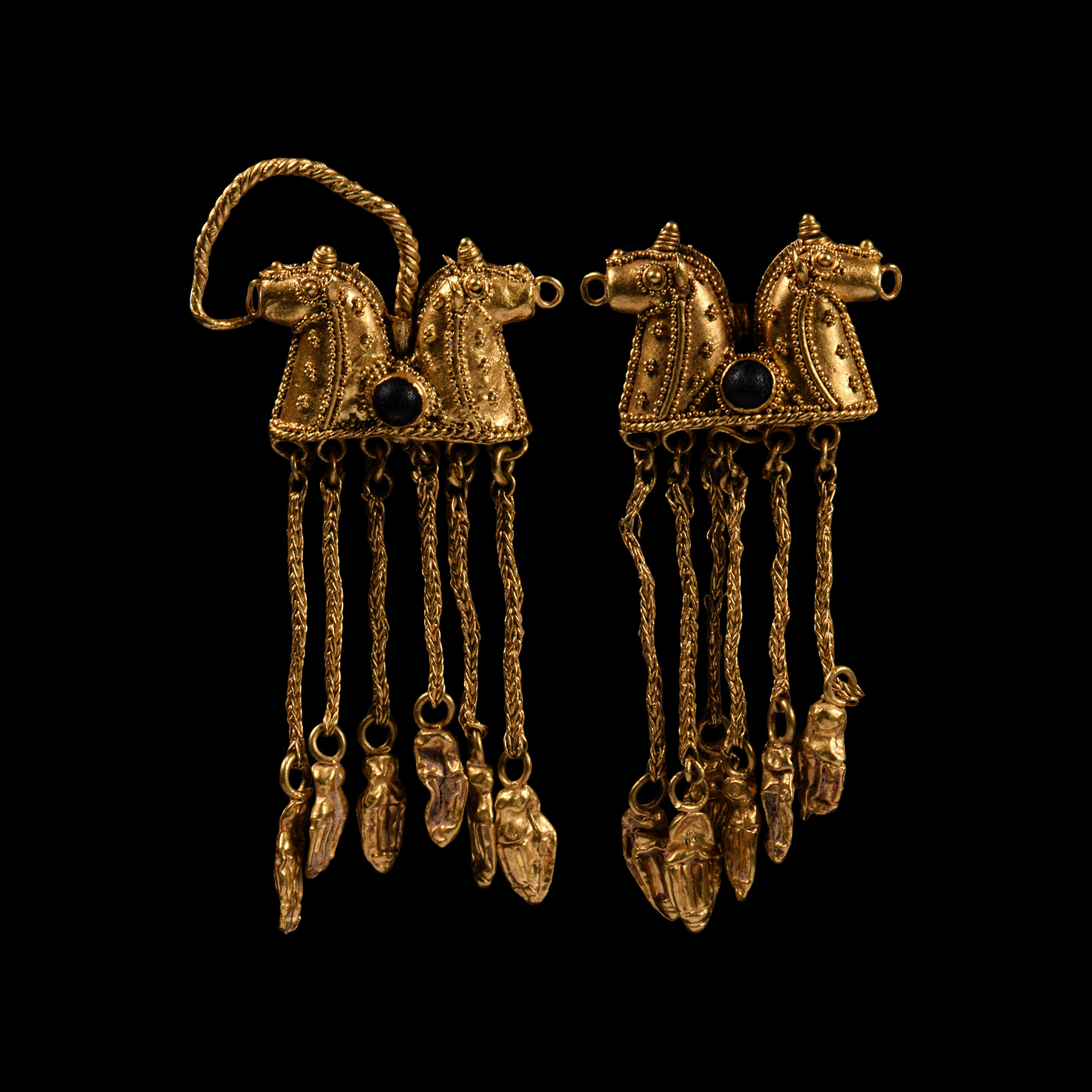
Eastern Greek Gold Horse Earrings with Pendants
CIRCA 4TH CENTURY B.C. AND LATER
2 1/4 - 2 1/2 in. (18.08 grams total, 58-64 mm).
Each composed of a pair of bifacial addorsed horse-heads with filigree and granule detailing, filigree loop to each mouth, coil to each forehead, six loops to the underside each with a chain and sheet gold fruit pendant; to each face an inset glass cabochon; one with twisted wire ear hook above; both earrings with ancient chain dangles, one with a replicant horse. [2]
ProvenancePreviously acquired on the UK art market between 1978-1980.
Ex property of a North West London gentleman.
Cf. Marshall, F.H., Catalogue of the Jewellery, Greek, Etruscan and Roman, in the Department of Antiquities, British Museum, London, 1911, item 1495, for type; The Metropolitan Museum, New York, accession number 1995.539.6, for similar fruit pendant charms; 48.11.2, .3, for similar lengths of chain.
CONDITIONTimeLine Auctions follows a vetting process to ensure the authenticity and legality of all items, reinforcing our commitment to integrity and responsible trading. Each antiquity, antique, and coin lot undergoes thorough examination by a vetting committee of at least ten external specialists, professional trade association members, scientists, and archaeologists: Our Vetting Process
AUCTIONS:
TimeLine is a leading auction house specialising in antiquities, ancient art, collectables, natural history, coins, medals, and books. Our auctions offer museums, collectors, historians, and enthusiasts the opportunity to acquire unique and historically significant pieces.
LOT 0527
Eastern Greek Gold Horse Earrings with Pendants
Estimate £1,500 - 2,000€1,740 - 2,320 (for guidance only)$2,030 - 2,700 (for guidance only)
-
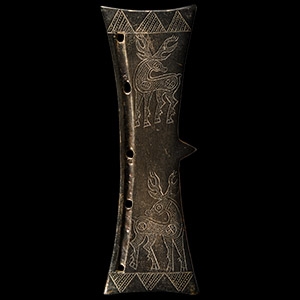
Scythian Bronze Belt Fitting
3rd-2nd century B.C.Sold for (Inc. bp): £416
Composed of a bow-tie-shaped body with a central triangular plaque to one edge forming a hook to reverse; series of piercings to the opposite edge; two regardant stags and bars of hatched triangles engraved to one face. 138 grams, 13.5 cm
Ex old English collection. London art market, 1980s. -
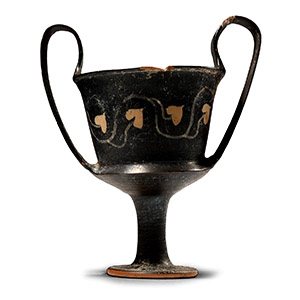
South Italian Blackware Kantharos with Ivy Branch
5th-4th century B.C.Estimate: £1,500 - 2,000 (‡+bp*)
Opening Bid: £750
The high-handled drinking cup with carinated lower body, discoid feet and vines painted to the equator. 472 grams, 23.3 cm high
Acquired in Europe before 1994. -
.jpg)
Cypriot Terracotta Goddess Figurine
Late 2nd millennium B.C.Sold for (Inc. bp): £1,690
With columnar body and flared base, arms raised, applied domed breasts, pinched facial features with applied mouth and ears; applied band to the brow for the hair or headdress; remains of coral-pink painted detailing. 299 grams, 20.2 cm
From the collection of French scholar and diplomat Auguste Dozon (1822-1890). Subsequently Hotel Des Ventes Monte Carlo, 6th May 2018, lot 7. With French cultural property passport.
