
Loading, please wait...
_900x900.jpg "Eastern Greek Bronze Standing Bull Statuette")
_200x200.jpg "Eastern Greek Bronze Standing Bull Statuette")
.jpg "Eastern Greek Bronze Standing Bull Statuette")
LOT 0066
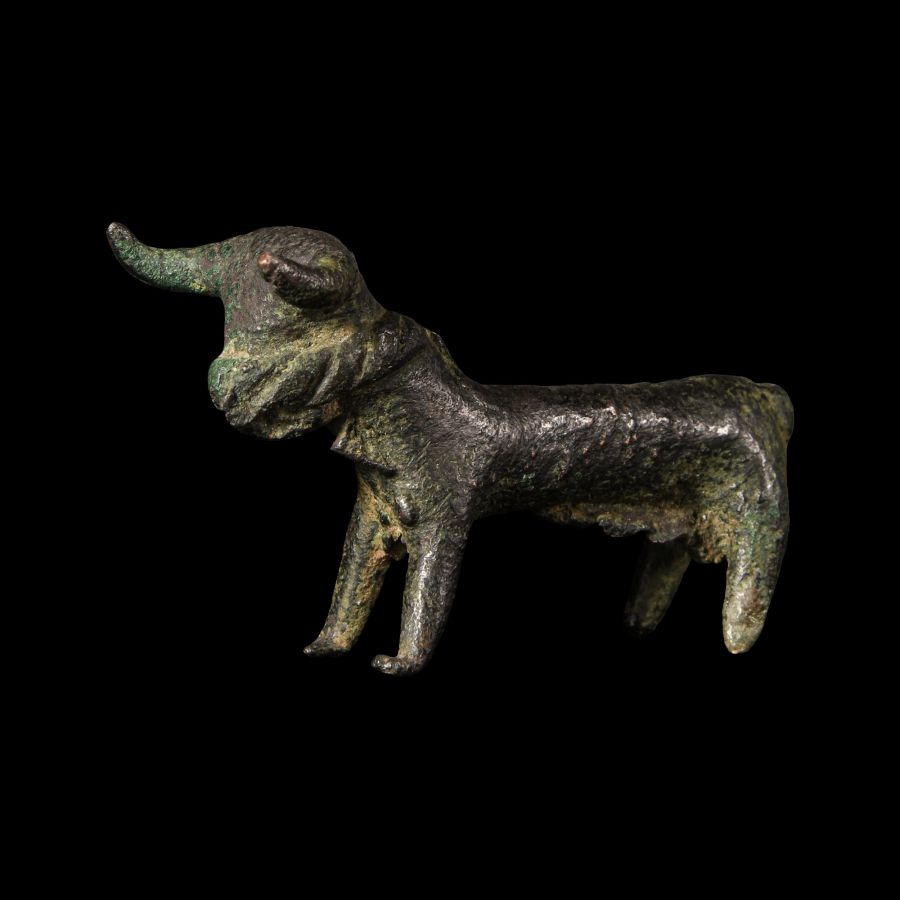
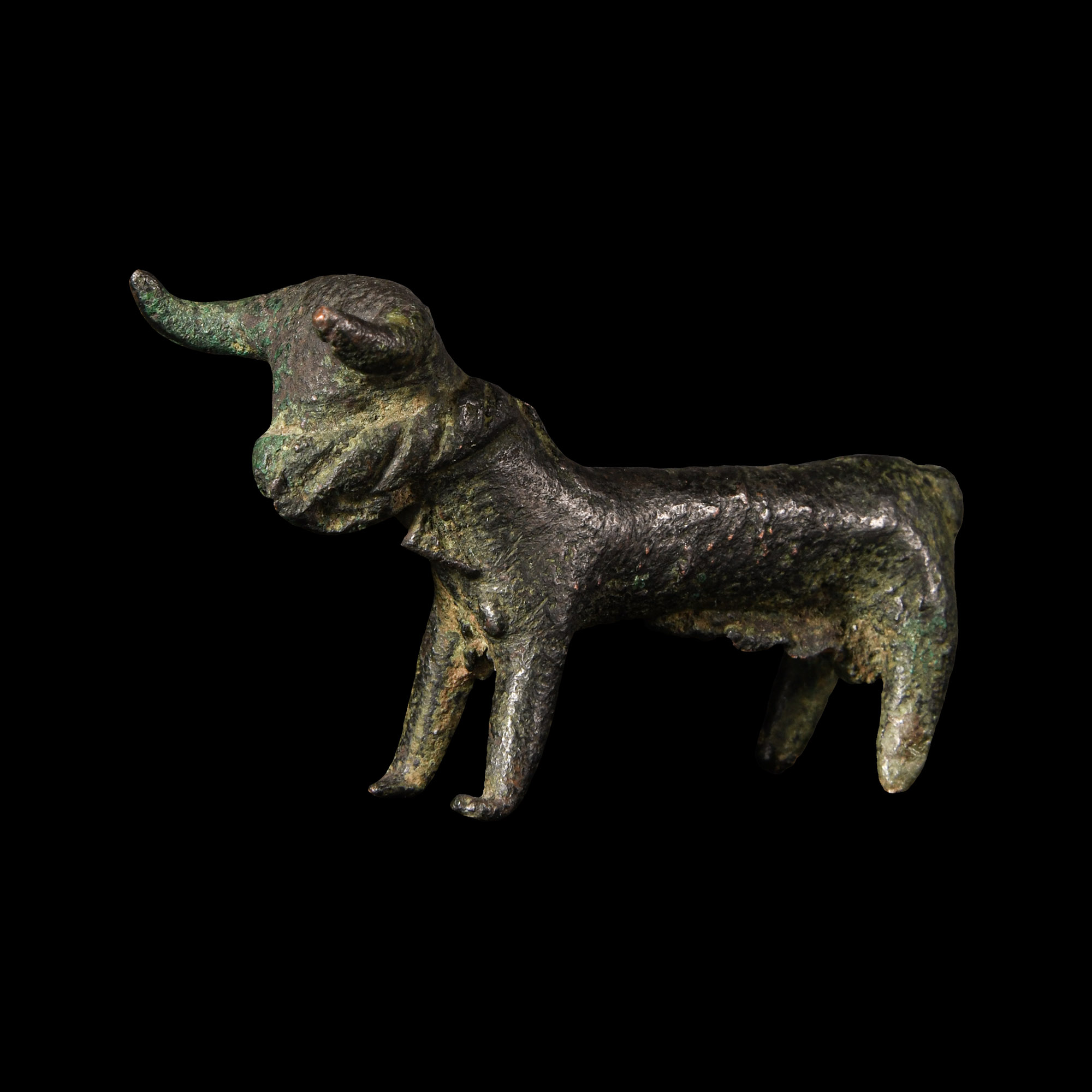
Eastern Greek Bronze Standing Bull Statuette
CIRCA 11TH-9TH CENTURY B.C.
3 3/8 in. (141 grams total, 86 mm wide including stand).
With thick ribbed neck, crescent horns and prominent genitals; mounted on a custom-made stand. [No Reserve]
ProvenanceFrom the collection of D. Smith, Sussex, UK, 1990s.
LiteratureCf. similar bull in the Museum of Fine Art of Budapest, inventory no.51.946.
FootnotesLike dozens of similar statuettes depicting animals or human figures, this bronze bull was probably offered by a worshipper during a sacrifice. A large number of statuettes were found in a thick layer of ash from the altar of Zeus at Olympia. In 2021, a similar statuette, with protruding horns, was found in the sanctuary. Bulls and horses were the favourite cultic animals in the Cretan, Achaean and Archaic Greek civilisations. The model of the long and narrow body was borrowed from the Near East.
CONDITIONTimeLine Auctions follows a vetting process to ensure the authenticity and legality of all items, reinforcing our commitment to integrity and responsible trading. Each antiquity, antique, and coin lot undergoes thorough examination by a vetting committee of at least ten external specialists, professional trade association members, scientists, and archaeologists: Our Vetting Process
AUCTIONS:
TimeLine is a leading auction house specialising in antiquities, ancient art, collectables, natural history, coins, medals, and books. Our auctions offer museums, collectors, historians, and enthusiasts the opportunity to acquire unique and historically significant pieces.
-
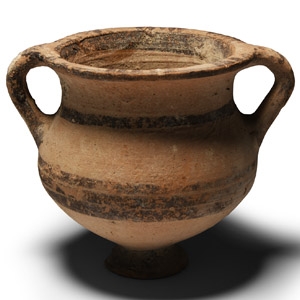
Cypriot Painted Terracotta Amphora
Circa 8th-5th century B.C.Sold for (Inc. bp): £169
In black-painted geometric buffware, with wide bands of black painted decoration on the ovoid body and on the rim, loop handles. 164 grams, 11.8 cm wide
Ex P.A., Hertfordshire, UK, specialist collection of Greek art, 1980-1990s. Accompanied by a copy of an old typed catalogue slip.
The type is well known on Cyprus from 850 B.C. The simplification of the geometric ornaments in panels on the neck and shoulder suggest that the present specimen is later than the Geometric Period. -
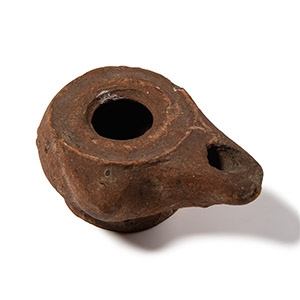
Greek Attic Terracotta Lamp
Circa 6th-5th century B.C.Sold for (Inc. bp): £111
Squat terracotta bowl with large discus and broad nozzle, lateral lug handle. 55 grams, 69 mm
Ex P. A., Hertfordshire, UK, specialist collection of Greek art, 1980-1990s. c -
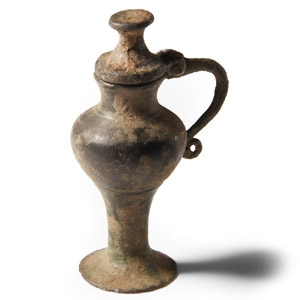
Hellenistic Bronze Lidded Cosmetic Vessel
Circa 1st century B.C.Sold for (Inc. bp): £117
Elegantly proportioned miniature ewer with trumpet-shaped base, swept loop handle with recurved finial, hinged lid. 54.4 grams, 66 mm
Acquired on the German art market before 2000. From an EU collection before 2020.
