
Loading, please wait...
LOT 0243
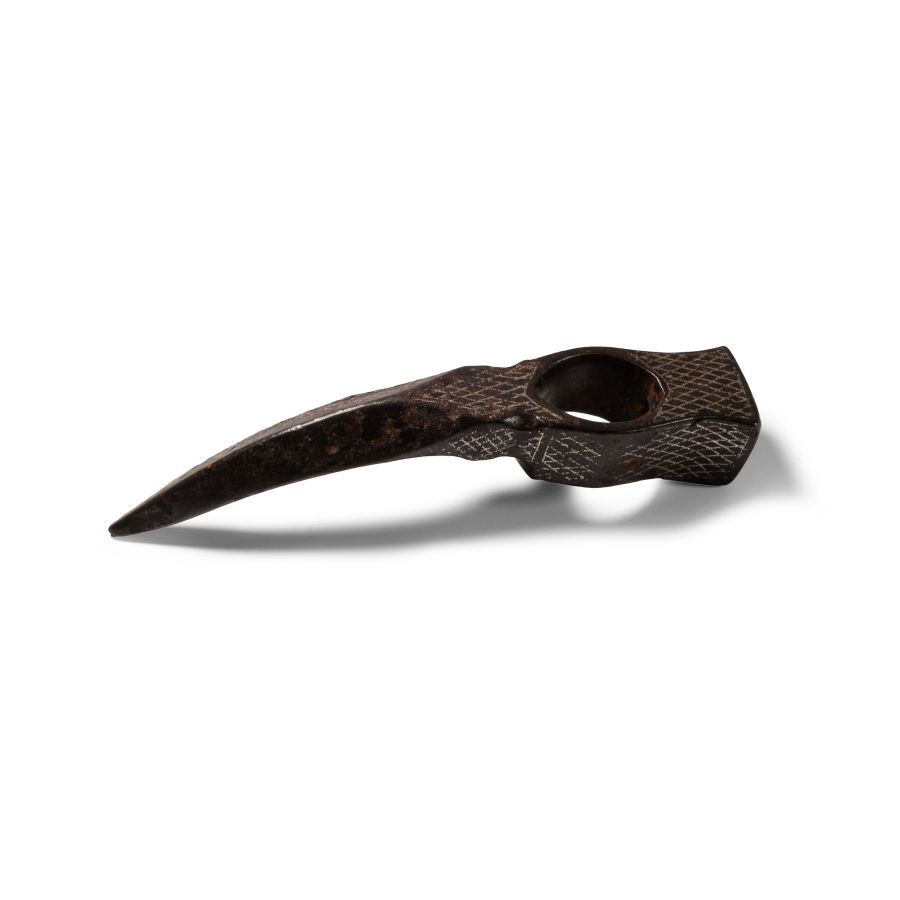
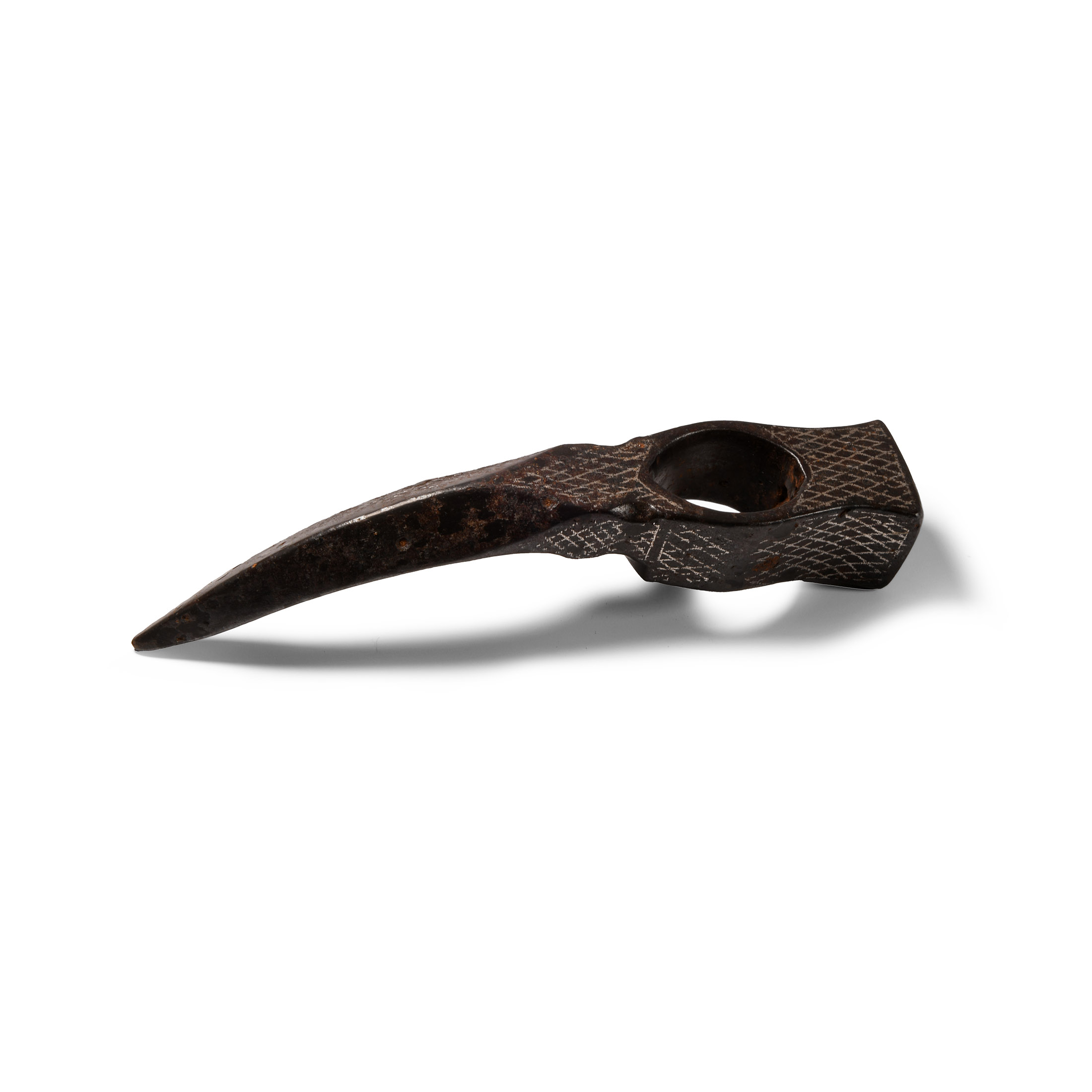
Eastern European Silver Inlaid War-Hammer
16TH CENTURY A.D.
7 1/4 in. (453 grams, 18.5 cm).
A copper-alloy war-hammer composed of ellipsoidal socket, waisted butt with shallow conical face and tapering, lozenge-section head, inlaid with a silver 'net' design.
ProvenancePrivate collection of Mr M.B., Mainz, Germany, 1990s.
Property of a London businessman.
This lot has been checked against the Interpol Database of stolen works of art and is accompanied by search certificate no.11203-186235.
See Paszkiewicz, M., 'Polish War Hammers: Czekan Nadziak, Obuch', in The Journal of The Arms and Armour Society, vol. VIII, no. 3, June 1974, pp. 225-227, pls. LXXXI - LXXXII, for parallels of war-hammers of this type; Popov, S., ‘Late Medieval War Hammers from Vatevi Collection (Bulgaria)’ in Relaţii Interetnice în Transilvania, Militaria Mediaevalia în Europa centralâ şi de sud-est, Sibiu, pp.71-83, figs. 8-9, type XI.
FootnotesThe name obuch is Polish and means 'the blind end of an axe', but already at the beginning of the 15th century it meant a [unspecified] war hammer. According to Polish sources of 17th century, the war-hammer could have been formed into the shape of an axe (czekan), or in the form of a thick, slightly sloping spike (nadziak), or curved like a round cracknel (obuch). A 17th century description states: 'It was a terrible instrument in the hand of a Pole...With the sabre one could cut off somebody’s hand, cut the face, injure the head, and the running blood of the adversary would calm down the rancour. But with the obuch one could cause a deadly wound without even seeing the blood, and – not seeing it – he would not calm down instantly, but would strike several times without cutting the skin, breaking ribs and bones at the same time.'
CONDITIONTimeLine Auctions follows a vetting process to ensure the authenticity and legality of all items, reinforcing our commitment to integrity and responsible trading. Each antiquity, antique, and coin lot undergoes thorough examination by a vetting committee of at least ten external specialists, professional trade association members, scientists, and archaeologists: Our Vetting Process
AUCTIONS:
TimeLine is a leading auction house specialising in antiquities, ancient art, collectables, natural history, coins, medals, and books. Our auctions offer museums, collectors, historians, and enthusiasts the opportunity to acquire unique and historically significant pieces.
-
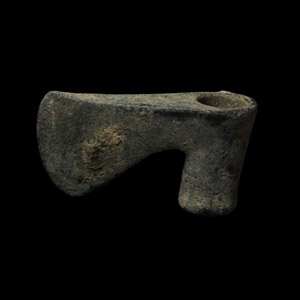
Luristan Socketted Axehead
13th-7th century B.C.Sold for (Inc. bp): £89
A small, heavy socketted bronze axehead with convex cutting edge. 243 grams, 86 mm
Fine condition.
English collection formed in the 1990s. UK art market. Property of an Essex gentleman.
Unadorned weapons, especially axes, adzes and picks, were made by Luristan craftsmen using simple clay or stone bivalve moulds, into which was inserted a core to form the socket for the shaft. Typically, the metallic composition consisted of a combination of arsenical bronze and copper, together with a small percentage of lead. -
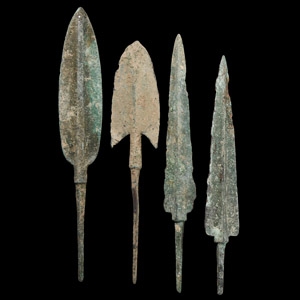
Luristan Arrowhead Collection
13th-6th century B.C.Sold for (Inc. bp): £140
A group of four bronze arrowheads comprising: two triangular with thick midrib; one barbed and tanged; one leaf-shaped. 118 grams total, 14.2-16 cm
Fine condition.
Acquired 1980-2015. Ex Abelita family collection. -
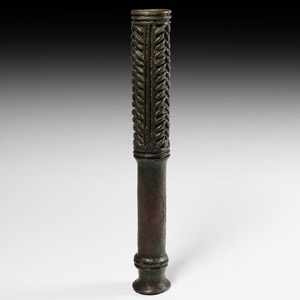
Akkadian Bronze Mace Head
2400-2000 B.C.Sold for (Inc. bp): £390
A bronze cylindrical mace head or cudgel with collared stem and flanged rim, the upper body with alternating vertical ribs and chevrons. 510 grams, 23 cm
Acquired 1980-2015. Ex Abelita family collection.
