
Loading, please wait...
LOT 2293
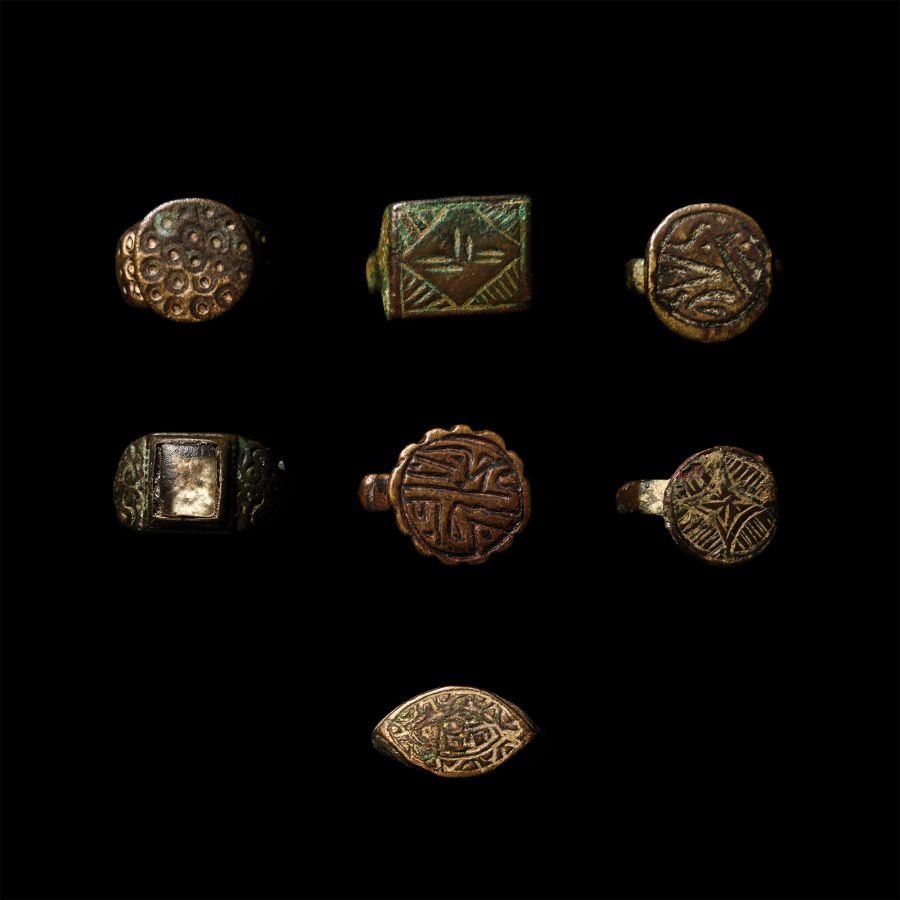
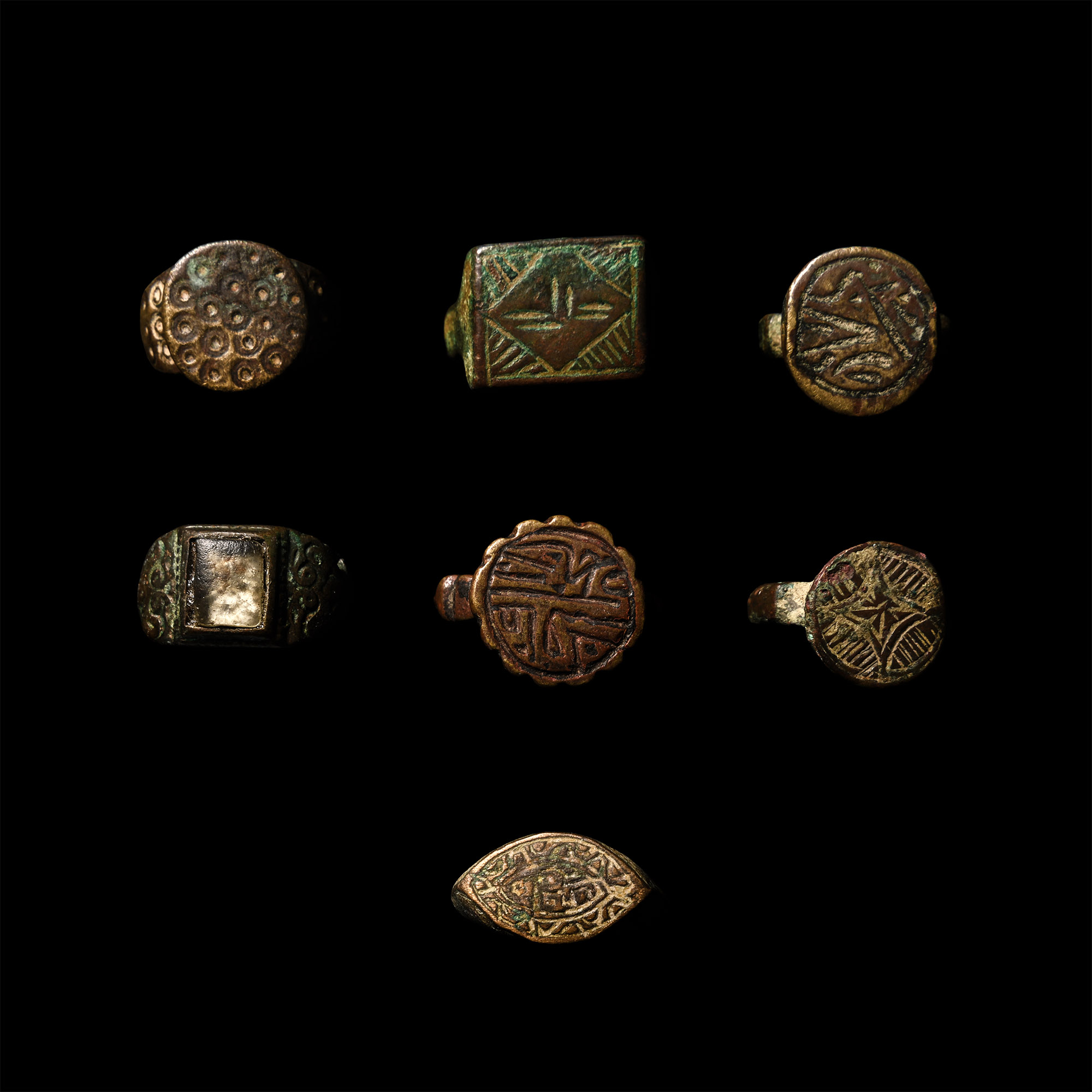
Eastern European Bronze Ring Collection
CIRCA 11TH-16TH CENTURY A.D.
3/4 - 1 in. (43.8 grams total, 20-28 mm).
Comprising seven rings, including one with a glass insert, one with a ring-and-dot decoration, and others. [7, No Reserve]
ProvenanceAcquired in the late 1980s-early 1990s.
Private collection, London, UK.
Cf. Đurović, I., Medieval Jewellery from the collection of the National Museum of Kregujevac, 2012, figs.60,66,68, for similar rings.
CONDITIONTimeLine Auctions follows a vetting process to ensure the authenticity and legality of all items, reinforcing our commitment to integrity and responsible trading. Each antiquity, antique, and coin lot undergoes thorough examination by a vetting committee of at least ten external specialists, professional trade association members, scientists, and archaeologists: Our Vetting Process
AUCTIONS:
TimeLine is a leading auction house specialising in antiquities, ancient art, collectables, natural history, coins, medals, and books. Our auctions offer museums, collectors, historians, and enthusiasts the opportunity to acquire unique and historically significant pieces.
LOT 2293
Eastern European Bronze Ring Collection
Estimate £60 - 80€70 - 93 (for guidance only)$81 - 108 (for guidance only)
Opening Bid
£5 (EUR 6; USD 7) +BP*
-
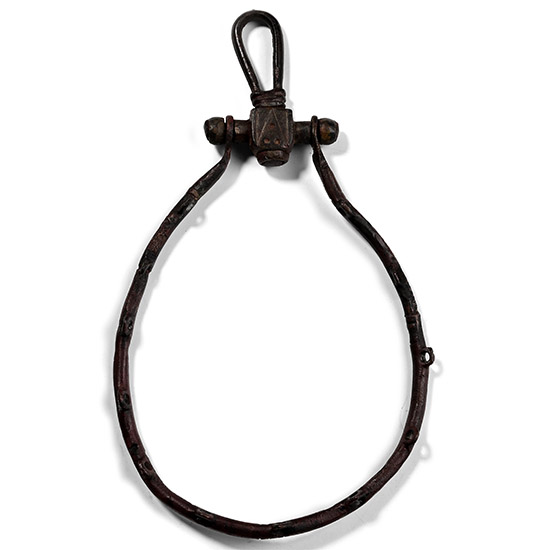
Medieval Bronze Purse Bar with Frame
Circa 15th-16th century A.D.Estimate: £150 - 200 (+bp*)
Opening Bid: £75
Elliptical round-section frame with attachment loops to the reverse, hinged bar to the top with cuboid mount, heater shield to each face one with pile motif and the other with chevron and pellets; frame repaired. 141 grams, 20 cm
Found Romney Marsh area, Kent, 1990-2015. Property of a Kent gentleman, a specialist medieval collector. -
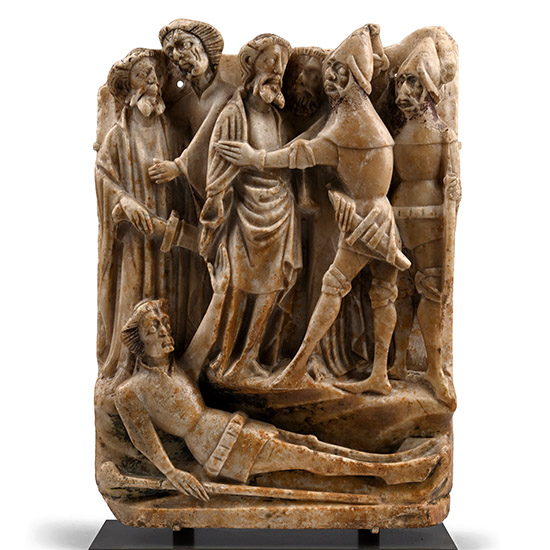
Medieval Alabaster Panel with The Betrayal and Arrest of Christ
England, Nottingham Alabaster, Midlands, circa 1420 A.D.Estimate: £5,000 - 7,000 (+bp*)
Bids: 1 | Current Bid: £5
Rectangular panel with figural scene in high relief; above, two figures left in bassinets and plate armour arrest two standing figures in loose robes; behind them, a tall figure stretching his hand across the chest of another robed figure drawing a sword; below, beneath a ledge, a supine figure extending his left hand towards the central figure above, his right hand holding a walking staff; mounted on a custom-made stand. 10.4 kg total, 37.5 cm high including stand
Collection of Aäron Vecht (1186-1965), Rokin 30, Amsterdam (his paper collection label adhered to the reverse). with Joanna Booth, London, UK. Private collection, London, UK, acquired from the above 11th June 2011. This lot has been checked against the Interpol Database of stolen works of art and is accompanied by search certificate no.13527-262845.
The iconography of the betrayal of Christ is ancient, with its earliest roots tracing back to Early Christian art. From its inception, the soldiers arresting Jesus in the Garden of Gethsemane were depicted as Roman warriors. It is important to note that artists typically rendered their weapons and armour in the contemporary style of their own eras, rather than using historically accurate Roman attire. This artistic convention persisted until the fall of the Eastern Roman Empire. As a result, Byzantine depictions of the arrest offer a dynamic chronicle of military evolution, showcasing the changing equipment of the Roman army and local militias throughout the Middle Ages. Similarly, when this iconography was adopted by other Western and Eastern medieval states, it mirrored the military advancements of nations outside the Byzantine sphere. Consequently, the representation of the arrest at Gethsemane serves as one of the richest visual sources available for studying medieval military equipment. -
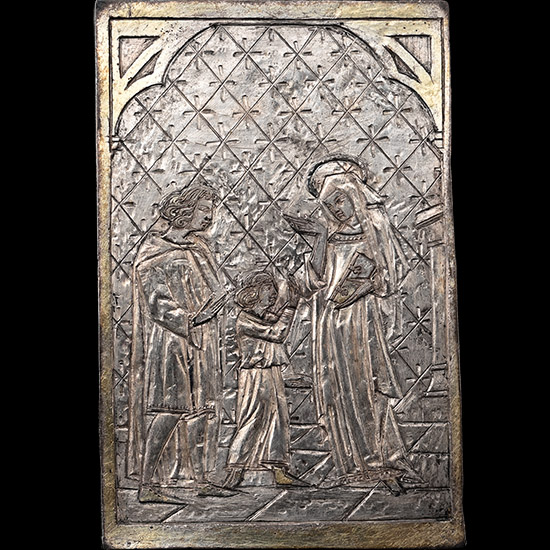
Medieval Silver Plaque Depicting Presentation Scene
Northern France or Flanders, 15th century A.D.Estimate: £2,000 - 3,000 (+bp*)
Bids: 1 | Current Bid: £5
Rectangular plaque with reserved border and fluted spandrels to the upper corners; figural scene with standing nimbate female in veiled robe holding a book in one hand; before her, a standing child with hand raised towards her and behind him an adult male in knee-length tunic with a travelling cloak; altar with stepped base, paved floor, latticework with quatrefoils at the nodes; mounted on a custom-made stand. 241 grams total, 94 mm, 15.3 cm including stand
Mrs Chester D. Tripp. Gifted to the Cleveland Museum of Art in honour of William Wixom, 1979. Deaccessioned by the museum before 2000. Private collection, Scotland, acquired at auction in Zurich in 2000. This lot has been checked against the Interpol Database of stolen works of art and is accompanied by search certificate no.13543-262827.
The plaque shows a child being presented by his father to a nimbate female saint wearing a veil covering her hair. The plaque features fictitious cusped architectural arches that spring from small corbels at each of the upper corners and embellish the plain borders framing the scene, as well as the tiled floors and diaper-pattern background ornamented with small cross motifs.
