
Loading, please wait...
LOT 0210
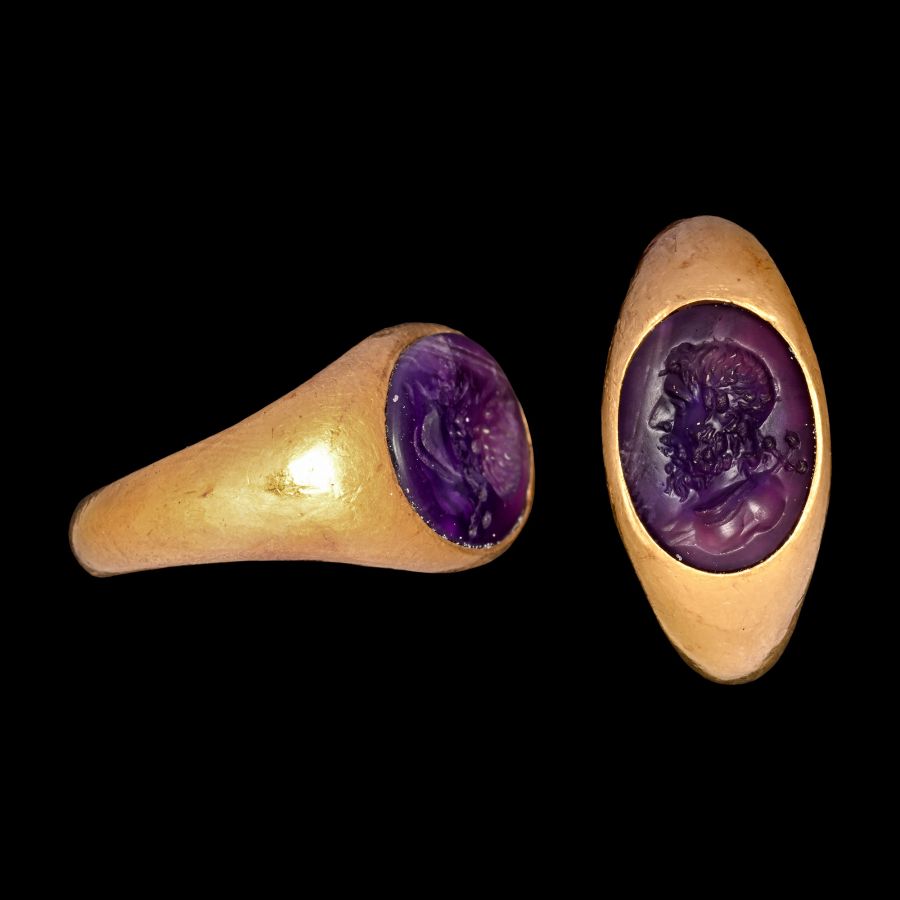
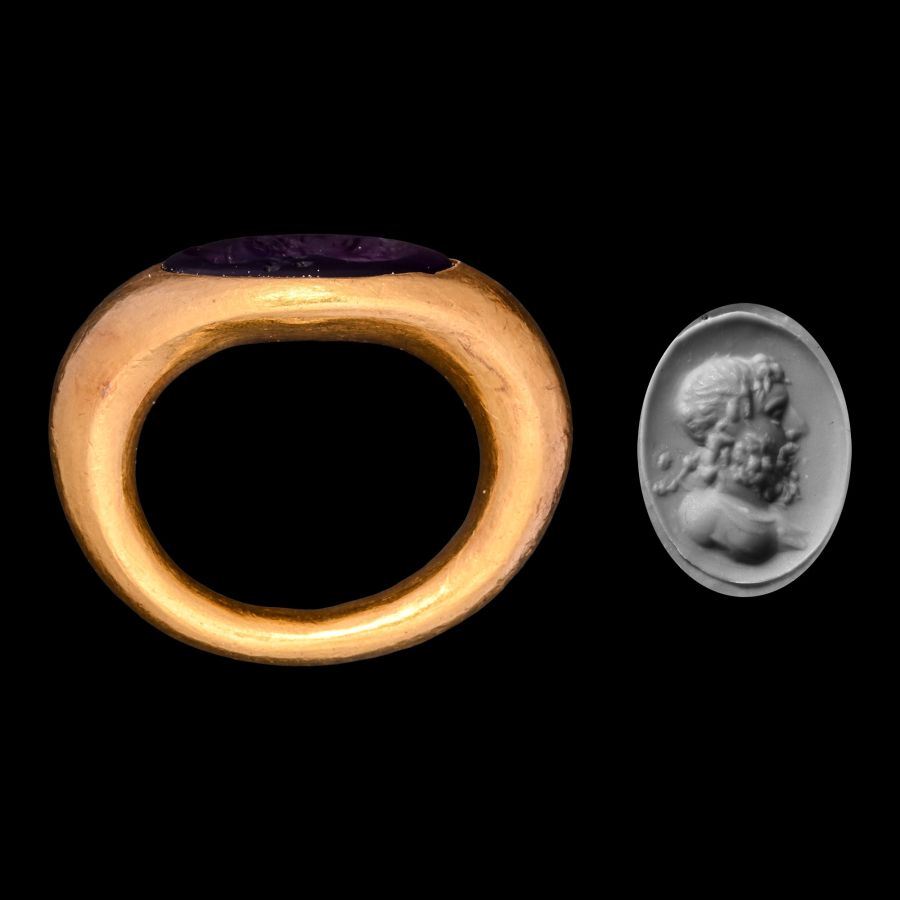
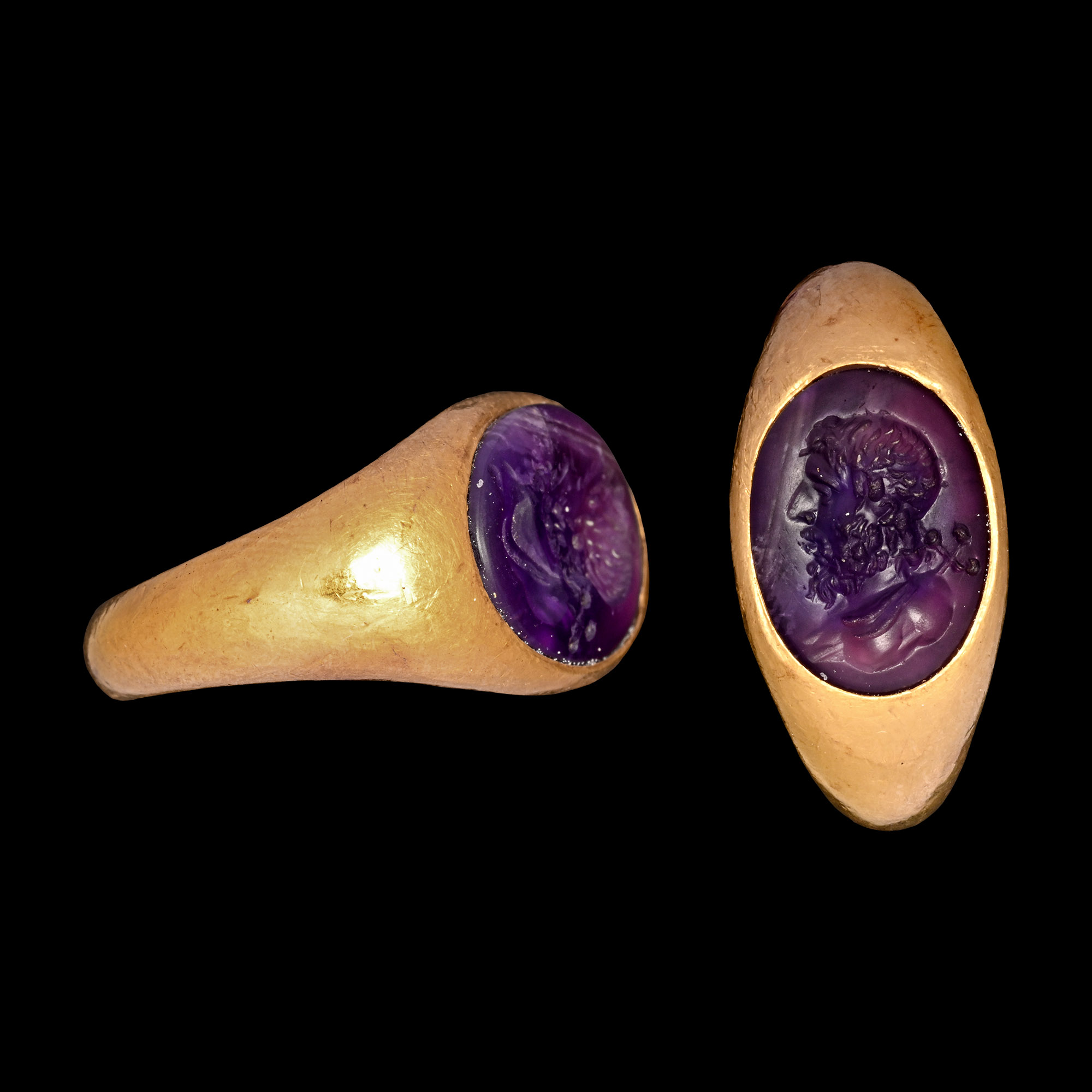
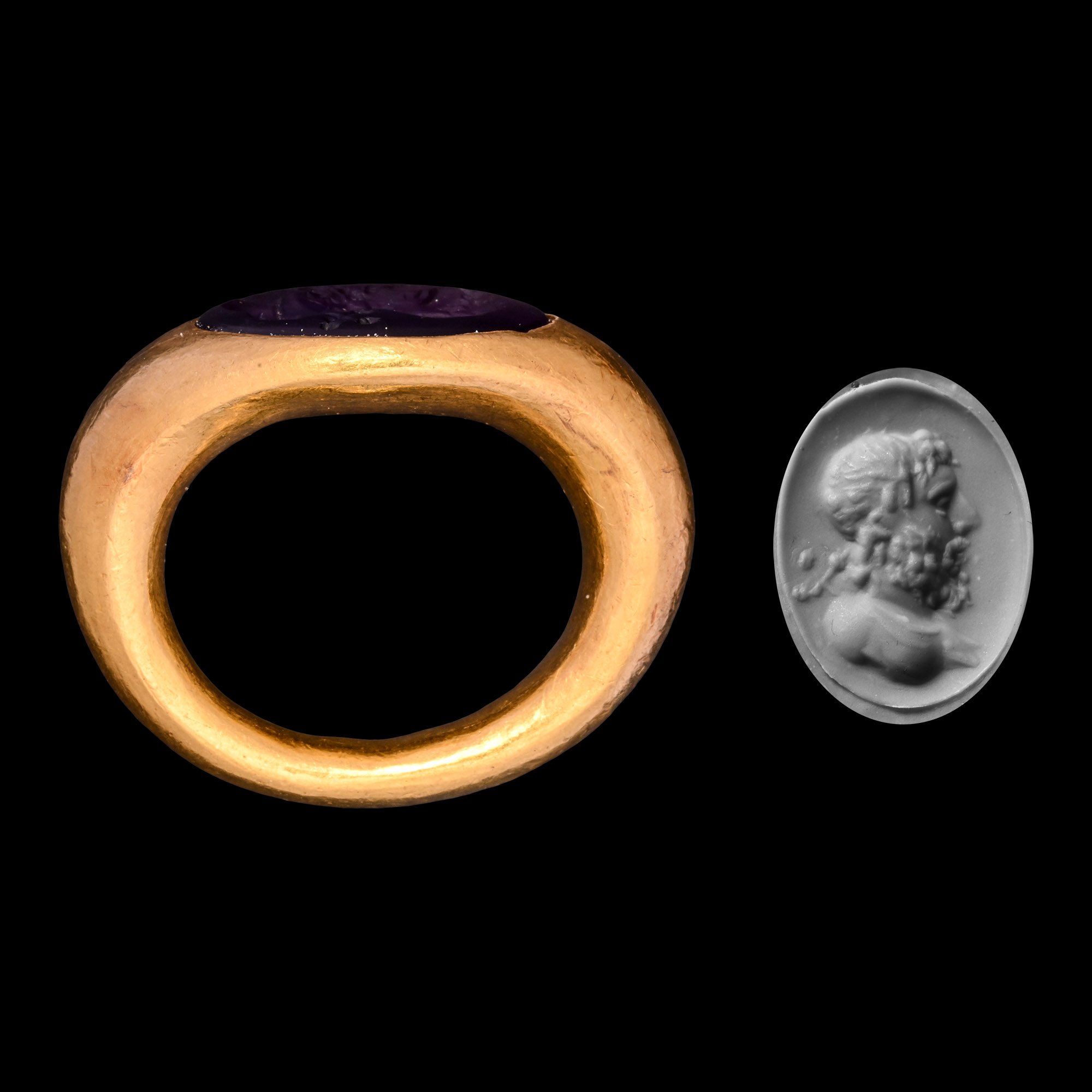
Eastern Byzantine Amethyst Gemstone of a Male Bust with Cross in Gold Ring
4TH-5TH CENTURY A.D. OR EARLIER
1 1/4 in. (9.56 grams, 32.00 mm overall, 20.72 x 16.55 mm internal diameter (approximate size British P, USA 7 1/2, Europe 16.23, Japan 15)).
Intaglio with bearded profile bust facing left with a small cross to the shoulder; set into a later hollow-formed gold ring.
ProvenanceAcquired on the European art market.
Private collection, England.
This lot has been checked against the Interpol Database of stolen works of art and is accompanied by search certificate number no.13137-249543.
For motif see The Cleveland Museum of Art, item number 1947.33.
CONDITIONTimeLine Auctions follows a vetting process to ensure the authenticity and legality of all items, reinforcing our commitment to integrity and responsible trading. Each antiquity, antique, and coin lot undergoes thorough examination by a vetting committee of at least ten external specialists, professional trade association members, scientists, and archaeologists: Our Vetting Process
AUCTIONS:
TimeLine is a leading auction house specialising in antiquities, ancient art, collectables, natural history, coins, medals, and books. Our auctions offer museums, collectors, historians, and enthusiasts the opportunity to acquire unique and historically significant pieces.
LOT 0210
Eastern Byzantine Amethyst Gemstone of a Male Bust with Cross in Gold Ring
Sold for (Inc. bp): £2,860
-
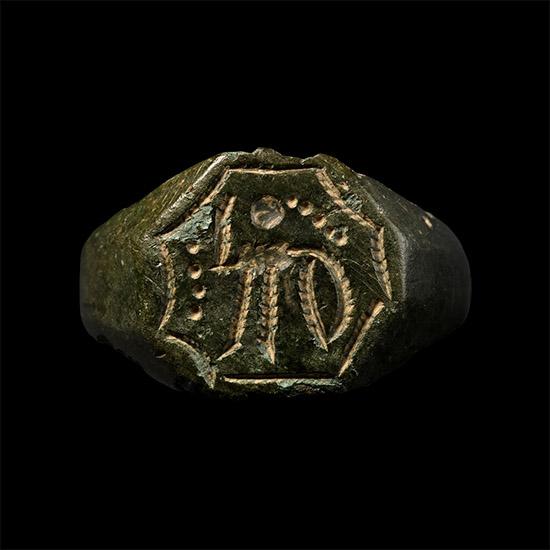
Byzantine Bronze Ring with Warrior Saint
14th-15th century A.D.Sold for (Inc. bp): £46
Wide hoop expanding at the shoulders, octagonal bezel with a stylised figure holding a sword and a shield. 7.11 grams, 23.16 mm overall, 19.40 mm internal diameter (approximate size British Q, USA 8, Europe 17.49, Japan 16)
Acquired on the UK and EU art market before 2000. From the private collection of a Surrey, UK, gentleman.
In these rings, the octagonal circular bezel bears a stylised warrior. The bezel of these rings was decorated with stylised images, very often military saints, invoking protection and blessing. -
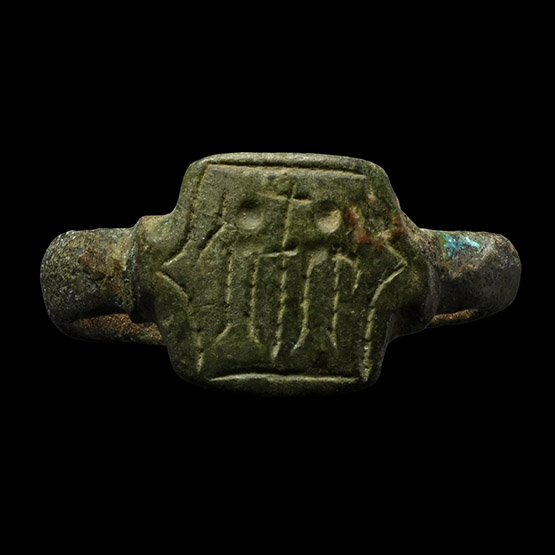
Byzantine Bronze Ring with Saints
12th-13th century A.D.Sold for (Inc. bp): £312
Comprising a D-section hoop and a hexagonal bezel with two stylised figures flanking a cross. 5.33 grams, 25.53 mm overall, 21.73 mm internal diameter (approximate size British O 1/2, USA 7 1/4, Europe 15.61, Japan 15)
Acquired on the UK and EU art market before 2000. From the private collection of a Surrey, UK, gentleman.
The bronze ring is compactly worked from a single bar. The ring link, hemispherical in section, broadens at the top, where the ring bezel was hammered. The decoration inscribed in the hexagon shows in the upper field a military saint, surrounded by lines running parallel to the hexagon, which form a further decorative element. The bezel of these rings was decorated with stylised images, very often military saints, who were asked for protection and blessing. They are usually represented as one or two human figures, schematically depicted, inscribed in a circle, decorating the bezel. -
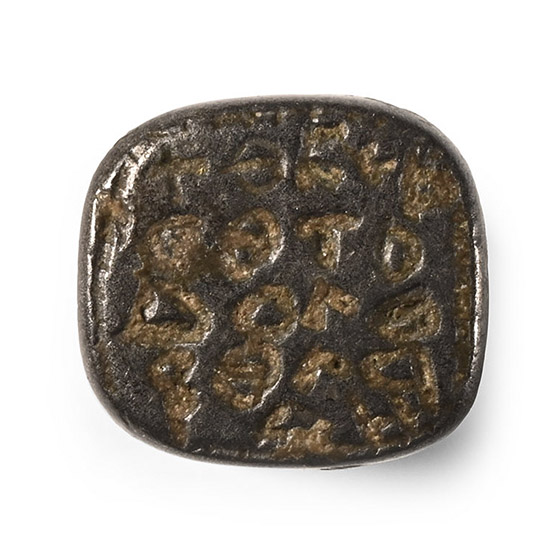
Byzantine Seal Matrix with Inscription
Circa 11th-12th century A.D.Estimate: £120 - 170 (+bp*)
Opening Bid: £67
With inscription '+ΘKEB / OΘTO / ΔΟΛΟ / ΤΘΛΑ' for 'ΘΕΟΤΟΚΕ ΒΟΗΘΕI ΤΩ ΔΟΥΛΩ ΤΟΥ ΘΕΟΥ ΛΑΔΕ' (Mother of God, help Lades, the servant of God). 13.1 grams, 18 mm
From an important collection formed before 1988, London and Geneva.
The stamp seals that have survived in large numbers from Byzantium are objects a few centimetres high and conical in shape, featuring a sealing surface at the lower end and a pendant at the upper end. They served the same function as signet rings and were used to seal everyday objects, primarily for personal purposes, using wax and other soft materials.
