
Loading, please wait...

LOT 1280
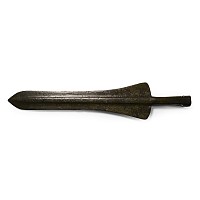
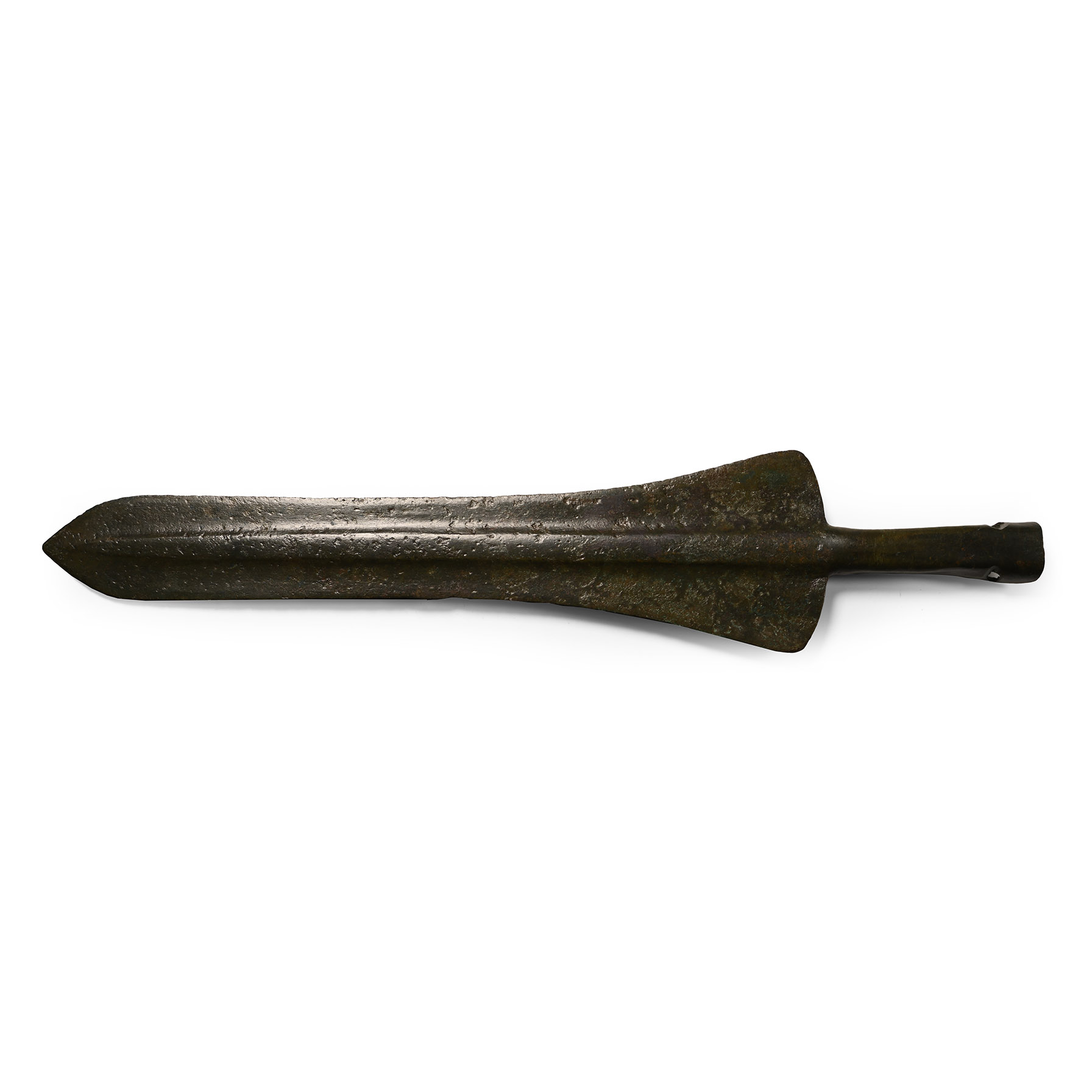
Early Urartu Bronze Spearhead
17TH-16TH CENTURY B.C.
11 3/4 in. (165 grams, 29.7 cm).
With leaf-shaped blade, raised midrib extending to a tubular split socket with fastening holes.
ProvenanceAcquired 1980-2015.
Ex Abelita family collection.
Cf. Gorelik, M., Weapons of Ancient East, IV millennium BC-IV century BC, Saint Petersburg, 2003, in Russian, see pl.XXXIII nos.127,128, from Urartu, for the type.
FootnotesWith the introduction of the socketted spearhead in the Middle East in the second half of the 3rd millennium B.C., by the middle of the 2nd millennium, these kind of spearheads became predominant throughout the ancient Near East, and the design of the spearhead remained practically unchanged since then.
CONDITIONTimeLine Auctions follows a vetting process to ensure the authenticity and legality of all items, reinforcing our commitment to integrity and responsible trading. Each antiquity, antique, and coin lot undergoes thorough examination by a vetting committee of at least ten external specialists, professional trade association members, scientists, and archaeologists: Our Vetting Process
AUCTIONS:
TimeLine is a leading auction house specialising in antiquities, ancient art, collectables, natural history, coins, medals, and books. Our auctions offer museums, collectors, historians, and enthusiasts the opportunity to acquire unique and historically significant pieces.
LOT 1280
Early Urartu Bronze Spearhead
Estimate £250 - 350€290 - 410 (for guidance only)$340 - 470 (for guidance only)
-
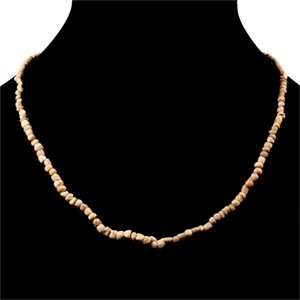
Western Asiatic Glass, Shell and Stone Bead Necklace String
1st millennium B.C. and laterSold for (Inc. bp): £20
Composed mainly of oblate and annular beads, restrung. 10.4 grams, 39.5 cm
Ex property of a late Japanese collector, 1970-2000s. -
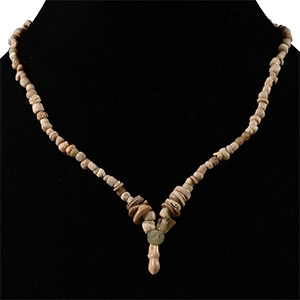
Ancient Bead Necklace String
1st millennium B.C. and laterSold for (Inc. bp): £33
Comprising discoid, oblate and other types in stone, shell, and other materials; restrung. 14 grams, 44 cm
UK gallery, early 2000s. -
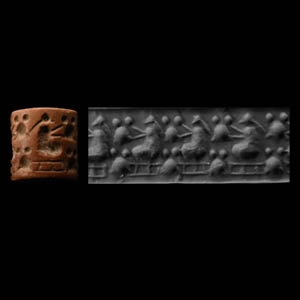
Sumerian Red Stone Cylinder Seal
Uruk, 3rd millennium B.C.Estimate: £500 - 700 (+bp*)
Opening Bid: £250
Incuse frieze composed of cows or horses standing amongst buildings, characters or symbols in rectangular panels in the field, pierced for suspension. 16.8 grams, 21 mm
Ex 'S' collection, London, UK. Examined by Professor Wilfrid George Lambert FBA (1926-2011), historian, archaeologist, and specialist in Assyriology and Near Eastern archaeology, in the late 1980s and early 1990s.
