
Loading, please wait...
LOT 0221
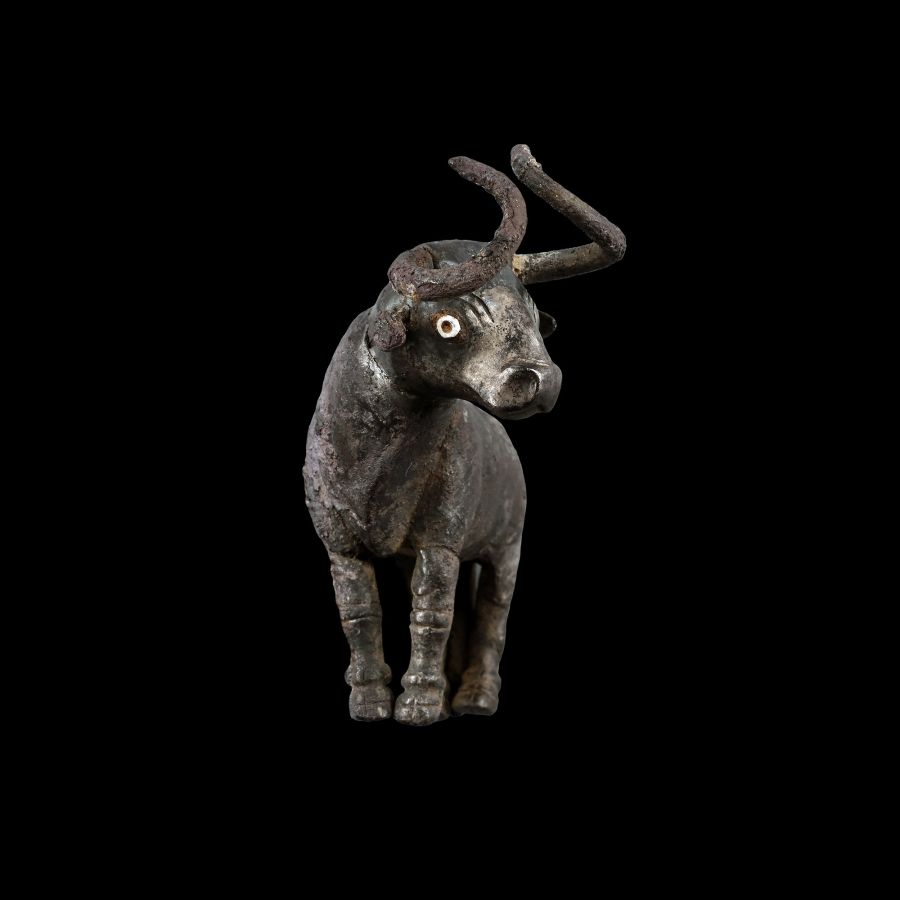
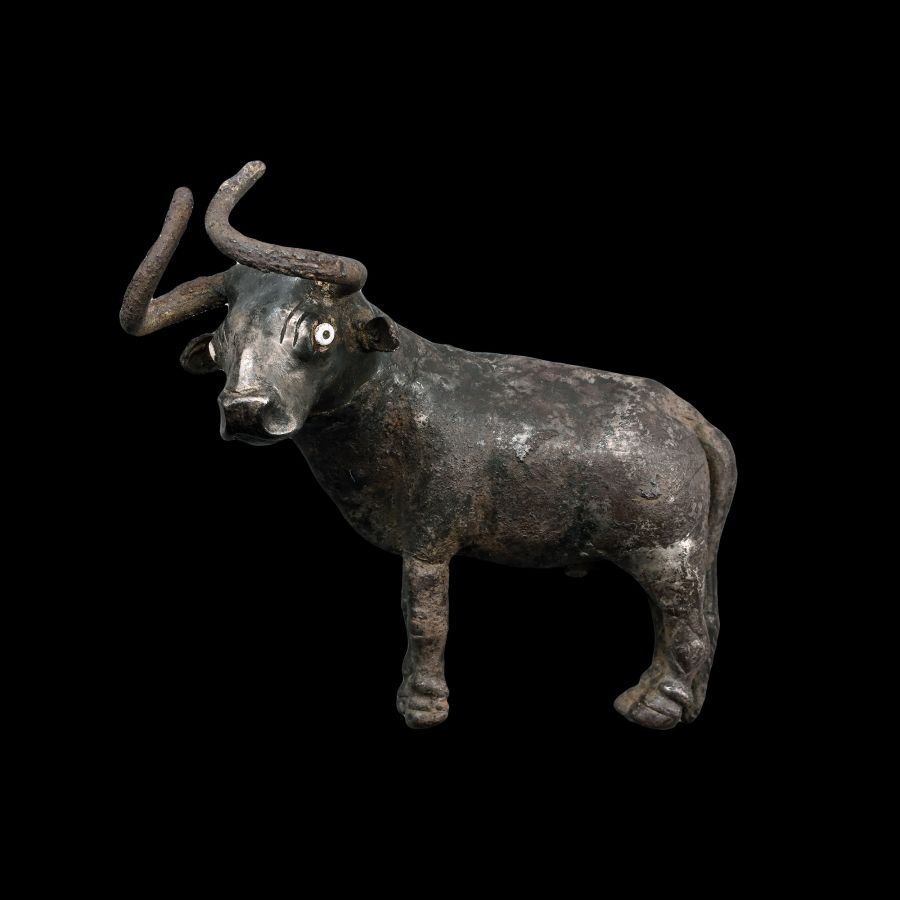
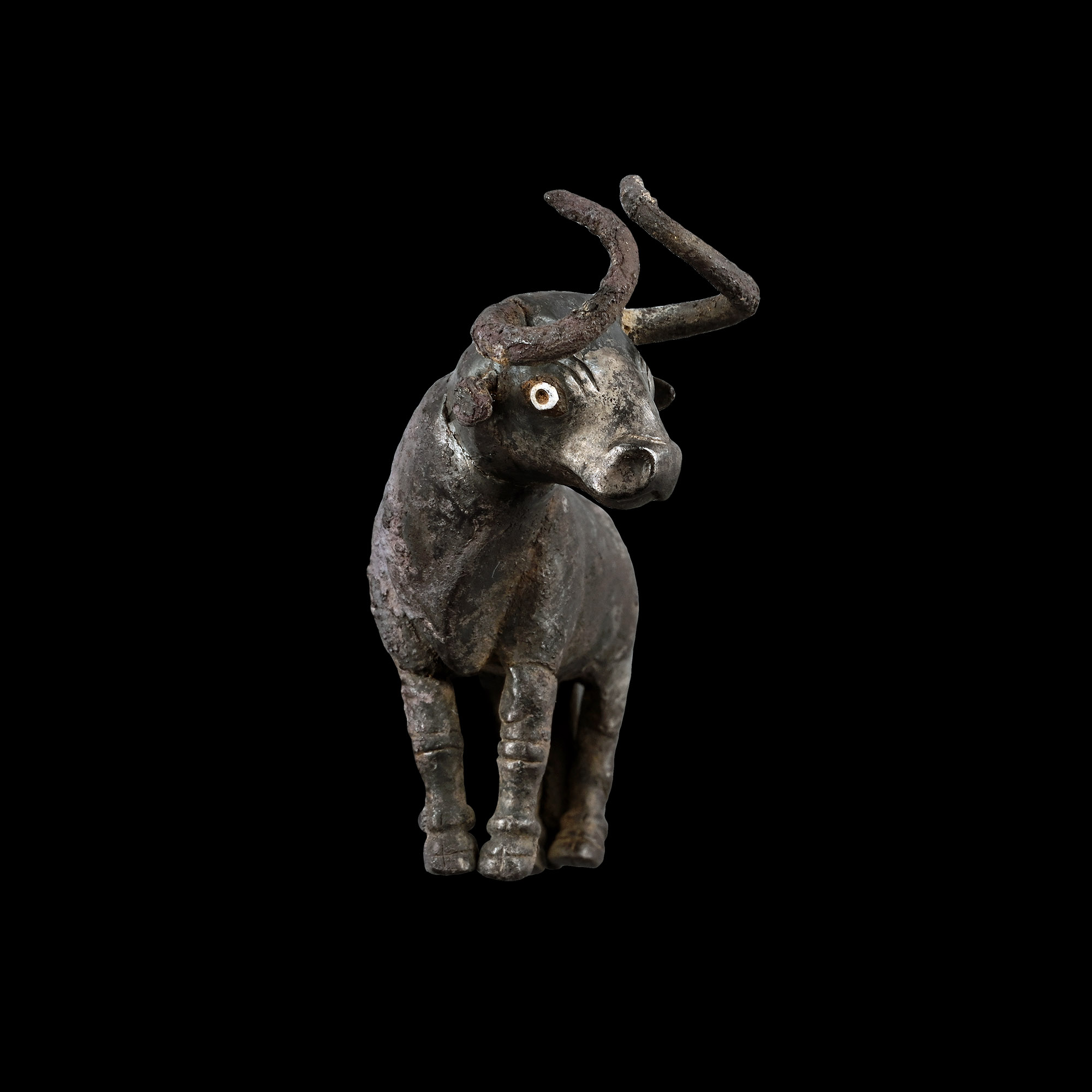
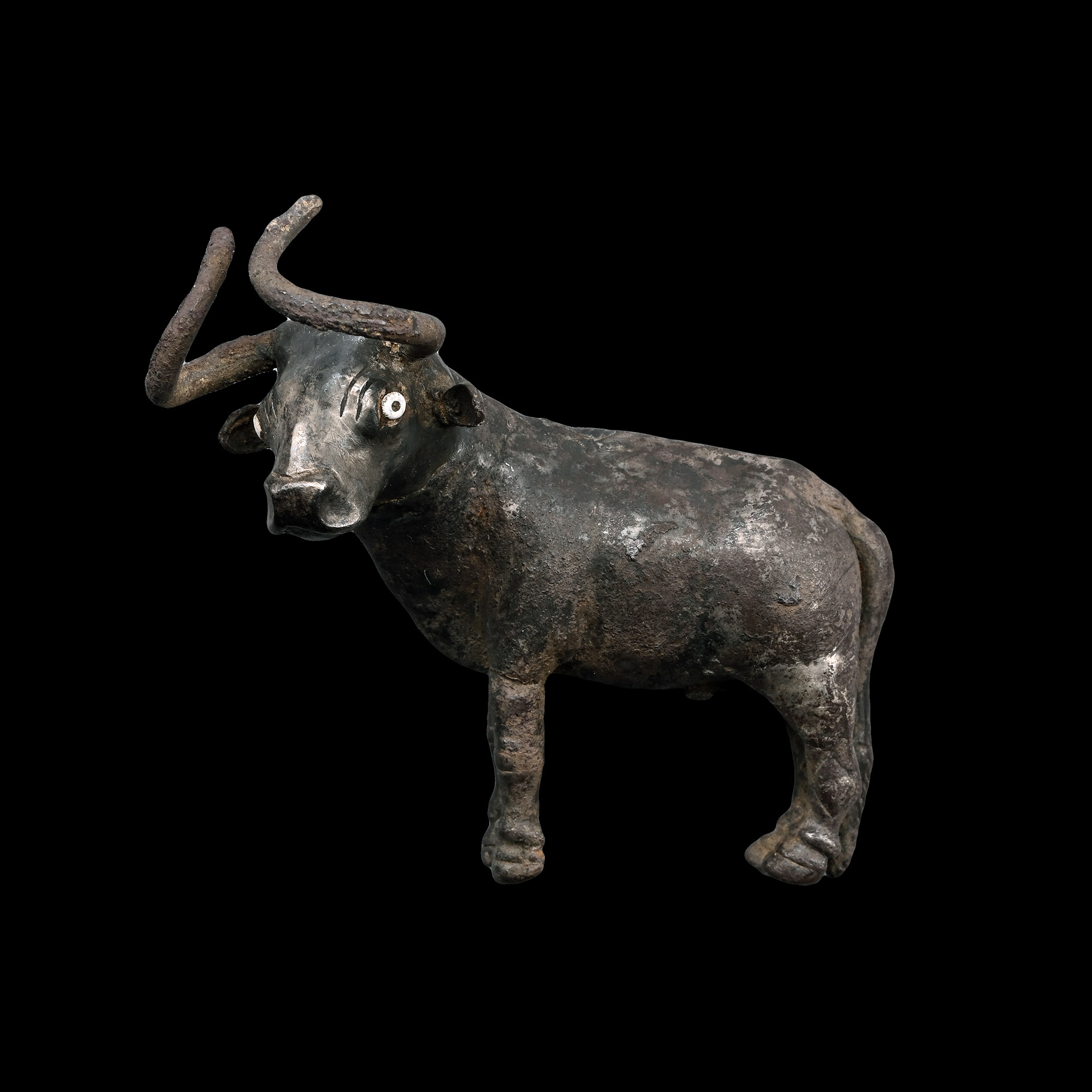
Early Proto-Elamite Silver Horned Bull Pendant
3100-2900 B.C.
2 3/4 in. (54.5 grams, 70 mm wide).
Representing an exquisite bull figure standing with his head turned dramatically to the left, depicted with large curled horns and inlaid white stone eyes, formed from thin hammered silver sheet in repoussé, depicting the bull as a hollow pendant, with the interior filled with natural bitumen; traces of an original suspension loop on the shoulder.
Provenancewith Mahboubian Gallery, New York, acquired prior to 1969.
Accompanied by an academic report by Dr Raffaele D’Amato.
This lot has been checked against the Interpol Database of stolen works of art and is accompanied by search certificate number no.13140-249434.
See Aruz, J. (ed), Art of the First Cities: The Third Millennium BC from the Mediterranean to the Indus, New York, 2003, items 42, 249. 314; Mahboubian, H., Art of Ancient Iran, London, 1997, figs.1-2, pp.36.
FootnotesObjects of this type are understood to be ritual or votive pendants, produced not for everyday wear but primarily for dedication in temple contexts. Bulls, goats, rams and other herd animals with horns were thematically abundant in the Ancient Near East, especially around the Iranian plateau circumscribed by the Zagros and Elbruz Mountains and multiple deserts. There are representations of bulls as pendants or votive statuettes (Mahboubian,1997, pp.59, 213, 224, 225, 225, 235, 240), vessel stands (Mahboubian, 1997, pp.40-41), vessel protomes and rhytons from Mesopotamia to Caucasus.
CONDITIONTimeLine Auctions follows a vetting process to ensure the authenticity and legality of all items, reinforcing our commitment to integrity and responsible trading. Each antiquity, antique, and coin lot undergoes thorough examination by a vetting committee of at least ten external specialists, professional trade association members, scientists, and archaeologists: Our Vetting Process
AUCTIONS:
TimeLine is a leading auction house specialising in antiquities, ancient art, collectables, natural history, coins, medals, and books. Our auctions offer museums, collectors, historians, and enthusiasts the opportunity to acquire unique and historically significant pieces.
LOT 0221
Early Proto-Elamite Silver Horned Bull Pendant
Estimate £20,000 - 30,000€23,200 - 34,800 (for guidance only)$27,000 - 40,500 (for guidance only)
-
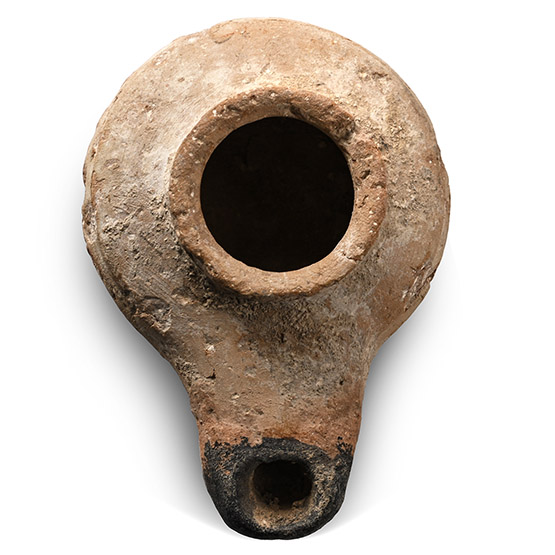
Judean Terracotta Shephelah Oil Lamp
3rd-2nd century B.C.Sold for (Inc. bp): £72
Comprising a drum-shaped body with a flat base and a low rim to the filler-hole, a long D-shaped nozzle. 79 grams, 85 mm
From the Lloyd and Jeanne Raport collection, Washington, D.C. and Florida, USA, formed between 1972-2000. Acquired through Bonhams, London, UK. -
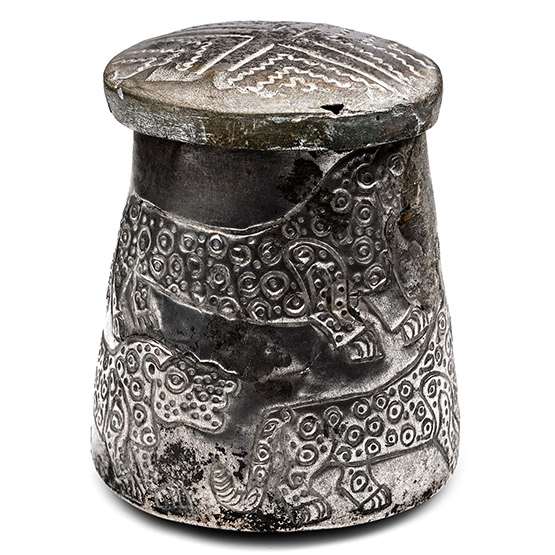
Elamite Silver Beaker with Leopards
Circa 2500-1500 B.C.Sold for (Inc. bp): £910
Sheet-silver pyxis with tapering sides and slightly curved base, everted rim; discoid lid with lip, impressed cruciform design with zigzags in the quadrants; sidewall with impressed frieze of leopards in profile, ring-and-dot and chased detailing to fur; some restoration. 47 grams, 87 mm
UK private collection before 2000. Acquired on the UK art market. with TimeLine Auctions, 5 September 2024, no.1255. Private collection, London, UK. -
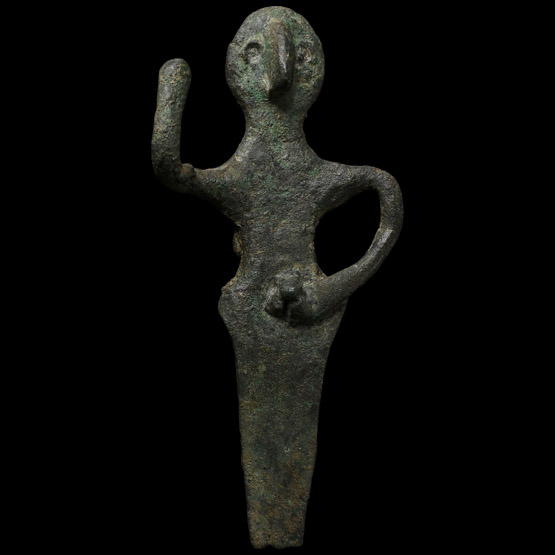
Syro-Hititte Bronze Male Idol
2nd millennium B.C.Sold for (Inc. bp): £247
Flat-section body with pinched facial detailing, right arm raised and bent, left hand protecting the genitals. 26.9 grams, 76 mm
Previously the property of an Islington, London, UK, dealer. From a London, UK, private collector since circa 1990.
