
Loading, please wait...
LOT 0255
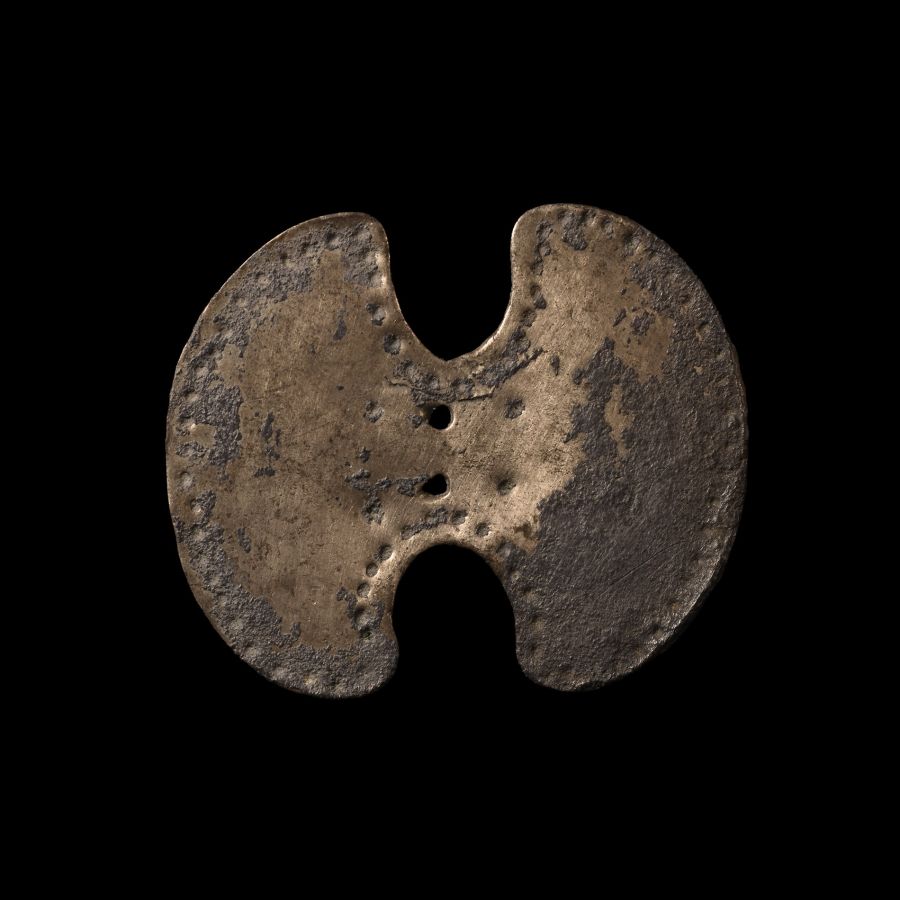
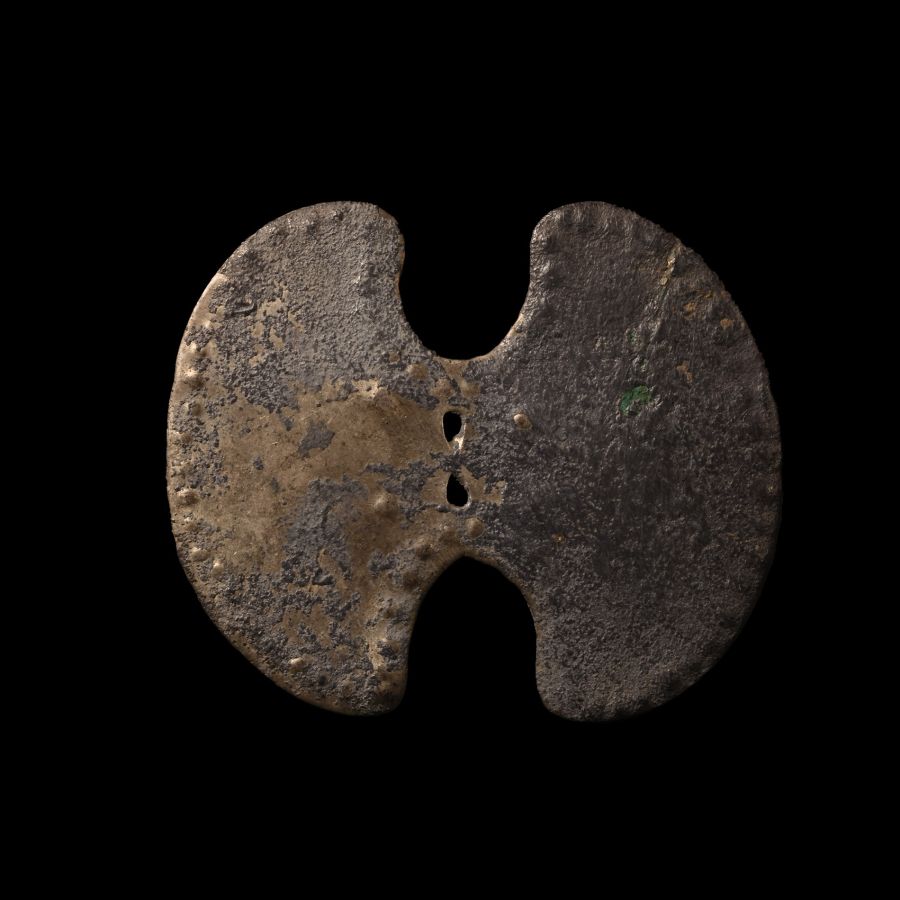
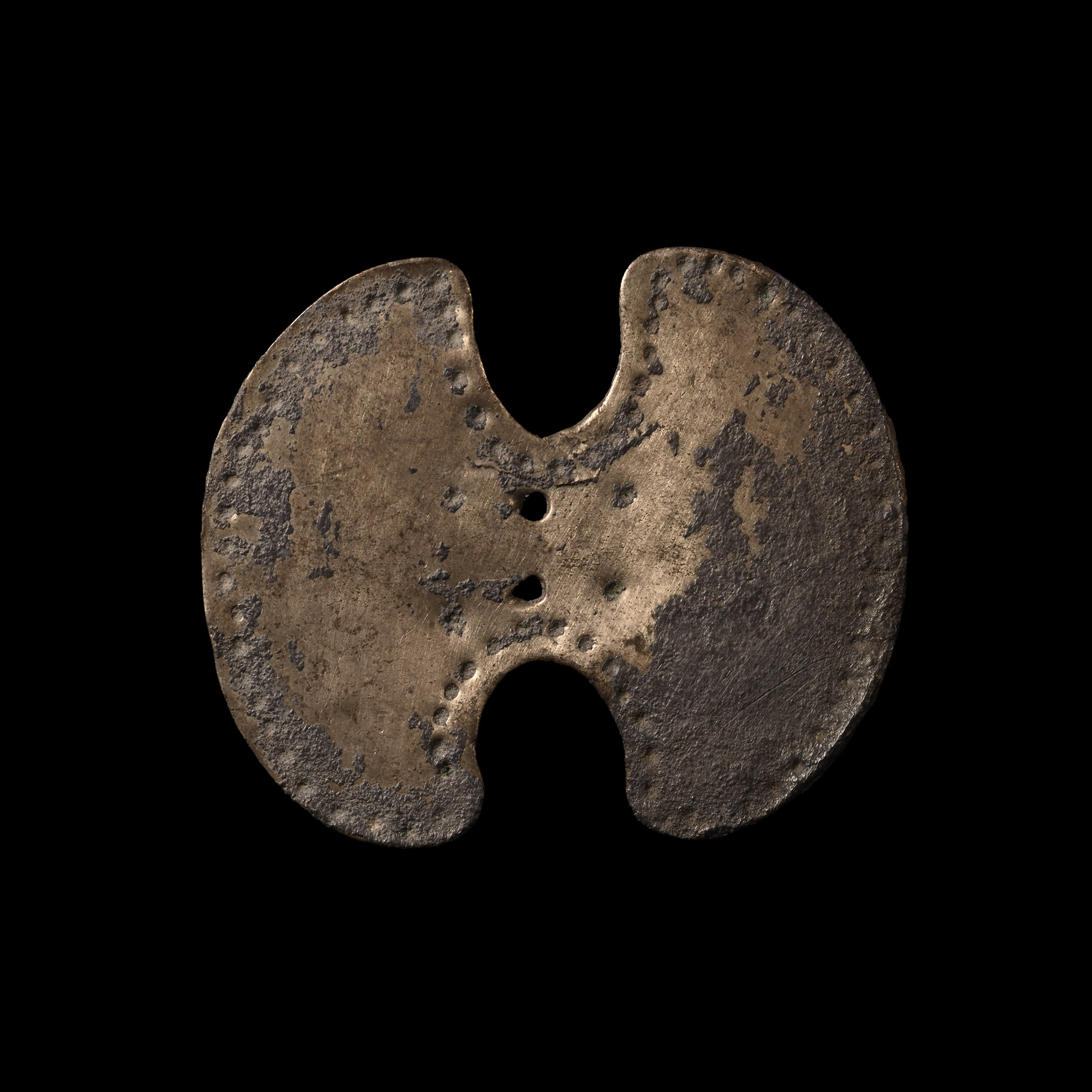
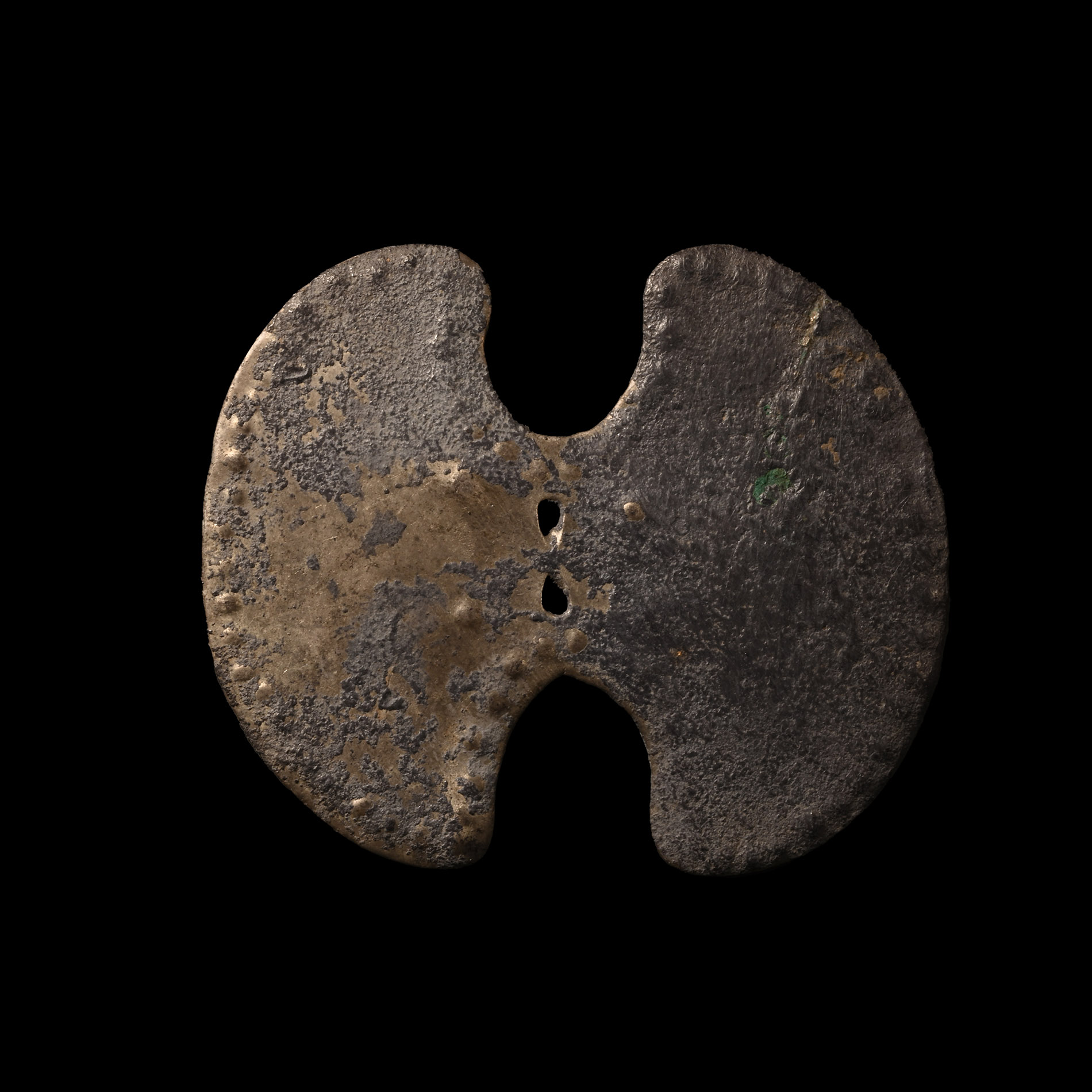
Early Bronze Age Silver Idol
CIRCA 2400-2100 B.C.
2 1/2 in. (17.88 grams, 64 mm).
Of unusual double pelta type, symbolising a female human body, embossed dots to the perimeter and two holes to the centre.
ProvenanceFrom a private family collection formed since the early 19th century, thence by descent.
Property of a New Zealand legal professional.
Accompanied by an academic report by Dr Raffaele D’Amato.
This lot has been checked against the Interpol Database of stolen works of art and is accompanied by search certificate number no.12318-223718.
This lot has been cleared against the Art Loss Register database, and is accompanied by an illustrated lot declaration signed by the Head of the Antiquities Department, Dr Raffaele D'Amato.
Cf. for similar idols but in marble, Bilgi, Ö., Anthropomorphic Representations in Anatolia before the Classical Age, Istanbul, 2014, figs.728, 729 and 741; for metallic idols of very similar (although not completely identical) shape see idem, pp.272-275; see also Connolly, P., The legend of Odysseus, Oxford, 1986; D’Amato, R., Salimbeti, A., Early Iron Age Greek Warrior 1100-700, Oxford, 2016.
CONDITIONTimeLine Auctions follows a vetting process to ensure the authenticity and legality of all items, reinforcing our commitment to integrity and responsible trading. Each antiquity, antique, and coin lot undergoes thorough examination by a vetting committee of at least ten external specialists, professional trade association members, scientists, and archaeologists: Our Vetting Process
AUCTIONS:
TimeLine is a leading auction house specialising in antiquities, ancient art, collectables, natural history, coins, medals, and books. Our auctions offer museums, collectors, historians, and enthusiasts the opportunity to acquire unique and historically significant pieces.
LOT 0255
Early Bronze Age Silver Idol
Estimate £2,000 - 3,000€2,320 - 3,480 (for guidance only)$2,700 - 4,050 (for guidance only)
-
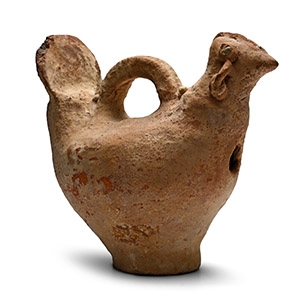
Western Asiatic Terracotta Bird Vessel with Glass Eyes
8th-9th century A.D.Estimate: £200 - 300 (+bp*)
Opening Bid: £100
Hollow-formed aviform vessel with loop handle and inset glass eyes, lateral loops at the neck. 395 grams, 15.2 cm
UK collection, 1990s. Acquired on the UK art market, before 2000. Private collection, Mr M.V., a London-based businessman. This lot has been cleared against the Art Loss Register database, and is accompanied by an illustrated lot declaration signed by the Head of the Antiquities Department, Dr Raffaele D'Amato. -
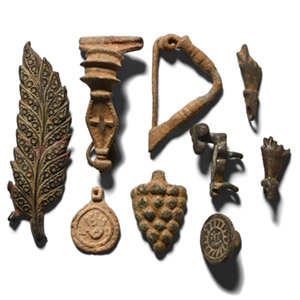
Western Asiatic Bronze Artefact Group
7th century B.C.-20th century A.D.Sold for (Inc. bp): £91
Including a fibula, aucissa brooch, fica pendant and other items. 50 grams total, 16-67 mm
From the collection of a gentleman, acquired on the London art market in the 1990s. This lot has been cleared against the Art Loss Register database, and is accompanied by an illustrated lot declaration signed by the Head of the Antiquities Department, Dr Raffaele D'Amato. -
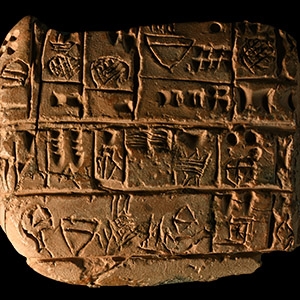
Sumerian Pictographic Tablet Fragment Listing Sheep and Goats
Jemdet Nasr Period, circa 3000 B.C.Sold for (Inc. bp): £3,770
Pillow-shaped tablet fragment with script to one face; accompanied by an old scholarly note, typed and signed by W.G. Lambert, late Professor of Assyriology, University of Birmingham, 1970-1993, which states: 'Portion of Clay tablet with Pictographic Script. 57x48 mm. This is an oblong tablet with rounded side and corners. Most of the obverse is preserved, only the top and left edges are missing. Most of the surface of the reverse is lost, but it was not written so the loss is not important. The obverse is divided into three columns, the first being a double column: each compartment has a smaller one beside it with figures alone. This is an administrative document from some town in Sumer, dating to the Jemdet Nasr period, c. 3000 B.C. Not everything can yet be understood, but some things are clear. The purpose of the double column is not known, but in the second column there are two immediately clear lines: 30 sheep; 1 (or:60) goat(s) The first two columns and the beginning of the third consist of compartments with signs for things and numbers, but the rest of the last column has more complex writing devices, and must be some kind of different statement. such as the name of the official in charge of the things listed, or the name of the office dealing with these matters, or also the name of the place where this listing was made. This tablet has been conserved by firing, and is in good condition.' 39 grams, 58 mm
Ex private collection of Mr S H; thence by descent,1980-1990. Accompanied by an original typed and signed scholarly note by the late W.G. Lambert, Professor of Assyriology at the University of Birmingham, 1970-1993. This lot has been cleared against the Art Loss Register database, and is accompanied by an illustrated lot declaration signed by the Head of the Antiquities Department, Dr Raffaele D'Amato.
