
Loading, please wait...
LOT 0187
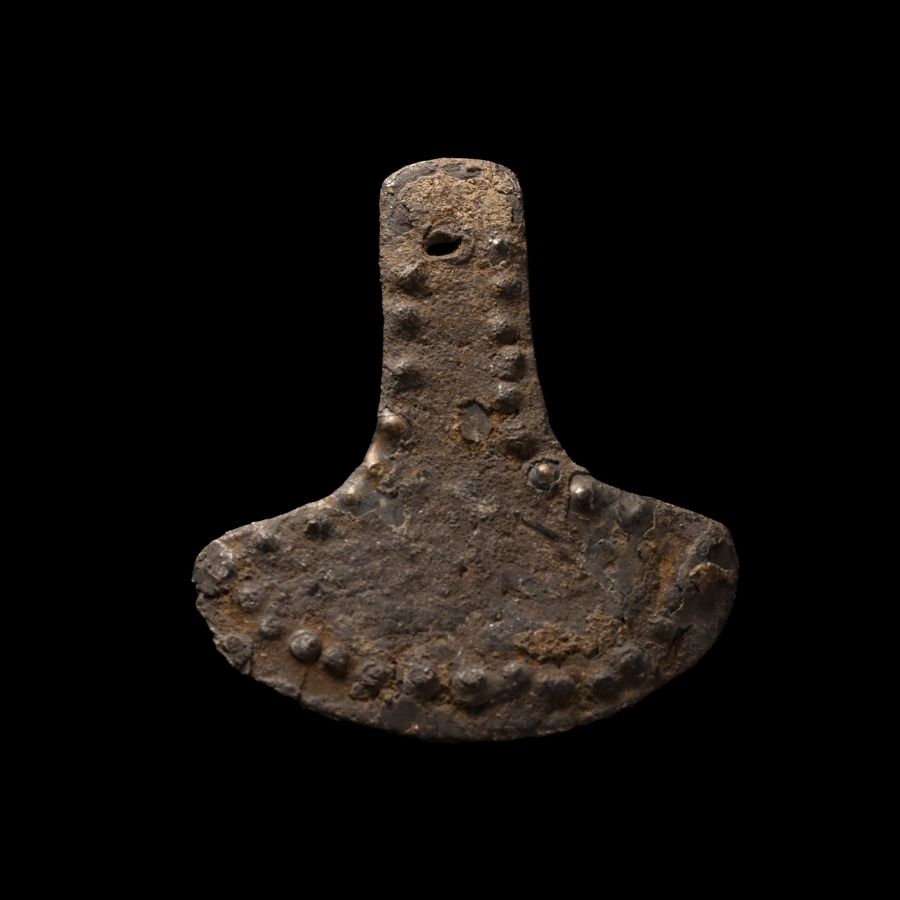
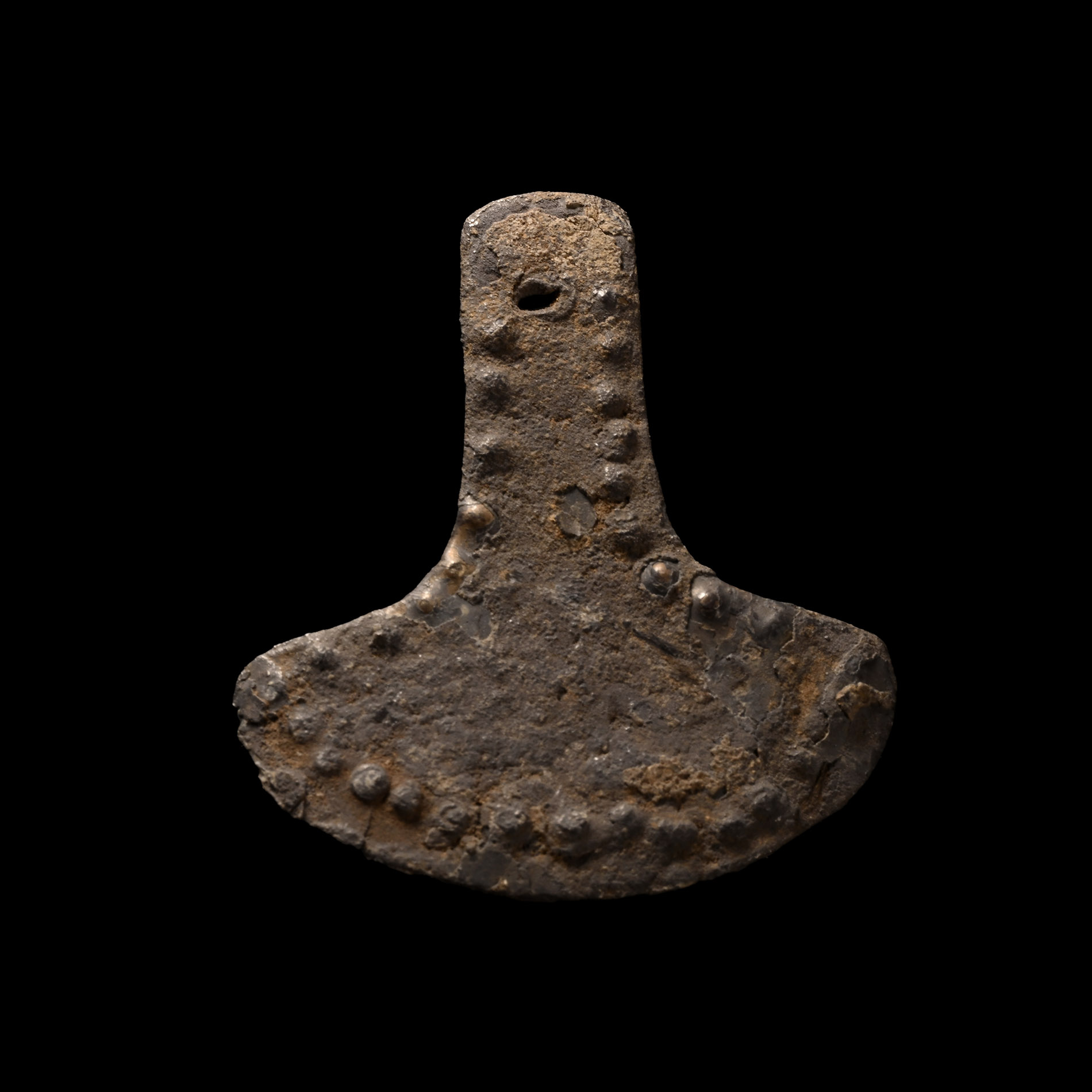
Early Bronze Age Silver Idol
CIRCA 2400-2100 B.C.
1 3/4 in. (2.75 grams, 44 mm).
Axe-shaped with crescentic body and long neck, symbolising a female body, perforated through the top with embossed perimeter.
ProvenanceFrom a private family collection formed since the early 19th century, thence by descent.
Property of a New Zealand legal professional.
Accompanied by an academic report by Dr Raffaele D’Amato.
This lot has been checked against the Interpol Database of stolen works of art and is accompanied by search certificate number no.12320-223722.
This lot has been cleared against the Art Loss Register database, and is accompanied by an illustrated lot declaration signed by the Head of the Antiquities Department, Dr Raffaele D'Amato.
Cf. for similar idols but in stone and clay, Bilgi, Ö., Anthropomorphic Representations in Anatolia before the Classical Age, Istanbul, 2014, figs.743, 792, 793; for metallic idols of very similar (although not completely identical) shape see idem, fig.782, p.273; see also Hoddinott, R.F., The Thracians, London, 1981, p.37, fig.19, especially nos.1-7, in clay.
CONDITIONTimeLine Auctions follows a vetting process to ensure the authenticity and legality of all items, reinforcing our commitment to integrity and responsible trading. Each antiquity, antique, and coin lot undergoes thorough examination by a vetting committee of at least ten external specialists, professional trade association members, scientists, and archaeologists: Our Vetting Process
AUCTIONS:
TimeLine is a leading auction house specialising in antiquities, ancient art, collectables, natural history, coins, medals, and books. Our auctions offer museums, collectors, historians, and enthusiasts the opportunity to acquire unique and historically significant pieces.
LOT 0187
Early Bronze Age Silver Idol
Estimate £1,000 - 1,400€1,160 - 1,620 (for guidance only)$1,350 - 1,890 (for guidance only)
-
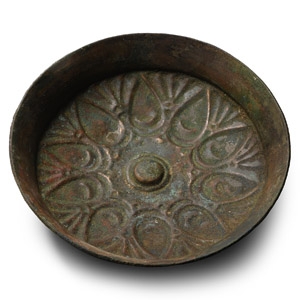
Achaemenid Bronze Phiale Mesomphalos
6th-4th century B.C.Sold for (Inc. bp): £338
With flanged rim, central mesomphalos boss surrounded by radiating lotus petals. 167 grams, 16.5 cm
Acquired 1980-2015. Ex Abelita family collection. This lot has been cleared against the Art Loss Register database, and is accompanied by an illustrated lot declaration signed by the Head of the Antiquities Department, Dr Raffaele D'Amato.
Phiale mesomphalos (literally: bowl with central boss) were the most popular form of vessel and were produced in a number of materials, including clay, bronze, silver and gold. They are a distinctive type of Achaemenid tableware, made by hammering or raising sheet metal, with decoration added in repoussé. They were used in banquets held by the nobility and for pouring libations at religious festivals. Phiales of this kind were a common gift from the Achaemenid king to the nobility which helped cement alliances among the different tribes of the Empire. The central boss to the underside allowed the user to secure their fingers and ensure a solid grip whilst drinking or pouring. -
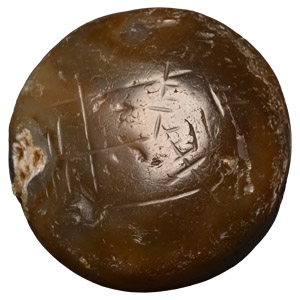
Sasanian Banded Agate Stamp Seal
4th-6th century A.D.Sold for (Inc. bp): £72
Plano-convex in profile with lightly incised geometric pattern to the underside, rectangle with vertical stem on a tiered base with lateral fronds; possibly a stylised winged figure or supplicant with raised arms. 18.6 grams, 26 mm
UK private collection before 2000. Acquired on the UK art market. Property of a London gentleman. This lot has been cleared against the Art Loss Register database, and is accompanied by an illustrated lot declaration signed by the Head of the Antiquities Department, Dr Raffaele D'Amato. -
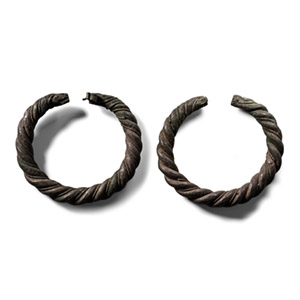
Western Asiatic Twisted Silver Bracelet Pair
10th-12th century A.D.Estimate: £1,000 - 1,400 (‡+bp*)
Opening Bid: £500
Each a penannular round-section band with a twisted filigree band coiled around the shank; clubbed finials, one with closure clip fitting. 259 grams total, 75-78 mm
Acquired in the mid 1980s-1990s. Private collection, Switzerland, thence by descent. Private collection, since the late 1990s. This lot has been cleared against the Art Loss Register database, and is accompanied by an illustrated lot declaration signed by the Head of the Antiquities Department, Dr Raffaele D'Amato.
