
Loading, please wait...
LOT 0186
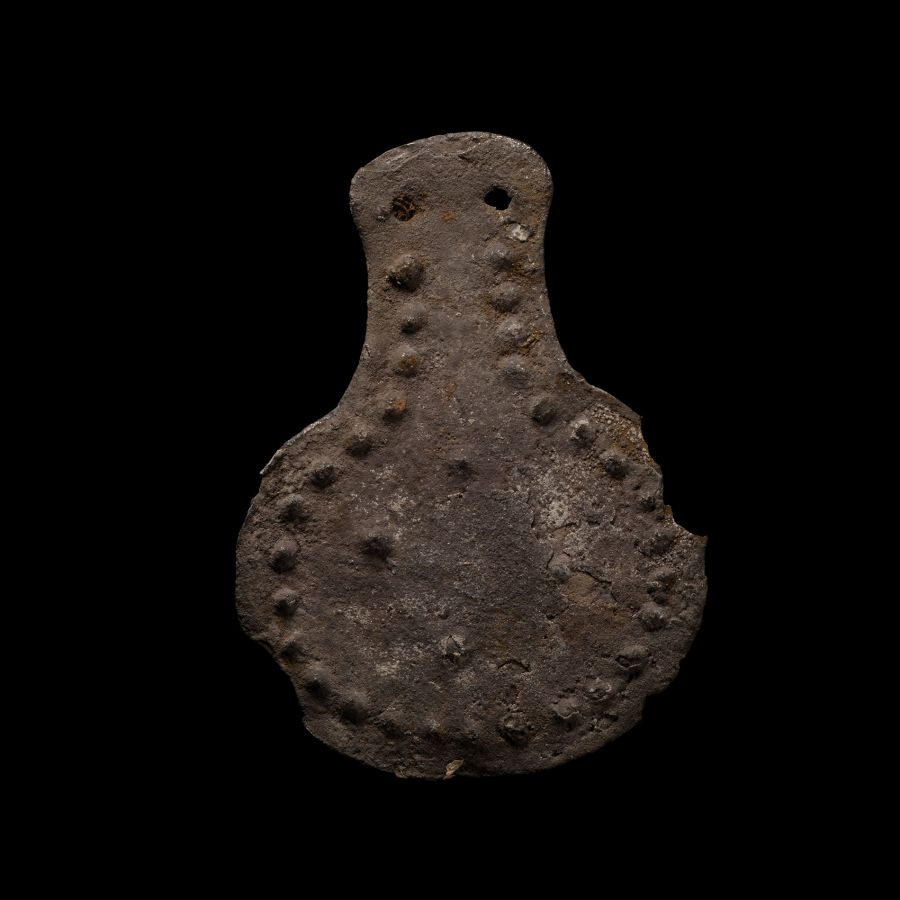
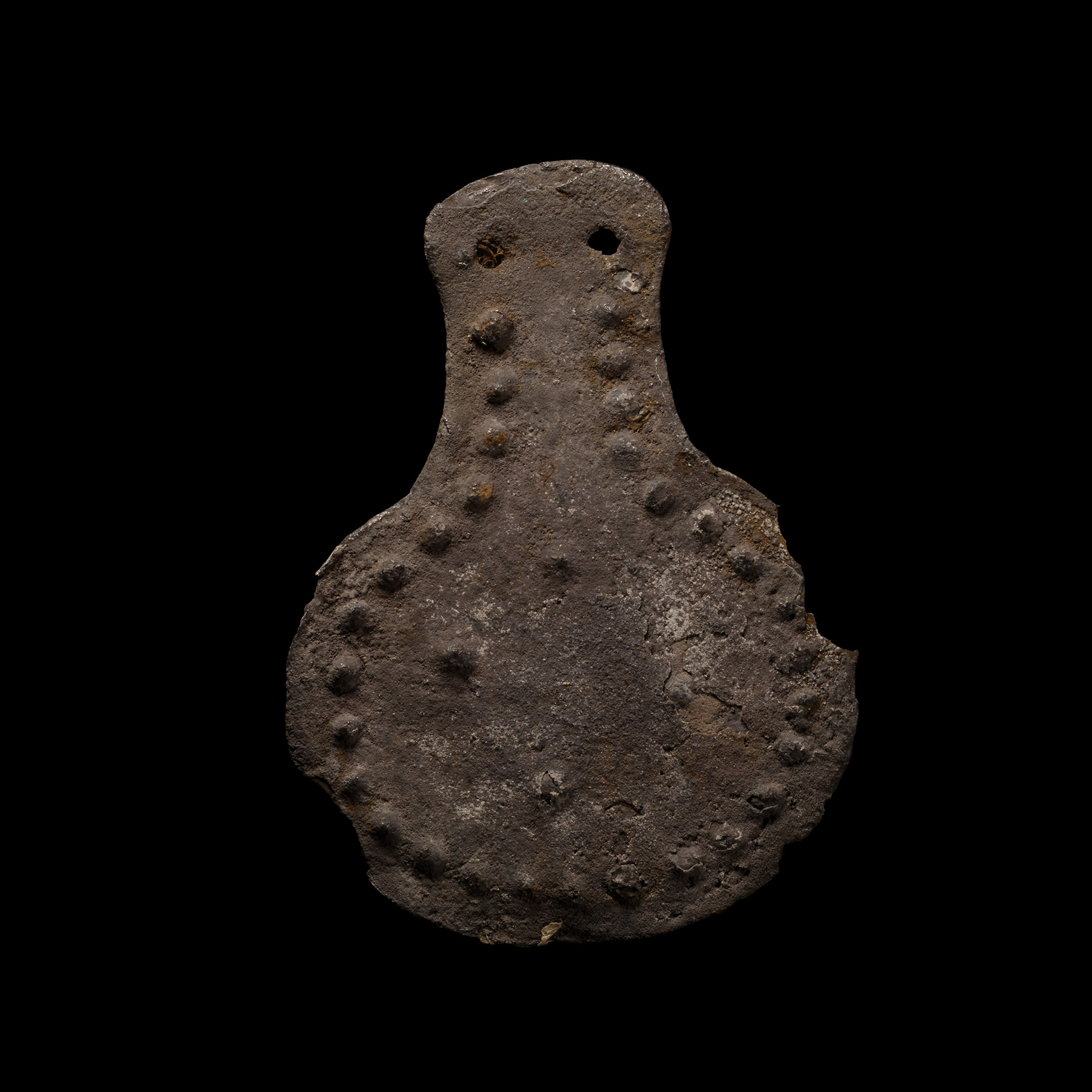
Early Bronze Age Silver Idol
CIRCA 2800-2100 B.C.
2 1/2 in. (6.87 grams, 63 mm).
With round female body and short neck, depicted armless, perforated with two parallel holes at the top for suspension; the edges and the centre embossed with dots.
ProvenanceFrom a private family collection formed since the early 19th century, thence by descent.
Property of a New Zealand legal professional.
Accompanied by an academic report by Dr Raffaele D’Amato.
This lot has been checked against the Interpol Database of stolen works of art and is accompanied by search certificate number no.12319-223722.
This lot has been cleared against the Art Loss Register database, and is accompanied by an illustrated lot declaration signed by the Head of the Antiquities Department, Dr Raffaele D'Amato.
Cf. for similar idols in marble, Bilgi, Ö., Anthropomorphic Representations in Anatolia before the Classical Age, Istanbul, 2014, figs.736-737; for metallic idols of very similar (although not completely identical) shape see idem, fig.653, p.241; see also Hoddinott, R.,F., The Thracians, London, 1981, pp.20-21, fig.8, especially nos.10, 23, 31; Zimmermann, B., ‘Anatolia and the Balkans, once again - Ring-shaped idols from Western Asia and a critical reassessment of some 'early bronze age' items from İki̇ztepe, Turkey’ in Oxford Journal of Archaeology 26 (1), pp.25-33, fig.2 no.9, for similar.
FootnotesThese idols have a broad chronological and spatial range, with late variants known from Late Chalcolithic and Early Bronze Age burial contexts in central Europe and Western Asia. Some of these idols have round bodies, and heads in the form of tabs. They developed from the earlier stone idols, leading to the representation of the human form becoming even more stylised when crafted in silver or copper.
CONDITIONTimeLine Auctions follows a vetting process to ensure the authenticity and legality of all items, reinforcing our commitment to integrity and responsible trading. Each antiquity, antique, and coin lot undergoes thorough examination by a vetting committee of at least ten external specialists, professional trade association members, scientists, and archaeologists: Our Vetting Process
AUCTIONS:
TimeLine is a leading auction house specialising in antiquities, ancient art, collectables, natural history, coins, medals, and books. Our auctions offer museums, collectors, historians, and enthusiasts the opportunity to acquire unique and historically significant pieces.
LOT 0186
Early Bronze Age Silver Idol
Estimate £1,500 - 2,000€1,740 - 2,320 (for guidance only)$2,030 - 2,700 (for guidance only)
-
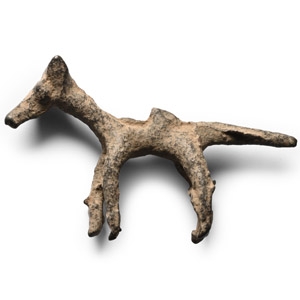
Luristan Bronze Animal
13th-7th century B.C.Sold for (Inc. bp): £78
Modelled in the round, with pricked ears and extended tail, casting seam to the spine. 17.02 grams, 58 mm
Acquired 1980-2015. Ex Abelita family collection. This lot has been cleared against the Art Loss Register database, and is accompanied by an illustrated lot declaration signed by the Head of the Antiquities Department, Dr Raffaele D'Amato. -
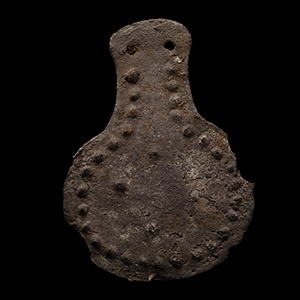
Early Bronze Age Silver Idol
Circa 2800-2100 B.C.Estimate: £1,500 - 2,000 (+bp*)
Opening Bid: £222
With round female body and short neck, depicted armless, perforated with two parallel holes at the top for suspension; the edges and the centre embossed with dots. 6.87 grams, 63 mm
From a private family collection formed since the early 19th century, thence by descent. Property of a New Zealand legal professional. Accompanied by an academic report by Dr Raffaele D’Amato. This lot has been checked against the Interpol Database of stolen works of art and is accompanied by search certificate number no.12319-223722. This lot has been cleared against the Art Loss Register database, and is accompanied by an illustrated lot declaration signed by the Head of the Antiquities Department, Dr Raffaele D'Amato.
These idols have a broad chronological and spatial range, with late variants known from Late Chalcolithic and Early Bronze Age burial contexts in central Europe and Western Asia. Some of these idols have round bodies, and heads in the form of tabs. They developed from the earlier stone idols, leading to the representation of the human form becoming even more stylised when crafted in silver or copper. -
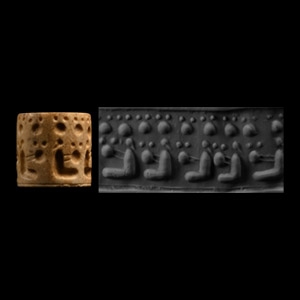
Jemdet Nasr Type White Stone Cylinder Seal with Seated Figures
3rd millennium B.C.Estimate: £450 - 650 (+bp*)
Opening Bid: £250
Drum-shaped with row of seated figures, mainly executed with a drill, framed with a row of pellets; accompanied by a museum-quality impression. 30 grams, 25 mm
Ex S. collection, London, UK, 1980s-2000s. This lot has been cleared against the Art Loss Register database, and is accompanied by an illustrated lot declaration signed by the Head of the Antiquities Department, Dr Raffaele D'Amato.
