
Loading, please wait...
LOT 1116
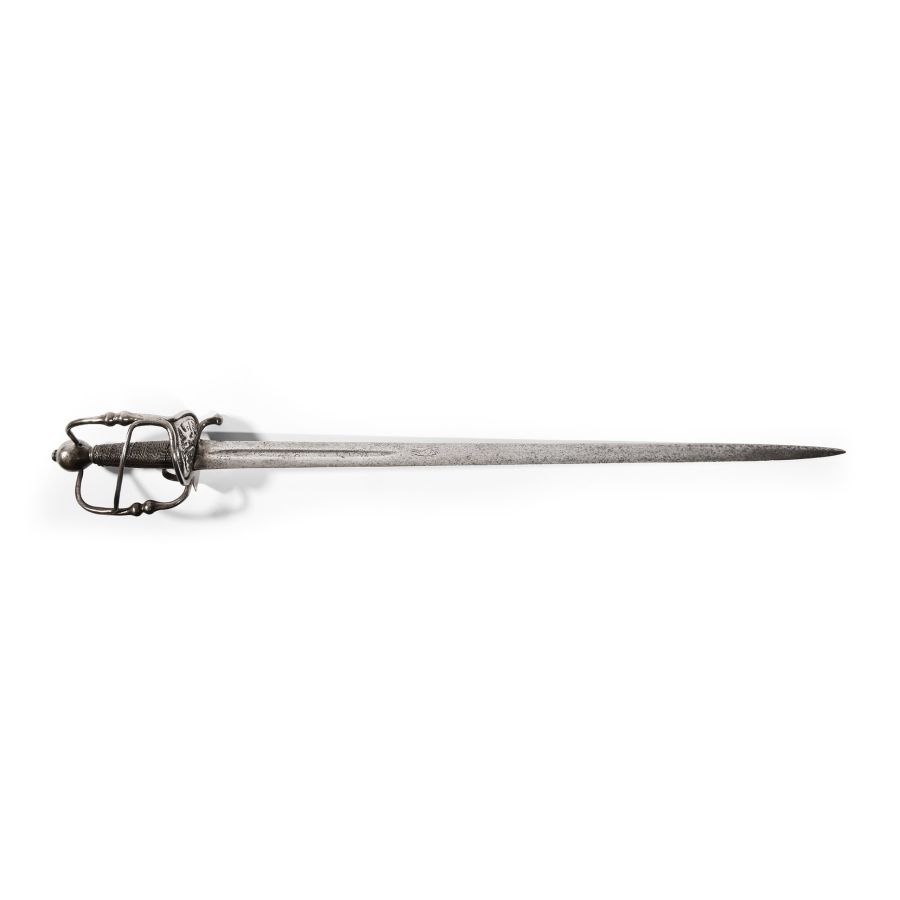
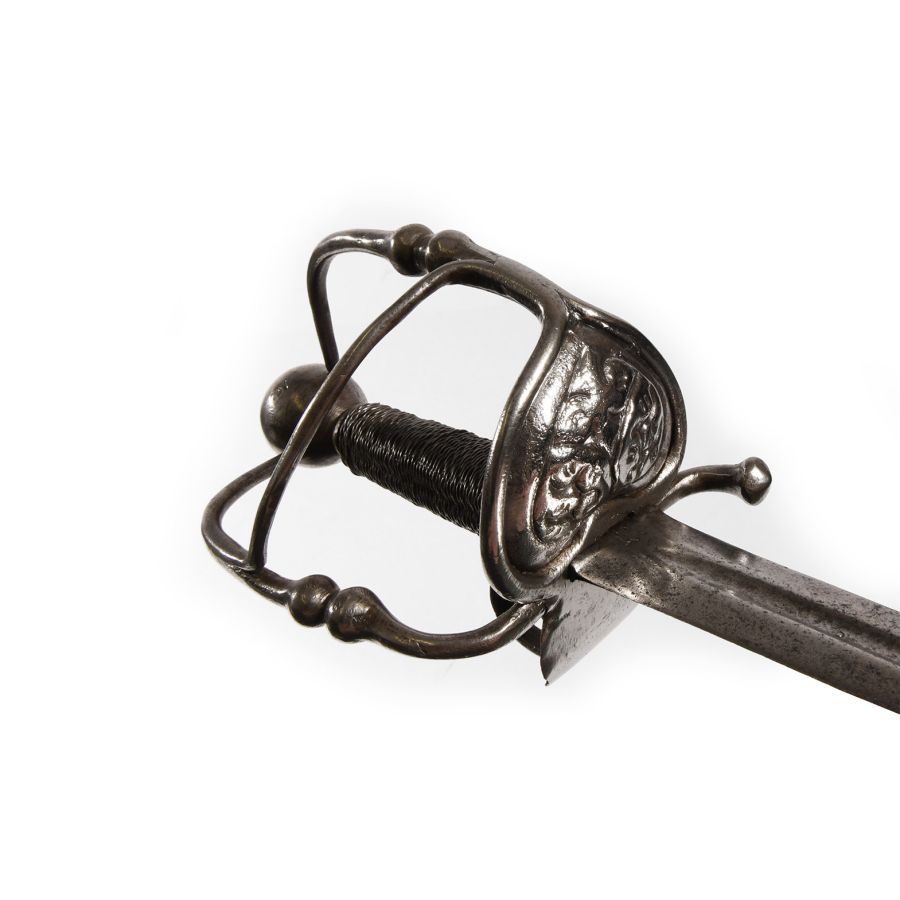
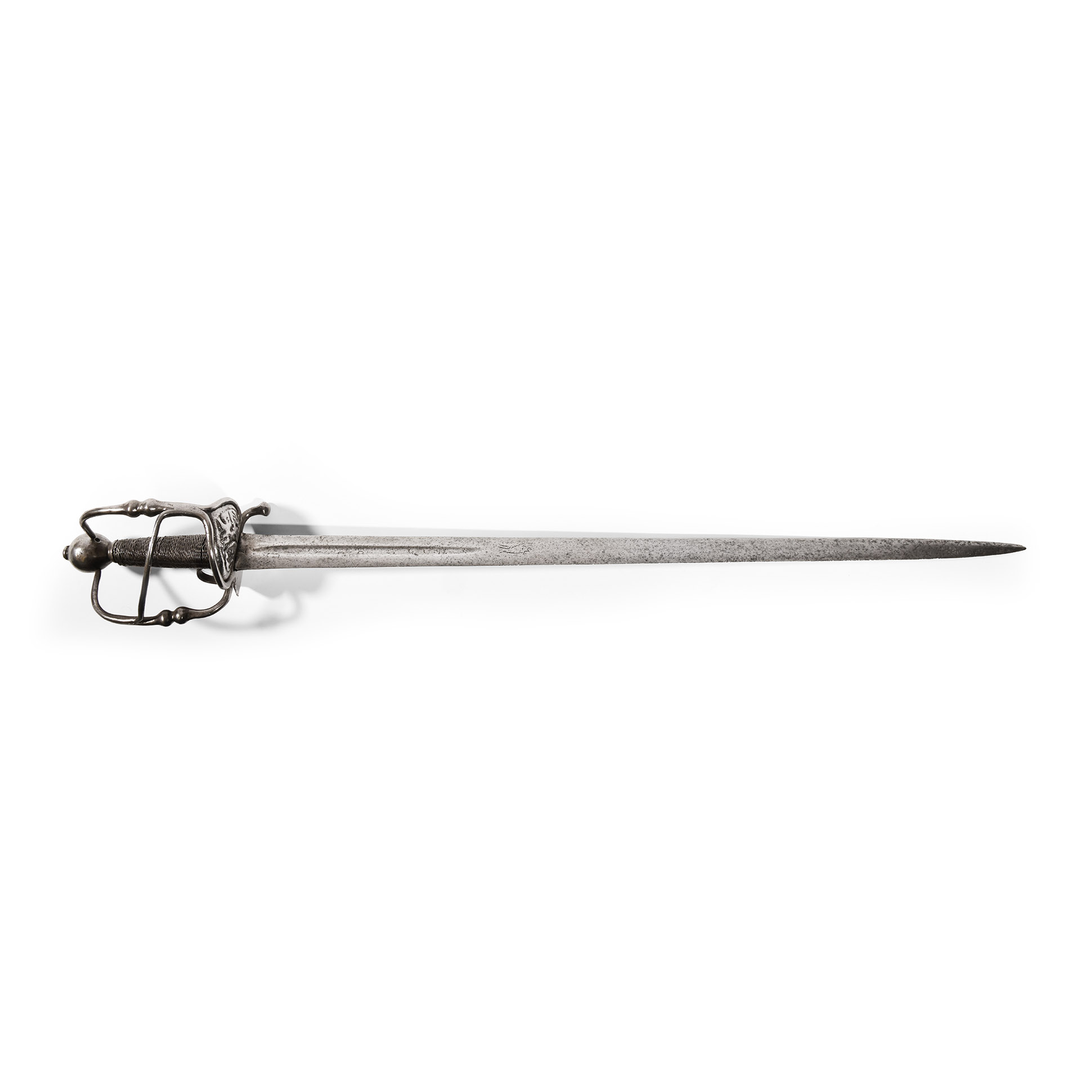
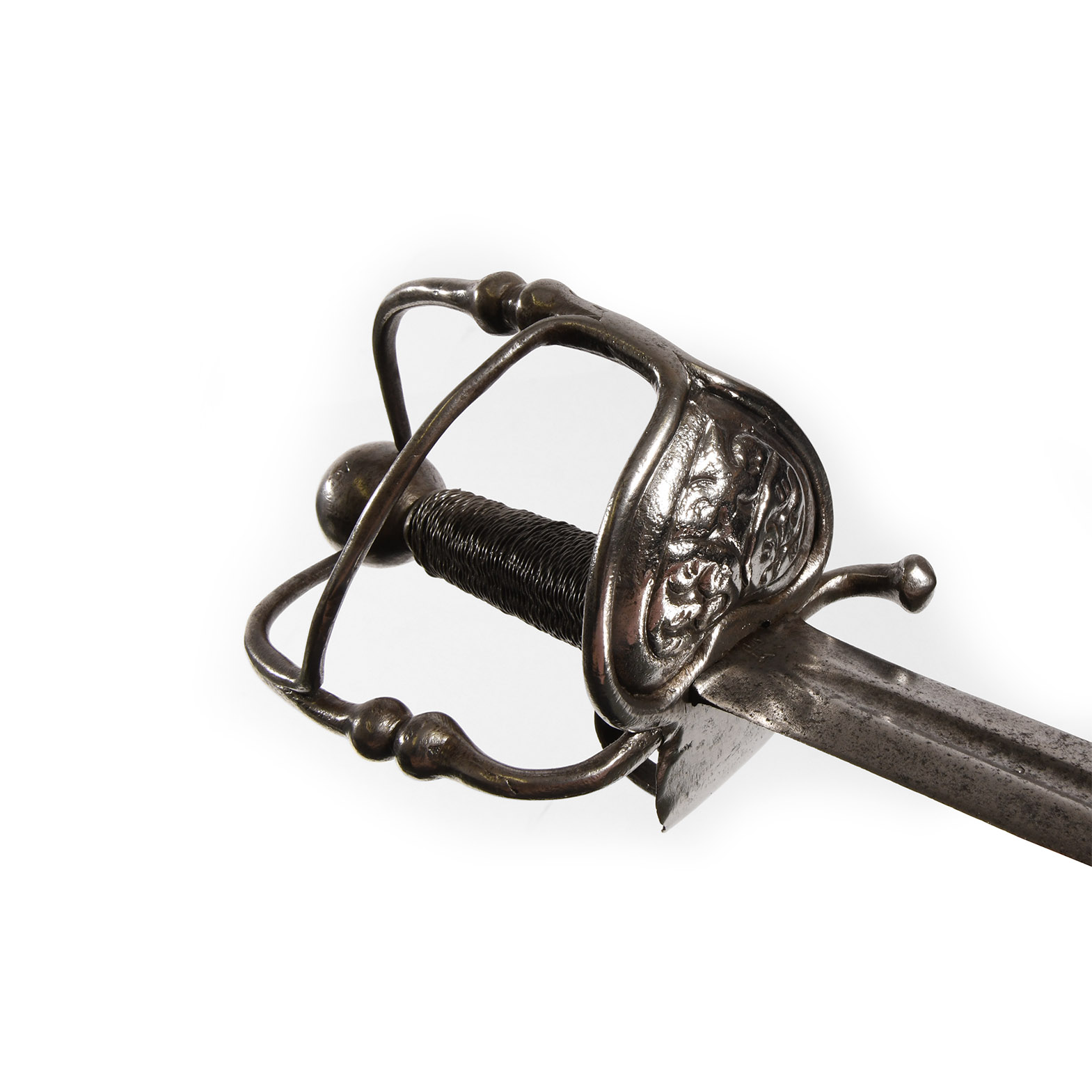
Dutch Thumb Ring Sword
MID 16TH CENTURY A.D.
33 in. (826 grams, 84 cm).
The blade composed of a straight, double edge with single fuller and clear running wolf marks; signed 'S AH A GOM' in both fullers with 'shooting star' below and with punched crown mark just below the hilt; twisted wire grip, thumb ring, leaf-shaped guard to hilt, bulbous pommel.
ProvenanceAcquired from West Street Antiques, Dorking, Surrey, UK, 2015.
The Kusmirek Collection, UK.
Accompanied by copy of a previous listing and item ticket.
TimeLine Auctions follows a vetting process to ensure the authenticity and legality of all items, reinforcing our commitment to integrity and responsible trading. Each antiquity, antique, and coin lot undergoes thorough examination by a vetting committee of at least ten external specialists, professional trade association members, scientists, and archaeologists: Our Vetting Process
AUCTIONS:
TimeLine is a leading auction house specialising in antiquities, ancient art, collectables, natural history, coins, medals, and books. Our auctions offer museums, collectors, historians, and enthusiasts the opportunity to acquire unique and historically significant pieces.
-
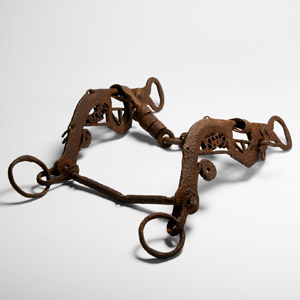
Byzantine Iron Horse Bit
14th-16th century A.D.Estimate: £200 - 300 (+bp*)
Opening Bid: £111
Composed of arched openwork shanks with looped terminals; one end fitted with large hoops and bar between; one end with a tripartite mouthpiece comprising two collared bars connected by a central hoop; Byzantine or early Ottoman. 340 grams, 19.5 cm
Fine condition.
Collection of Dr. Hanns-Ulrich Haedeke (1928-2017), author of ‘Schmuck Aus Drei Jahrtausenden’ and who became the director of the Museum of Klingenmuseum in Solingen, Germany, in 1968; the collection was formed in the early 1960s. From an important private Dutch collection.
This type of horse bit is visible on one of the most important equestrian artworks of the 15th century - the Cappella dei Magi by Benozzo Gozzoli, a painting representing the Three Kings visiting Christ, depicted in costumes belonging to the early quarter of 15th century. All the cavalrymen in the artwork had heavy curb-bits (with short and curved shanks, as in our specimen) and heavy, single reins. -
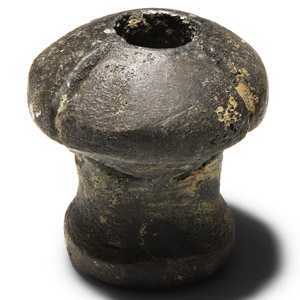
Urartu Bronze Mace or Sceptre Head
9th-8th century B.C.Sold for (Inc. bp): £208
With cylindrical head and narrow flanged base, the head divided in four petals. 490 grams, 60 mm
Acquired on the UK art market. Property of a Ruislip, UK, gentleman, by inheritance.
Assyrian and Urartian officers are identified by their weapons in the reliefs. It is not so easy to definitely identify cavalry officers on the palace reliefs of the Assyrian kings, but their identification is based mainly on the context they appear in, and on some insignia (mace, sceptre) they carry with them. Hence, the mace was not only a practical weapon, but also a command insignia. -
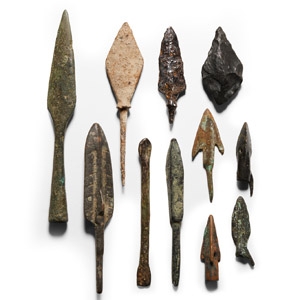
Greek and Other Mixed Arrowhead Collection
Circa 17th millennium B.C.-6th century A.D.Sold for (Inc. bp): £78
Comprising a Mesolithic flint arrowhead of triangular form; a paddle shaped arrowhead with a flat, comparatively wide mid-rib (Elamite or Old Babylonian); a fully developed bronze arrowhead with a large lozenge-section midrib and triangular barbed blade; an arrowhead with a long slender blade with rounded shoulders and wide flat mid-rib (both Luristan); two bronze arrowheads with slender lozenge-shaped blade and socket extending near the tip, with a side lug (Scythian); a lozenge form blade with a wide socket and high mid-rib (Greek); a large arrowhead with leaf-shaped blade and thin stop ridge collar; a sub-triangular arrowhead with the blade running diagonally to the stop ridge collar at its base; a lozenge-shaped arrowhead with a flat blade, circular stop ridge and long spiked tang (all three Roman); a bronze votive arrow. 75 grams total, 32-96 mm
Acquired on the UK art market. Property of a Ruislip, UK, gentleman, by inheritance.
In the Greek warfare, archers were mainly employed by Scythians and Cretans. Both used composite bows made of wood, horn, bone and sinew. This explains the great range of Scythian arrowheads also found on the Greek sites.
