
LOT 2861
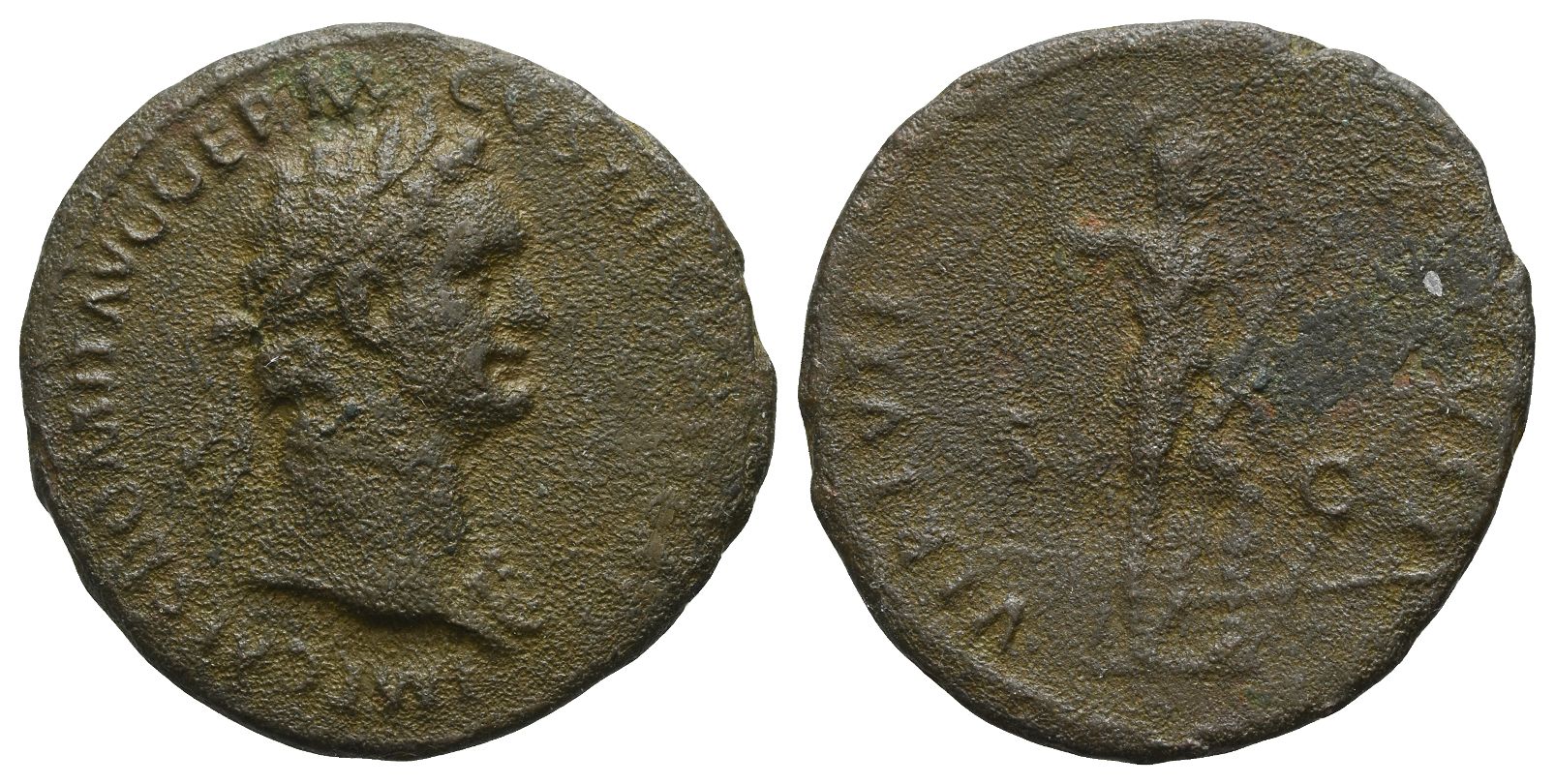
Domitian AE As. AD 81-96.
Rome, AD 86. IMP CAES DOMIT AVG GERM COS XIII CENS PER P P, laureate head to right, wearing aegis / VIRTVTI AVGVSTI, Virtus standing to right, foot on helmet, holding spear and parazonium; S-C across fields. RIC II.1 500; BMCRE 394. Near Very Fine.(8.51gr, 29mm, 8h.).
ProvenanceAcquired on the UK art market; Property of an Essex, UK, collector.
TimeLine Auctions follows a vetting process to ensure the authenticity and legality of all items, reinforcing our commitment to integrity and responsible trading. Each antiquity, antique, and coin lot undergoes thorough examination by a vetting committee of at least ten external specialists, professional trade association members, scientists, and archaeologists: Our Vetting Process
AUCTIONS:
TimeLine is a leading auction house specialising in antiquities, ancient art, collectables, natural history, coins, medals, and books. Our auctions offer museums, collectors, historians, and enthusiasts the opportunity to acquire unique and historically significant pieces.
-
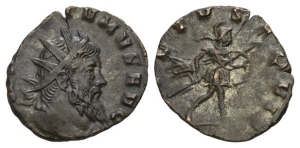
Aureolus, Romano-Gallic Usurper BI Antoninianus. AD 268-269.
Sold for (Inc. bp): £59
Mediolanum mint; struck AD 268. In the name of Postumus. IMP POSTVMVS AVG, radiate, draped and cuirassed bust to right / VIRTVS EQVIT, Mars walking to right, holding spear and shield; [T?] in exergue. RIC V.2 388; Cohen 441. 2.45gr, 19mm, 12h.
Good Very Fine.
Property of a Cambridgeshire, UK, gentleman. -
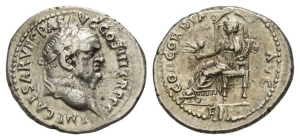
Vespasian AR Denarius. AD 69-79.
Estimate: £200 - 300 (+bp*)
Opening Bid: £100
Ephesus mint; struck AD 71. IMP CAESAR VESPAS AVG COS III TR P P P, laureate head to right / CONCORDIA AVG, Ceres seated to left, on ornate high-backed chair, holding corn ears, poppy and cornucopia; EPHE (partially ligate) in exergue. RIC II.1 1428; RPC II 830; BMCRE 453; RSC 67. 3.41gr, 19mm, 6h.
Good Very Fine.
Ex German art market, 2000s. Acquired from an EU collector living in London. From the collection of a Surrey, UK, gentleman. -
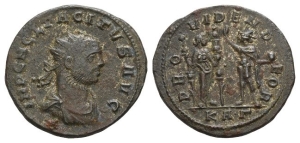
Tacitus BI Antoninianus. AD 275-276.
Sold for (Inc. bp): £13
Serdica mint; struck AD 276. 3rd officina. IMP C M CL TACITVS AVG, radiate, draped and cuirassed bust to right / PROVIDEN D-EOR, Fides standing to right, with two standards, facing Sol standing to left, with globe and hand raised; KA•Γ• in exergue. RIC V online 3941. 3.94gr, 23mm, 12h.
Very Fine.
Property of a Cambridgeshire, UK, gentleman.
