
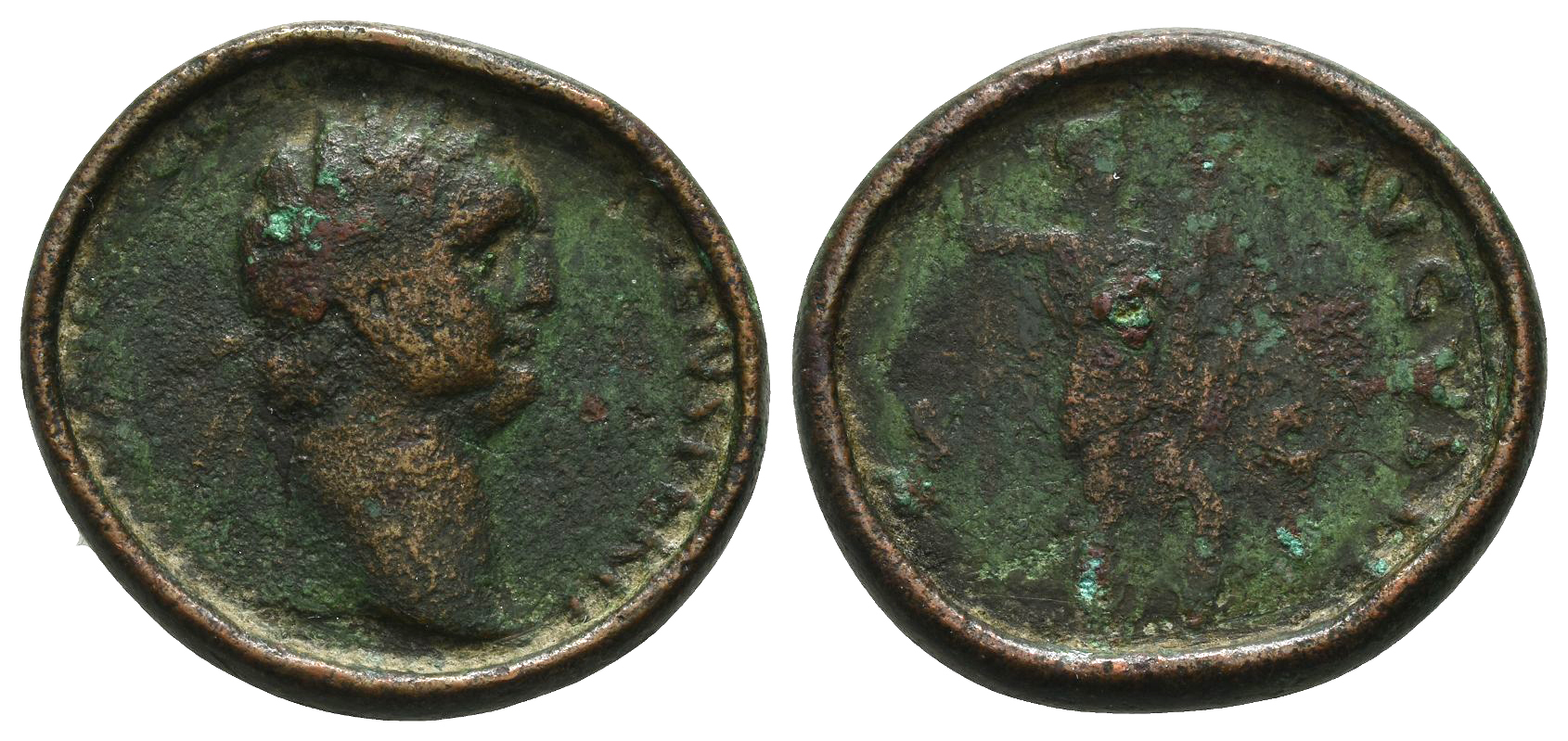
LOT 2862
Domitian AE As. AD 81-96.
Rome mint; struck AD 87. [IMP CAES DOMIT AVG GERM COS XIII] CENS PER P P, laureate head to right / [VIRTVTI] AVGVSTI, Virtus standing to right, foot on helmet, holding spear and parazonium; S C across fields. RIC II.1 550; BMCRE 404. Fine. Edges having been tapped to create raised rims.(10.04gr, 28mm, 6h.).
ProvenanceProperty of a Cambridgeshire, UK, gentleman.
FootnotesProto-contorniate is the modern term used to describe Roman Imperial and Provincial bronze coins of the first, second, and early third centuries with hammered-up edges. These raised edges on the rims probably occurred after these bronze issues no longer circulated and ceased to be part of the currency in general use. A common assumption is that proto-contorniates functioned as game counters since the rim created through hammering could protect the designs. Andreas Alföldi in Die Kontorniaten (Budapest, 1943) believed proto-contorniates to be forerunners of the contorniates of the fourth and fifth centuries. He argued that proto-contorniates were New Year's gifts and that the older coins were actually hammered in the fourth century before the contorniates proper came into being.
TimeLine Auctions follows a vetting process to ensure the authenticity and legality of all items, reinforcing our commitment to integrity and responsible trading. Each antiquity, antique, and coin lot undergoes thorough examination by a vetting committee of at least ten external specialists, professional trade association members, scientists, and archaeologists: Our Vetting Process
AUCTIONS:
TimeLine is a leading auction house specialising in antiquities, ancient art, collectables, natural history, coins, medals, and books. Our auctions offer museums, collectors, historians, and enthusiasts the opportunity to acquire unique and historically significant pieces.
-
![Group of Three [3] Late Roman Emperors AE Coins.](https://timelineauctions.com/upload/images/items/small/222793-s.jpg)
Group of Three [3] Late Roman Emperors AE Coins. AD 335-408.
Sold for (Inc. bp): £20
Group of bronze issues of Delmatius (AD 335-337), Theodosius I (AD 379-395), and Arcadius (AD 383-408). 2.86gr total, 10-14mm.
Near Very Fine to Very Fine.
Property of an Essex, UK, collector. -
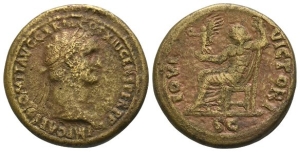
Domitian AE Sestertius. AD 88-89.
Estimate: £60 - 80 (+bp*)
Opening Bid: £30
Rome. IMP CAES DOMIT AVG GERM COS XIII CENS PER P P, laureate head to right / IOVI VICTORI, Jupiter seated to left, holding Victory and sceptre; S C in exergue. RIC II.1 633; C. 313; BN 436; BMCRE 406. 28.76gr, 34mm, 7h.
Near Very Fine. Tooled.
From the collection of a gentleman, acquired on the London art market in the 1990s. -
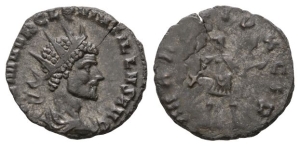
Quintillus BI Antoninianus. AD 270.
Sold for (Inc. bp): £59
Rome mint. Struck AD 270. 10th officina. [IMP C] M AVR CL QVINTILLVS AVG, radiate, draped and cuirassed bust to right, seen from rear / MAR-TI PACIF, Mars walking to left, holding olive branch with right hand, spear and shield with left; X in left field. RIC V.1 24 var. (not cuirassed); MER-RIC 1187 (temporary). 2.60gr, 20mm, 12h.
Good Very Fine. Some silvering remaining. Flan crack at 2h.
From a London, UK, collection, 1990s.
