
Loading, please wait...
LOT 0387
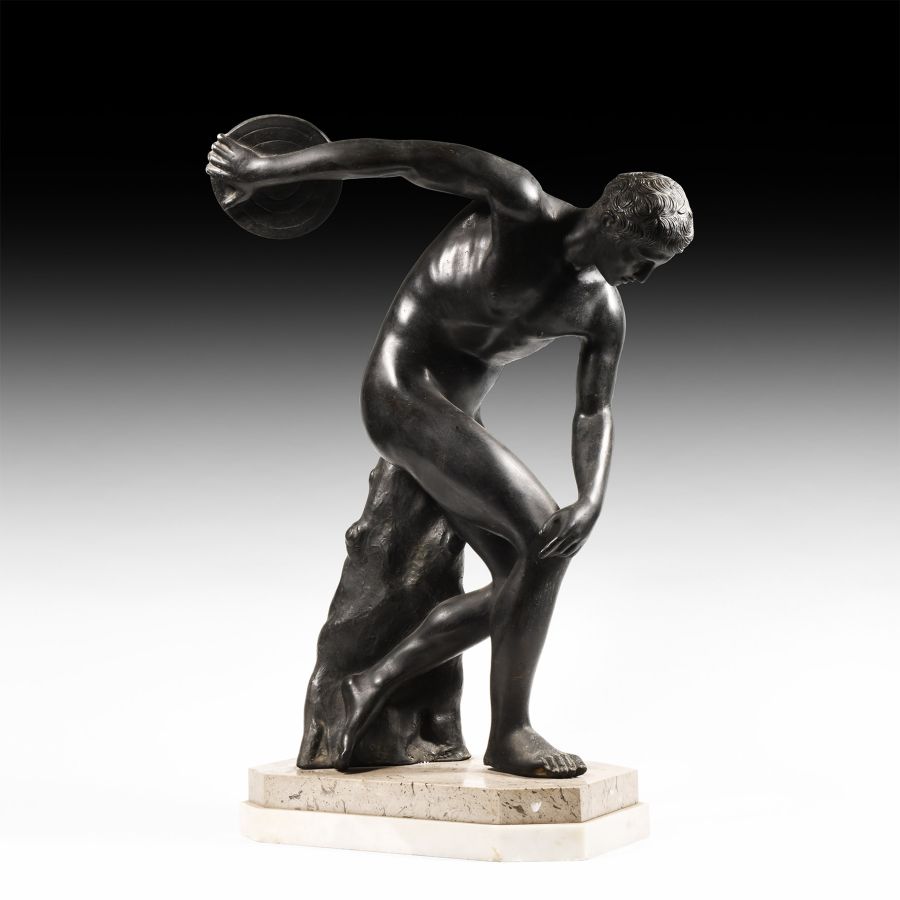
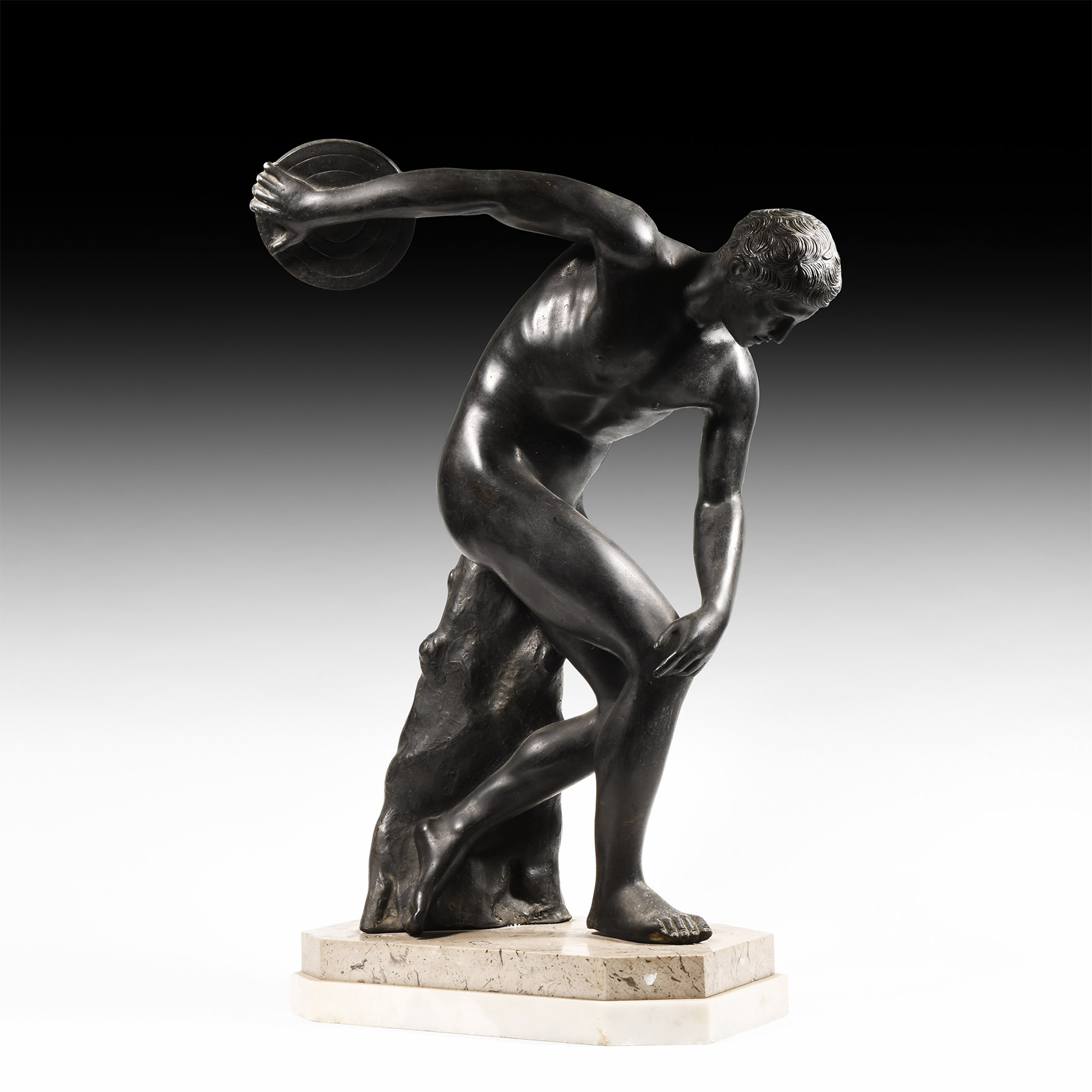
Diskobolos of Myron Statue
19TH CENTURY A.D.
25 5/8 in. (27 kg, 65 cm high).
A copper-alloy copy of the original Greek bronze Diskobolos of Myron, portraying a youthful nude male athlete poised to spin to release his discus; naturalistically modelled; on a tiered octagonal stone display base.
ProvenanceFrench collection, 1960s-early 2000s.
From an important Paris gallery, France.
with Hampel Fine Art Auctions GmbH & Co KG, Munich, Germany, 12 December 2014, lot 1912.
The original Greek bronze (now lost) dated to circa 460–450 B.C., but the work is known through numerous Roman copies in marble.
CONDITIONTimeLine Auctions follows a vetting process to ensure the authenticity and legality of all items, reinforcing our commitment to integrity and responsible trading. Each antiquity, antique, and coin lot undergoes thorough examination by a vetting committee of at least ten external specialists, professional trade association members, scientists, and archaeologists: Our Vetting Process
AUCTIONS:
TimeLine is a leading auction house specialising in antiquities, ancient art, collectables, natural history, coins, medals, and books. Our auctions offer museums, collectors, historians, and enthusiasts the opportunity to acquire unique and historically significant pieces.
-

Ancient Style Object Group
20th century A.D.Sold for (Inc. bp): £20
A mixed group of archaistic items including a figure of Bastet, a nude female lying supine, a lapis lazuli stamp seal and other items. 199 grams total, 7-52 mm
Acquired 1990s. Ex French collection. -
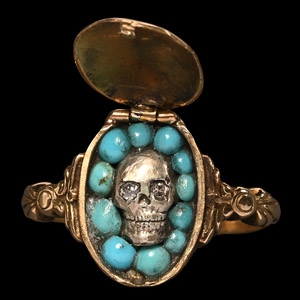
Georgian Gold Locket Ring with Skull
Circa 1800 A.D.Estimate: £3,000 - 4,000 (+bp*)
Opening Bid: £1,111
A gold ring comprising a slender hoop with shell-shaped shoulders, hinged oval bezel with secret compartment revealing a silvered skull framed by turquoise cabochons, the eyes set with diamonds or other stones; accompanied by a ring box. 3.95 grams, 20.00 mm overall, 16.20 mm internal diameter (approximate size British J, USA 4 3/4, Europe 8.69, Japan 8)
Acquired from Berganza, Hatton Garden, London, 2016. Property of an East Sussex collector. Accompanied by a copy of the Berganza invoice. This lot has been checked against the Interpol Database of stolen works of art and is accompanied by search certificate no.11666-197585.
Likely a ring of the memento mori genre. -
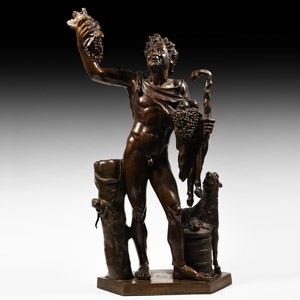
Bronze 'Fauno Rosso' Satyr
19th century A.D.Estimate: £1,500 - 2,000 (+bp*)
Opening Bid: £750
A bronze figure of a satyr standing on a hexagonal base wearing a goatskin mantle tied by the forelegs around his shoulders, with poppy seed-heads and bunches of grapes by the left arm; in his raised right hand, a bunch of grapes and in his left hand a cudgel; stump of a tree by his right leg and barrel beside his left, with a lamb to the rear placing its foreleg on top; modelled after the so-called Fauno Rosso from Hadrian's Villa, now in the Capitoline Museum. 18.5 kg, 67 cm high
From an important Paris gallery, France.
Half-man, half-beast, satyrs were believed to be the children of goats and mountain nymphs. Followers of the god Dionysus, they had a reputation for drunkenness and spent their days participating in orgiastic rituals. They represented the crude and boisterous facets of the stereotypical male persona, particularly of rural man.
