
Loading, please wait...
LOT 0412
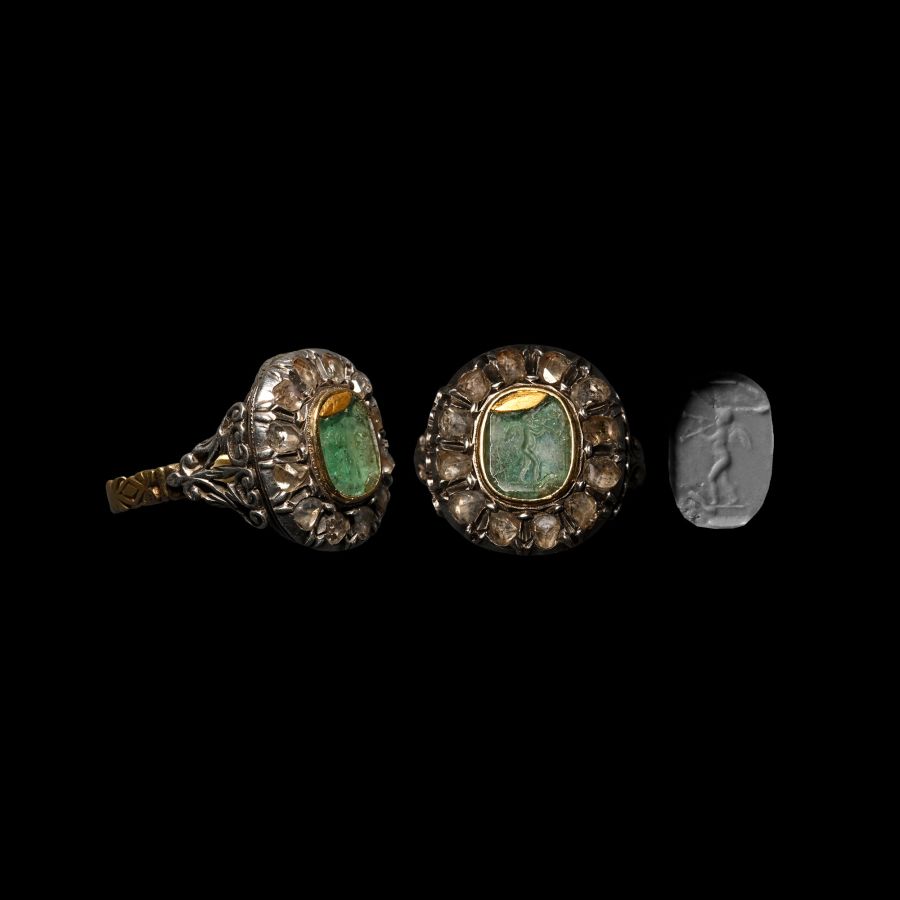
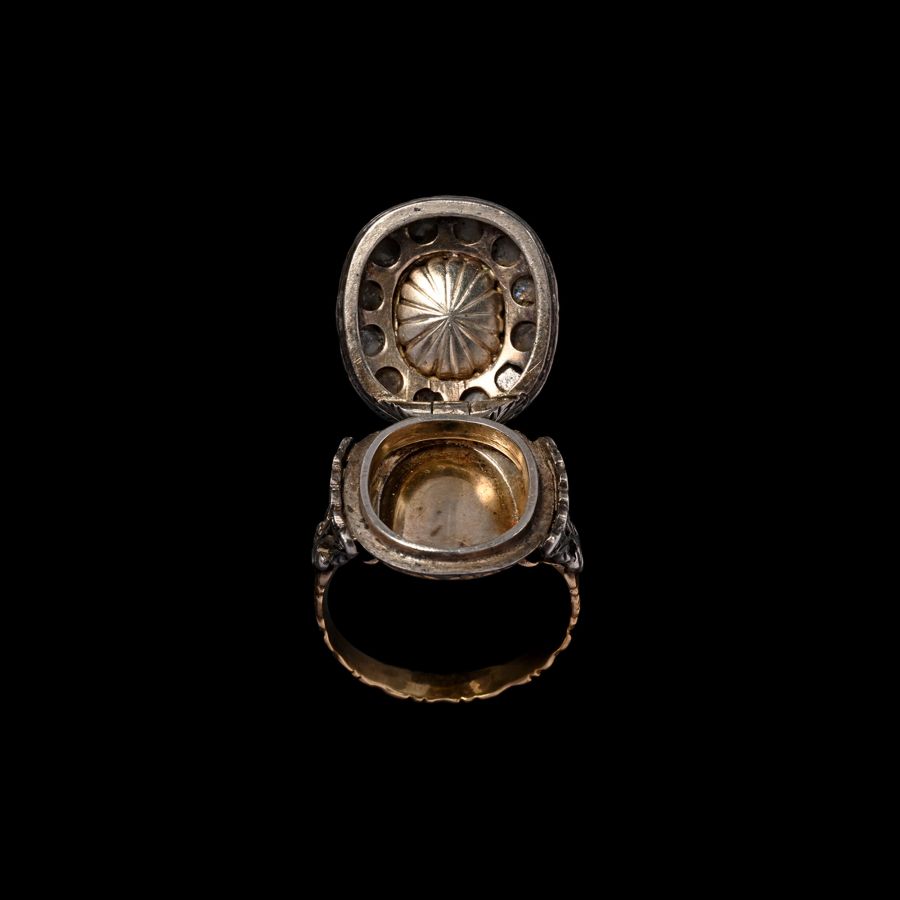
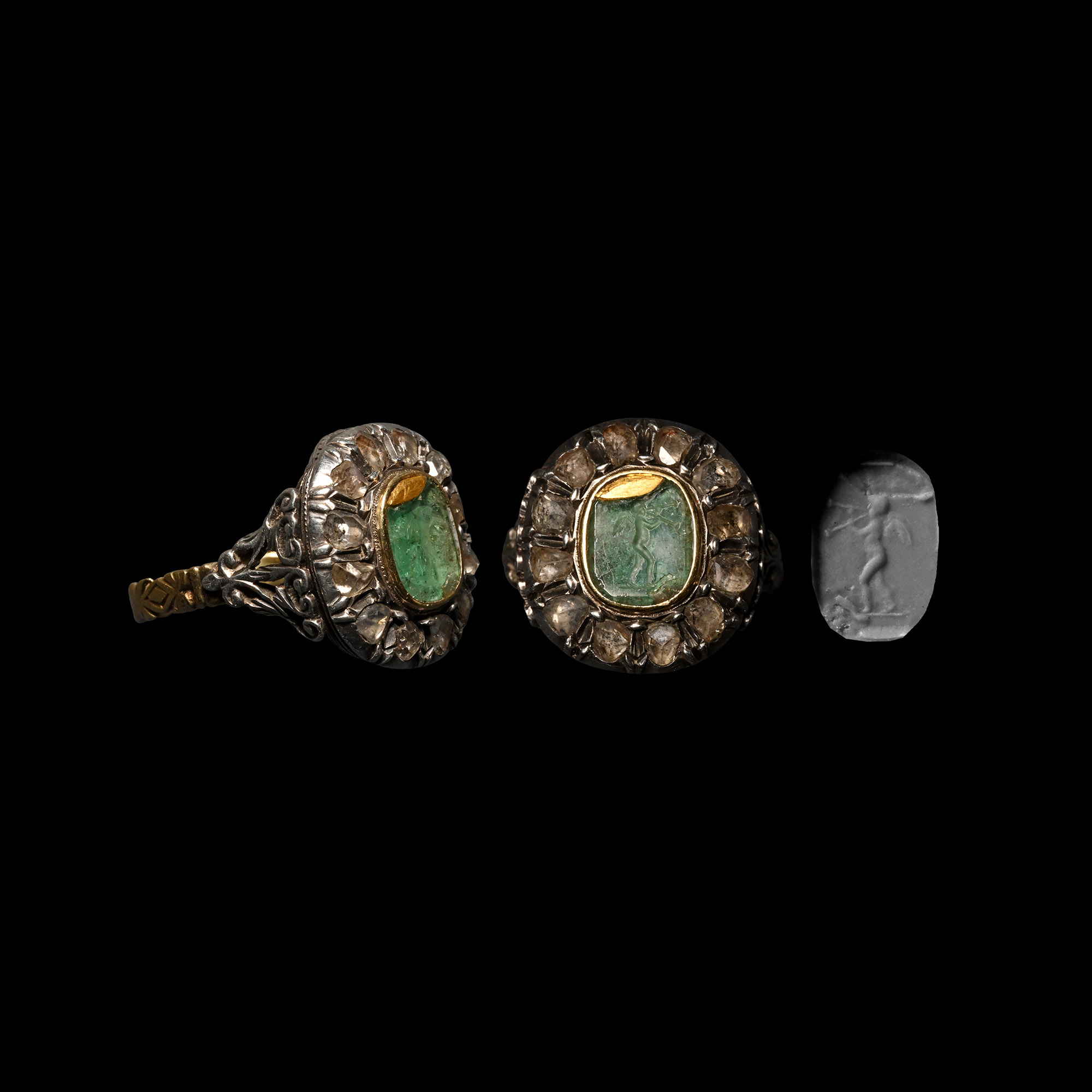
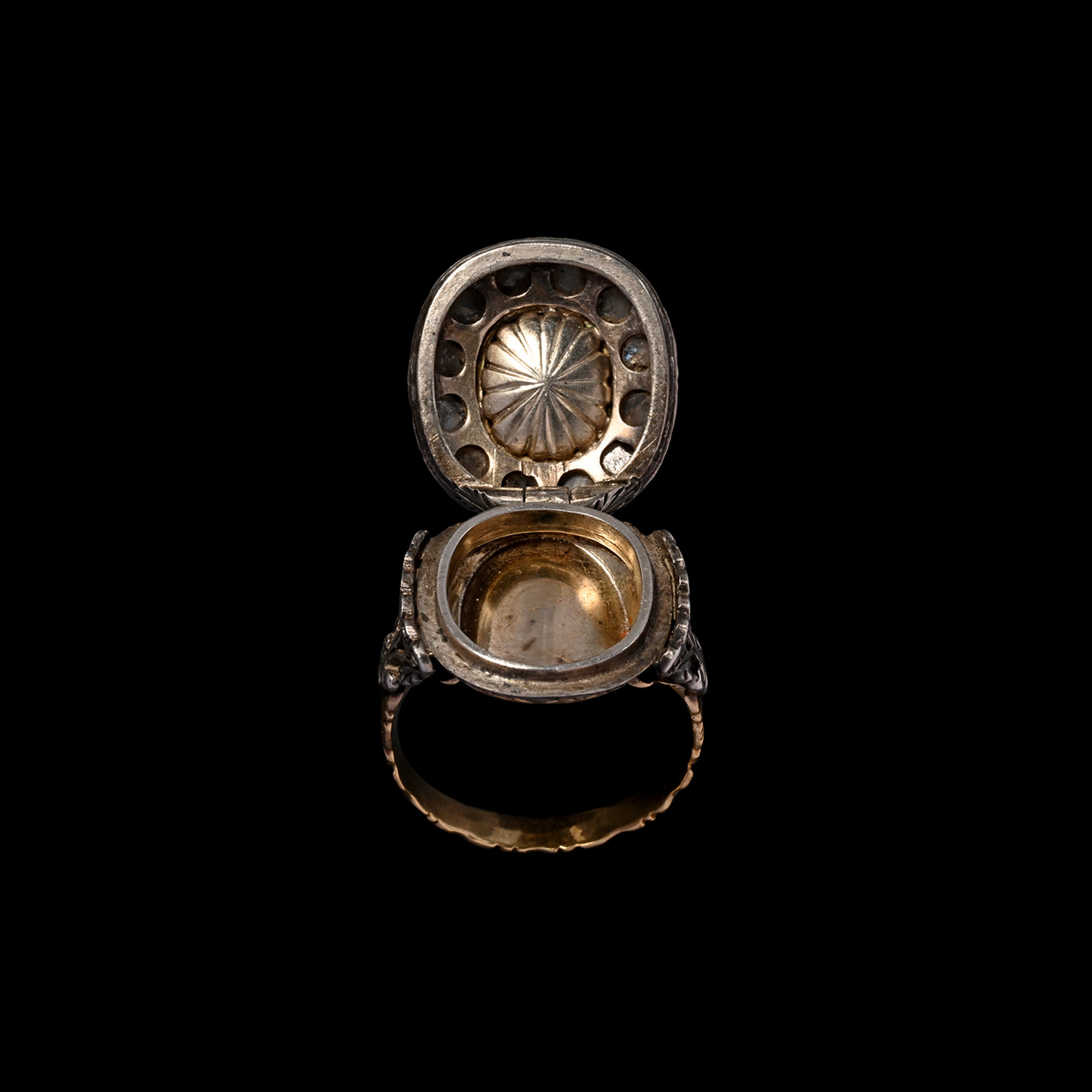
Diamond Locket Ring Set with Emerald Intaglio of Eros, the Greek God of Love, Playing Aulos
LATE 19TH CENTURY A.D.
1 in. (5.82 grams, 23.60 mm overall, 16.50 mm internal diameter (approximate size British L 1/2, USA 6, Europe 11.87, Japan 11)).
Comprising a segmented hoop with scroll-shaped shoulders, a hinged oval bezel with a secret compartment, and a bezel decorated with twelve cut diamonds around a central green stone intaglio of a winged figure on a pillar playing an aulos.
ProvenancePrivate collection, Europe.
Acquired on the English art market.
Cf. Chadour, A.B., Rings. The Alice and Louis Koch Collection, volume II, Leeds, 1994, item 1215.
CONDITIONTimeLine Auctions follows a vetting process to ensure the authenticity and legality of all items, reinforcing our commitment to integrity and responsible trading. Each antiquity, antique, and coin lot undergoes thorough examination by a vetting committee of at least ten external specialists, professional trade association members, scientists, and archaeologists: Our Vetting Process
AUCTIONS:
TimeLine is a leading auction house specialising in antiquities, ancient art, collectables, natural history, coins, medals, and books. Our auctions offer museums, collectors, historians, and enthusiasts the opportunity to acquire unique and historically significant pieces.
LOT 0412
Diamond Locket Ring Set with Emerald Intaglio of Eros, the Greek God of Love, Playing Aulos
Estimate £1,500 - 2,000€1,740 - 2,320 (for guidance only)$2,030 - 2,700 (for guidance only)
-
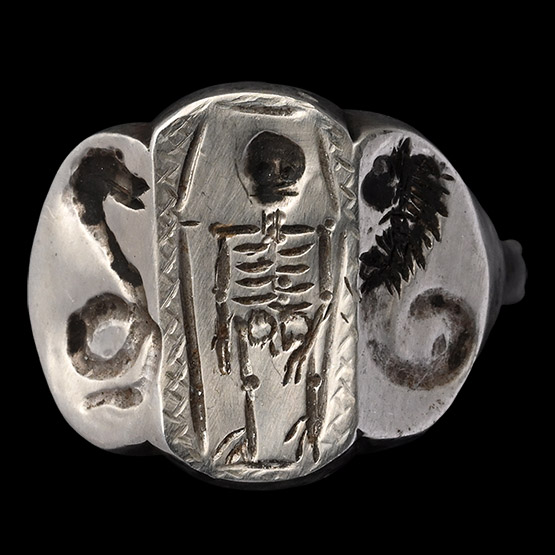
Post Medieval Silver Memento Mori Ring with Skeleton in Coffin Flanked by Rearing Snakes
18th-19th century A.D.Sold for (Inc. bp): £117
With facetted hoop, quatrefoil bezel with serpents flanking a coffin with skeleton inside; italic script legend to reverse 'jeap[...]'. 5.28 grams, 20.97 mm overall, 16.91 mm internal diameter (approximate size British N, USA 6 1/2, Europe 13.72, Japan 13)
Ex East Sussex private collection, 1970s-1980s. -
.jpg)
Renaissance Carnelian Gemstone Depicting the God Mercury in Gold Ring
16th-17th century A.D.Sold for (Inc. bp): £1,170
Cloison with incuse figure of Mercury standing with caduceus and marsupium; set into a later gold ring; supplied with a museum-quality impression. 4.63 grams, 24.38 mm overall, 18.99 mm internal diameter (approximate size British R 1/2, USA 8 3/4, Europe 19.38, Japan 18)
Private collection, Europe. Acquired on the English art market. -
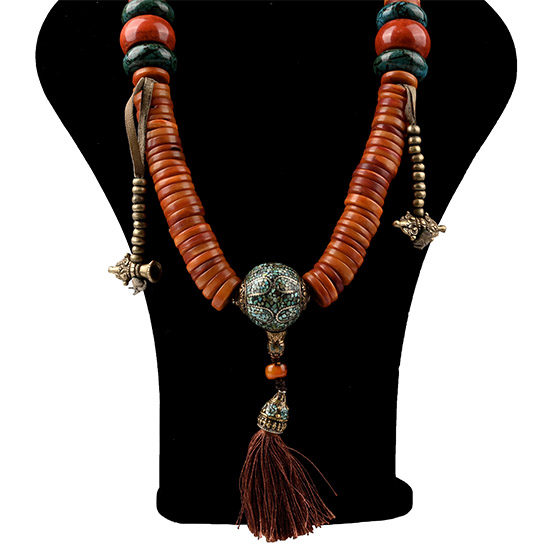
Hymalayan Prayer Glass Bead Necklace
20th century A.D.Sold for (Inc. bp): £169
Comprising mainly discoid beads with drum-shaped and other beads, enamelled spherical centrepiece and other detailing. 560 grams, 74 cm
Private collection, UK.
