
Loading, please wait...
LOT 0377
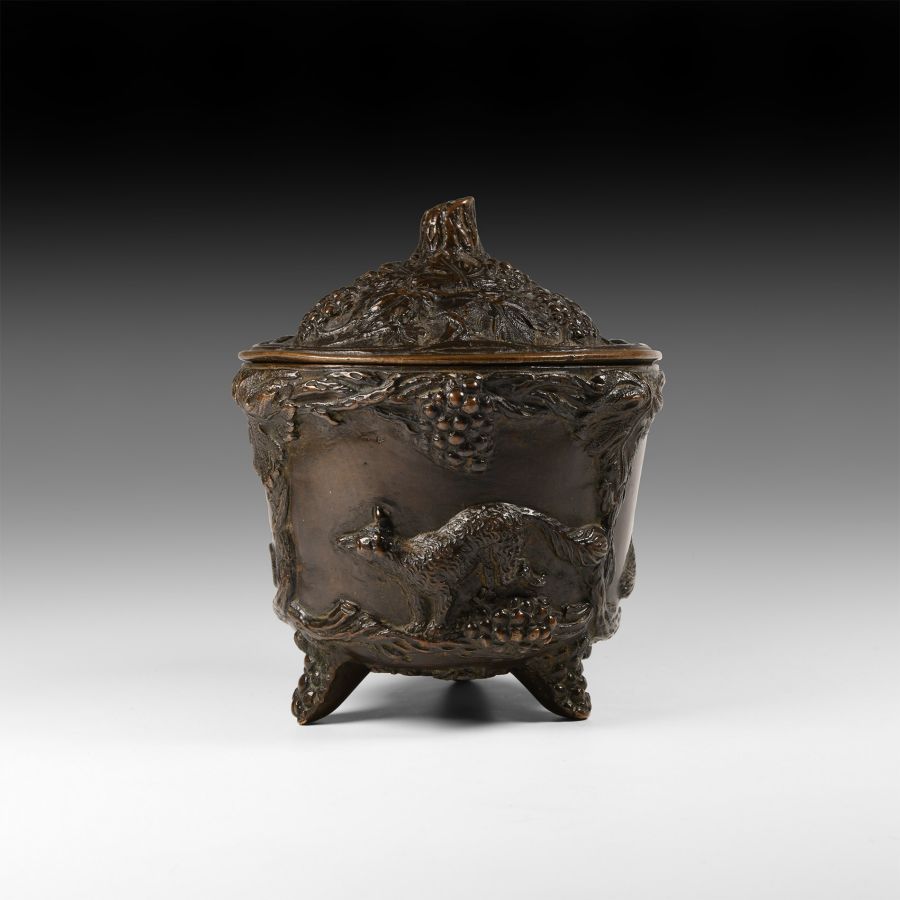
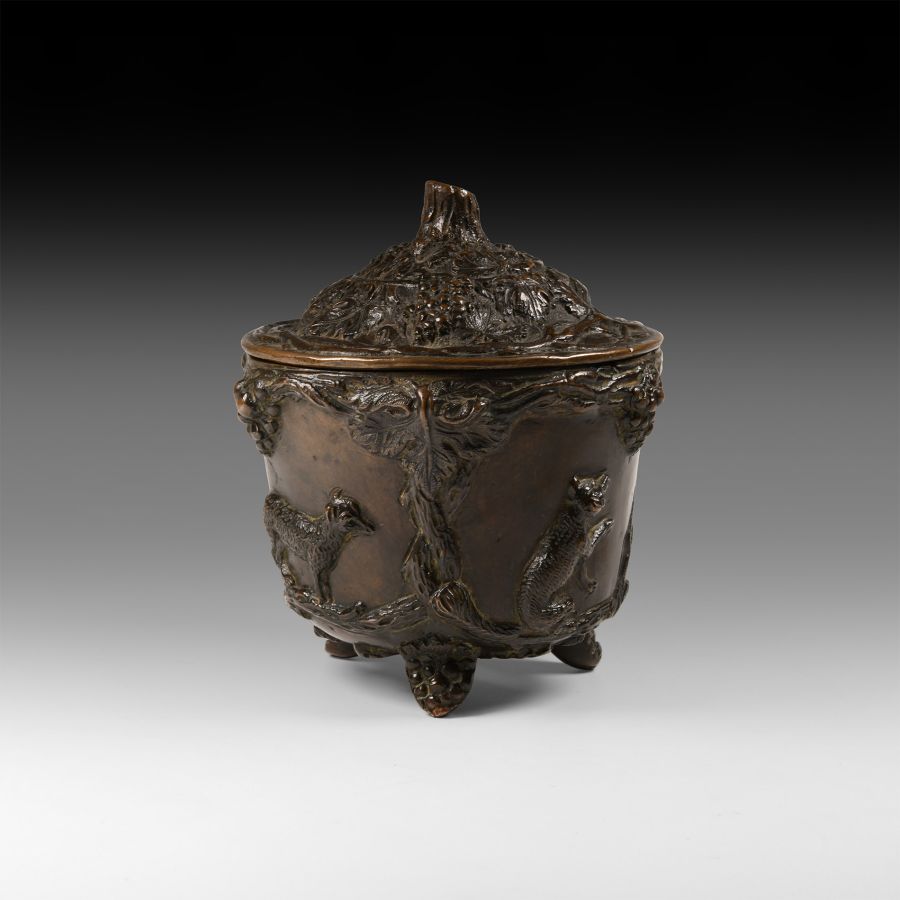
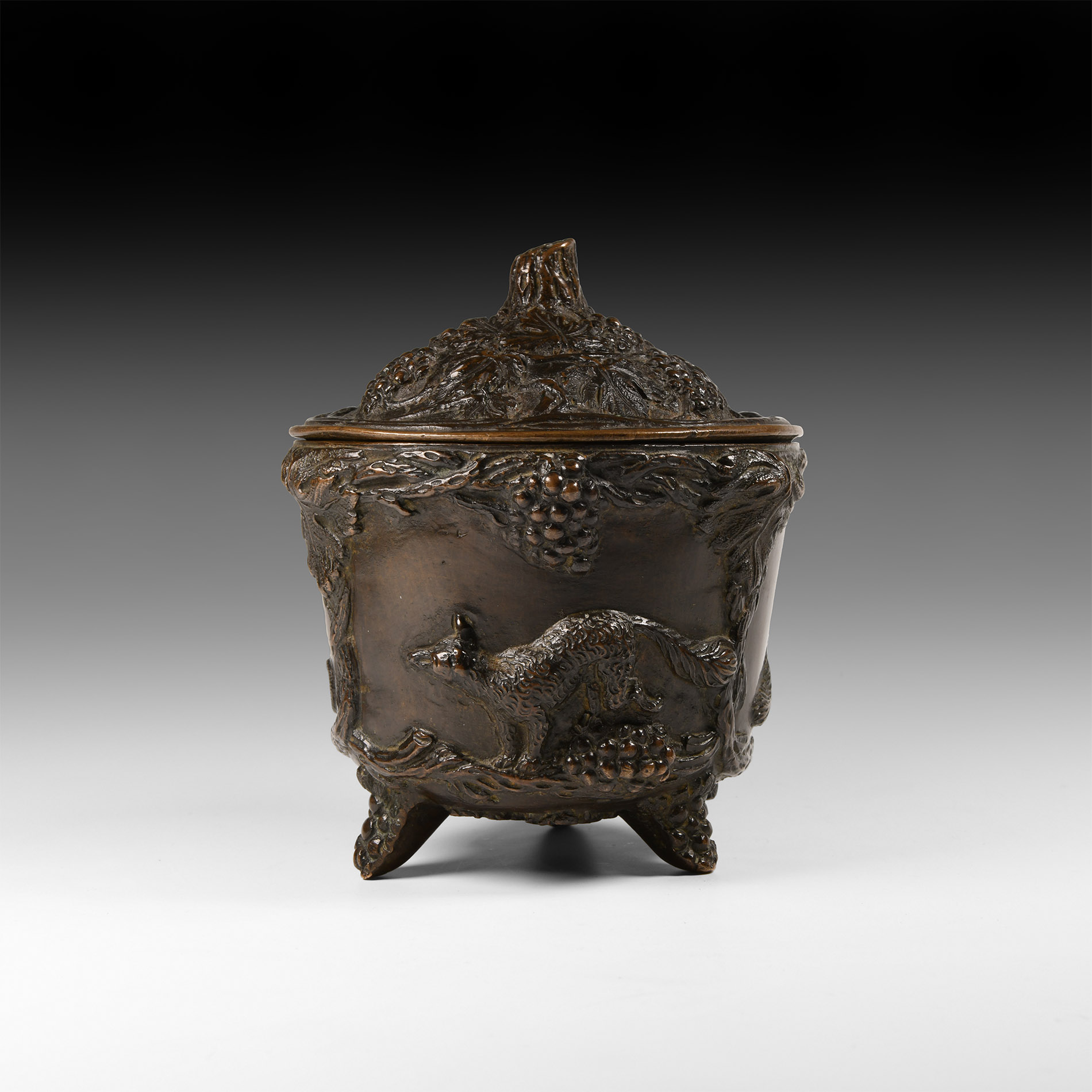
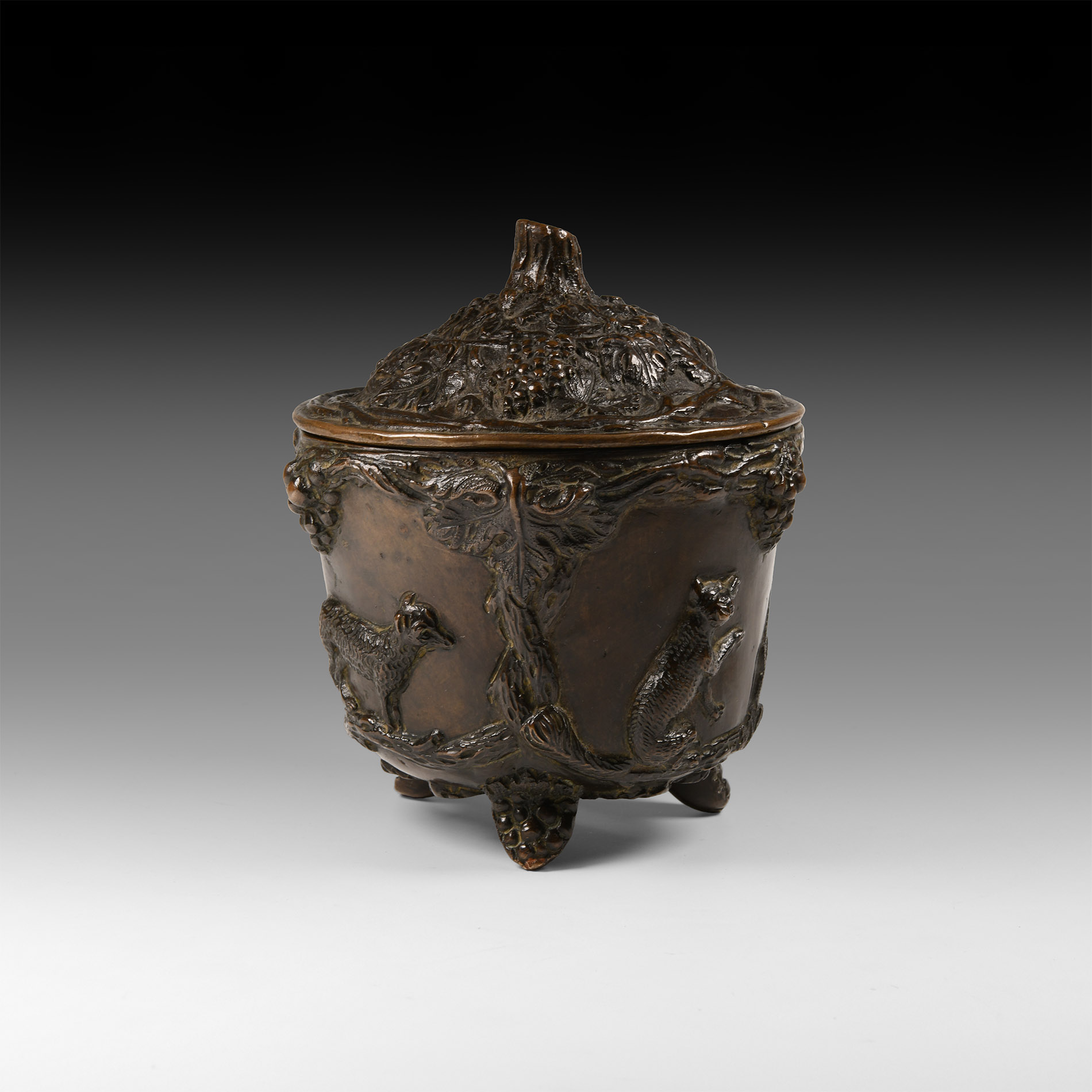
Decorated Bronze Container
CIRCA 17TH-19TH CENTURY A.D.
4 7/8 in. (1.28 kg, 12.3 cm high).
A bronze trinket-box or container with separate lid; the slightly flared body with three stub feet formed as bunches of grapes, field with frieze divided by twisted branches and leaves into three scenes featuring foxes and a snake; domed lid with with vines, leaves and bunches of grapes, knop handle formed as a twig stump.
ProvenanceEnglish private collection.
CONDITIONTimeLine Auctions follows a vetting process to ensure the authenticity and legality of all items, reinforcing our commitment to integrity and responsible trading. Each antiquity, antique, and coin lot undergoes thorough examination by a vetting committee of at least ten external specialists, professional trade association members, scientists, and archaeologists: Our Vetting Process
AUCTIONS:
TimeLine is a leading auction house specialising in antiquities, ancient art, collectables, natural history, coins, medals, and books. Our auctions offer museums, collectors, historians, and enthusiasts the opportunity to acquire unique and historically significant pieces.
LOT 0377
Decorated Bronze Container
Estimate £1,000 - 1,400€1,160 - 1,620 (for guidance only)$1,350 - 1,890 (for guidance only)
-
Gemstone Collection
17th-20th century A.D.Sold for (Inc. bp): £195
A mixed group of gemstones including lapis lazuli and sardonyx with intaglio motifs including bust of Mercury, figure of Mars and others. 8.4 grams total, 13-20 mm
English private collection. -
Post Medieval Painted Wooden Saint Barbara Statue
17th century A.D.Estimate: £6,000 - 8,000 (+bp*)
Opening Bid: £3,000
A free-standing, naturalistically modelled figure of Saint Barbara, standing in an animated manner beside a scaled-down tower or turret with stone and glass came detailing, the saint shown with one bare foot emerging from beneath the hem of her luxuriant floor-length robes, adorned with a jewel near her right breast and crowned with a jewelled diadem; extensive remains of gesso and polychrome pigmentation; metal fitting to reverse for securing the figure upright. 38.3 kg, 1.34 m high
English private collection. This lot has been checked against the Interpol Database of stolen works of art and is accompanied by search certificate number no.11677-199840.
Saint Barbara is the patron saint of architects. Her father constructed a tower and imprisoned his daughter within it. To honour the Holy Trinity, Barbara had three windows incorporated into the design. The timber shows some old insect flight holes and we are advised that this piece has been recently treated with Permethrin, as a precaution. -
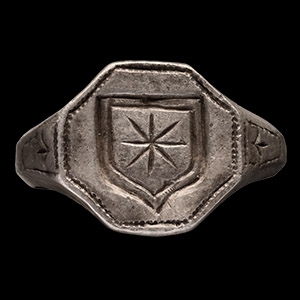
Stuart Period Silver Ring with Shield and Star
Circa 17th century A.D.Sold for (Inc. bp): £169
A silver finger ring with facetted hop and shoulders, octagonal bezel with pointillé border, parcel-gilt outline to heater shield with star motif. 6.08 grams, 21.96 mm overall, 18.85 mm internal diameter (approximate size British P, USA 7 1/2, Europe 16.23, Japan 15)
Acquired in the late 1990s-2000. Property of an East London gentleman.
