
Loading, please wait...
LOT 0522
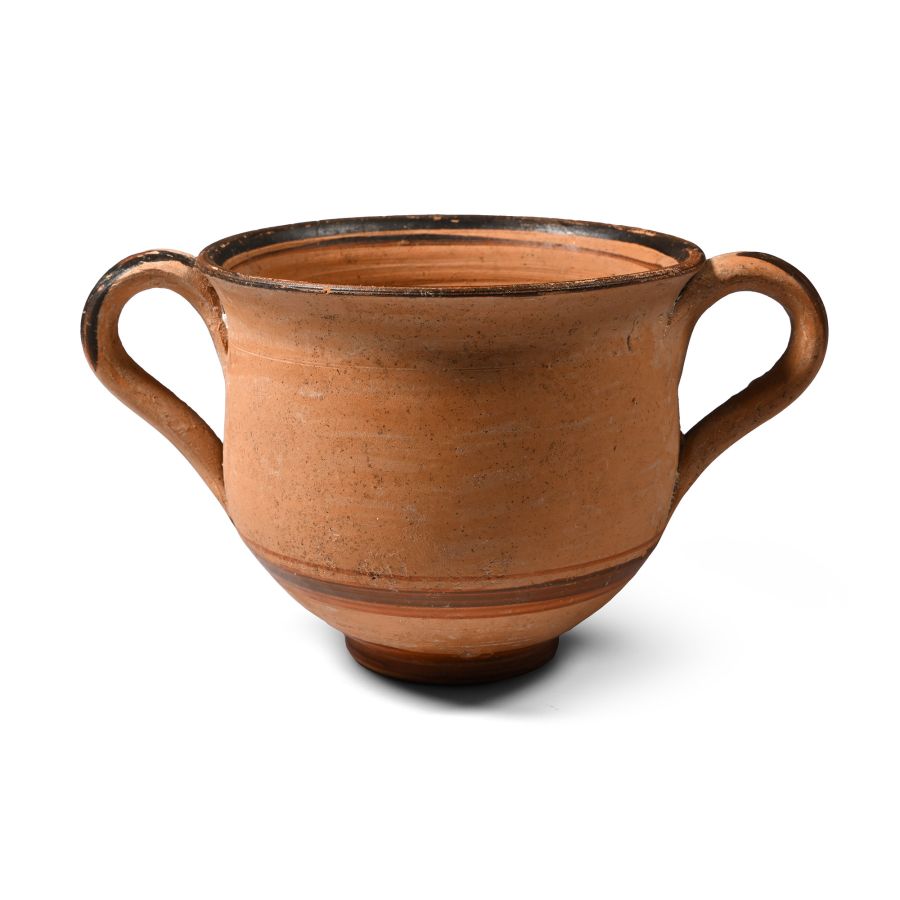
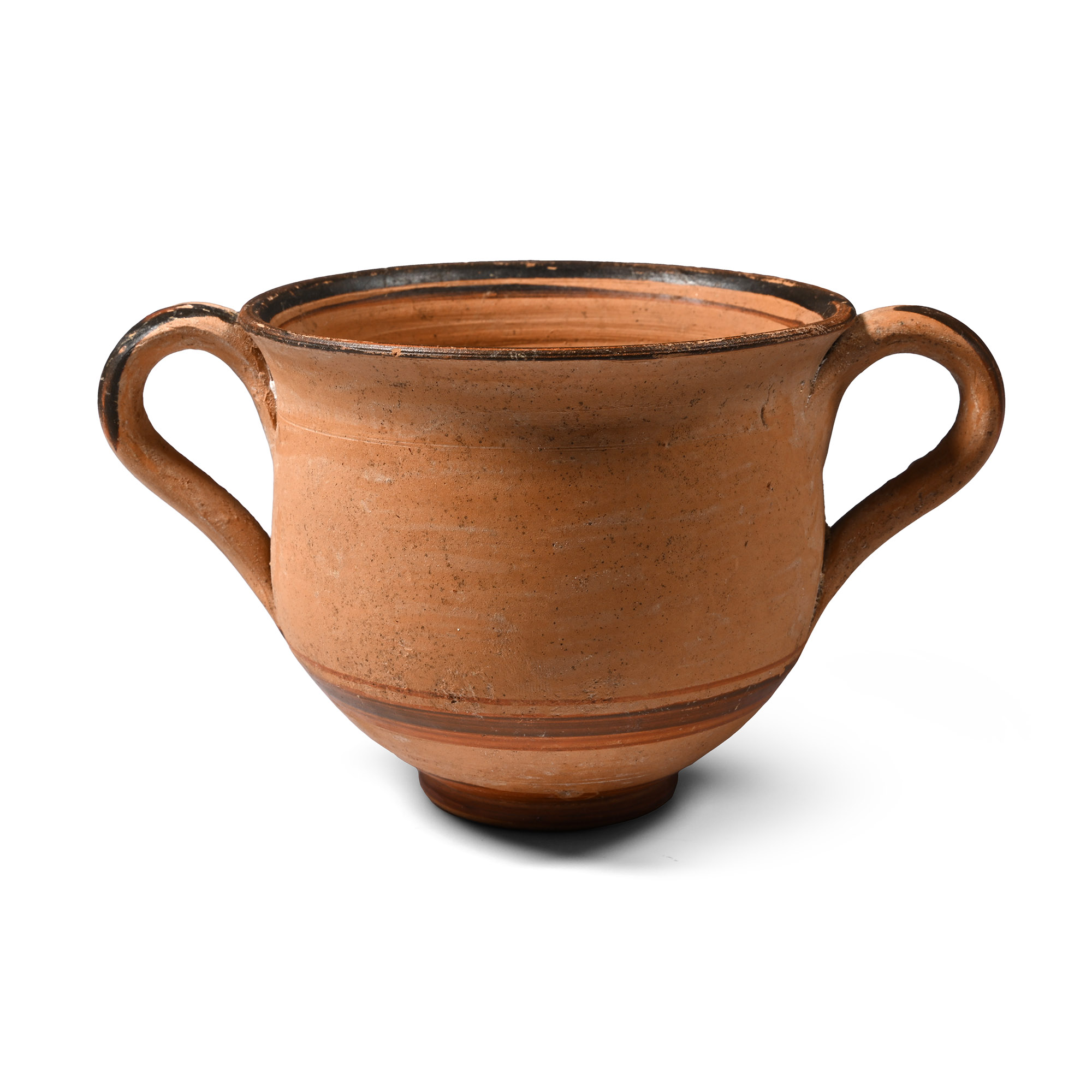
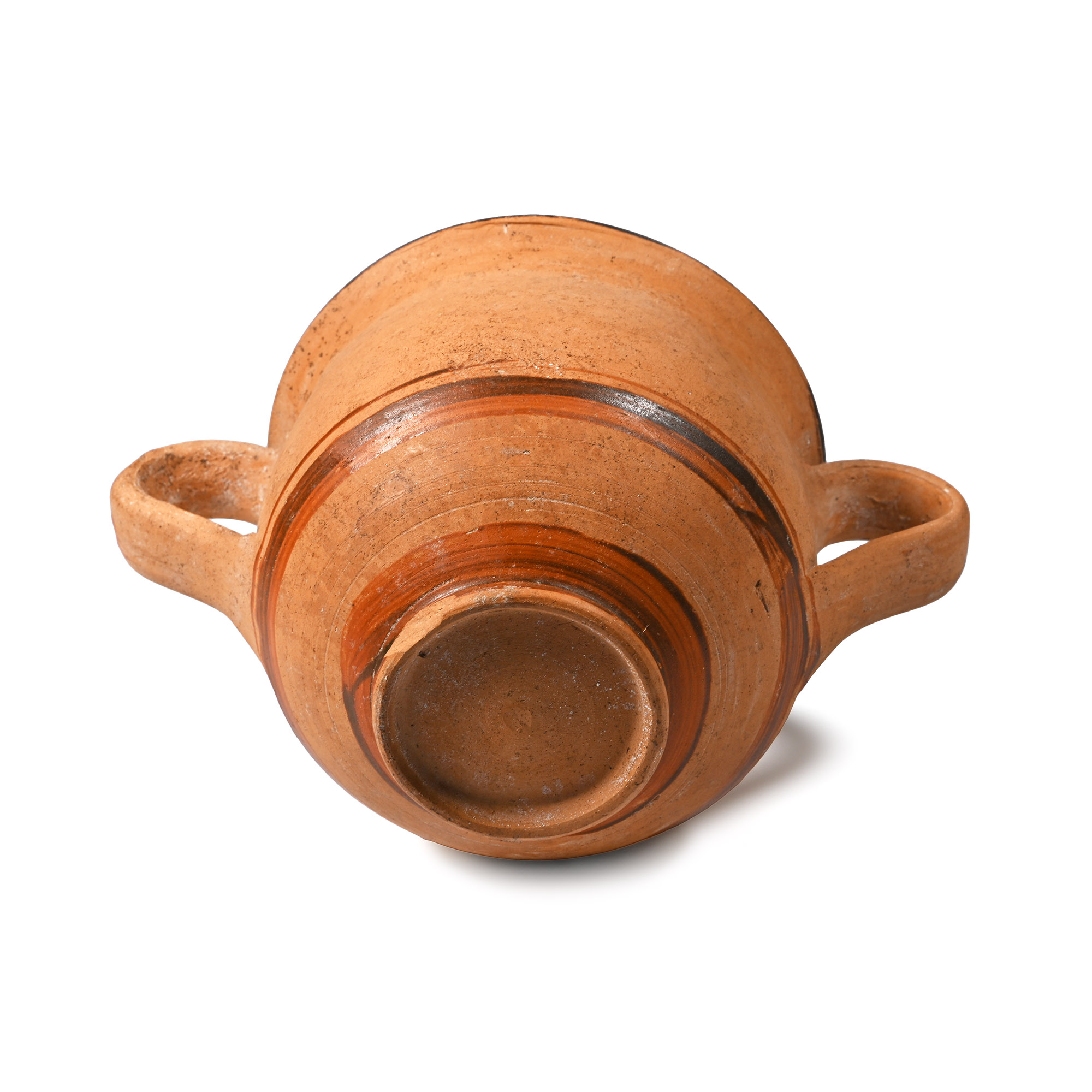
Daunian Terracotta Twin-Handled Cup
5TH-4TH CENTURY B.C.
6 1/4 in. (206 grams, 16 cm wide).
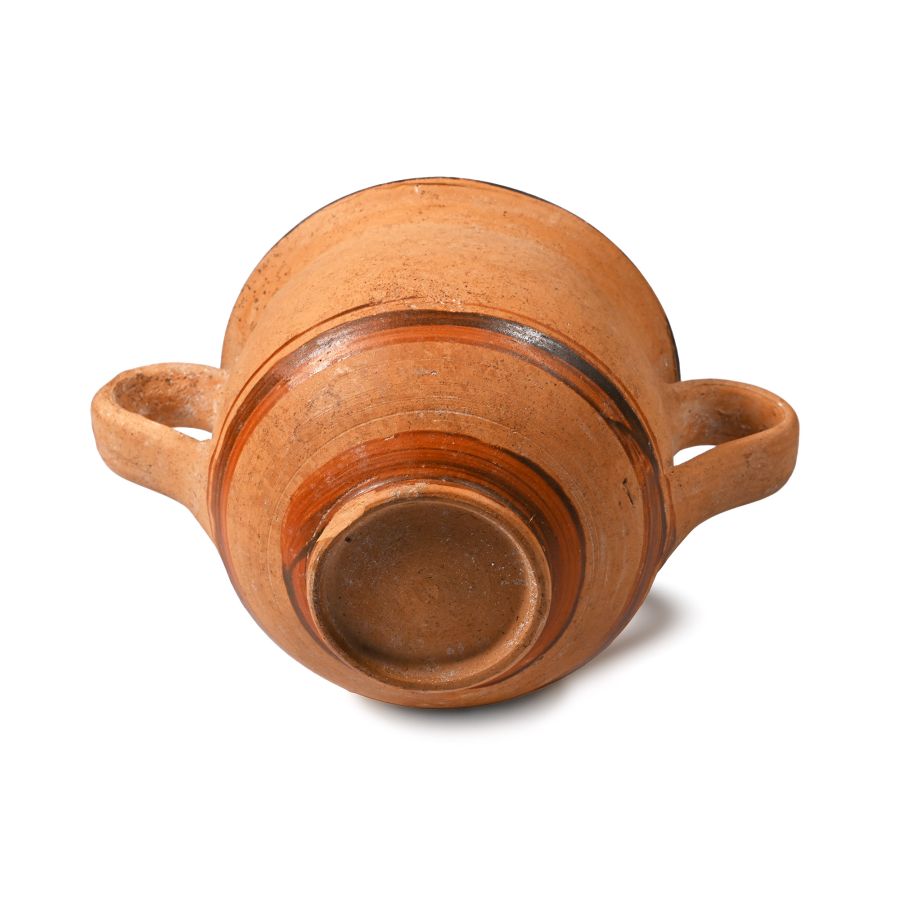
Comprising a bell-shaped thin-walled body with two strap handles and an everted rim, dark lip with a thin circumferential band below; each handle with a lentoid motif; narrow foot with two circumferential bands above. [No Reserve]
ProvenanceFrom the estate of a Swiss gentleman, Ticino, before 1970.
with Galerie Rhéa, Zurich, Switzerland.
Daunian pottery is characterised by unique shapes and decorative motifs, which include geometric patterns, plant and animal motifs, and human figures. The pottery is typically made from a coarse clay, and it is decorated with black or dark brown slip, a type of liquid clay that is applied to the surface of the pottery before firing.
CONDITIONTimeLine Auctions follows a vetting process to ensure the authenticity and legality of all items, reinforcing our commitment to integrity and responsible trading. Each antiquity, antique, and coin lot undergoes thorough examination by a vetting committee of at least ten external specialists, professional trade association members, scientists, and archaeologists: Our Vetting Process
AUCTIONS:
TimeLine is a leading auction house specialising in antiquities, ancient art, collectables, natural history, coins, medals, and books. Our auctions offer museums, collectors, historians, and enthusiasts the opportunity to acquire unique and historically significant pieces.
-
.jpg)
Etruscan Bronze Statue of a Satyr
Circa 6th century B.C.Estimate: £4,000 - 6,000 (‡+bp*)
Opening Bid: £2,000
Modelled in the round in energetic pose with left hand resting on the hip and right arm raised, head tilted slightly upwards, tail curled gracefully over the rump; on a square base with papyrus stalk detailing; on a later gilt-metal stand mounted on a polished stone cube. 679 grams total, 20.4 cm including stand
Iris Cornelia Love (1933–2020), New York, collection primarily formed in the 1950s-1970s. -
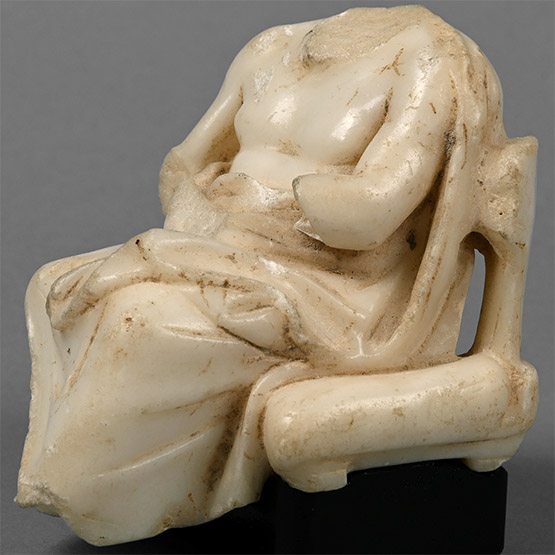
Greek Marble Figure of a Seated God or Philosopher
Hellenistic, 3rd-1st century B.C.Estimate: £15,000 - 20,000 (‡+bp*)
Opening Bid: £7,500
Carved in the round male figure in a seated pose wearing a loosely draped pallium on the shoulders and lower body, legs crossed at the knees; openwork frame to the chair with deep undercuts; mounted on a custom-made stand. 563 grams total, 86 mm high including stand
Formerly in a private collection, London. European private collection, acquired in 2002. Accompanied by a copy of an Art Loss Register certificate, 8 June 2004. This lot has been checked against the Interpol Database of stolen works of art and is accompanied by search certificate number no.13210-249309.
The statuette could represent Zeus or Chronos, based on similarities with two statues in the Vatican Museums and two statues in the Thebes Museum. The god is depicted seated, with his torso exposed, and his left hand, which normally holds the sceptre in statues of seated Zeus, is instead stretched out across his legs. -
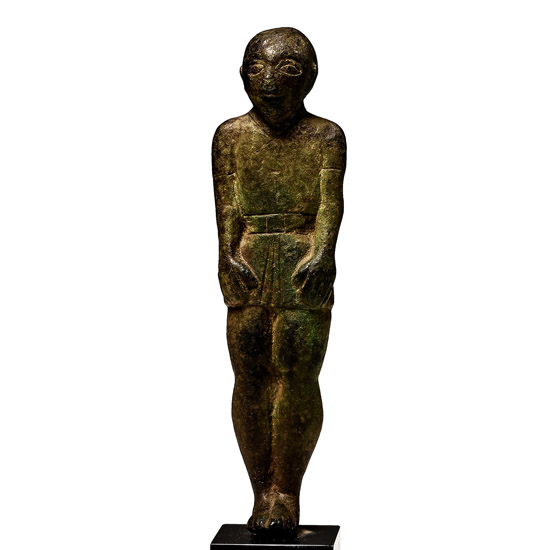
Iberian Bronze Figurine of a Man in Egyptianizing Dress
4th-2nd century B.C.Estimate: £2,500 - 3,500 (‡+bp*)
Opening Bid: £1,250
Standing with arms held straight at the sides, short hair with neck-ring to rear, short-sleeved tunic with pleats to centre-front and rear, wide belt; perhaps a monumental fitting; gas permeation to rear right leg; mounted on a custom-made stand. 77.8 grams total, 10 cm including stand
Private collection, Paris, France, assembled in the 1950s-1960s. with Tessier-Sarrou & Associés, Paris, 2015. European private collection. Accompanied by a copy of an Art Loss Register certificate, no.S00107108. Accompanied by a copy of French cultural export passport no.167803. This lot has been checked against the Interpol Database of stolen works of art and is accompanied by a search certificate number no.12651-234613.
