
Loading, please wait...
LOT 0607
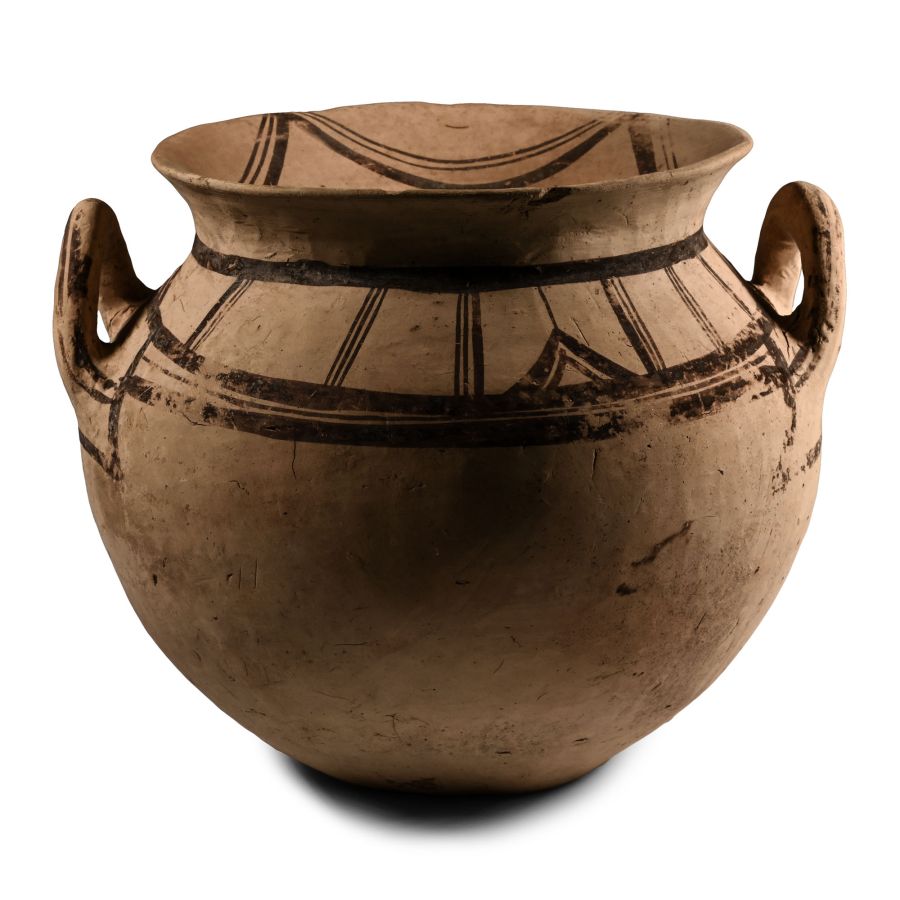
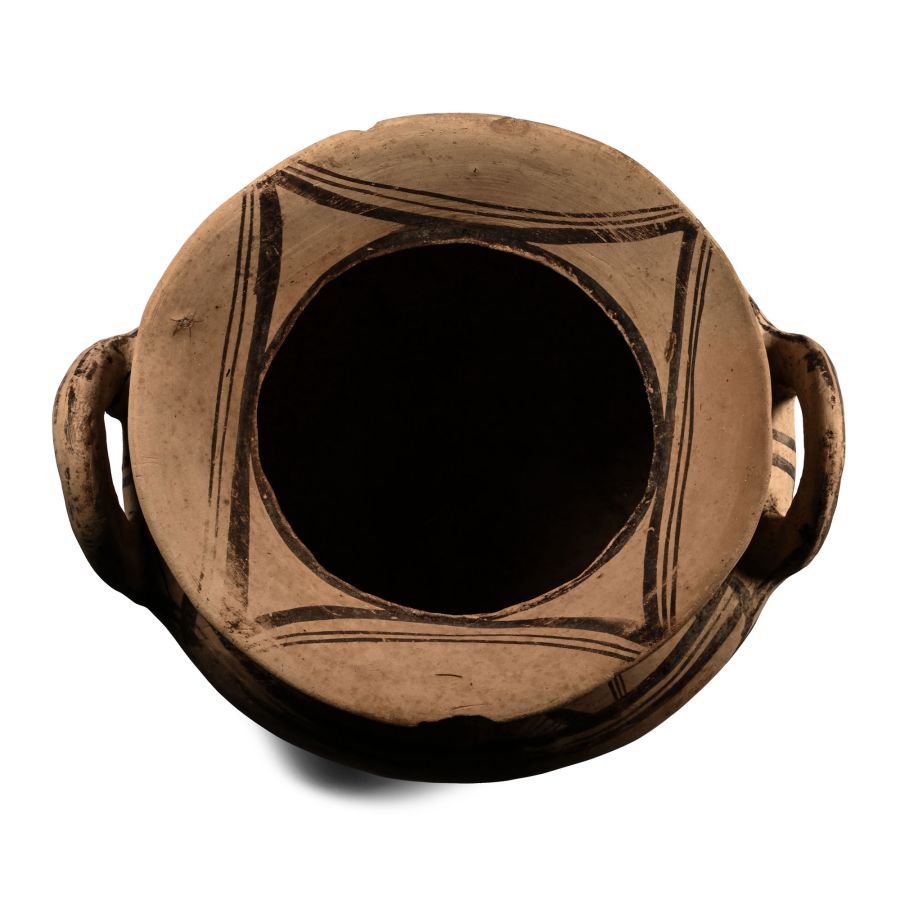
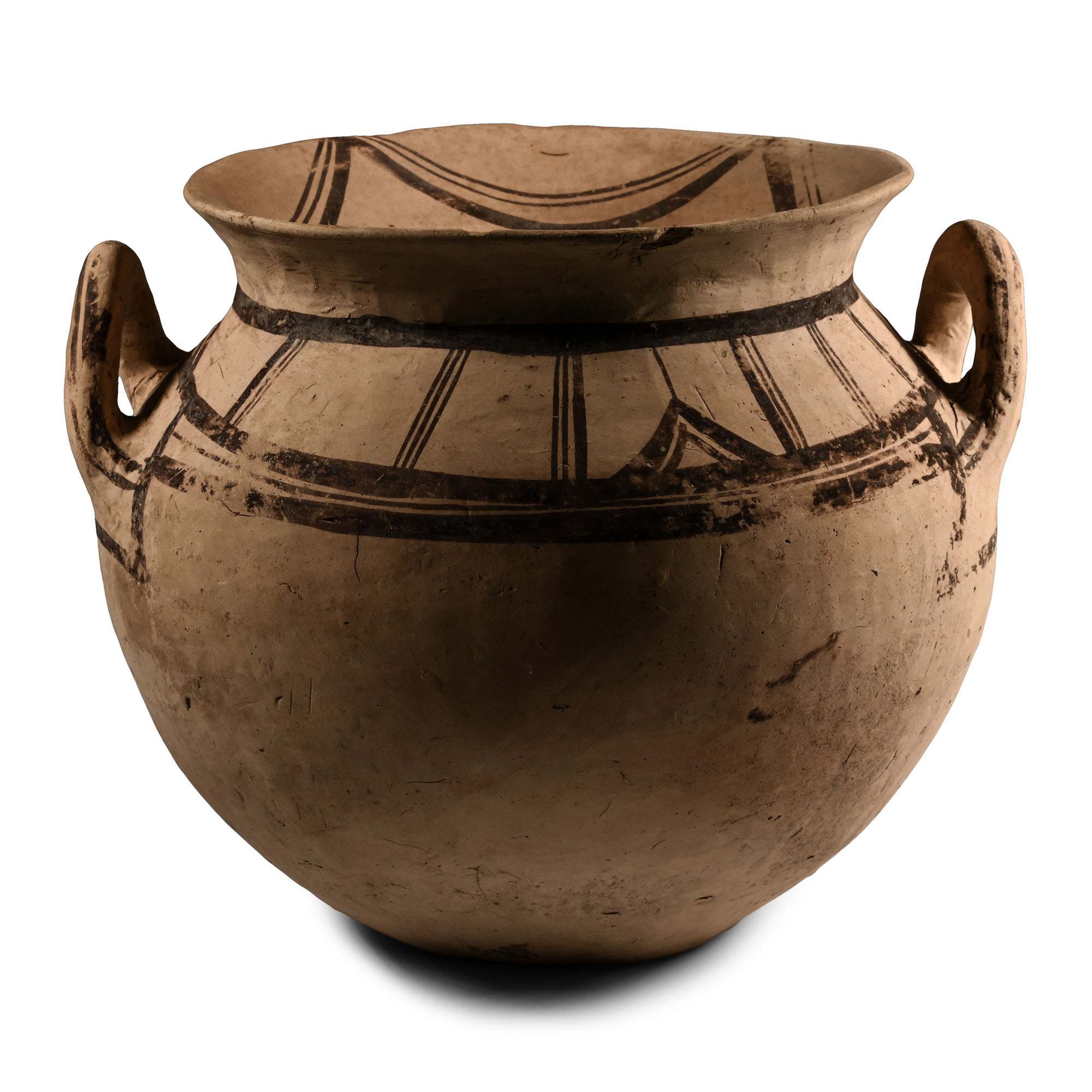
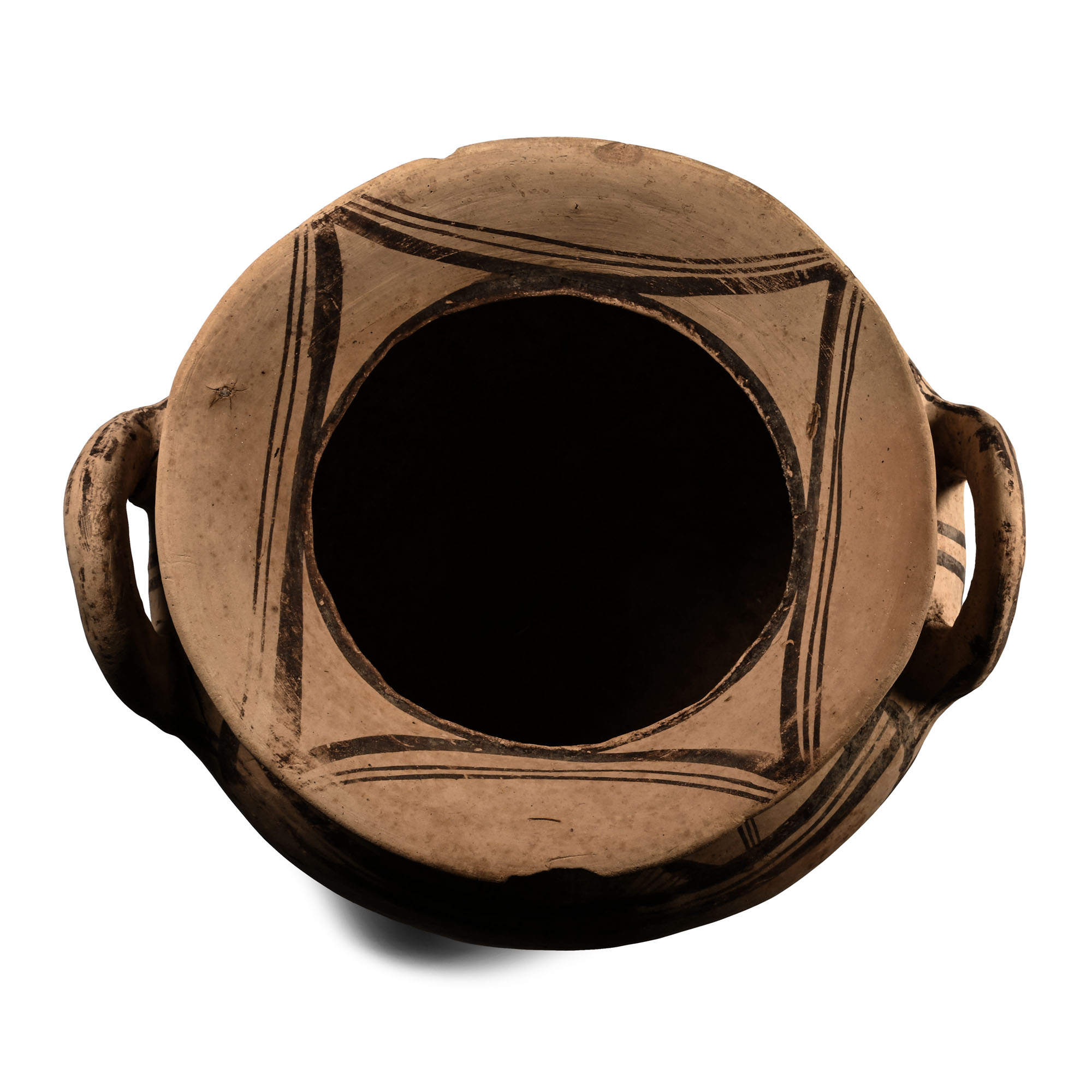
Daunian Terracotta Olla
SUBGEOMETRIC, 6TH-5TH CENTURY B.C.
10 in. (2.33 kg, 25.5 cm wide).
With a deep body on round base, flaring mouth, short loop handles to the shoulders; pendant circle segments on interior of mouth; Metope-like frieze on shoulder with triglyphs and suspended triangles, U-shaped motif at the root of the handle, horizontal bands; monochrome ware.
ProvenanceThe estate of Hans-Ulrich Rutschmann, Switzerland, circa 1950s-1970s.
Accompanied by a copy of an Art Loss Register certificate no.S00097644.
This lot is accompanied by an illustrated lot declaration signed by the Head of the Antiquities Department, Dr Raffaele D’Amato.
This lot is accompanied by an illustrated lot declaration signed by the Head of the Antiquities Department, Dr Raffaele D'Amato.
TimeLine Auctions follows a vetting process to ensure the authenticity and legality of all items, reinforcing our commitment to integrity and responsible trading. Each antiquity, antique, and coin lot undergoes thorough examination by a vetting committee of at least ten external specialists, professional trade association members, scientists, and archaeologists: Our Vetting Process
AUCTIONS:
TimeLine is a leading auction house specialising in antiquities, ancient art, collectables, natural history, coins, medals, and books. Our auctions offer museums, collectors, historians, and enthusiasts the opportunity to acquire unique and historically significant pieces.
-
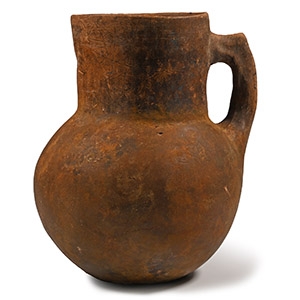
Cypro-Phoenician Terracotta Jug
1st millennium B.C.Sold for (Inc. bp): £208
With bulbous body and broad tubular neck, angled handle to rear. 685 grams, 17.2 cm
From a London, UK, gentleman's collection of ancient pottery and artefacts, 1990s. This lot is accompanied by an illustrated lot declaration signed by the Head of the Antiquities Department, Dr Raffaele D'Amato.
BoR pottery begins to appear on the Phoenician mainland and Cyprus from the middle of the 10th century. The first ceramic horizon, which we can term 'Phase Γ of BoR distribution, continues from this period until the beginning of the 9th century (c.950 - c.890/880 BC). The destruction possibly caused by Pharaoh Shishak at various sites in the Levant has preserved assemblages of similar wares which were probably sealed in the last decades of the 10th century. -
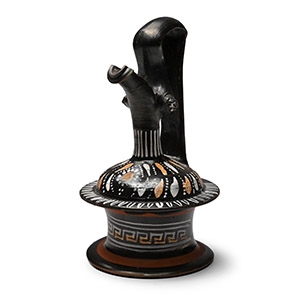
Greek Apulian Blackware Epichysis
South Italic, circa 4th century B.C.Sold for (Inc. bp): £546
With spool base, domed upper face, tall neck with spout and strap handle to the rear; the spool with meander band in cream and white, the upper face with frond pattern in cream and white, parallel vertical strokes to the base of the spout. 183 grams, 14.5 cm
From the private collection of a Canadian gentleman living in Essex, UK, formed since the 1920s-circa 1990. Property of an Essex lady until the late 1990s; thence by descent. From the private collection of an Essex gentleman since the late 1990s. This lot is accompanied by an illustrated lot declaration signed by the Head of the Antiquities Department, Dr Raffaele D'Amato. -
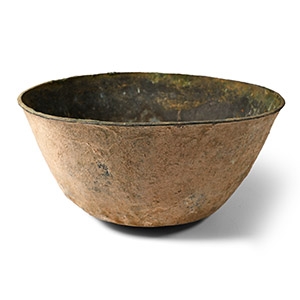
Villanovan Bronze Cup
750-730 B.C.Sold for (Inc. bp): £182
Hemispherical in profile with flat rim. 183 grams, 12.9 cm
Ex London, UK, collections, 1990s-2000s. This lot is accompanied by an illustrated lot declaration signed by the Head of the Antiquities Department, Dr Raffaele D'Amato.
In the necropolises of Southern Etruria, around the second half of the 8th century B.C., new technologies were used, which also involved metalworking. Alongside simple bronze cups intended for everyday use, similar magnificent examples containing a flourish of impressed or engraved geometric motifs were made.
