
Loading, please wait...
LOT 0573
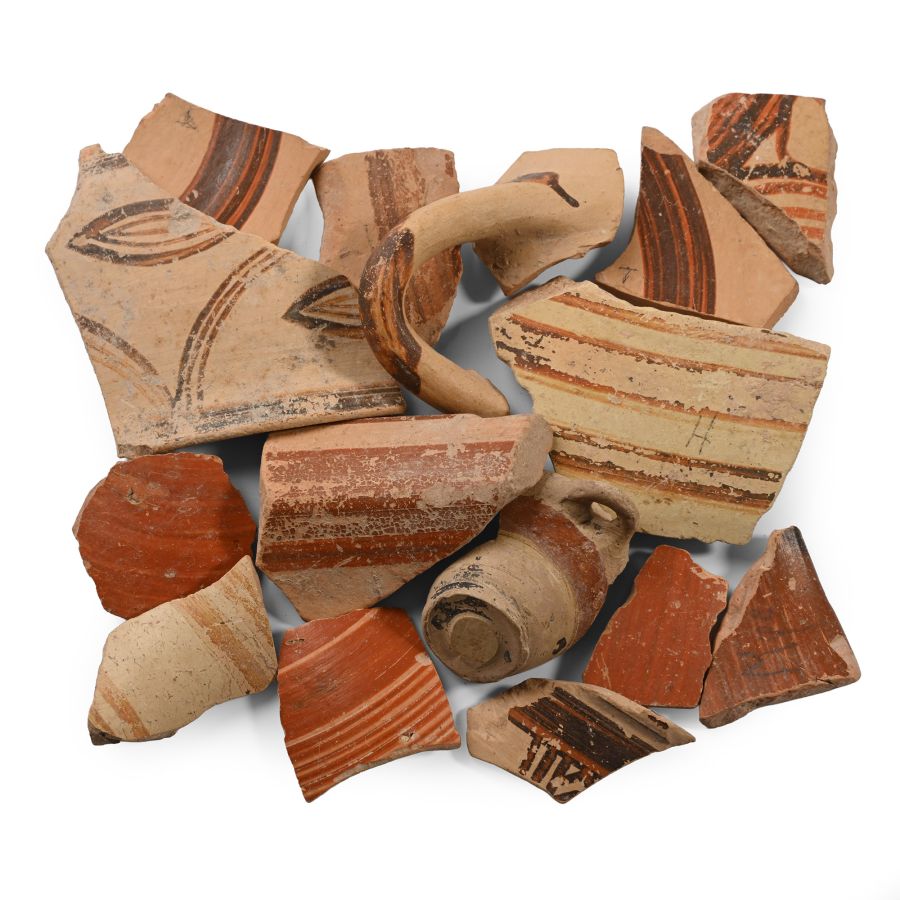
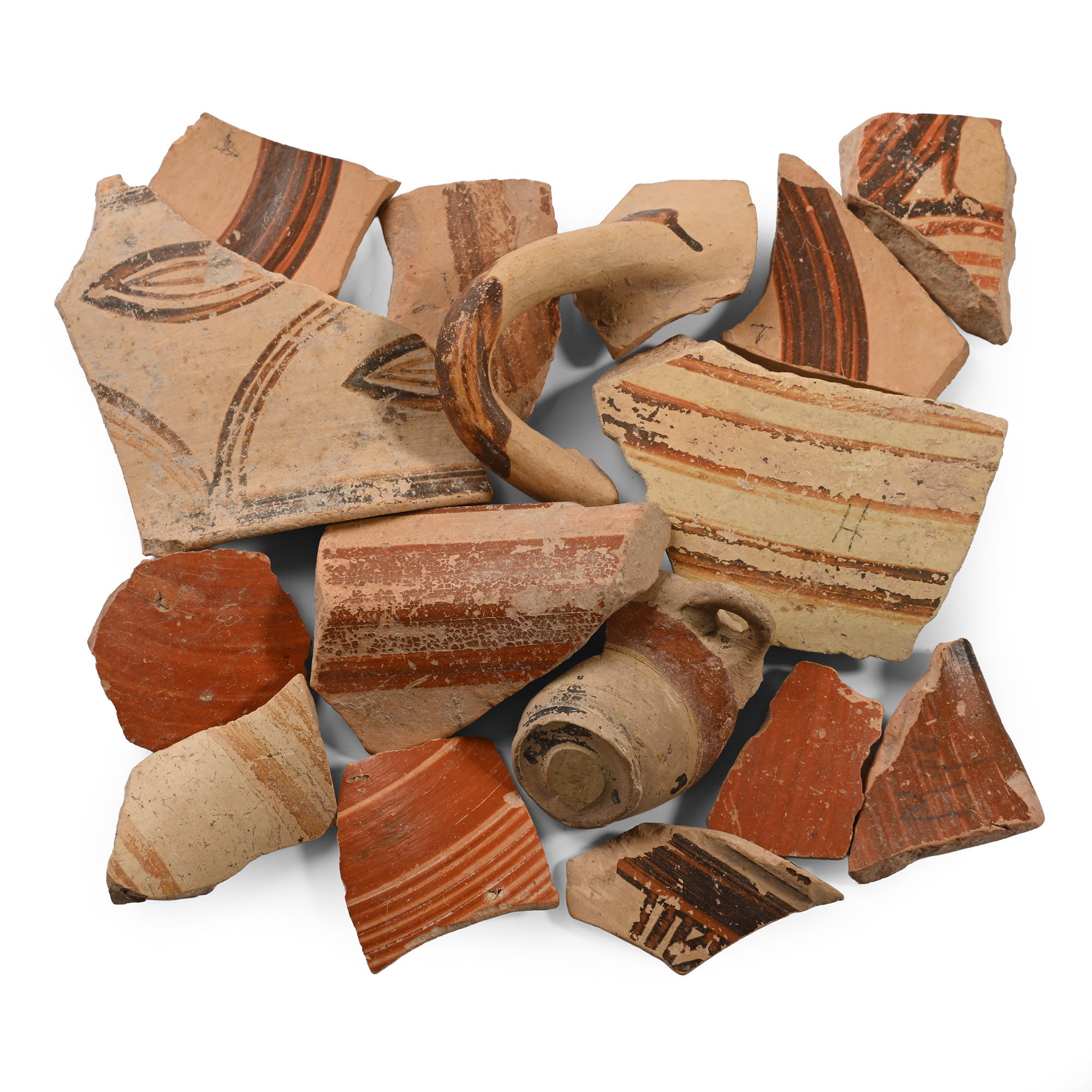
Daunian Pottery Collection
6TH-4TH CENTURY B.C.
1 1/9 - 2 3/8 in. (122 grams total, 29-61 mm).
Comprising various vessel fragments including a partial handle, most with linear decoration, some with old pencil inscriptions. [15, No Reserve]
ProvenanceFrom a deceased estate, UK.
Acquired on the UK art market.
This lot is accompanied by an illustrated lot declaration signed by the Head of the Antiquities Department, Dr Raffaele D'Amato.
Cf. for similar pottery De Juliis, E.M., ‘Centri di produzione ed aree di diffusione commerciale della ceramica Daunia di stile geometrico’, in Archivio Storico Pugliese, XXXI, 1978, pp.3-23, plates IV, V.
FootnotesThe fragments of Daunian ceramics presented here seem to belong both to the first vascular group of this type of ceramic, the most numerous, that of Herdonia, either to that of Canosa, which forms the second vascular group of Daunian ceramics. In the first group the two-tone decoration is limited to thin elements in red, interspersed with the rest of the decoration in a blackish-brown colour, consisting of minute and dense geometric motifs. The Canosa vases are instead generally monochrome, not lacking the sober use of red lines, having as a central motif a pendulous quadrangular panel, with three free sides of the decorative frame.
CONDITIONTimeLine Auctions follows a vetting process to ensure the authenticity and legality of all items, reinforcing our commitment to integrity and responsible trading. Each antiquity, antique, and coin lot undergoes thorough examination by a vetting committee of at least ten external specialists, professional trade association members, scientists, and archaeologists: Our Vetting Process
AUCTIONS:
TimeLine is a leading auction house specialising in antiquities, ancient art, collectables, natural history, coins, medals, and books. Our auctions offer museums, collectors, historians, and enthusiasts the opportunity to acquire unique and historically significant pieces.
-
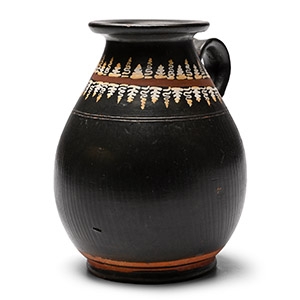
Greek Gnathian Black-Glazed Jug with Grape Vines
South Italic, 5th-3rd century B.C.Sold for (Inc. bp): £442
Blackware juglet with pedestal base, bulbous body, waisted neck and everted rim; the applied handle to the rear; band of red flanked by cream and white fronds to the shoulder. 155 grams, 11 cm
From the private collection of a Canadian gentleman living in Essex, UK, formed since the 1920s-circa 1990. Property of an Essex lady until the late 1990s; thence by descent. From the private collection of an Essex gentleman since the late 1990s. This lot is accompanied by an illustrated lot declaration signed by the Head of the Antiquities Department, Dr Raffaele D'Amato. -
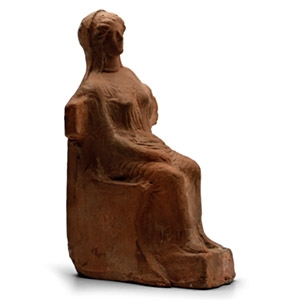
Greek Terracotta Figure of a Seated Goddess
3rd-2nd century B.C.Estimate: £600 - 800 (‡+bp*)
Opening Bid: £300
Hollow-formed figurine of a female wearing a himation seated on a high-backed chair with right hand in her lap and left arm bent over the back of the chair; triangular vent to reverse, hollow underside; Tanagra type. 255 grams, 13.8 cm
Collection of Mr C., Geneva, Switzerland (1936-2016), assembled between 1985 and 2010. This lot is accompanied by an illustrated lot declaration signed by the Head of the Antiquities Department, Dr Raffaele D'Amato. -
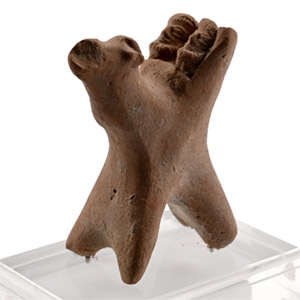
Parthian Camel and Riders Figurine
3rd-1st century B.C.Sold for (Inc. bp): £182
With bearded riders in a rectangular structure; mounted on a custom made display stand. 224 grams, 10 cm including stand
Fine condition.
Ex an important Dutch collection; acquired on the European art market in the 1970s. From the private collection of John Meredith, acquired since the 1990s; thence by descent. This lot is accompanied by an illustrated lot declaration signed by the Head of the Antiquities Department, Dr Raffaele D'Amato.
