
Loading, please wait...
LOT 1833
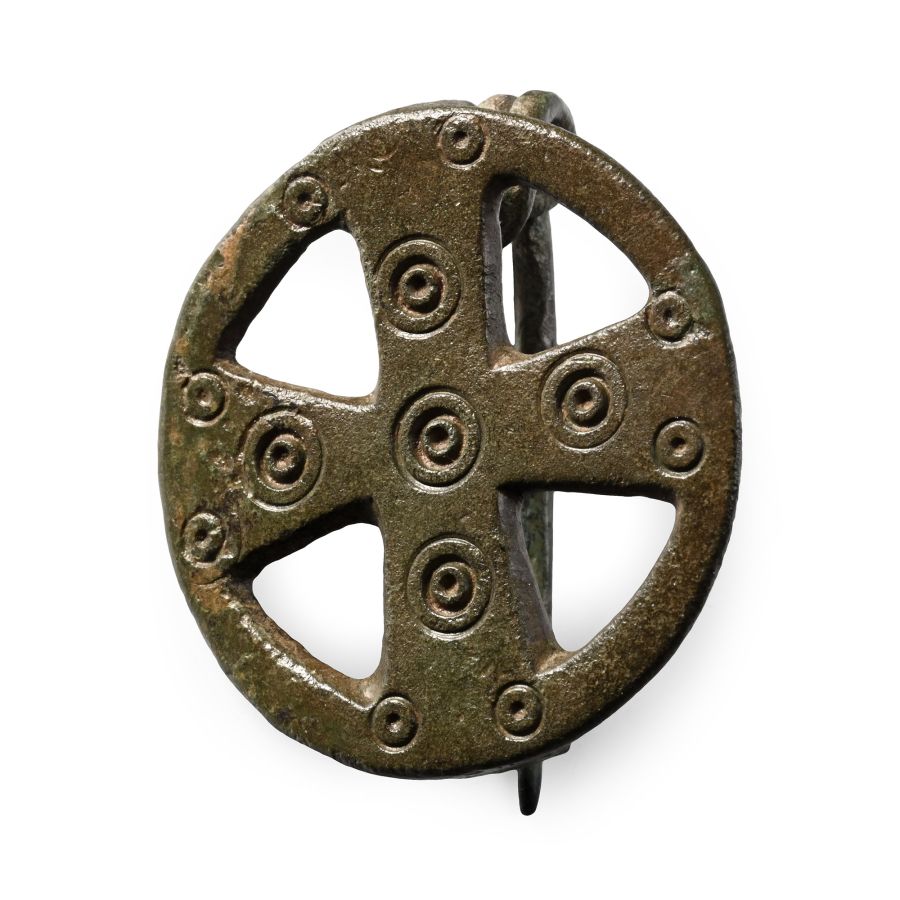
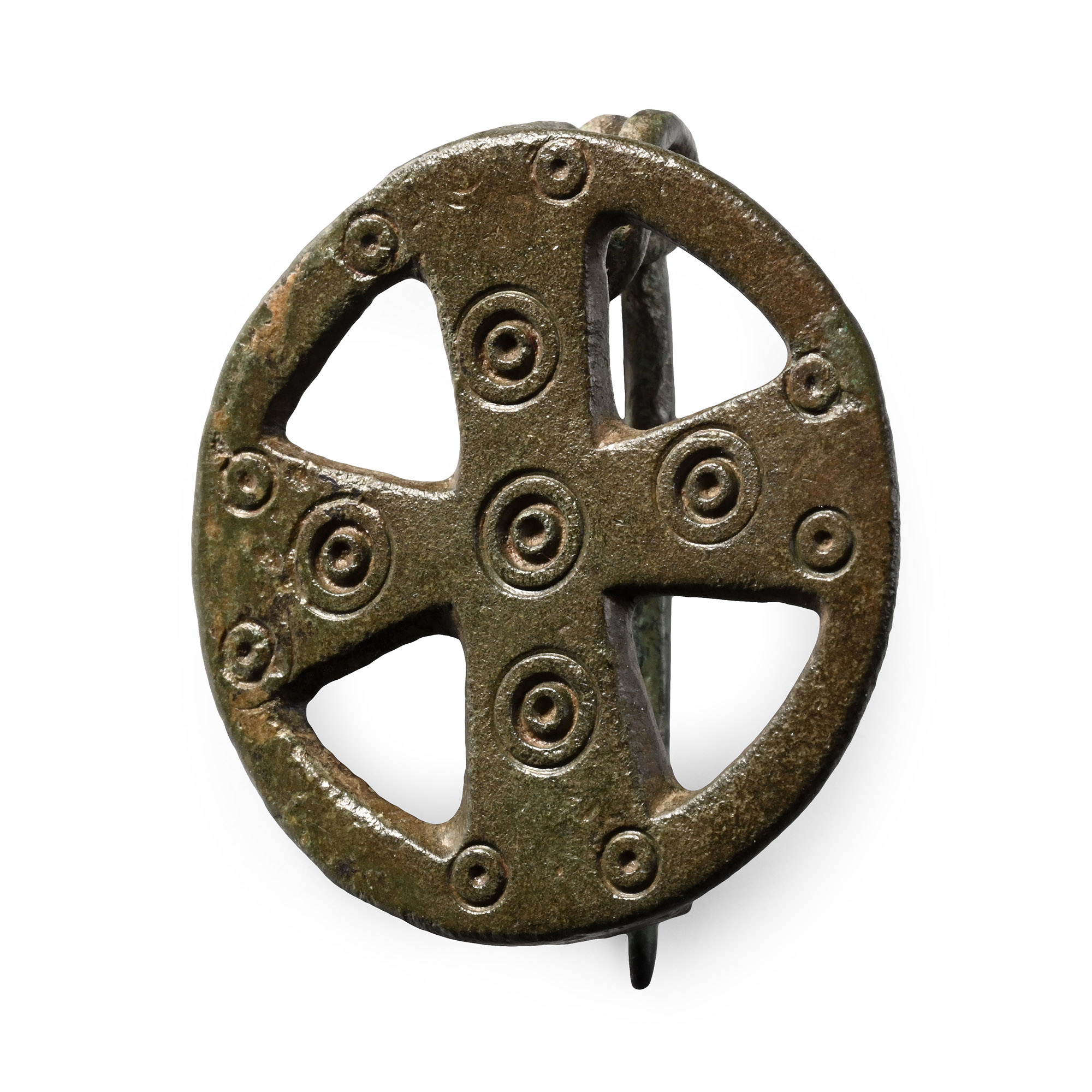
Dark Age Bronze Cross Plate Brooch
7TH-8TH CENTURY A.D.
1 3/8 in. (12.6 grams, 36 mm).
Comprising an expanding arm cross within a circular border, punched ring-and-dot decoration, pin and catch on the reverse. [No Reserve]
ProvenanceFrom the private coin collection of a West London, UK, gentleman, formed since the mid 1980s.
CONDITIONTimeLine Auctions follows a vetting process to ensure the authenticity and legality of all items, reinforcing our commitment to integrity and responsible trading. Each antiquity, antique, and coin lot undergoes thorough examination by a vetting committee of at least ten external specialists, professional trade association members, scientists, and archaeologists: Our Vetting Process
AUCTIONS:
TimeLine is a leading auction house specialising in antiquities, ancient art, collectables, natural history, coins, medals, and books. Our auctions offer museums, collectors, historians, and enthusiasts the opportunity to acquire unique and historically significant pieces.
-
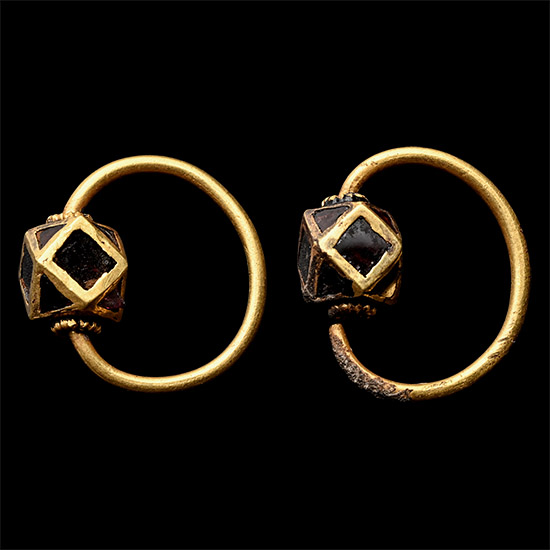
Merovingian Gold Earrings with Garnets
6th century A.D.Sold for (Inc. bp): £2,600
Of circular form, each composed of a plain gold hoop terminating in a cube-shaped setting displayed upon panels of almandine garnet, carefully cut and backed with gold foil to enhance their translucency and depth of colour; the polygonal settings formed of intersecting gold struts. 21.44 grams total, 30-32mm
New York art market. Christie's, New York, 18 December 1998, no.316. with Ariadne Galleries, New York, acquired at the above sale. Private American collection, acquired from the above, 27 April 2016. This lot has been checked against the Interpol Database of stolen works of art and is accompanied by search certificate number no.13449-257970.
Collectively, these objects demonstrate the wide diffusion of this Ostrogothic type across the Mediterranean, highlighting both the technical mastery of cloisonné work and its symbolic value within elite Gothic adornment. Their integrity is exceptional for jewels of this period, and they would be suitable, if desired, for sympathetic adaptation with discreet loops for modern wear. The use of garnet inlaid into gold cells reflects the continuation of Late Roman cloisonné techniques, adapted and developed within the Ostrogothic world. Such earrings, with their bold cubic settings and luminous stones, would have projected wealth and status, while also embodying the cultural synthesis of Roman and Gothic traditions in Italy and the wider Mediterranean during the 6th century. Displayed upon a modern bespoke bronze stand, included with the earrings. -
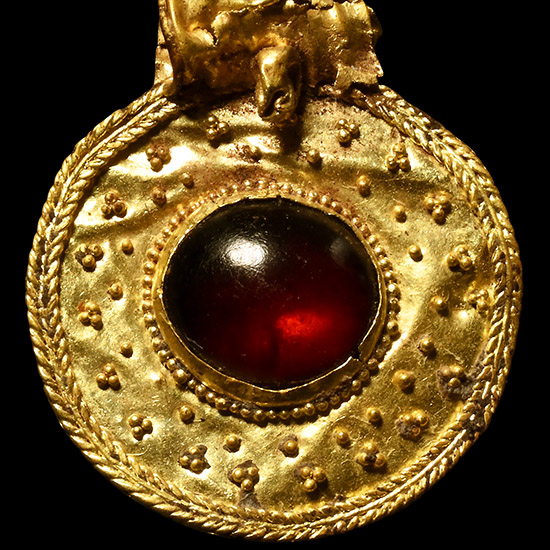
Merovingian Gold Pendant with Cabochon Garnet
Circa 5th-6th century A.D.Estimate: £1,000 - 1,400 (+bp*)
Current Winning Bid: £575
Foil disc with central cell surrounded by a beaded filigree collar, ropework filigree rim and granule clusters to the tondo; cell with inset garnet cabochon; broad ribbed loop with hollow-formed granule stud at the junction. 0.94 grams, 20 mm
From a European collection, 1980s. Property of an Essex, UK, gentleman -
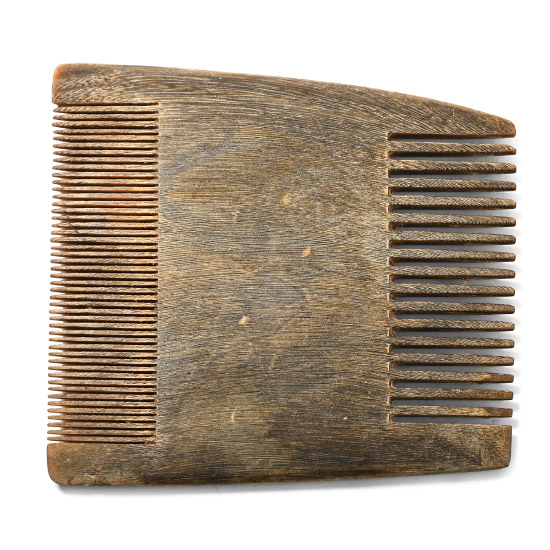
Migration Period Horn Comb
Circa 6th-8th century A.D.Sold for (Inc. bp): £286
Trapezoidal type with saw-cut teeth to each long edge, one group coarse and the other fine. 14.95 grams, 71 mm
Ex German art market, 2000s. Acquired from an EU collector living in London. From the collection of a Surrey, UK, gentleman.
