
Loading, please wait...


LOT 1593
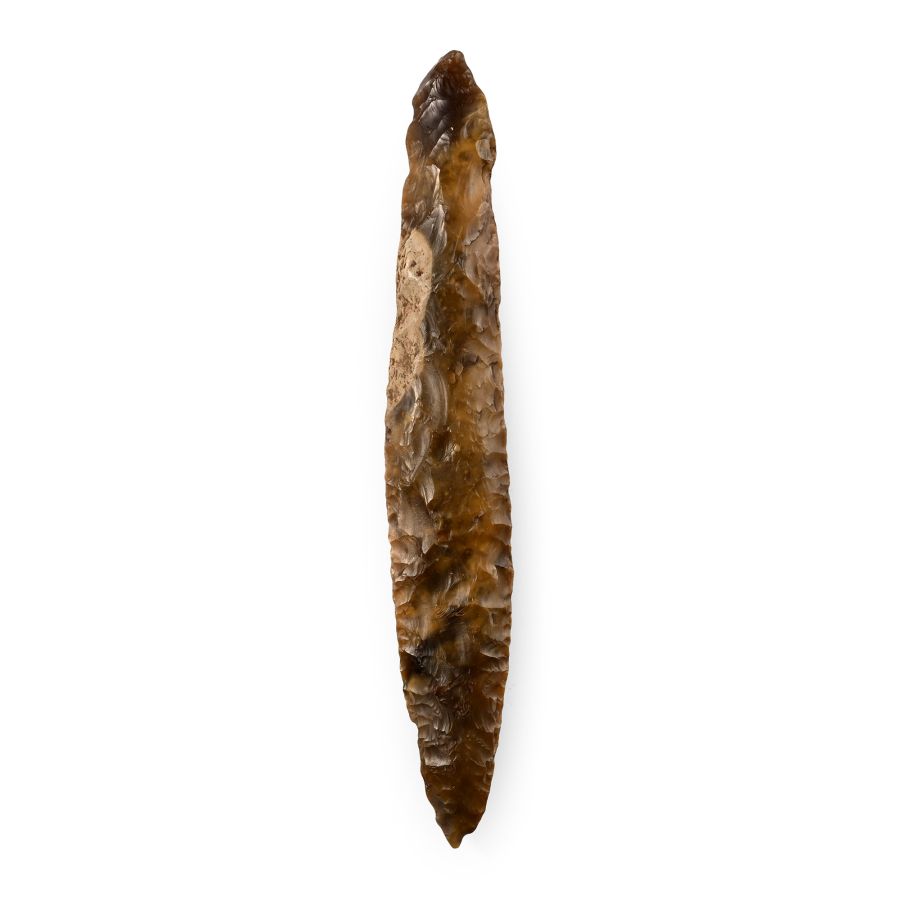
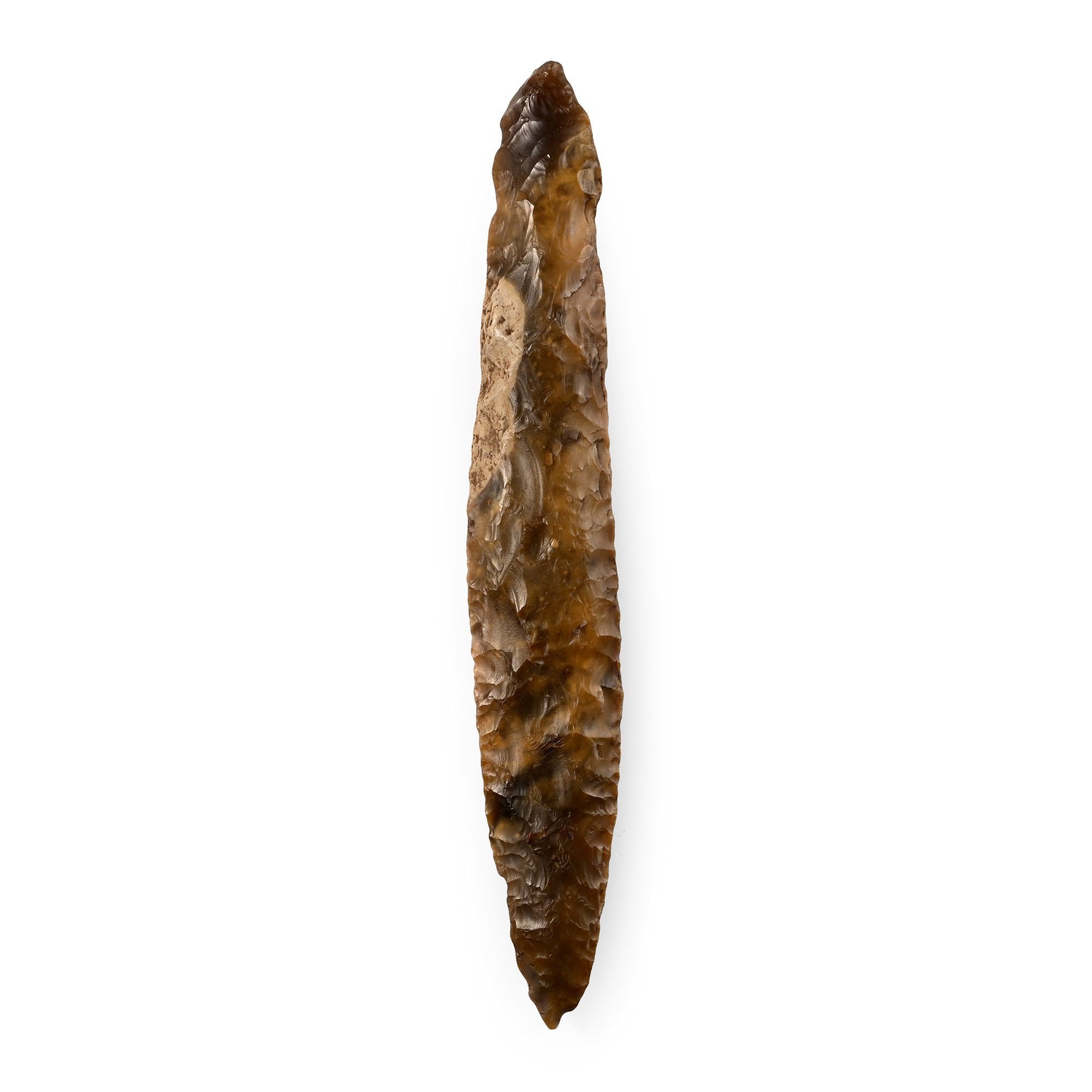
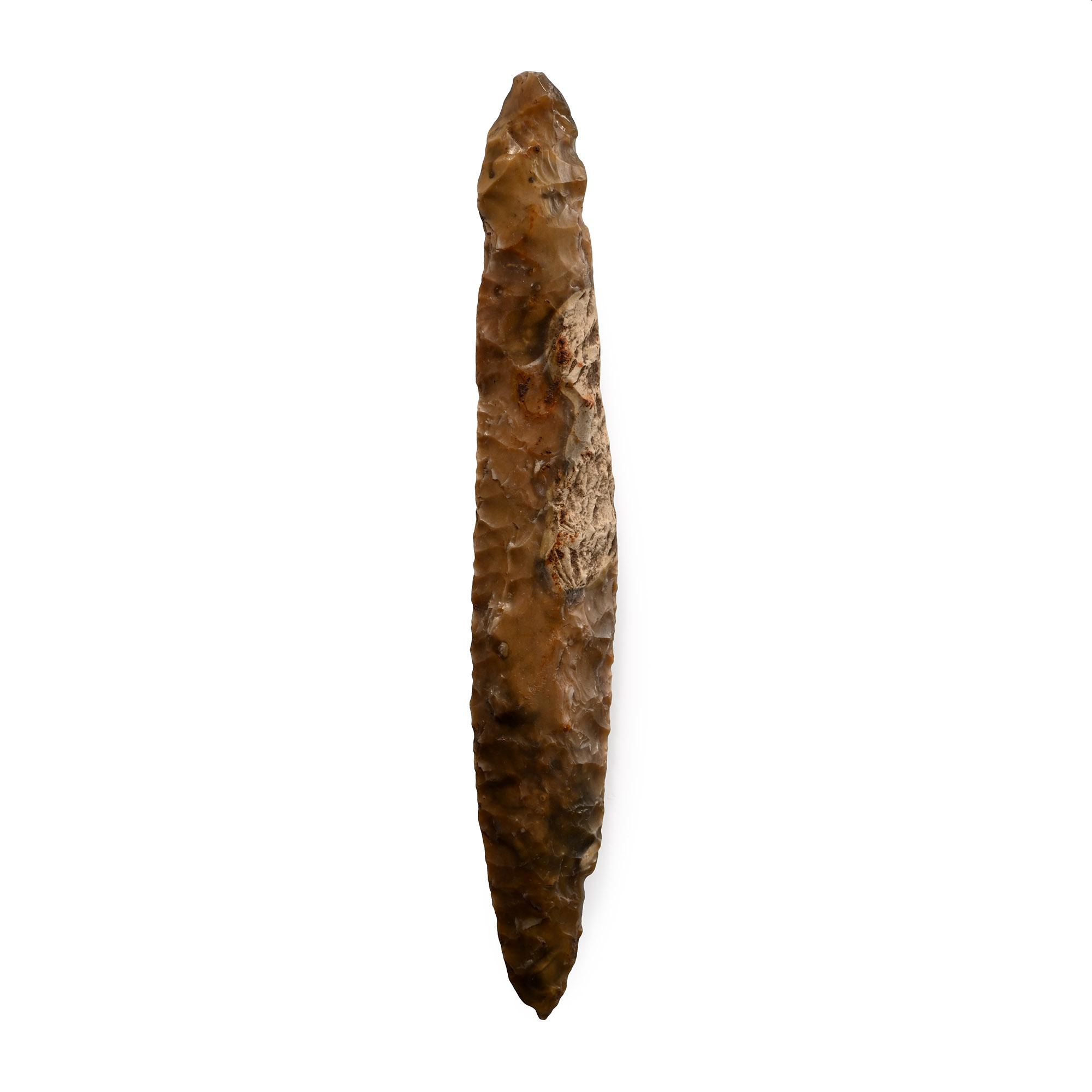
Danish Stone Age 'Type 1B' Knapped Flint Dagger
NEOLITHIC PERIOD, 4400-3800 B.P.
6 in. (40 grams, 15.1 cm).
Slender double-edged blade with pointed ends. [No Reserve]
ProvenanceFound Denmark.
From the collection of Martin Doyle, Leverstock, UK, 1980s-2000s.
TimeLine Auctions follows a vetting process to ensure the authenticity and legality of all items, reinforcing our commitment to integrity and responsible trading. Each antiquity, antique, and coin lot undergoes thorough examination by a vetting committee of at least ten external specialists, professional trade association members, scientists, and archaeologists: Our Vetting Process
AUCTIONS:
TimeLine is a leading auction house specialising in antiquities, ancient art, collectables, natural history, coins, medals, and books. Our auctions offer museums, collectors, historians, and enthusiasts the opportunity to acquire unique and historically significant pieces.
-
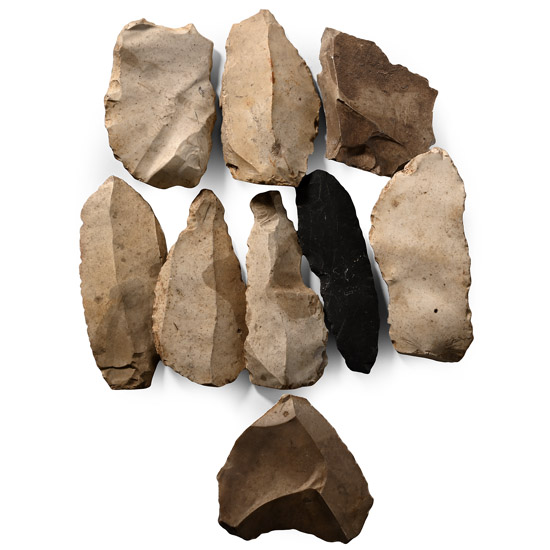
Stone Age Tool and Core Collection
Neolithic Period, circa 6,000 B.P.Sold for (Inc. bp): £13
Including leaf-shaped blades, scrapers, burin and other types. 406 grams total, 70-92 mm
From a UK private collection since at least 1946. Property of a West London, UK, gentleman. -
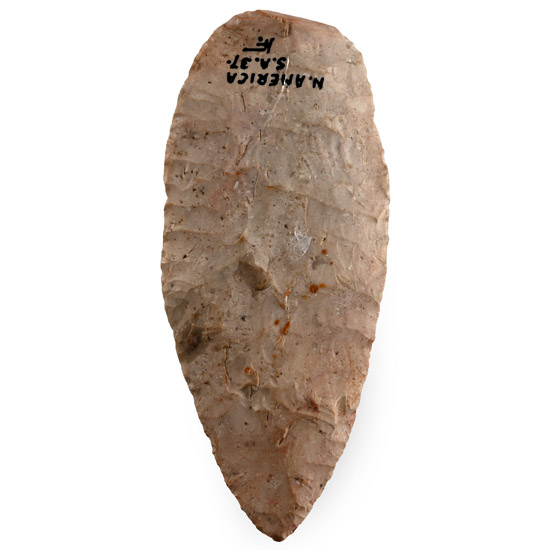
North American Stone Age Knapped Bifacial Knife
Circa 6000-4000 B.P.Sold for (Inc. bp): £78
Ovate blade in cream-coloured stone, narrow point, inked collector's note 'N.America S.A 37' and Hugh Fawcett collection monogram below. 25.4 grams, 79 mm
Ex Dr Hugh Alderson Fawcett (1891-1982), a general practitioner and antiquarian who built up an important collection of ancient implements, weapons and ornaments. From the collection of a West Sussex collector. Acquired from the UK art market in the 2020s.
Dr Hugh Alderson Fawcett (1891-1982) was a general practitioner and antiquarian who built up an important collection of ancient implements, weapons and ornaments. The bulk of his collection is now in the Bristol Museum and Art Gallery, but Fawcett previously sold or traded some examples. His distinctive monogram and careful recording of provenance make his pieces readily identifiable. -
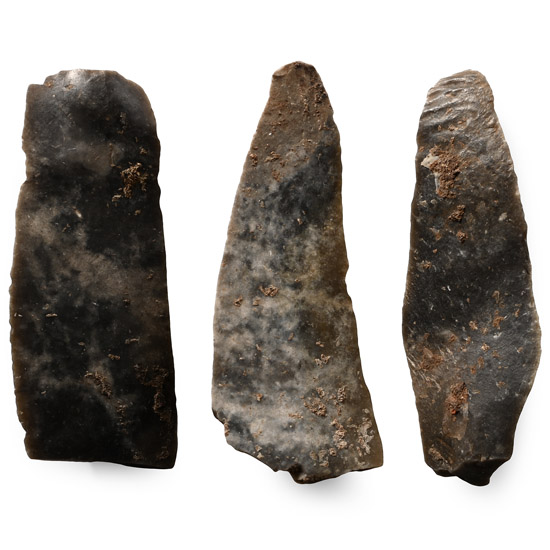
French Stone Age Solutrean Knapped Flint Blade Group - Ex Sir Arthur Evans
Upper Palaeolithic Period, 22,000-17,000 B.P.Sold for (Inc. bp): £234
Comprising two blades made from bluish-white flint, and one made of dark blue-grey flint. 18.3 grams total, 48-52 mm
Found at Fourneau du Diable, Bourdielles Dordogne, an important Upper Palaeolithic prehistoric rock shelter. Ex Sir Arthur John Evans (1851–1941), British archaeologist and son of Sir John Evans (1823-1908). Ex Henry Dewey (1876–1965), a prominent British geologist and archaeologist who made seminal contributions to the study of the Palaeolithic period. Ex R Richard Widdowson, a well-known UK-based antiquities specialist who owned the gallery 'Ancient Times' in Scarborough in Southern England. Ex J Weston Smith. Each accompanied by an illustrated collector's information card.
