
Loading, please wait...


LOT 1614
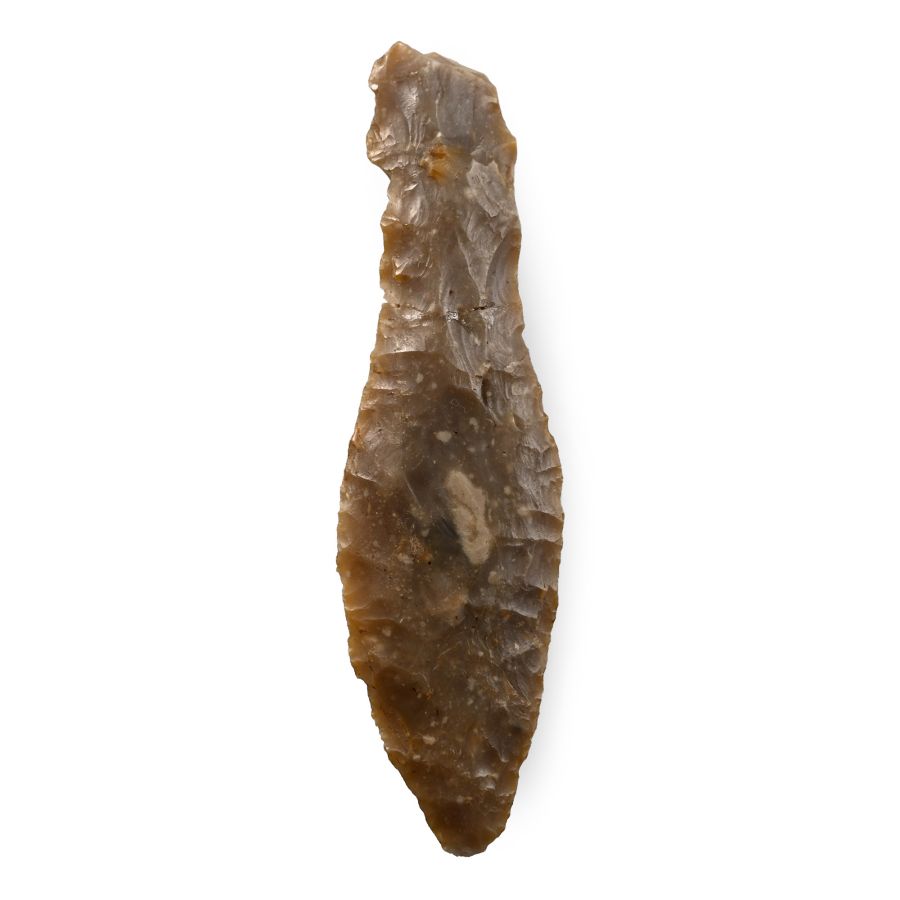
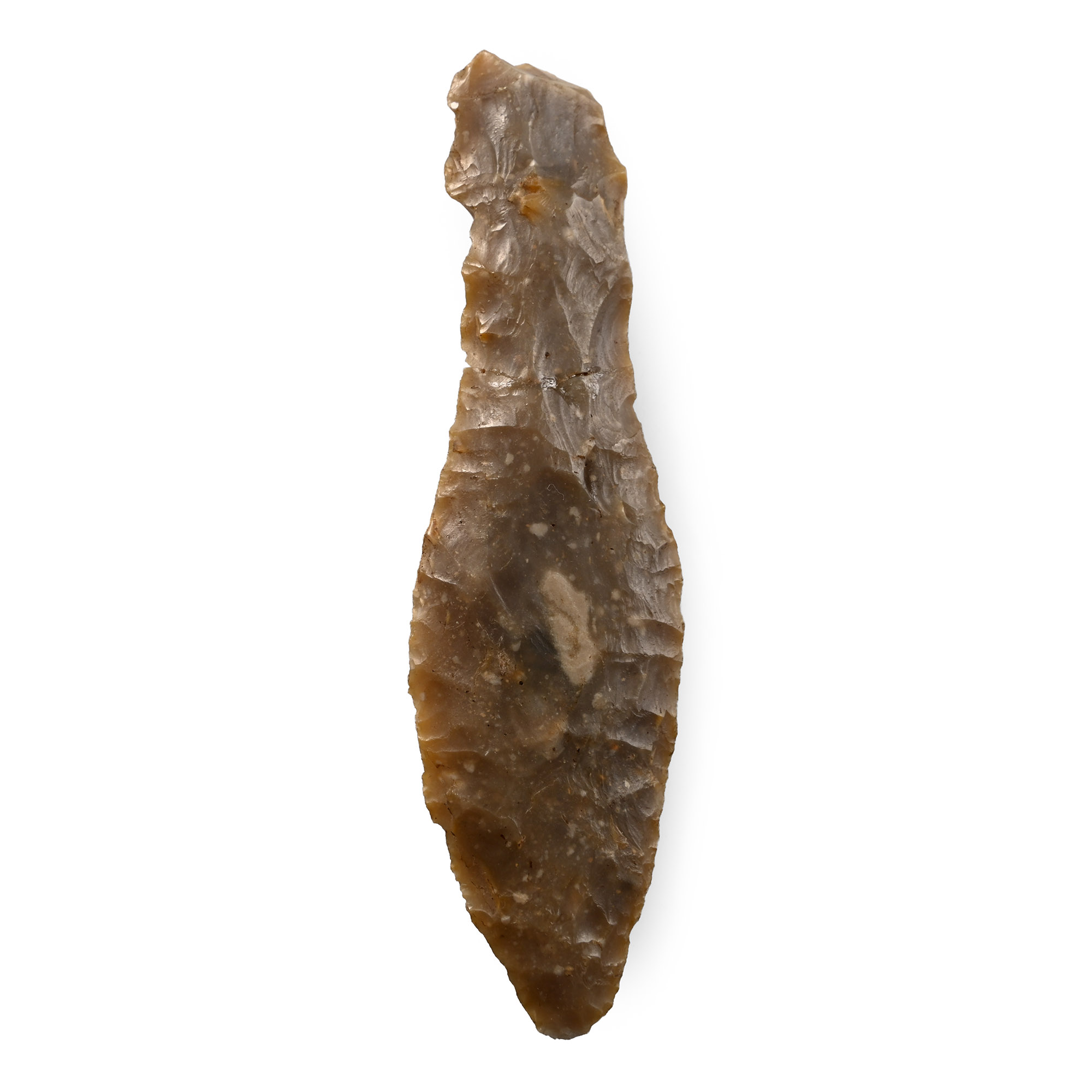
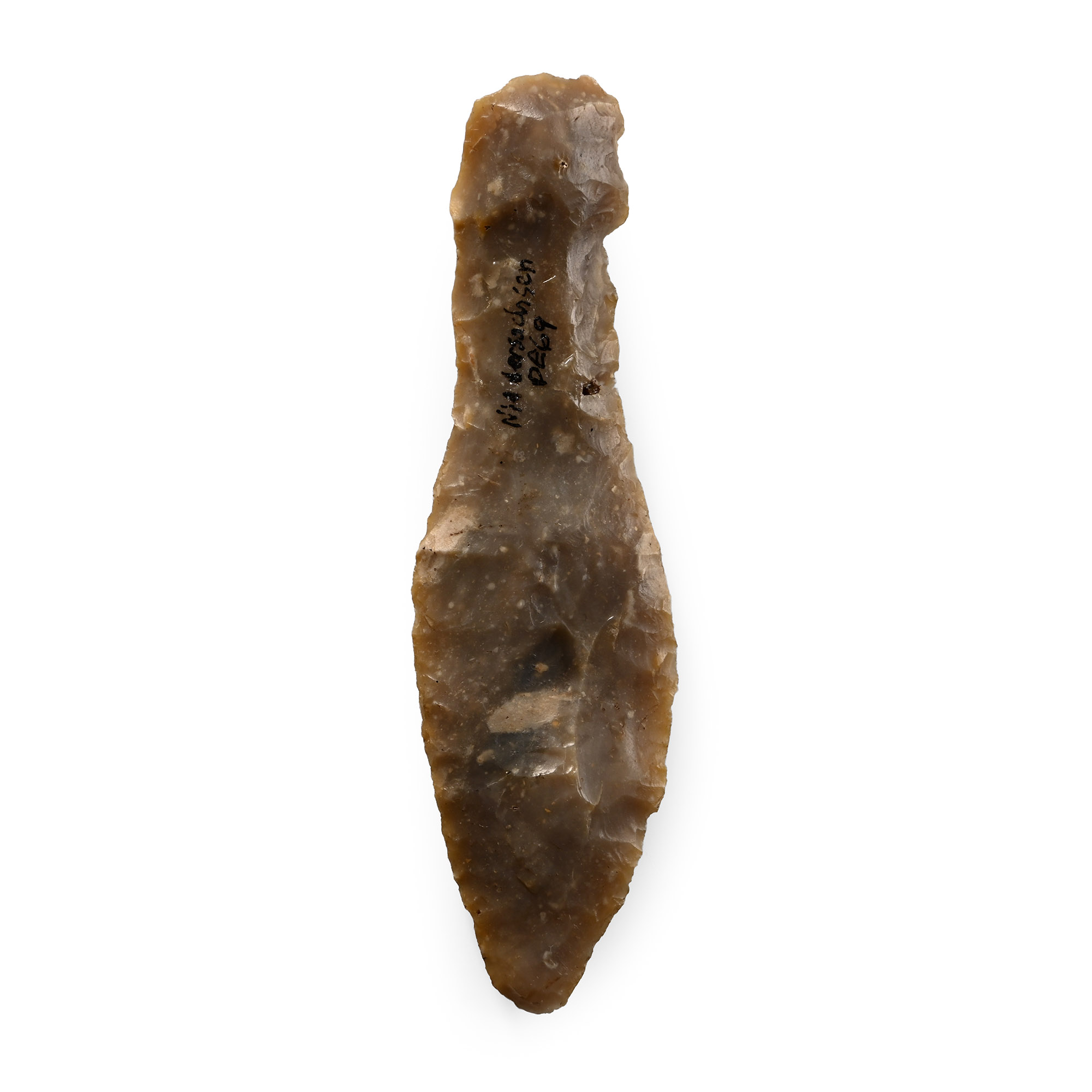
Danish Stone Age Knapped Flint Dagger
NEOLITHIC PERIOD, 3950-3600 B.P.
4 3/8 in. (35.3 grams, 11.1 cm).
With a leaf-shaped blade and long tand, an old inked collector's note to one side; repaired. [No Reserve]
ProvenanceFound Denmark.
From the collection of Martin Doyle, Leverstock, UK, 1980s-2000s.
TimeLine Auctions follows a vetting process to ensure the authenticity and legality of all items, reinforcing our commitment to integrity and responsible trading. Each antiquity, antique, and coin lot undergoes thorough examination by a vetting committee of at least ten external specialists, professional trade association members, scientists, and archaeologists: Our Vetting Process
AUCTIONS:
TimeLine is a leading auction house specialising in antiquities, ancient art, collectables, natural history, coins, medals, and books. Our auctions offer museums, collectors, historians, and enthusiasts the opportunity to acquire unique and historically significant pieces.
-
.jpg)
Massive North American Stone Age Knapped Grey Chert Ceremonial Adena Spear Point
Early Woodland Period, circa 2500-1900 B.P.Sold for (Inc. bp): £1,105
With yellow patina and some polished areas, a ceremonial blade of exceptional length, fashioned from high-quality chert with controlled percussion flaking and well-balanced symmetry. 193 grams, 26.3 cm
Acquired in 1977 by the archaeologist owner from a private collection in Ohio, USA.
Blades of this size exceed functional hunting requirements and belong to the class of oversized ritual pieces placed in high-status Adena mound burials. This spearpoint is a rare and impressive example of Early Woodland craftsmanship. -
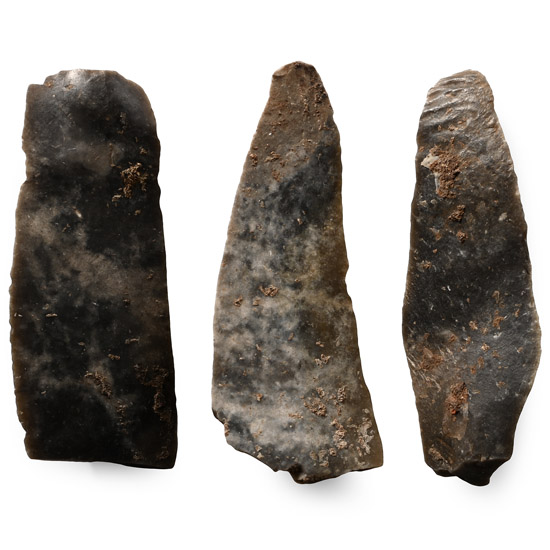
French Stone Age Solutrean Knapped Flint Blade Group - Ex Sir Arthur Evans
Upper Palaeolithic Period, 22,000-17,000 B.P.Sold for (Inc. bp): £234
Comprising two blades made from bluish-white flint, and one made of dark blue-grey flint. 18.3 grams total, 48-52 mm
Found at Fourneau du Diable, Bourdielles Dordogne, an important Upper Palaeolithic prehistoric rock shelter. Ex Sir Arthur John Evans (1851–1941), British archaeologist and son of Sir John Evans (1823-1908). Ex Henry Dewey (1876–1965), a prominent British geologist and archaeologist who made seminal contributions to the study of the Palaeolithic period. Ex R Richard Widdowson, a well-known UK-based antiquities specialist who owned the gallery 'Ancient Times' in Scarborough in Southern England. Ex J Weston Smith. Each accompanied by an illustrated collector's information card. -
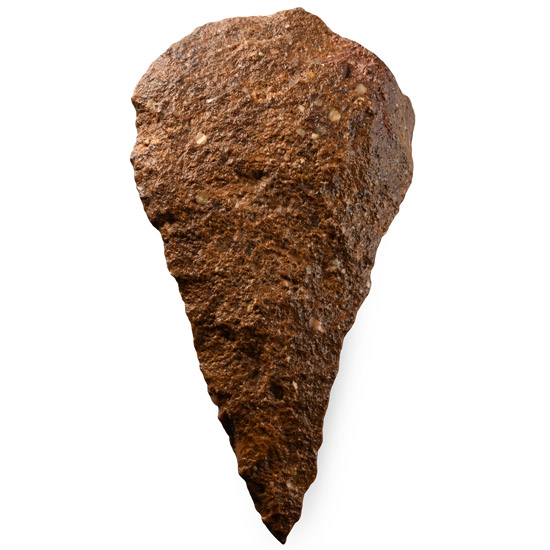
African Stone Age Homo Erectus Knapped Acheulean Classic Pointed Handaxe
Lower Palaeolithic Period, circa 1,000,000-500,000 B.P.Sold for (Inc. bp): £130
Classic piriform type with broad butt. 206 grams, 17.6 cm
From the Northern Sahara, North Africa. From a collection formed during the 1970s and 1980s, having been acquired on the British art market; thence by descent to the current owner in 1998.
