Loading, please wait...

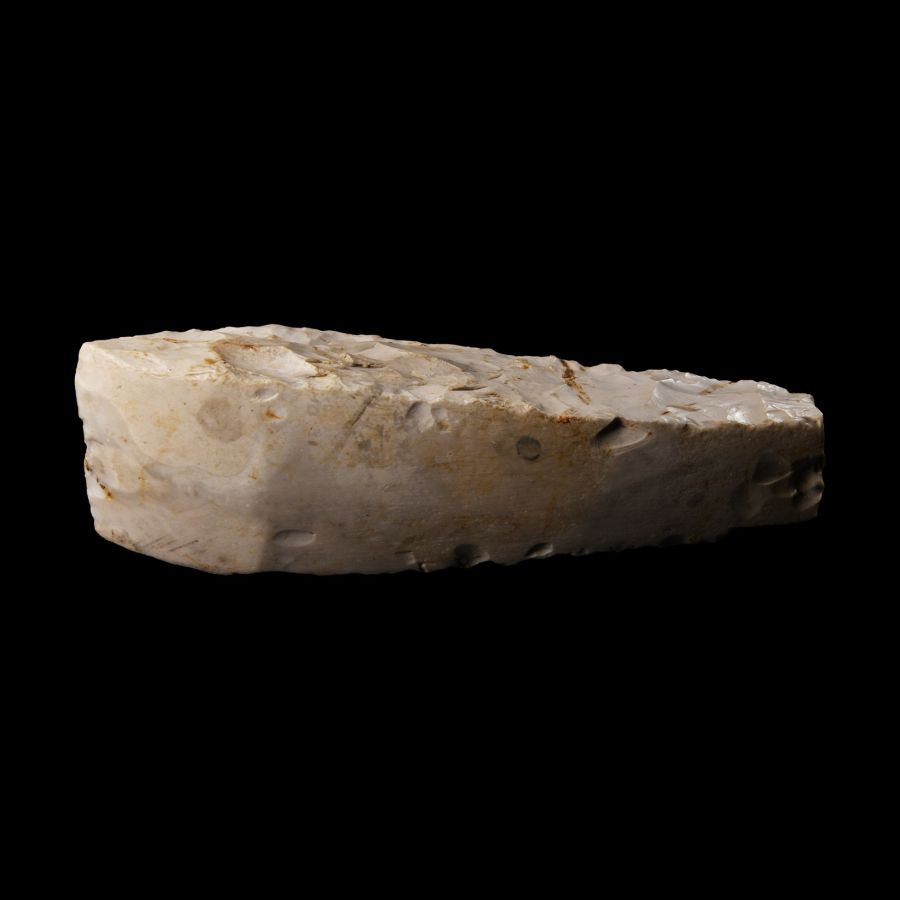
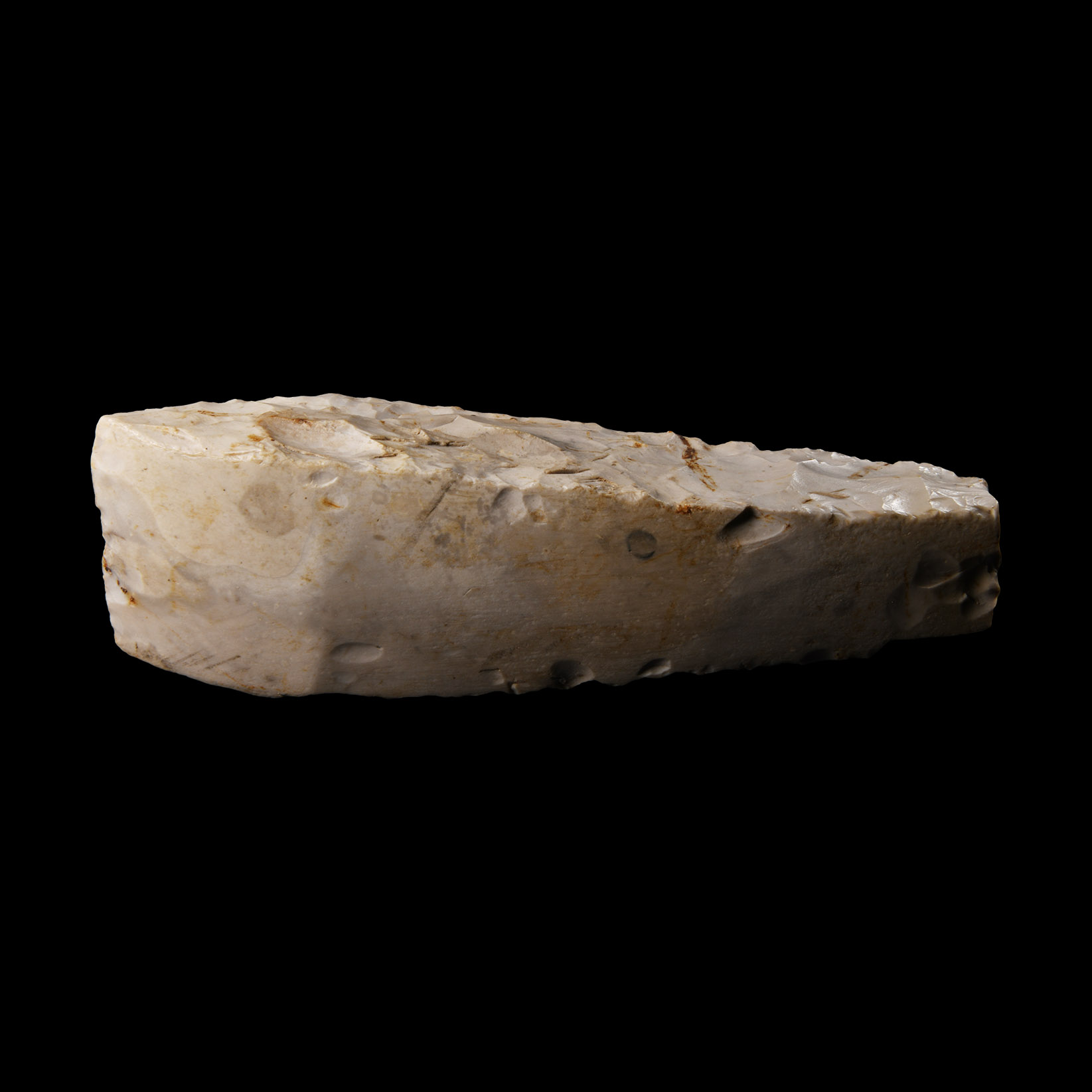
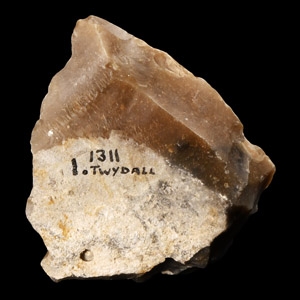
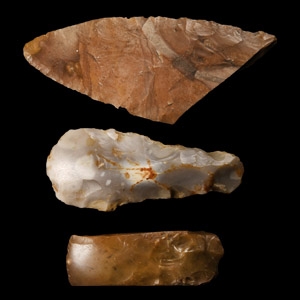
Danish Neolithic Flint Axehead Danish Neolithic Flint Axehead Danish Neolithic Flint Axehead
Use mousewheel to zoom in and out, click to enlarge
Details

LOT 0247

Danish Neolithic Flint Axehead

4TH MILLENNIUM B.C.

6 1/4 in. (440 grams, 15.9 cm).

A thin-butted wedge-shaped white flint axe head.

Provenance

Acquired early 1990s.
Ex private American collection; thence by descent.
Private Swiss collection since 1998.

CONDITION
VETTING:

TimeLine Auctions follows a vetting process to ensure the authenticity and legality of all items, reinforcing our commitment to integrity and responsible trading. Each antiquity, antique, and coin lot undergoes thorough examination by a vetting committee of at least ten external specialists, professional trade association members, scientists, and archaeologists: Our Vetting Process


AUCTIONS:

TimeLine is a leading auction house specialising in antiquities, ancient art, collectables, natural history, coins, medals, and books. Our auctions offer museums, collectors, historians, and enthusiasts the opportunity to acquire unique and historically significant pieces.

LOT 0247

Danish Neolithic Flint Axehead

Estimate £300 - 400€350 - 460 (for guidance only)$410 - 540 (for guidance only)

Print page

RELATED LOTS
  • Stone Age Aterian Tanged Arrowheads
    Stone Age Aterian Tanged Arrowheads
    Circa 85,000-40,000 B.P.

    Sold for (Inc. bp): £33

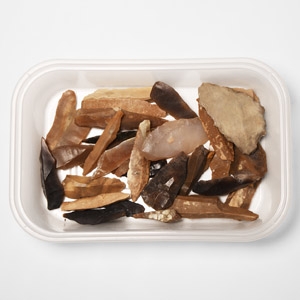
    A group of 20 tanged stone transverse style arrowheads. 250 grams total, 27-55 mm


    From Grotte des Pigeons in Taforalt, Morocco, North Africa. Ex Arthur Halcrow Versage collection, Reigate, Surrey, UK.

    The tang would have been inserted into a split handle or shaft material, like wood or bone, and then bound in position with cord, or with a binding agent which would have harden to form a permanent bond. The Aterian is the name given to a distinctive stone tool industry made by anatomically modern humans between about 80,000 and 40,000 years ago. The tools are found on sites in northern Africa between the Atlantic coast to the Kharga Oasis and the western edge of the Nile River Basin. The manufacturing process for these tools is derived from the earlier "Mousterian" methods for working stone, using prepared and shaped cores from which were struck off large flakes which were then often unifacially trimmed into the desired tool shapes. They continued with the same basic stone working processes, but with a major conceptual difference. The "Aterian" style tools are the first to have clearly been designed and manufactured to be mounted on handles, with the projectile points and the scrapers having distinctive prepared "tangs" at the base of the tool or projectile point.

    Lot Details

  • Large Danish Stone Age Neolithic Thin Butted Axe
    Large Danish Stone Age Neolithic Thin Butted Axe
    Dolman Period, 3700-3300 B.C.

    Sold for (Inc. bp): £416

    A very finely polished axe with square edges and convex cutting edge, in yellow-brown flint with evidence of use as a 'strike-a-light' to the butt; with old collector label '179' to face. 758 grams, 20.5 cm

    Fine condition.

    Acquired 1990s. French private collection before 2020. Property of a Sussex, UK, teacher.

    Lot Details

  • Stone Age Aterian Tanged Arrowheads
    Stone Age Aterian Tanged Arrowheads
    Circa 85,000-40,000 B.P.

    Sold for (Inc. bp): £26

    A group of 20 tanged stone transverse style arrowheads. 298 grams total, 30-71 mm


    From Grotte des Pigeons in Taforalt, Morocco, North Africa. Ex Arthur Halcrow Versage collection, Reigate, Surrey, UK.

    The tang would have been inserted into a split handle or shaft material, like wood or bone, and then bound in position with cord, or with a binding agent which would have harden to form a permanent bond. The Aterian is the name given to a distinctive stone tool industry made by anatomically modern humans between about 80,000 and 40,000 years ago. The tools are found on sites in northern Africa between the Atlantic coast to the Kharga Oasis and the western edge of the Nile River Basin. The manufacturing process for these tools is derived from the earlier "Mousterian" methods for working stone, using prepared and shaped cores from which were struck off large flakes which were then often unifacially trimmed into the desired tool shapes. They continued with the same basic stone working processes, but with a major conceptual difference. The "Aterian" style tools are the first to have clearly been designed and manufactured to be mounted on handles, with the projectile points and the scrapers having distinctive prepared "tangs" at the base of the tool or projectile point.

    Lot Details

Stay up-to-date with the latest from TimeLine Auctions by joining our mailing list