
Loading, please wait...
LOT 0559
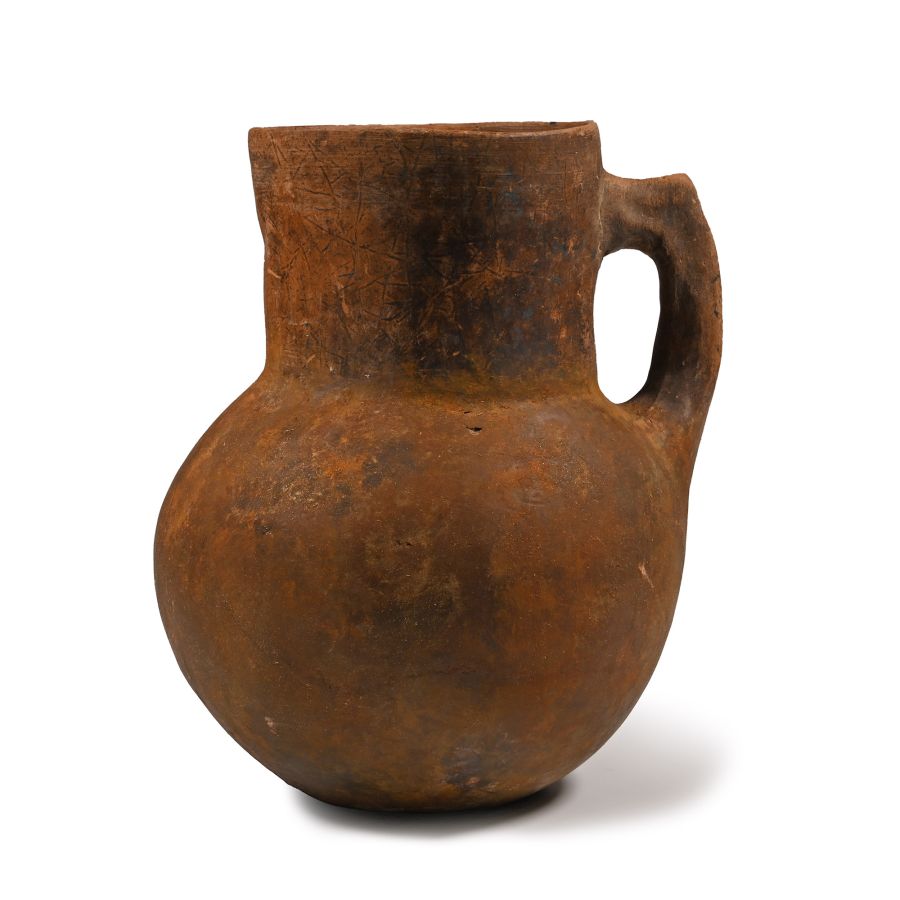
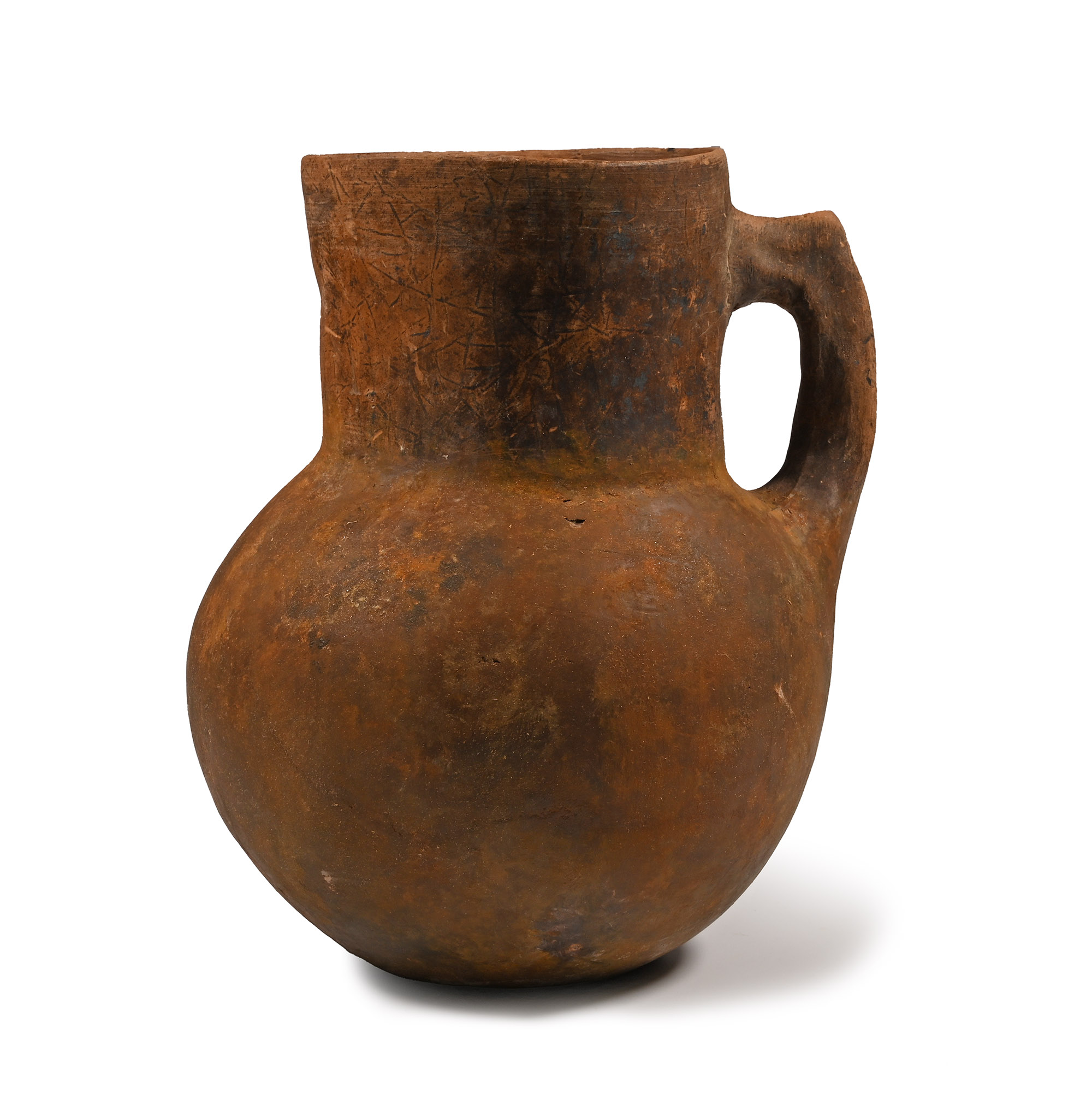
Cypro-Phoenician Terracotta Jug
1ST MILLENNIUM B.C.
6 3/4 in. (685 grams, 17.2 cm).
With bulbous body and broad tubular neck, angled handle to rear. [No Reserve]
ProvenanceFrom a London, UK, gentleman's collection of ancient pottery and artefacts, 1990s.
This lot is accompanied by an illustrated lot declaration signed by the Head of the Antiquities Department, Dr Raffaele D'Amato.
Cf. Schreiber, N., The Cypro-Phoenician Pottery of the Iron Age, Leiden-Boston, 2003, fig.14 nos.1,2,3, for similar pottery (Phase I BoR pottery).
FootnotesBoR pottery begins to appear on the Phoenician mainland and Cyprus from the middle of the 10th century. The first ceramic horizon, which we can term 'Phase Γ of BoR distribution, continues from this period until the beginning of the 9th century (c.950 - c.890/880 BC). The destruction possibly caused by Pharaoh Shishak at various sites in the Levant has preserved assemblages of similar wares which were probably sealed in the last decades of the 10th century.
CONDITIONTimeLine Auctions follows a vetting process to ensure the authenticity and legality of all items, reinforcing our commitment to integrity and responsible trading. Each antiquity, antique, and coin lot undergoes thorough examination by a vetting committee of at least ten external specialists, professional trade association members, scientists, and archaeologists: Our Vetting Process
AUCTIONS:
TimeLine is a leading auction house specialising in antiquities, ancient art, collectables, natural history, coins, medals, and books. Our auctions offer museums, collectors, historians, and enthusiasts the opportunity to acquire unique and historically significant pieces.
-
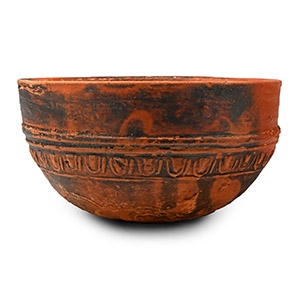
Greek Megarian Terracotta Bowl
2nd century B.C.Estimate: £350 - 450 (+bp*)
Opening Bid: £175
Hemispherical in profile with slightly everted rim and a matt glaze, raised architectural motifs to the shoulder, dense stylised vines below; shallow rosette foot. 208 grams, 13.5 cm
From the collection of a gentleman, acquired on the London art market in the 1990s. This lot is accompanied by an illustrated lot declaration signed by the Head of the Antiquities Department, Dr Raffaele D'Amato. -
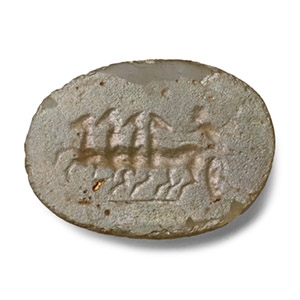
Greek Glass Gem with Quadriga
Circa 2nd century B.C.Sold for (Inc. bp): £234
Ellipsoid in plane and planoconvex in section with incuse chariot, driver and horses. 1.2 grams, 20 mm
Acquired on the European art market in the early 2000s. with Galerie Rhéa, Zurich, Switzerland. This lot is accompanied by an illustrated lot declaration signed by the Head of the Antiquities Department, Dr Raffaele D'Amato. -
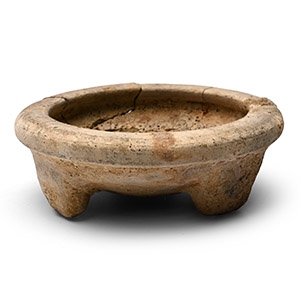
Parthian Shallow Terracotta Tripod Dish
1st-3rd century A.D.Sold for (Inc. bp): £52
A squat bowl with three stub feet and chamfered rim; repaired. 200 grams, 11 cm
Fine condition, repaired.
From an important central London collection formed since the mid 1960s; thence by descent. From the private collection of John Meredith, acquired since the 1990s; thence by descent. This lot is accompanied by an illustrated lot declaration signed by the Head of the Antiquities Department, Dr Raffaele D'Amato.
