
Loading, please wait...
LOT 0057
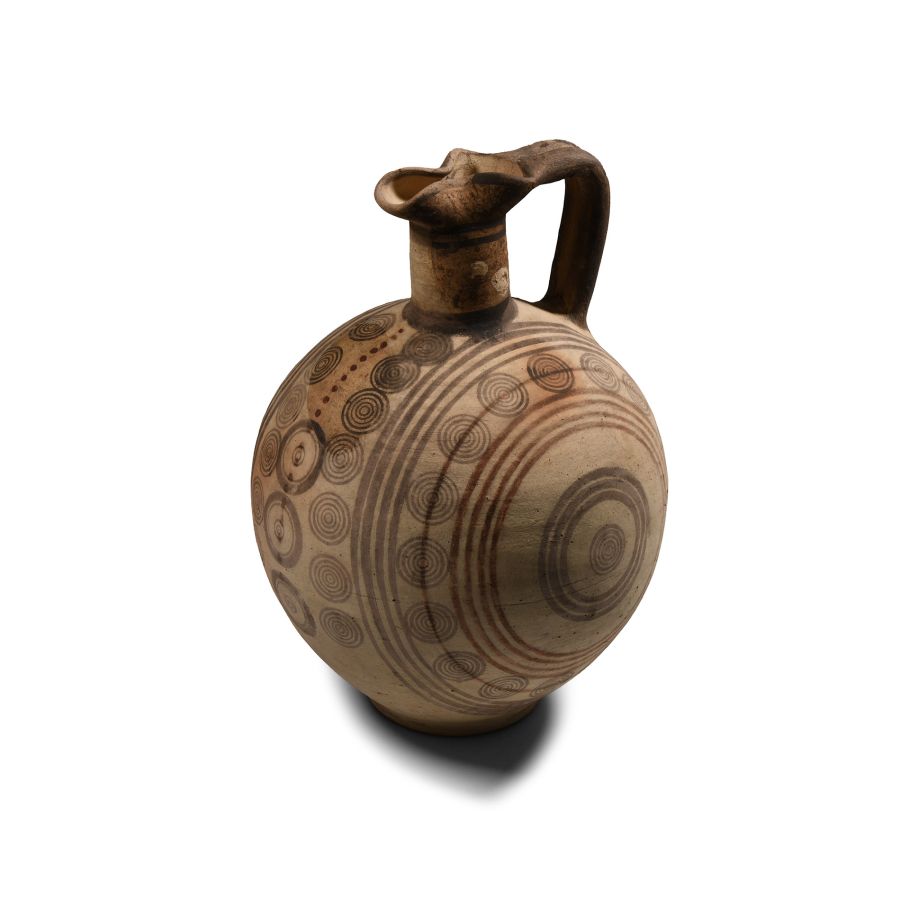
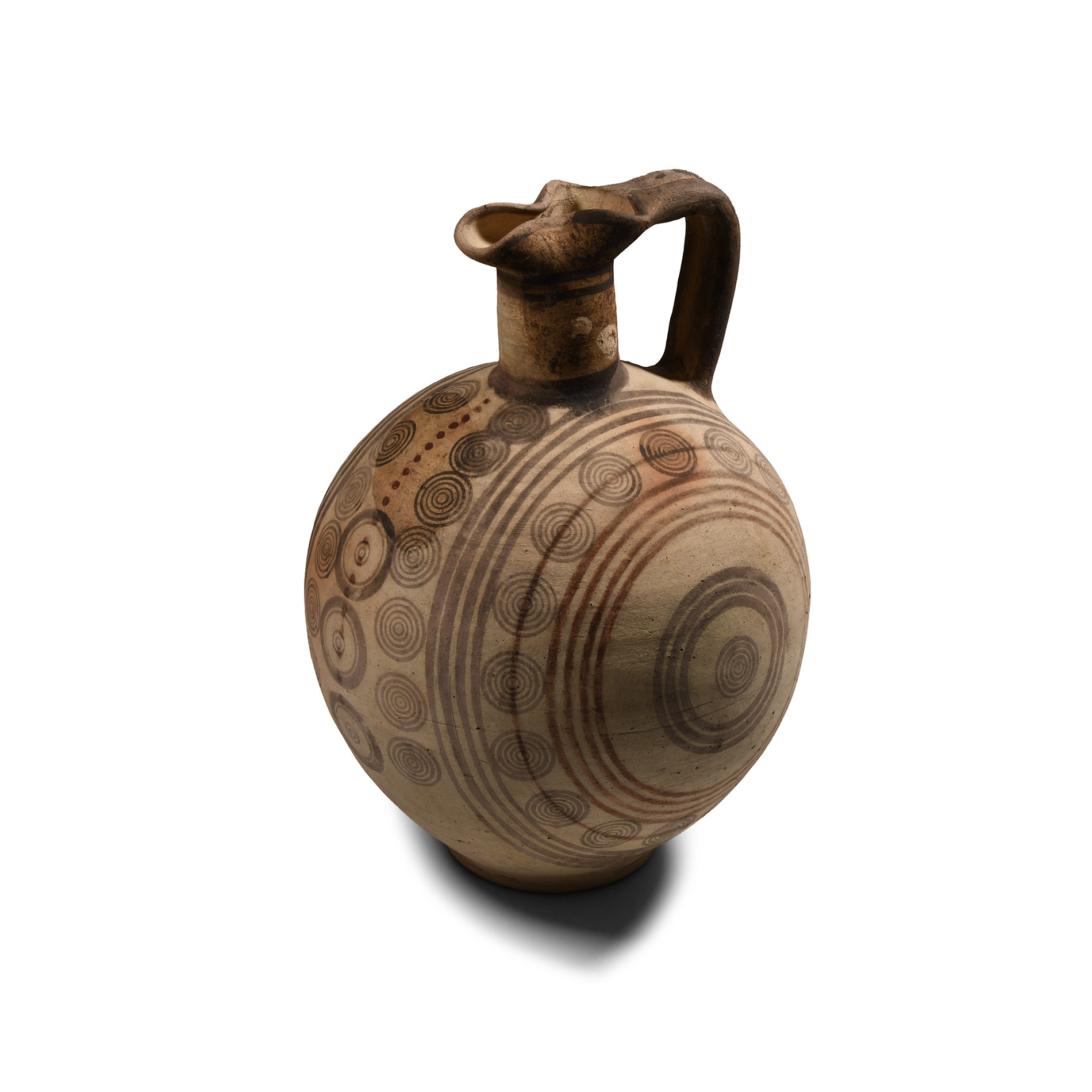
Cypriot Trefoil Jug with Concentric Decorations
700-600 B.C.
12 3/4 in. (1.7 kg, 32.5 cm high).
With low basal ring, globular body, cylindrical neck with a pinched trefoil spout and thick ribbed strap-handle from shoulder to rim; decorated on each broad face with concentric rings in black and red paint with vertical bands of smaller concentric rings to the shoulder.
ProvenanceFrom the collection of Herbert Henry Marks (1896-1972), acquired 1930s-1940s.
Subsequently by descent to his son, Stephen Powys Marks (1932-2020), Bath.
This lot has been checked against the Interpol Database of stolen works of art and is accompanied by search certificate number no.11848-207711.
Cf. similar in the collection of the British Museum under accession no.1982,0729.153.
CONDITIONTimeLine Auctions follows a vetting process to ensure the authenticity and legality of all items, reinforcing our commitment to integrity and responsible trading. Each antiquity, antique, and coin lot undergoes thorough examination by a vetting committee of at least ten external specialists, professional trade association members, scientists, and archaeologists: Our Vetting Process
AUCTIONS:
TimeLine is a leading auction house specialising in antiquities, ancient art, collectables, natural history, coins, medals, and books. Our auctions offer museums, collectors, historians, and enthusiasts the opportunity to acquire unique and historically significant pieces.
-
.jpg)
Hellenistic Gold Earrings with Lapis and Mother of Pearl
4th-2nd century B.C.Sold for (Inc. bp): £19,500
Comprising a shallow disc with central flower motif inlaid with carnelian and lapis lazuli, surrounded by a beaded border, the outer pearled border inlaid with mostly replicant lapis lazuli, and mother of pearl inserts; three pendants to the lower edge, two with chain and carnelian bead, the central pendant formed as a miniature amphora with filigree, repaired; housed in a custom-made display box. 10.23 grams total, 57-61 mm
Acquired by Tuyet Nguyet in the 1970s-1980s. From the jewellery collection of Tuyet Nguyet and Stephen Markbreiter. Important North West London collection. Accompanied by an academic report by Dr Raffaele D’Amato. This lot has been checked against the Interpol Database of stolen works of art and is accompanied by search certificate number no.11777-204568. -
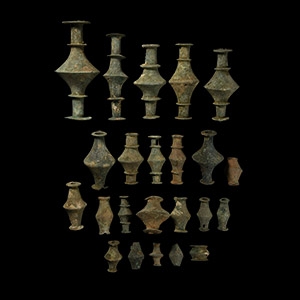
Greek Bronze Furniture Fitting Group
3rd-2nd century B.C.Sold for (Inc. bp): £156
Comprising over 20 hollow-formed bicones. 790 grams total, 21-96 mm
Acquired 1960s-1990s. Late Alison Barker collection, a retired London barrister. -
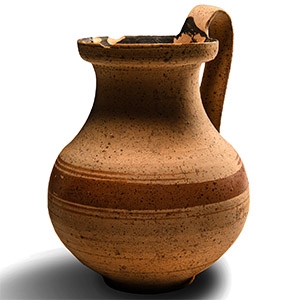
South Italian Terracotta Painted Jug
4th-2nd century B.C.Estimate: £500 - 700 (‡+bp*)
Opening Bid: £250
Piriform with convex rim, lentoid-section handle and discoid foot; polychrome painted bands and lines decorating the equator and inner mouth, dash to handle. 227 grams, 13.5 cm high
Acquired in Europe before 1994.
