
Loading, please wait...
LOT 0489
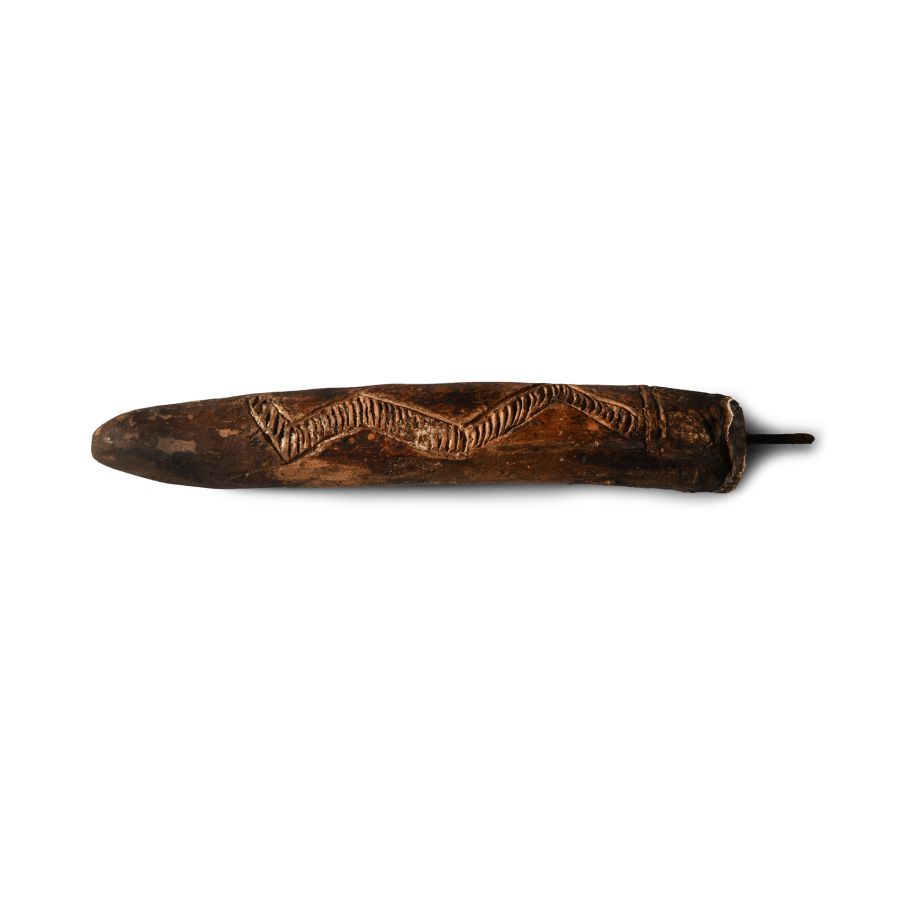
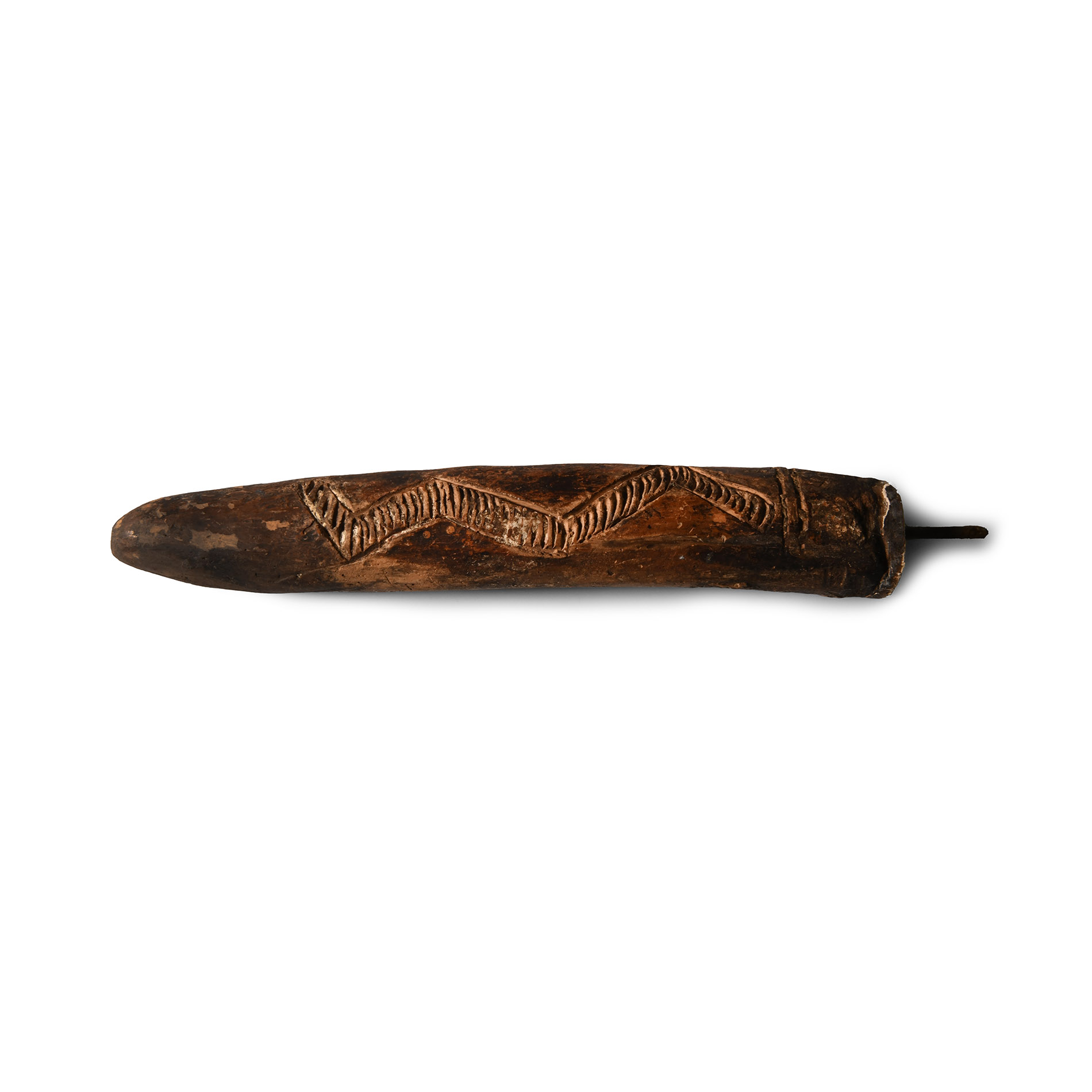
Cypriot Terracotta Votive Horn
2100-1850 B.C.
5 3/8 in. (71 grams, 13.5 cm).
Tapering round-section votive with reserved zigzag bands of dense linear hatching; modern mounting pin. [No Reserve]
ProvenanceFrom the celebrated personal collection of art formed by the famous anthropologist, artist, and television presenter Desmond Morris.
with Christie’s, South Kensington, 14 May 2002, lot 19 (part).
TimeLine Auctions follows a vetting process to ensure the authenticity and legality of all items, reinforcing our commitment to integrity and responsible trading. Each antiquity, antique, and coin lot undergoes thorough examination by a vetting committee of at least ten external specialists, professional trade association members, scientists, and archaeologists: Our Vetting Process
AUCTIONS:
TimeLine is a leading auction house specialising in antiquities, ancient art, collectables, natural history, coins, medals, and books. Our auctions offer museums, collectors, historians, and enthusiasts the opportunity to acquire unique and historically significant pieces.
-
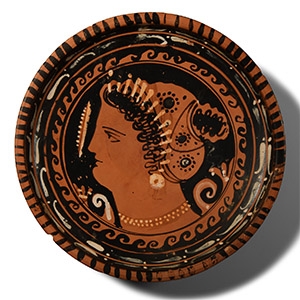
Greek Red Figure Dish with Lady of Fashion
South Italian, circa 380-350 B.C.Sold for (Inc. bp): £611
With pedestal foot, decorated with radiating strokes to the rim, band of leaf ornament surrounding the central profile of a lady of fashion facing left, her hair dressed in a ribboned sakkos with stephane; earrings and necklace in white and ochre. 187 grams, 16.5 cm wide
Acquired by the vendor's father in the 1950s or before; thence by descent 2003. -
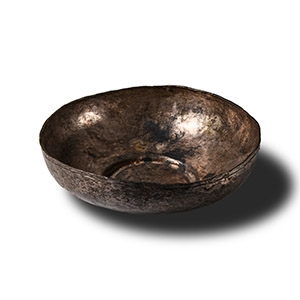
Parthian Hammered Silver Drinking Vessel
2nd-1st century B.C.Estimate: £400 - 600 (+bp*)
Opening Bid: £200
Squat bowl with integral raised foot,incised line beneath the rim. 171 grams, 16 cm
London, UK gallery, 1971-early 2000s. -
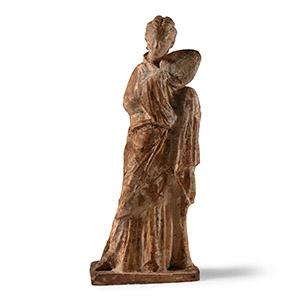
Greek Tanagra Female Figure with Fan
4th-3rd century B.C.Sold for (Inc. bp): £1,690
Modelled robed with a palmette fan; rectangular slot to reverse, hollow underside; with traces of white engobe and polychromy; recomposed from fragments. 189 grams, 16 cm high
Private collection Adry de Carbuccia, Sainte-Maxime, France, acquired prior to 1975. with Eurl Eve, Paris, 11 December 2013, lot 30. Accompanied by a copy of an Art Loss Register certificate number S00085753, dated 26 March 2014. Accompanied by a copy of a French cultural passport no.1537836. Accompanied by a copy of an original thermoluminescence analysis report no.QED1340/FG-0404 from QED Laboratoire. Accompanied by a copy of the relevant Eurl Eve catalogue pages.
