
Loading, please wait...


LOT 0563
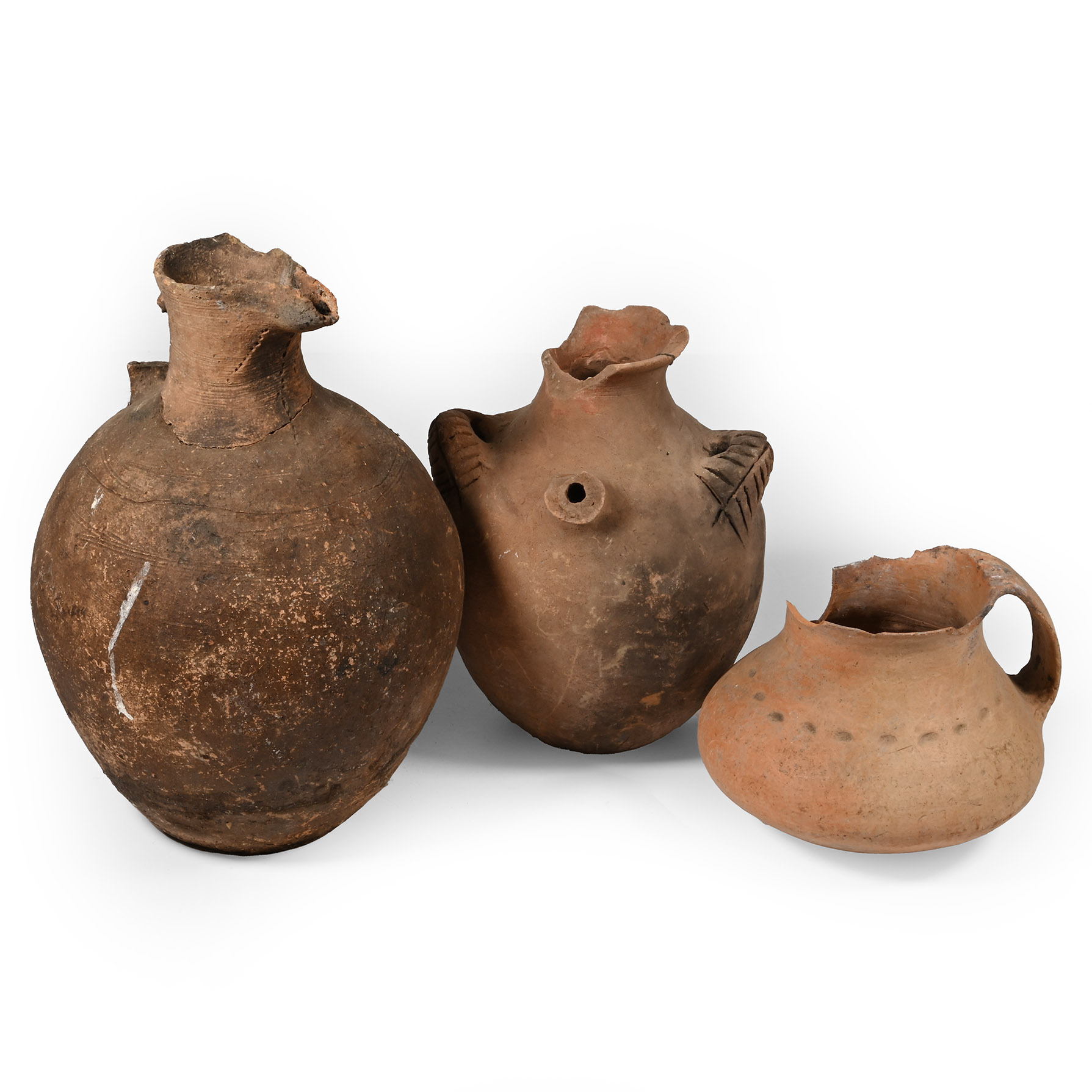
Cypriot Terracotta Vessel Group
2ND-1ST MILLENNIUM B.C.
5 7/8 - 9 1/2 in. (2.6 kg total, 15-24 cm).
Including a spouted ewer, a carinated cup and a jar with ropework handles. [3, No Reserve]
ProvenanceFrom a collection acquired on the UK art market from various auction houses and collections mostly before 2000.
From an important Cambridgeshire estate; thence by descent.
TimeLine Auctions follows a vetting process to ensure the authenticity and legality of all items, reinforcing our commitment to integrity and responsible trading. Each antiquity, antique, and coin lot undergoes thorough examination by a vetting committee of at least ten external specialists, professional trade association members, scientists, and archaeologists: Our Vetting Process
AUCTIONS:
TimeLine is a leading auction house specialising in antiquities, ancient art, collectables, natural history, coins, medals, and books. Our auctions offer museums, collectors, historians, and enthusiasts the opportunity to acquire unique and historically significant pieces.
-
Parthian Bronze Ring with Seated Figure
2nd-3rd century A.D.Sold for (Inc. bp): £20
Ellipsoid plaque with incuse figure seated beside a tree, one hand raised. 1.06 grams, 18.92 mm overall, 16.45 mm internal diameter (approximate size British L, USA 5 3/4, Europe 11.24, Japan 10)
UK private collection before 2000. Acquired on the UK art market. Property of a London gentleman. -
Large Cypriot Red Burnished Ware Jug with Plank Idol
Early Bronze Age III-Middle Bronze Age I, circa 2100-1850 B.C.Sold for (Inc. bp): £715
With globular body, tall tubular neck and flared mouth; circumferential bands of hatching, concentric rings and chevrons; loop handle with thumb-pad spur to the reverse of the neck; plank idol to the shoulder with anthropomorphic detailing to both faces; supplied with a display stand; repaired. 1.68 kg, 37 cm high
From a collection acquired on the UK art market from various auction houses and collections mostly before 2000. From an important Cambridgeshire estate; thence by descent.
Red polished ware was the dominant ware of the Early Bronze Age. The clay was covered with red slip which was then burnished to produce a high point. The Philia red polished ware was characterised by incised multi-zigzag and open herring-bone bands, and also batches of multi-lines on base. -
Cypriot and Other Idol Group
1st millennium B.C. and laterSold for (Inc. bp): £52
Including a two-headed dog, a crouching female and a kneeling figure with vertical piercing; each mounted on a ceramic base. 480 grams total, 52-91 mm including stand
From a collection acquired on the UK art market from various auction houses and collections mostly before 2000. From an important Cambridgeshire estate; thence by descent.
