
Loading, please wait...
LOT 0058
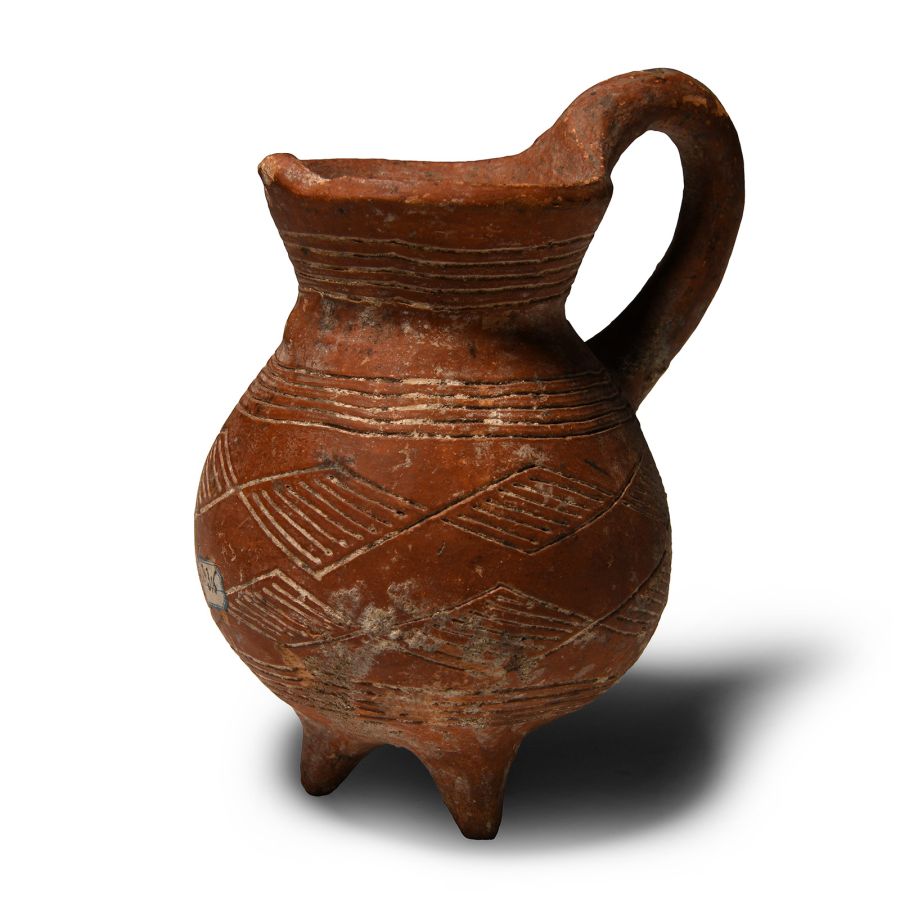
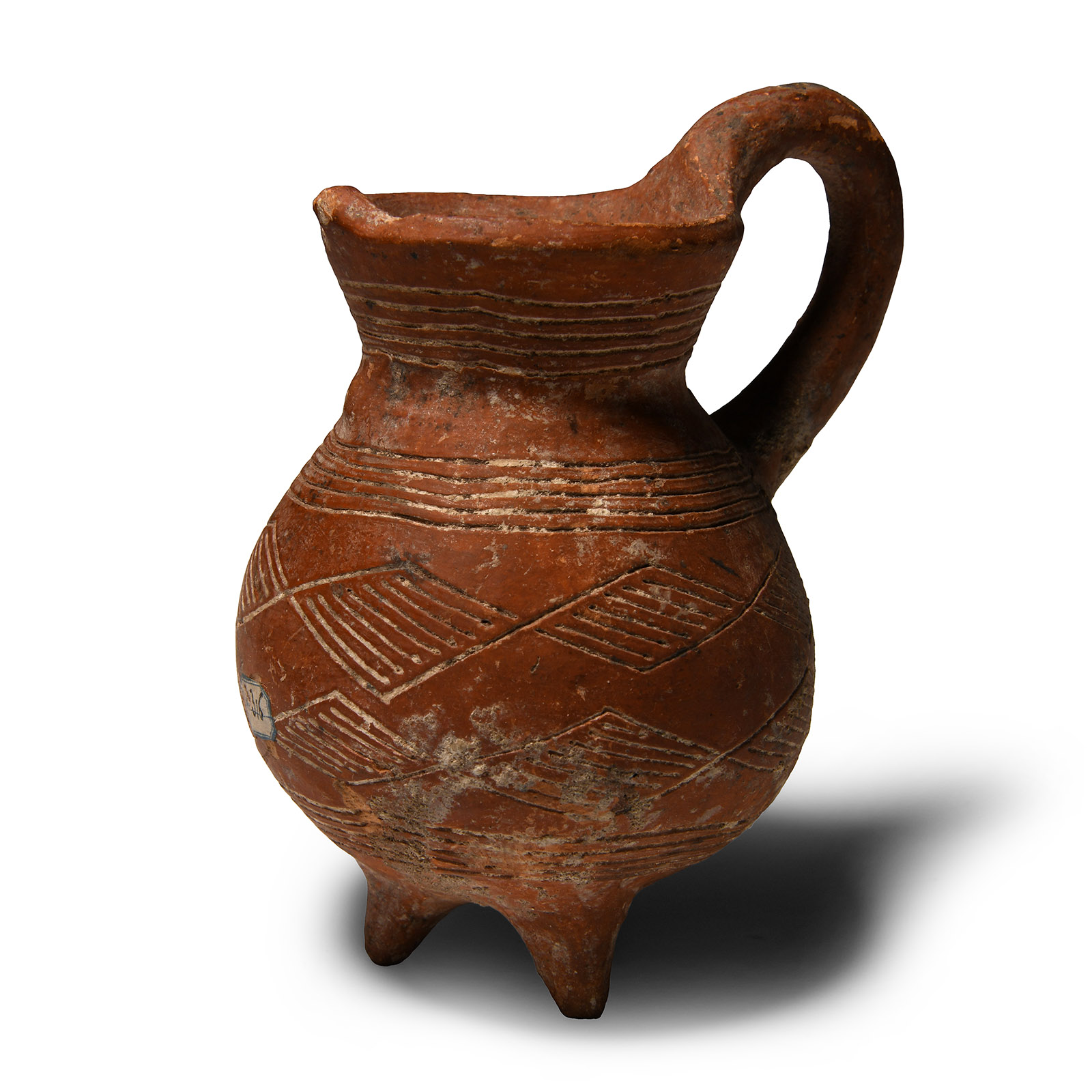
Cypriot Terracotta Juglet with Handle
650-600 B.C.
4 1/8 in. (119 grams, 10.6 cm).
With globular body, three stub legs, flared mouth with spur to the lip; loop handle to the rear; bands of incised geometric ornament. [No Reserve]
ProvenanceCollection of Louis-Gabriel Bellon (1819-1899), Saint-Nicolas-lez-Arras and Rouen, thence by descent.
with Millon & Associes Auctions, Paris, 6th December 2021, lot 1.
TimeLine Auctions follows a vetting process to ensure the authenticity and legality of all items, reinforcing our commitment to integrity and responsible trading. Each antiquity, antique, and coin lot undergoes thorough examination by a vetting committee of at least ten external specialists, professional trade association members, scientists, and archaeologists: Our Vetting Process
AUCTIONS:
TimeLine is a leading auction house specialising in antiquities, ancient art, collectables, natural history, coins, medals, and books. Our auctions offer museums, collectors, historians, and enthusiasts the opportunity to acquire unique and historically significant pieces.
-
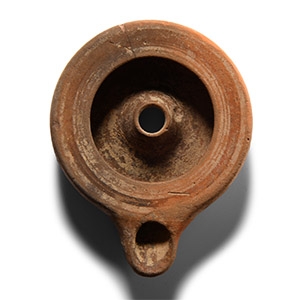
Greek Corinthian Terracotta Oil Lamp
Circa 5th-3rd century B.C.Sold for (Inc. bp): £195
With short nozzle, open reservoir with central cone open beneath; orange and brown pigment. 113 grams, 10.7 cm wide
Acquired before 1990s/early 2000s. From the family collection of Jack Lyttle (1944-2023), Kilmacolm, Scotland; thence by descent to his granddaughter. Property of an East Sussex, UK, gentleman. -
.jpg)
Eastern Greek Bronze Standing Bull Statuette
Circa 11th-9th century B.C.Sold for (Inc. bp): £780
With thick ribbed neck, crescent horns and prominent genitals; mounted on a custom-made stand. 141 grams total, 86 mm wide including stand
From the collection of D. Smith, Sussex, UK, 1990s.
Like dozens of similar statuettes depicting animals or human figures, this bronze bull was probably offered by a worshipper during a sacrifice. A large number of statuettes were found in a thick layer of ash from the altar of Zeus at Olympia. In 2021, a similar statuette, with protruding horns, was found in the sanctuary. Bulls and horses were the favourite cultic animals in the Cretan, Achaean and Archaic Greek civilisations. The model of the long and narrow body was borrowed from the Near East. -
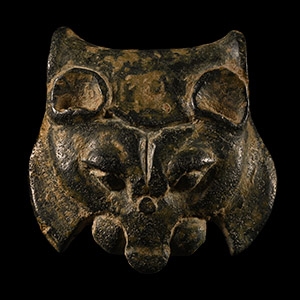
Greek Zoomorphic Bronze Hydria Handle Attachment
Circa 5th-4th century B.C.Sold for (Inc. bp): £442
Modelled as a skinned lion's head with fierce facial detailing; made for soldering to an articulated round handle. 98 grams, 51 mm high
Private collection, Germany, 1980s. Acquired on the UK art market 2010.
The handles were usually shaped as divinities or animals linked with gods (ie. lions for Herakles). A similar specimen can be seen in the Berlin Museum (inv.7491), from Athens.
