
Loading, please wait...
LOT 0084
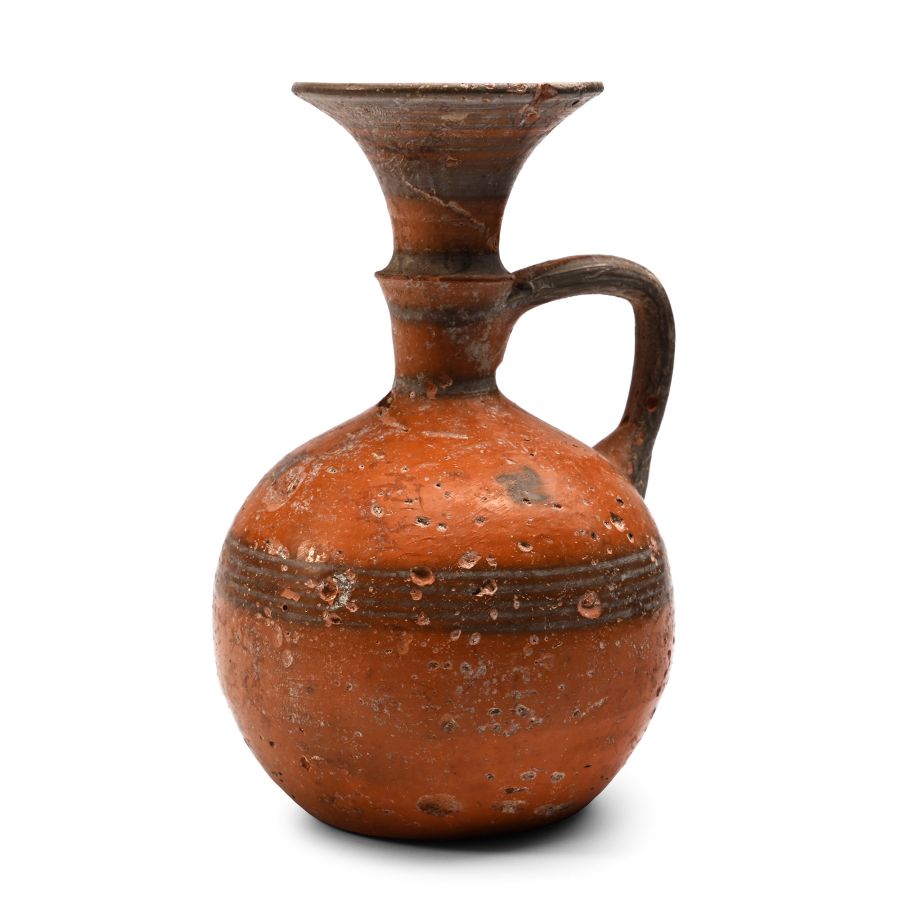
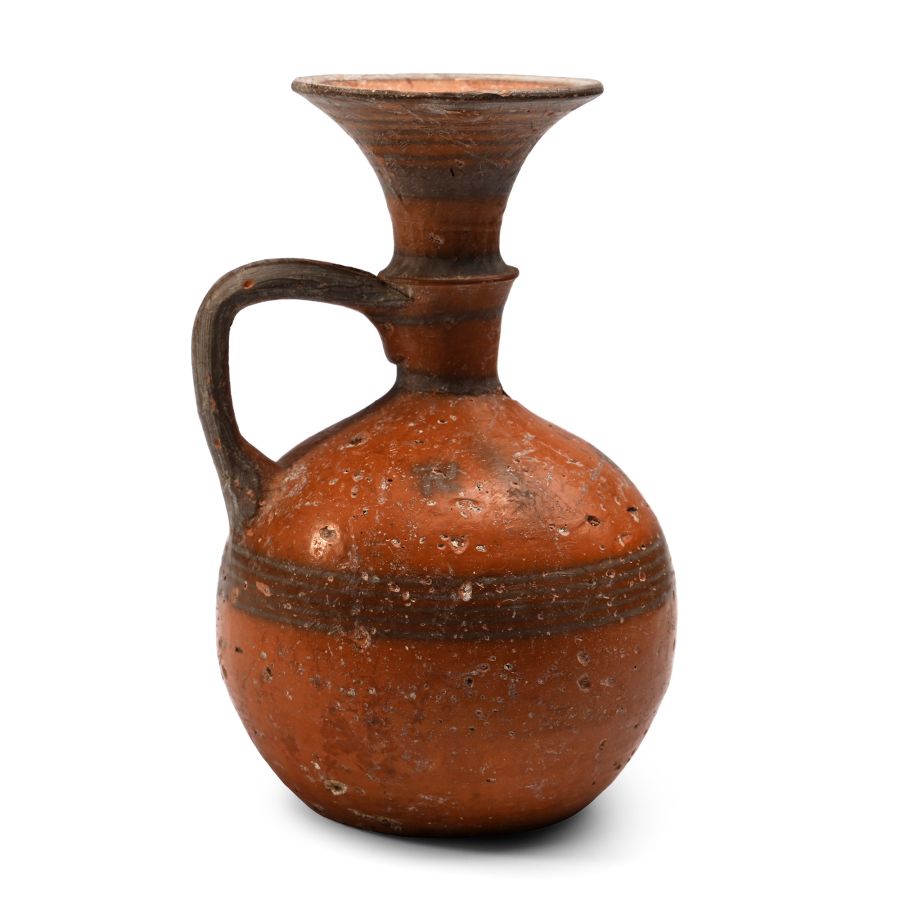
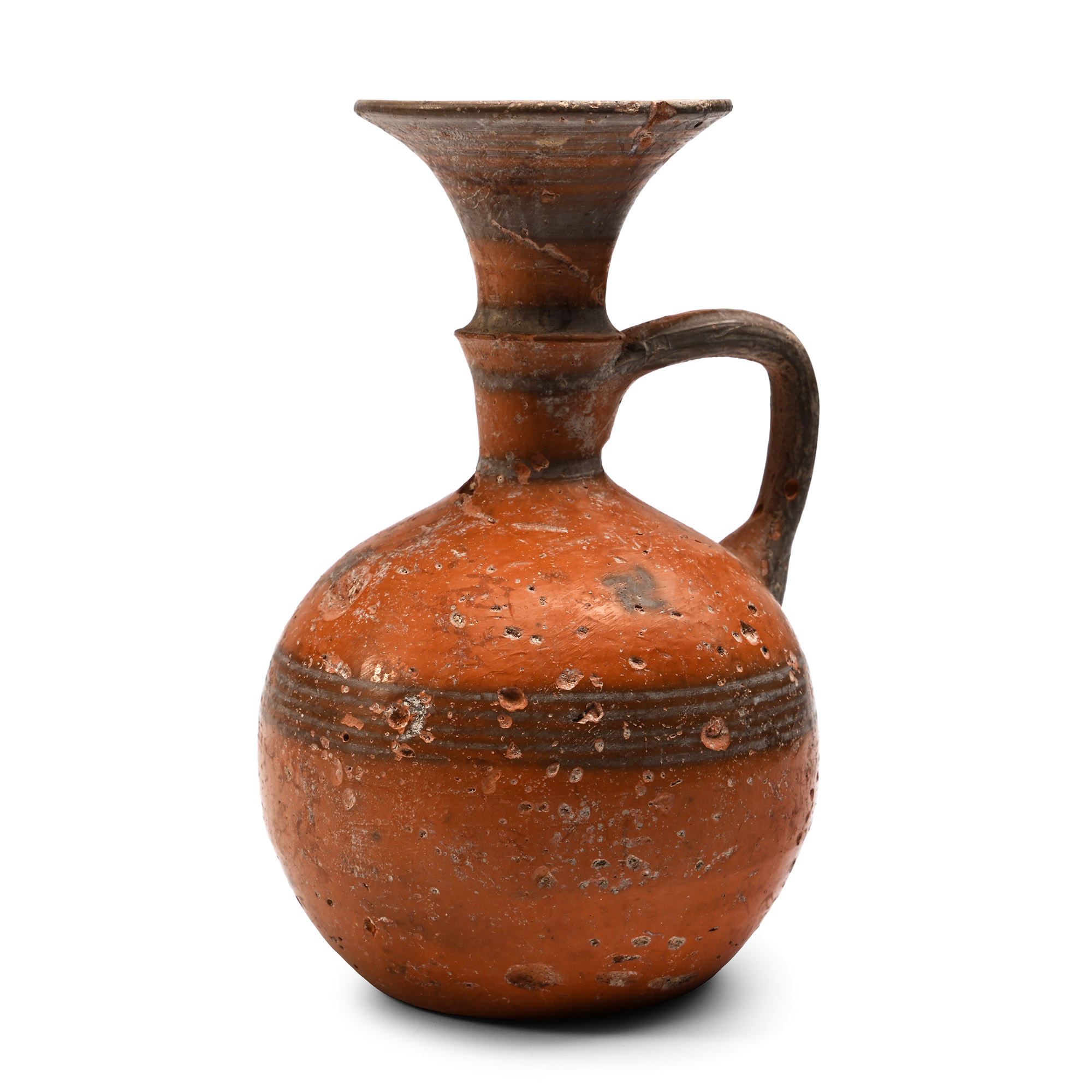
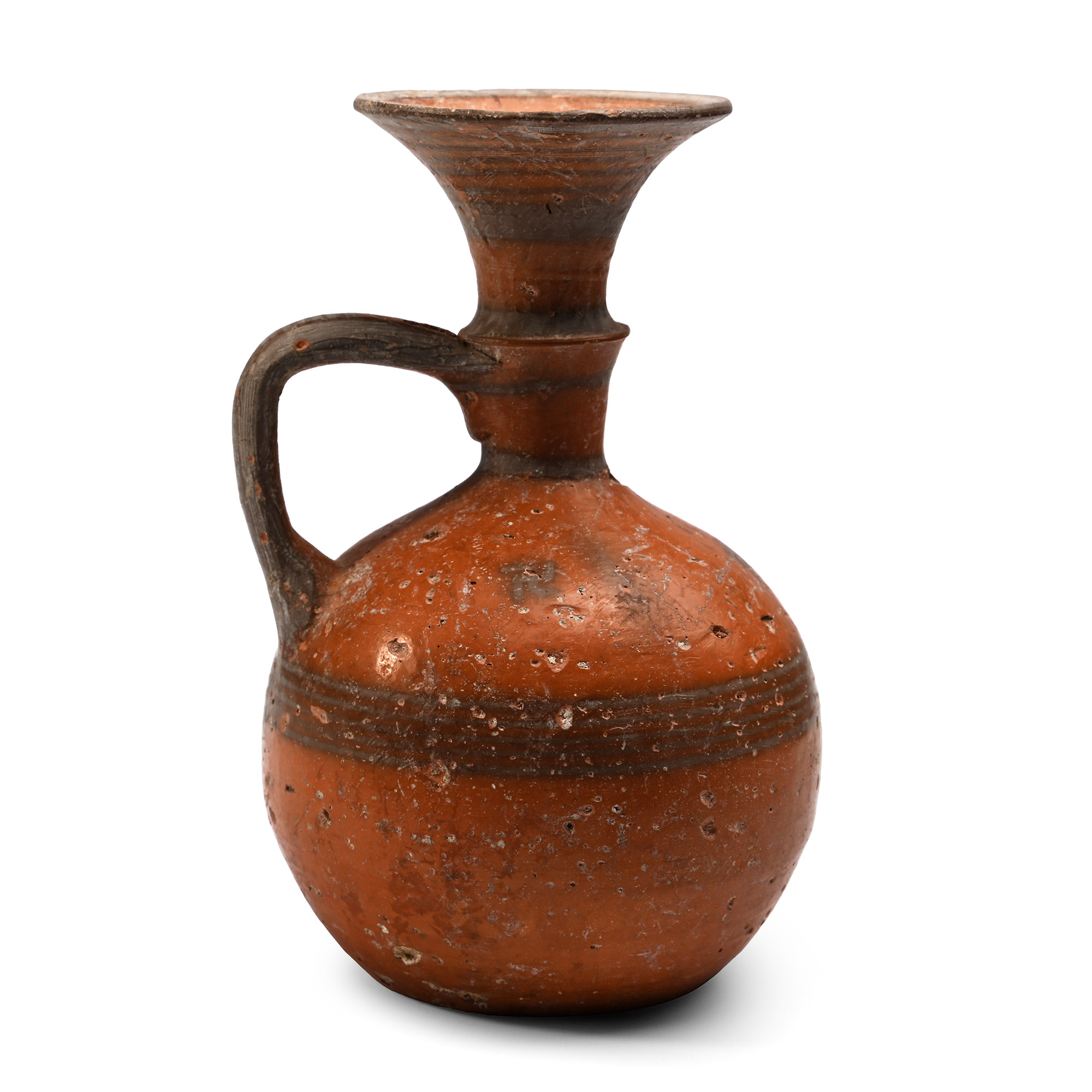
Cypriot Terracotta Jug with Decorations
7TH-6TH CENTURY B.C.
3 1/2 in. (67 grams, 91 mm).
Comprising a spherical body and flat base, trumpet-shaped mouth with biconvex collar and strap handle; painted circumferential bands.
ProvenanceAcquired by a Swiss family in the mid-1980s to late 1990s, thence by descent.
Private collection, Switzerland, since the late 1990s.
Cf. Morris, D., The Art of Ancient Cyprus, Oxford, 1985, fig. p.23, pl.14, for similar.
CONDITIONTimeLine Auctions follows a vetting process to ensure the authenticity and legality of all items, reinforcing our commitment to integrity and responsible trading. Each antiquity, antique, and coin lot undergoes thorough examination by a vetting committee of at least ten external specialists, professional trade association members, scientists, and archaeologists: Our Vetting Process
AUCTIONS:
TimeLine is a leading auction house specialising in antiquities, ancient art, collectables, natural history, coins, medals, and books. Our auctions offer museums, collectors, historians, and enthusiasts the opportunity to acquire unique and historically significant pieces.
-
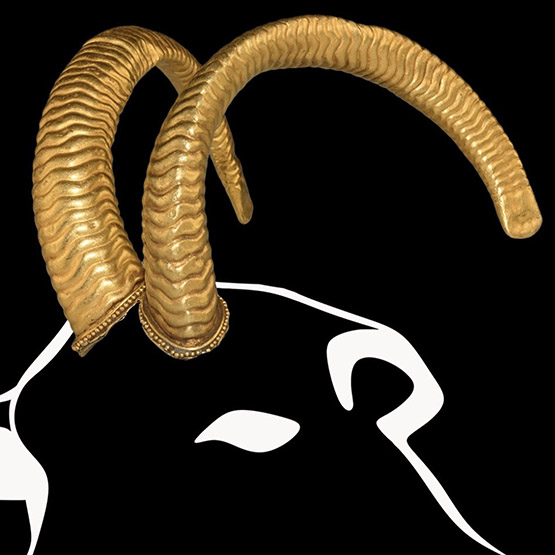
Greek Gold 'Golden Fleece' Ram-Horn Pair
5th-3rd century B.C.Sold for (Inc. bp): £6,240
A matched pair of sheet-gold model ram's horns, each curved with a narrow end flattened, ribbed body, flared rim to the mouth with applied granule detailing; probably from a representation of the χρυσόμαλλον δέρας or 'golden fleece' from the legend of Jason and his adventures with the crew of the ship Argo. 60.61 grams total, 10.5 cm each
From a private collection of seals and amulets, the property of a Canadian gentleman living in London; from his father's collection formed in the late 1960s to 1980s. This lot has been checked against the Interpol Database of stolen works of art and is accompanied by search certificate number no.13105-249639.
The legend of the Golden Fleece is referenced by several ancient writers, including Pindar, whose reformulation forms the basis of most modern retellings, but an earlier version was evidently familiar to Homer in the 8th century B.C. It appears as a pictorial theme on early Greek vases. The story refers to a celestial winged ram with golden wool, which was believed to live and be worshipped by the inhabitants of lands north of the Black Sea; this ram, in some versions of the tale, is transformed into the constellation Aries. -
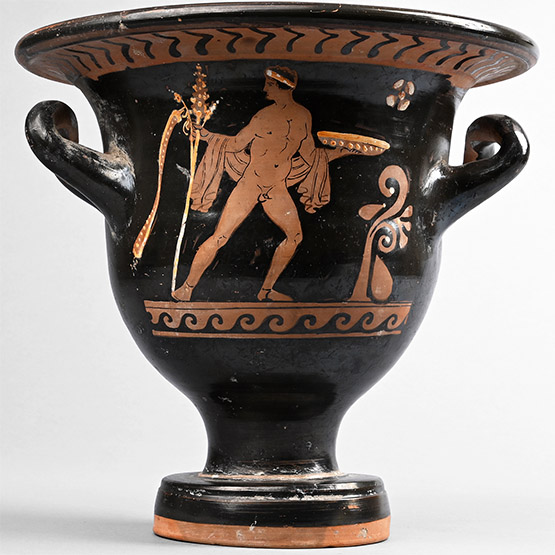
Greek Red-Figure Bell Krater Belonging to the Chevron Group
Apulian, 4th century B.C.Estimate: £2,500 - 3,500 (+bp*)
Opening Bid: £1,389
With reserved herringbone band beneath the rim, wave pattern to be the baseline; Side A: young man with thyrsus and pendant streamer holding a phiale, a loose mantle draped from the elbows; Side B: head of a lady of fashion with white accents to her stephane and hair drawn up in a chignon, a volute and window before her. 1.11 kg, 23.2 cm wide
Acquired on the art market between the late 1990s and mid-2000s. Estate of the late Barry Paul Buxton (1944-2024), Oakham, Rutland. Acquired on the UK art market, 2025. Accompanied by an academic report by Dr Raffaele D'Amato. This lot has been checked against the Interpol Database of stolen works of art and is accompanied by search certificate no.13071-249285.
Bell kraters were commonly used in regions of ancient Italy for mixing and serving wine during communal gatherings, thanks to their wide shape and flared mouth. These vessels also served as artistic expressions, reflecting the cultural tastes of the time. The Chevron Group is the conventional name for a group of ancient Apulian red-figure vase painters who were active in Southern Italy between approximately 335-310 B.C. They are named for their distinctive use of a band of chevron patterns to encircle the rims of the small kraters (mixing vessels) they decorated. -
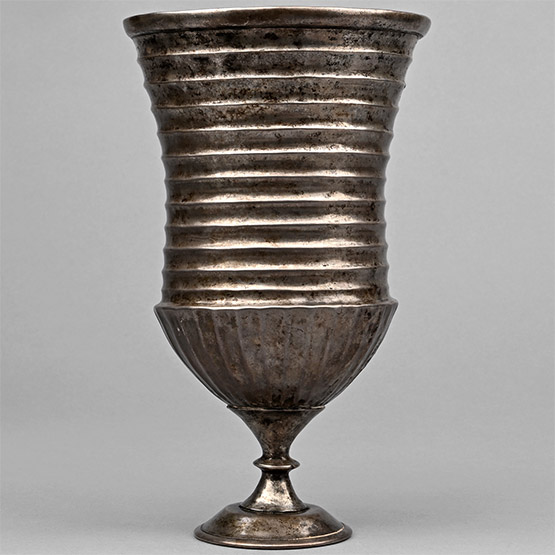
Large Graeco-Parthian Ribbed Silver Goblet
Graeco-Parthian or Gandharan, 1st century B.C.-1st century A.D.Estimate: £20,000 - 30,000 (+bp*)
Opening Bid: £10,000
With carinated ribbed walls, the upper portion cylindrical, the lower ovoid, with a separately made footed base, with the foot characterised by a central horizontal groove. 695 grams, 20 cm high
Robert Haber, New York, 1992. Accompanied by an academic report by Dr Raffaele D'Amato. This lot has been checked against the Interpol Database of stolen works of art and is accompanied by a search certificate number no.13036-248075.
