
Loading, please wait...
LOT 0590
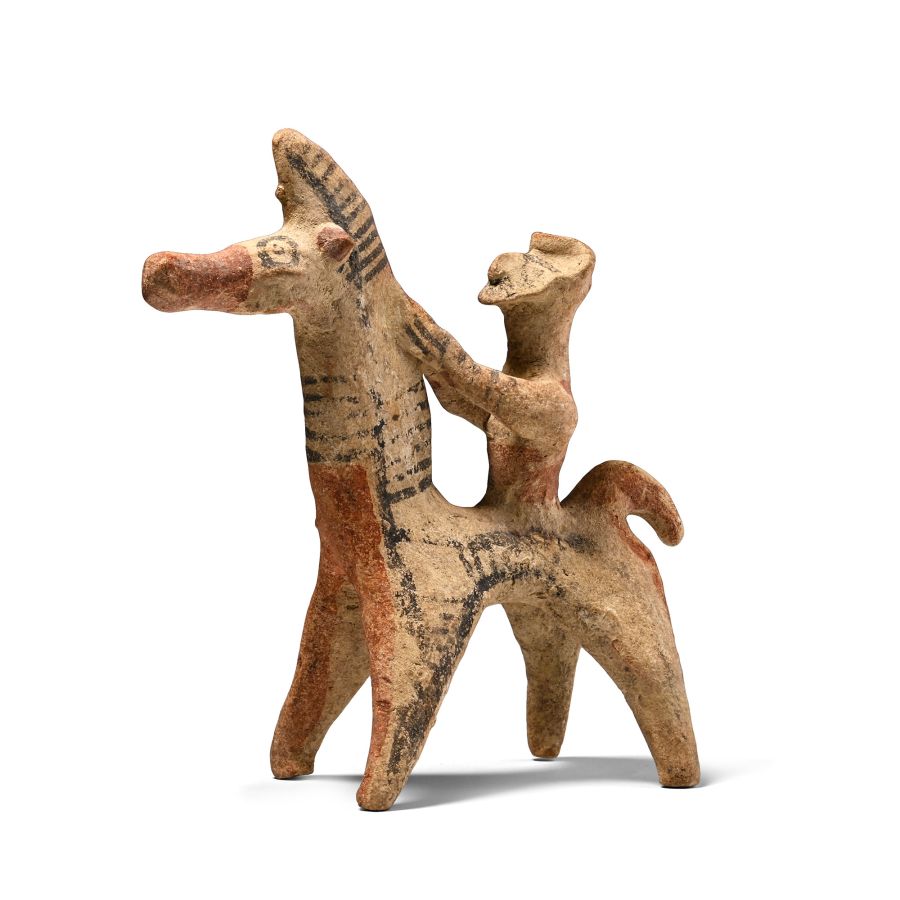
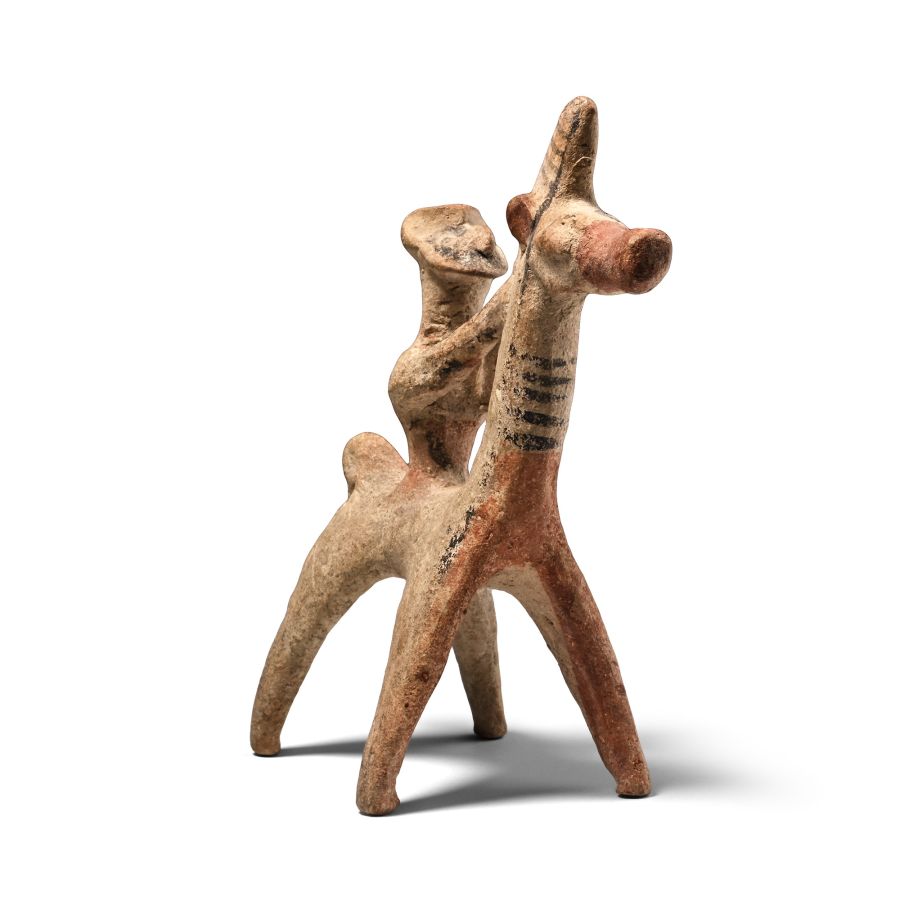
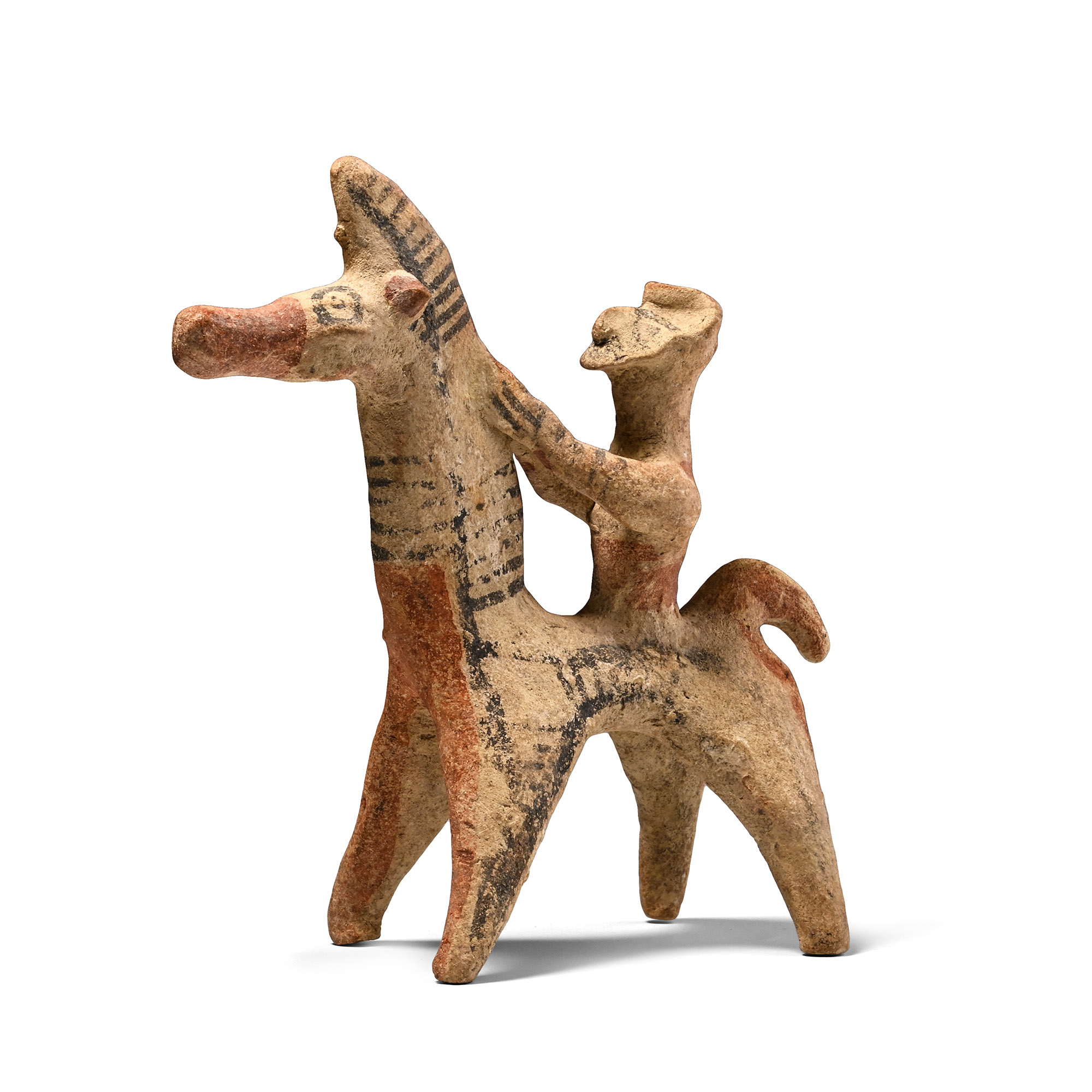
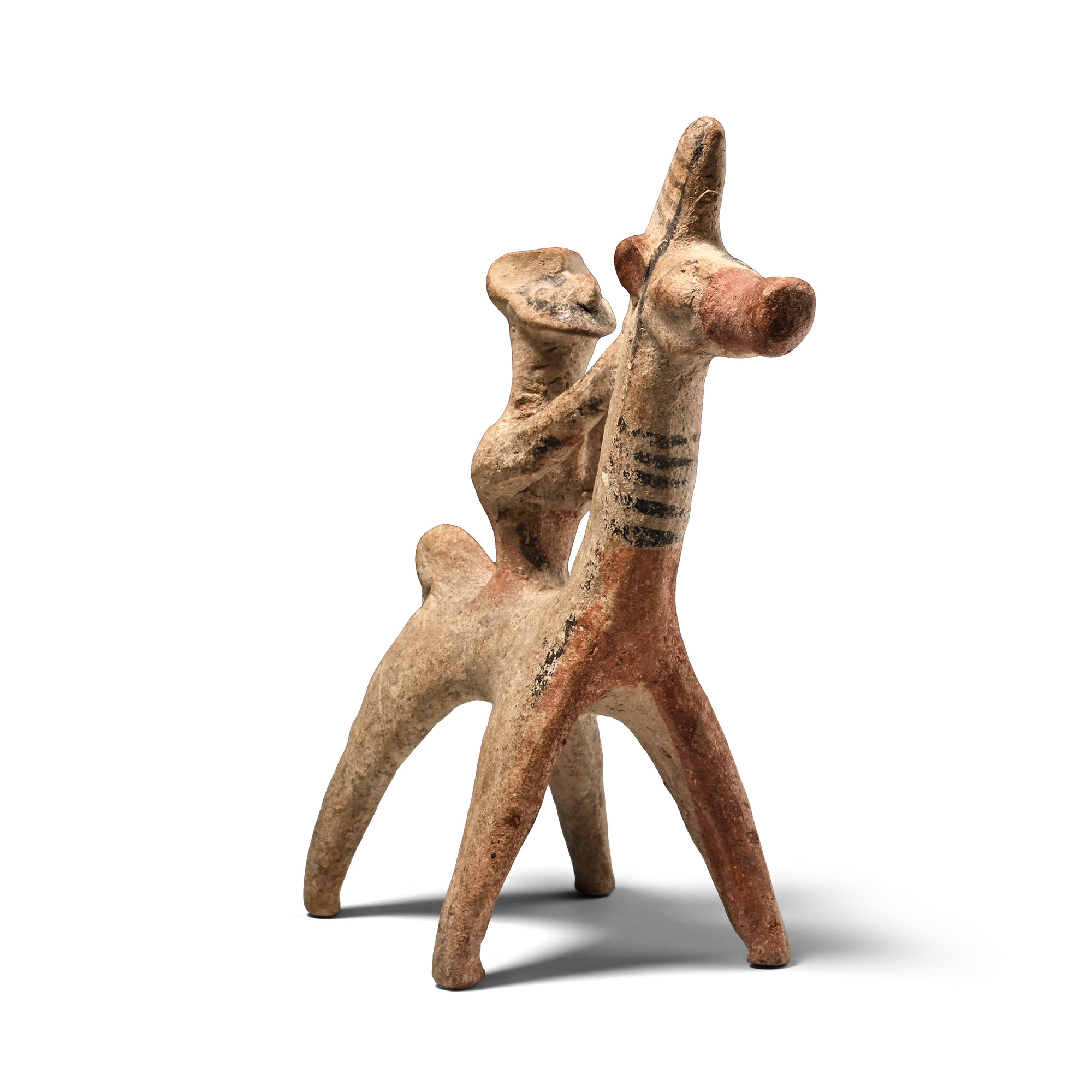
Cypriot Terracotta Horse and Rider Figure
8TH-6TH CENTURY B.C.
6 1/8 in. (206 grams, 15.5 cm wide).
A horse and rider figure modelled in the round, standing on elongated stub legs, stout neck with stylised painted mane and coat detailing, waisted muzzle with raised almond-shaped eyes defined by painted roundels, solid colouring to the muzzle and short tail; rider represented by a torso and D-shaped head, arms reaching for the horse's neck and gripping its mane, painted detailing to the arms, hands and face. [No Reserve]
ProvenanceLondon deceased estate, 1960s-1970s.
Property of a Cambridgeshire, UK, gentleman.
From the private collection of John Meredith, acquired since the 1990s; thence by descent.
Cf. The Metropolitan Museum of Art, accession number 74.51.1771, for very similar.
FootnotesTerracotta figurines of horse and rider were common grave offerings in Boeotia, northwest of Attica, particularly during the 6th century B.C. Representations of warriors on horseback were already diffused in the Geometric Period, and widely employed in Cyprus, in this same period. The image of our rider, although influenced by Cypriot designs, does not show typical Cypriot characteristics, and indeed his kausia cap suggests a northern Greek origin.
CONDITIONTimeLine Auctions follows a vetting process to ensure the authenticity and legality of all items, reinforcing our commitment to integrity and responsible trading. Each antiquity, antique, and coin lot undergoes thorough examination by a vetting committee of at least ten external specialists, professional trade association members, scientists, and archaeologists: Our Vetting Process
AUCTIONS:
TimeLine is a leading auction house specialising in antiquities, ancient art, collectables, natural history, coins, medals, and books. Our auctions offer museums, collectors, historians, and enthusiasts the opportunity to acquire unique and historically significant pieces.
-
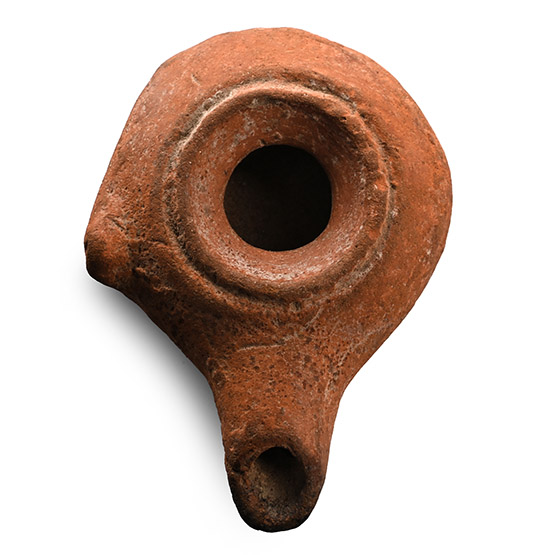
Greek Terracotta Oil Lamp
Hellenistic, circa 3rd-2nd century B.C.Sold for (Inc. bp): £39
Rounded body with large central filler hole and pointed lug on the shoulder, the rim with a low-relief ovolo decoration, elongated nozzle with scooped nozzle; low basal ring.; old collector's label 'MH1932'. 34 grams, 65 mm
From an old West Country, UK, collection, sold at auction. From the private collection of a West Midlands lady collector. -
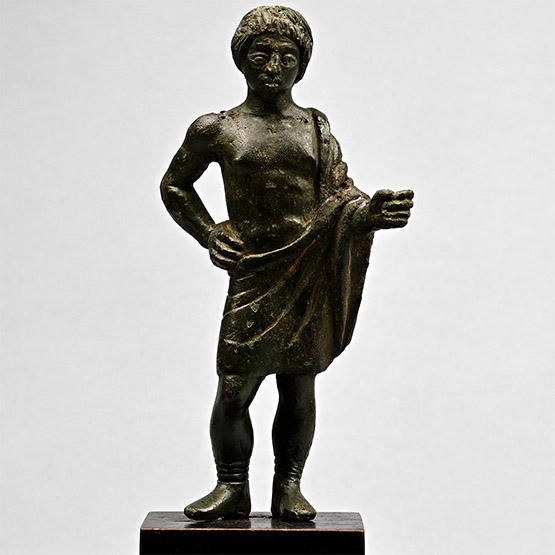
Etruscan Bronze Statuette of a Draped Hero
4th-3rd century B.C.Estimate: £18,000 - 24,000 (‡+bp*)
Opening Bid: £9,500
Modelled in the round, standing erect with right hand on his hip and left arm extending from the elbow resting on the left hip and with fingers curled to hold a staff or handle, wearing a loosely draped cloth over the left shoulder and drawn around the body to hang over the arms; ribbed cuffs to the boots; youthful face with tousled hair and slightly exaggerated lentoid eyes; C-shaped staple beneath the feet for attachment; supplied with a custom-made display stand. 506 grams total, 18.7 cm including stand
with Sotheby’s, Antiquities, London, 6 July 1995, no.130. Acquired by the present owner at the above sale. This lot has been checked against the Interpol Database of stolen works of art and is accompanied by search certificate number no.12194-222321.
The statue was probably a cult offering and presents an archaic Etruscan hairstyle; it is likely to have been produced as a votive offering or for private lararia. His warrior status can be confirmed by his boots, typical of archaic-era Etruscan and Latin warriors. -
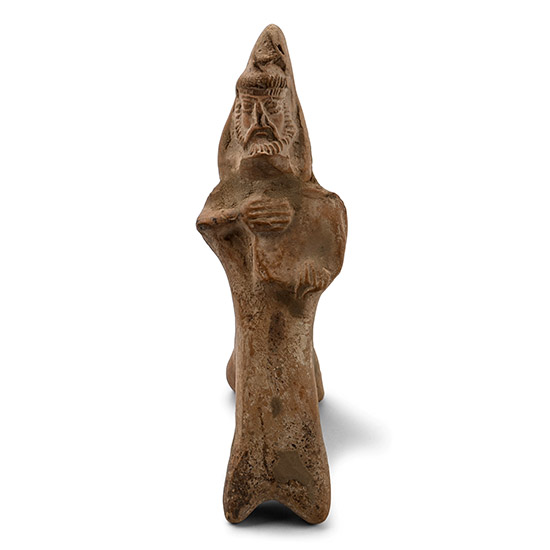
Parthian Horse and Rider Figurine
1st century B.C.-3rd century A.D.Estimate: £150 - 200 (+bp*)
Opening Bid: £75
Formed as a stylised horseman on four splayed legs, with finely modelled facial features and beard; the head of the horse integrated into the rider's body. 97 grams, 12.9 cm
Acquied on the UK art market. Private collection, London, UK.
