
Loading, please wait...
LOT 0498
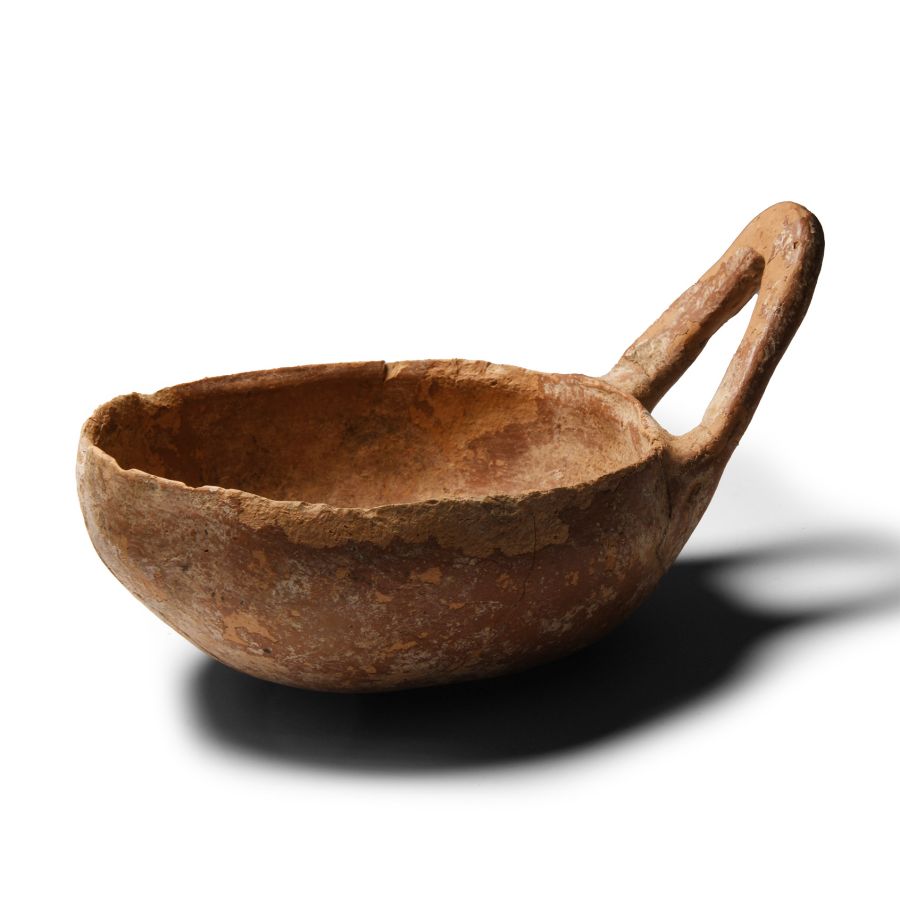
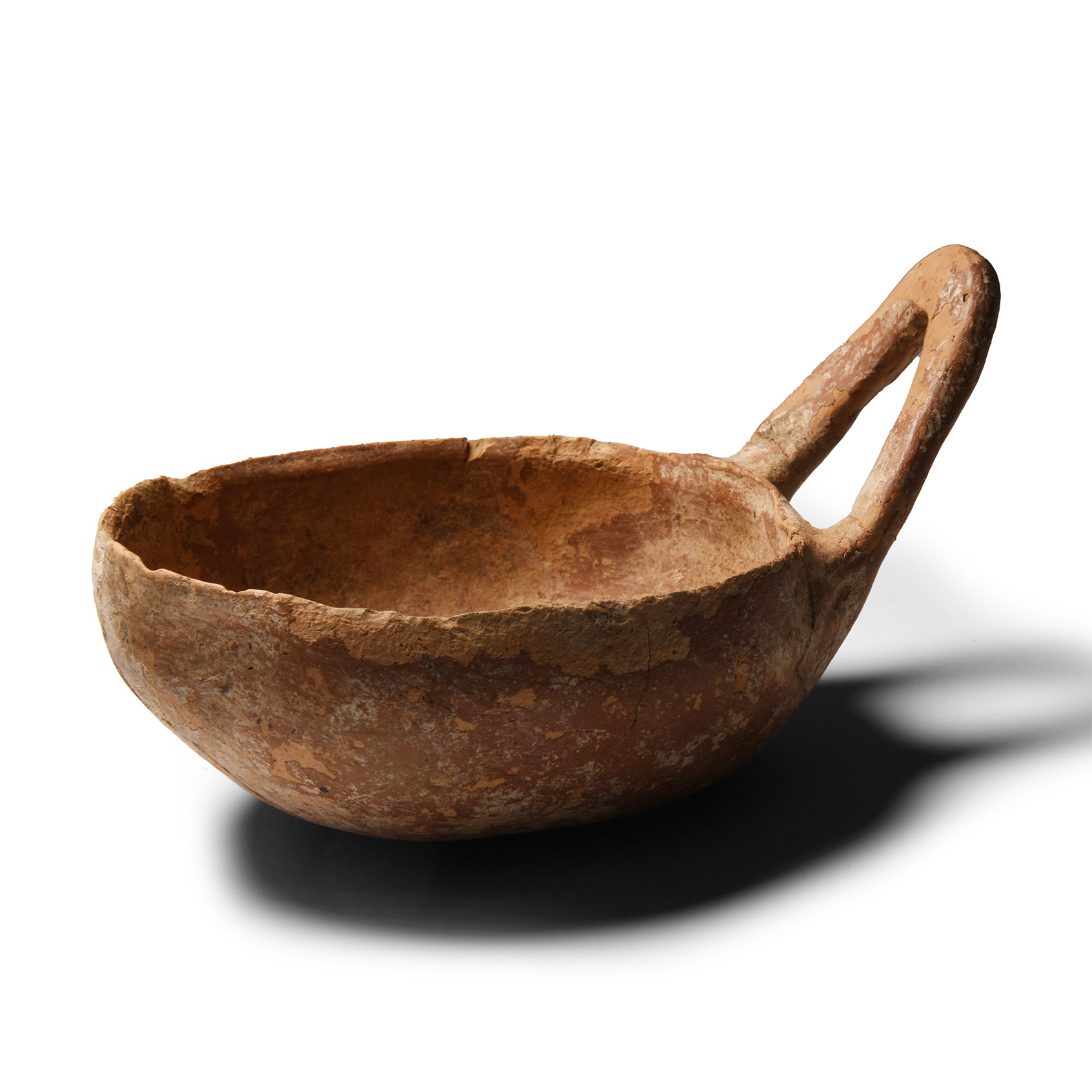
Cypriot Redware Cup with Wishbone Handle
1450-1200 B.C.
5 1/2 in. (96 grams, 14 cm).
Cup or bowl of spherical shape, unpainted, fitted with a wishbone handle. [No Reserve]
ProvenanceEx P.A., Hertfordshire, UK, specialist collection of Greek art, 1980-1990s.
LiteratureCf. similar cup at the Metropolitan Museum of Art, accession no.74.51.1148, Cesnola collection.
FootnotesThe presence of Achaeans in Cyprus, in late Cypriot II, also significantly influenced the life of the island from a ceramic production point of view. The social changes and new habits that developed among the elites of the main urban centres of the island included elaborate funerary displays, a means through which the emerging elite could express its identity and differentiate itself from other social groups. The ceramic forms were often cups intended for elaborate libation rituals, symposia, or ceremonies equivalent to Near Eastern marzeah, during which drinking services including kraters for mixing wine, cups and jugs were used. Alongside the more elaborate Achaean pottery, local Cypriot pottery (white-slip and base-ring) was still in use.
CONDITIONTimeLine Auctions follows a vetting process to ensure the authenticity and legality of all items, reinforcing our commitment to integrity and responsible trading. Each antiquity, antique, and coin lot undergoes thorough examination by a vetting committee of at least ten external specialists, professional trade association members, scientists, and archaeologists: Our Vetting Process
AUCTIONS:
TimeLine is a leading auction house specialising in antiquities, ancient art, collectables, natural history, coins, medals, and books. Our auctions offer museums, collectors, historians, and enthusiasts the opportunity to acquire unique and historically significant pieces.
-
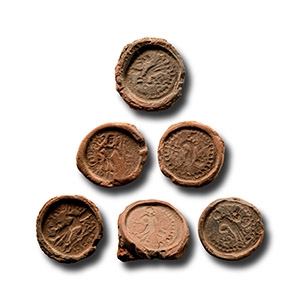
Indo-Greek Terracotta Forger's Mold Group
Circa 2nd-1st century B.C.Sold for (Inc. bp): £520
Group of discoid clay moulds for casting contemporary counterfeit coins. 40 grams total, 27-32 mm
Private collection formed in the 1990s. Acquired from a central London gallery. Property of an Essex gentleman. -
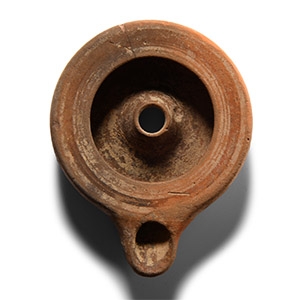
Greek Corinthian Terracotta Oil Lamp
Circa 5th-3rd century B.C.Sold for (Inc. bp): £195
With short nozzle, open reservoir with central cone open beneath; orange and brown pigment. 113 grams, 10.7 cm wide
Acquired before 1990s/early 2000s. From the family collection of Jack Lyttle (1944-2023), Kilmacolm, Scotland; thence by descent to his granddaughter. Property of an East Sussex, UK, gentleman. -
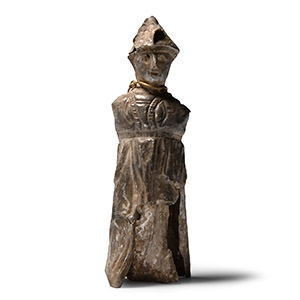
Graeco-Roman Silver Votive Figure of Pallas Athena
Circa 1st century B.C.Estimate: £400 - 600 (+bp*)
Opening Bid: £200
Sheet silver beaten over a former; Pallas Athena wearing a chiton gathered at the waist and a conical cap, a stylised aegis armour covering the chest; gold filigree torc at the neck; chiton repaired. 32 grams, 12.1 cm
Acquired on the UK art market before 2000. Property of a Surrey, UK, collector.
