
Loading, please wait...
LOT 0087
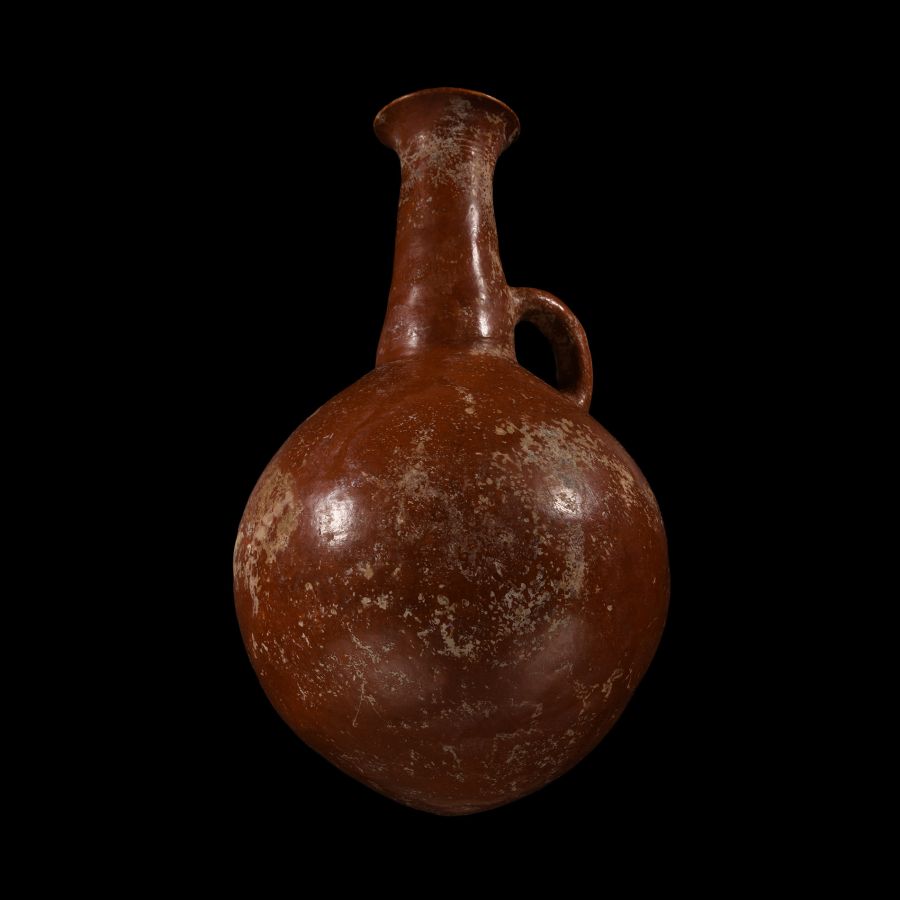
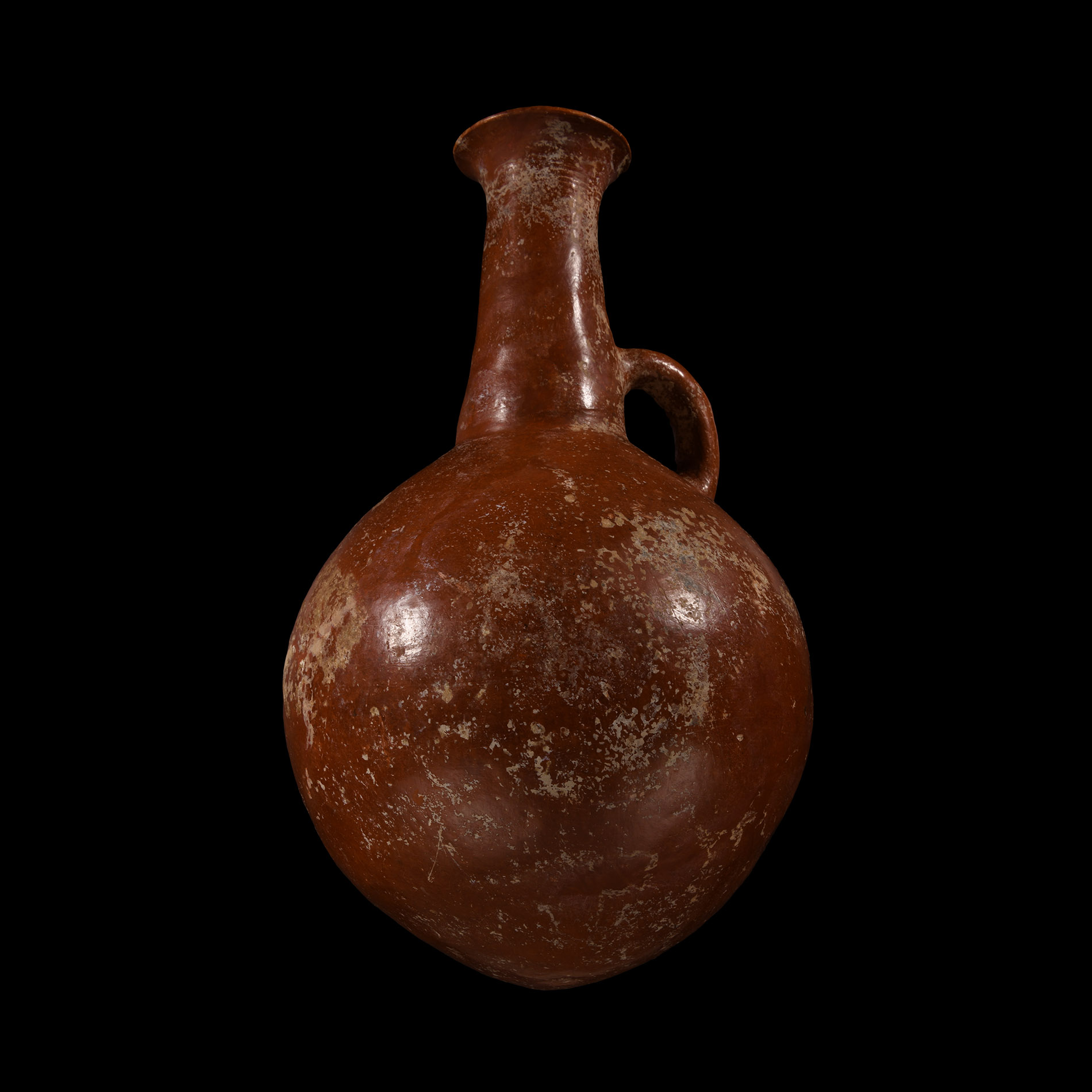
Cypriot Red Burnished Ware Pitcher
BRONZE AGE, 2300-1650 B.C.
16 1/2 in. (3.4 kg, 42 cm high).
With burnished surface, tall tapering neck and trumpet-shaped mouth, globular body, one loop handle at the shoulder.
ProvenanceFrom the collection of Dr Takey Crist, Jacksonville, North Carolina, acquired late 1980s.
This lot has been checked against the Interpol Database of stolen works of art and is accompanied by search certificate number no.11854-207732.
Exhibited: The Cyprus Museum, Jacksonville, North Carolina, 1988-2018.
LiteratureCf. more ornate version of the same type in the British Museum under accession no.1919,0712.1
CONDITIONTimeLine Auctions follows a vetting process to ensure the authenticity and legality of all items, reinforcing our commitment to integrity and responsible trading. Each antiquity, antique, and coin lot undergoes thorough examination by a vetting committee of at least ten external specialists, professional trade association members, scientists, and archaeologists: Our Vetting Process
AUCTIONS:
TimeLine is a leading auction house specialising in antiquities, ancient art, collectables, natural history, coins, medals, and books. Our auctions offer museums, collectors, historians, and enthusiasts the opportunity to acquire unique and historically significant pieces.
-
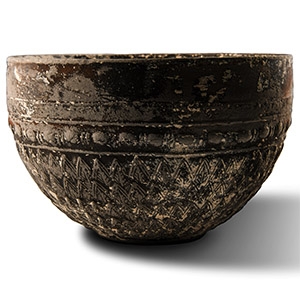
Greek Megarian Terracotta Bowl
Circa 2nd-1st century B.C.Sold for (Inc. bp): £585
Roughly hemispherical in form with in-turned rim and a matt glaze, raised architectural motifs to the shoulder, dense stylised ferns below; shallow foot. 143 grams, 11.5 cm wide
Acquired in before 1994. -
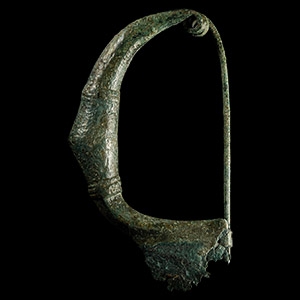
Greek Bronze Bow Fibula
8th-7th century B.C.Sold for (Inc. bp): £111
Arched bow with a central bulb and ribbed collar, integral pin and large catch-plate. 93 grams, 99 mm
From the family collection of a Surrey gentleman since before 1960.
The function of the catch-plate fibulae was utilitarian and decorative, they were used for woollen clothing (Herodotus V, 87) and they have been found in houses, tombs and as votive offerings in sanctuaries. Our fibula is an early type, very often found in the graves of the Greek colonies of Southern Italy and widespread in the Magna Graecia. This typology was introduced there by the Greeks. Like all female fibulae, it functioned as a clothing fastener, usually worn as a pair on each shoulder. -
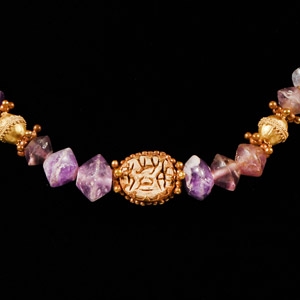
Greek Amethyst and Gold Bead Necklace
Circa 3rd-2nd century B.C.Sold for (Inc. bp): £1,560
Graduated designer necklace formed with mainly biconical amethyst beads, spherical gold beads with granule detailing, granulated gold elements, irregular quartz beads and other types; central Phoenician mounted scaraboid in a beaded gold frame; restrung with modern clasp. 45.9 grams, 42.5 cm long
Acquired 1970s-1996. Property of a North American collector. London collection, 2016.
