
Loading, please wait...
LOT 0538
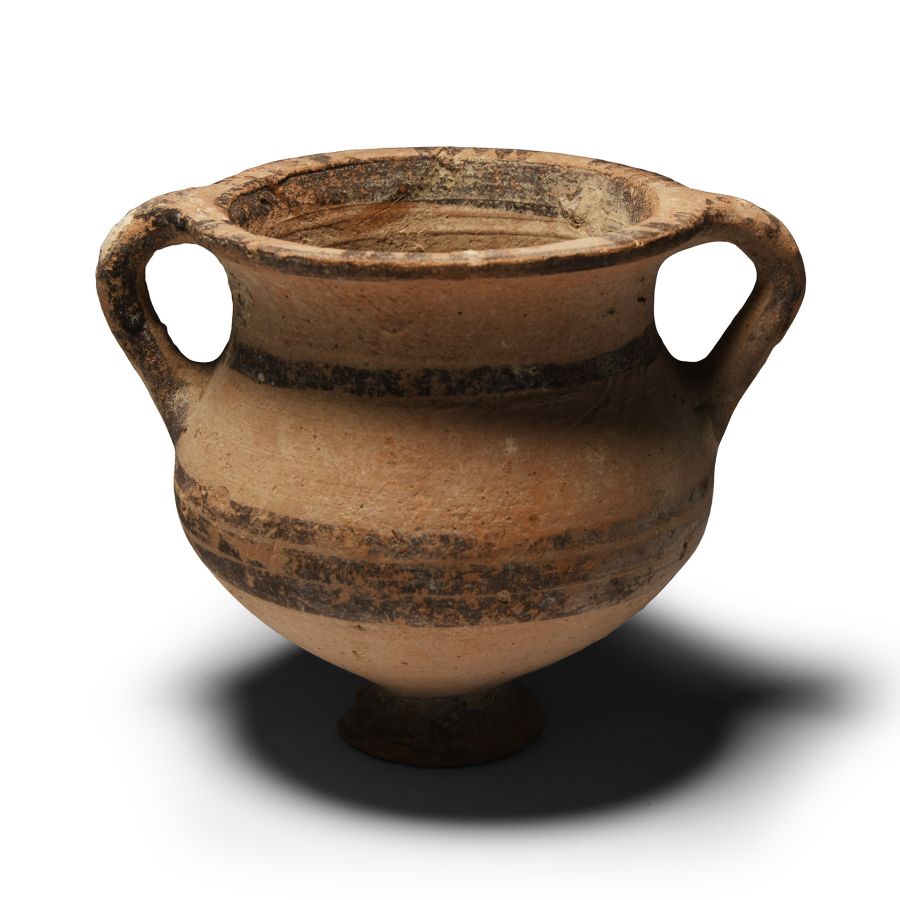
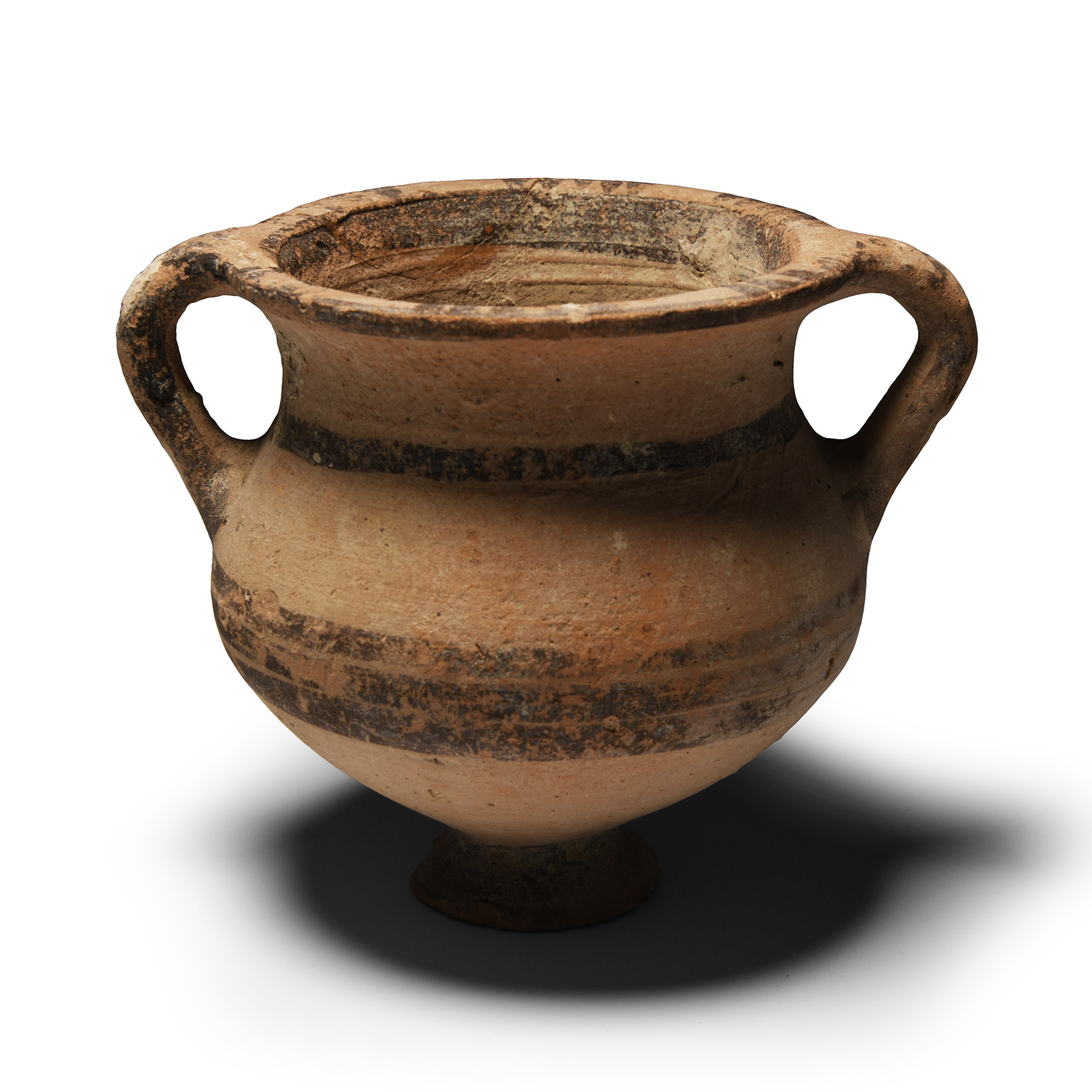
Cypriot Painted Terracotta Amphora
CIRCA 8TH-5TH CENTURY B.C.
4 5/8 in. (164 grams, 11.8 cm wide).
In black-painted geometric buffware, with wide bands of black painted decoration on the ovoid body and on the rim, loop handles.
ProvenanceEx P.A., Hertfordshire, UK, specialist collection of Greek art, 1980-1990s.
Accompanied by a copy of an old typed catalogue slip.
Cf. similar item in the Metropolitan Museum of Art, accession no. 74.51.779, for the type.
FootnotesThe type is well known on Cyprus from 850 B.C. The simplification of the geometric ornaments in panels on the neck and shoulder suggest that the present specimen is later than the Geometric Period.
CONDITIONTimeLine Auctions follows a vetting process to ensure the authenticity and legality of all items, reinforcing our commitment to integrity and responsible trading. Each antiquity, antique, and coin lot undergoes thorough examination by a vetting committee of at least ten external specialists, professional trade association members, scientists, and archaeologists: Our Vetting Process
AUCTIONS:
TimeLine is a leading auction house specialising in antiquities, ancient art, collectables, natural history, coins, medals, and books. Our auctions offer museums, collectors, historians, and enthusiasts the opportunity to acquire unique and historically significant pieces.
-
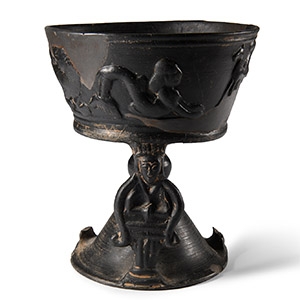
Etruscan Bucchero Chalice with Mythical Beasts, Animals, and Caryatid
Circa 7th-6th century B.C.Sold for (Inc. bp): £650
Blackware vessel comprising a broad bowl with frieze of animals (boar, lion, sphinx, horse); trumpet-shaped base with supporting caryatid; some restoration. 502 grams, 17 cm high
From the Steel family collection, 1950s-late 1990s. -
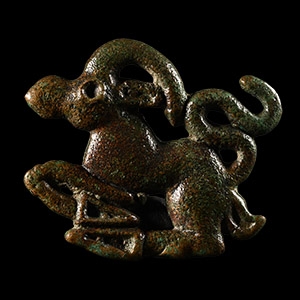
Scythian Bronze Antelope Mount
Circa 4th-3rd century B.C.Estimate: £300 - 400 (+bp*)
Opening Bid: £150
Openwork with mounting lug to the reverse; animal in active pose with S-curved tail. 50 grams, 60 mm
Acquired 1980-2015. Ex Abelita family collection. -
.jpg)
Hellenistic Cut-Glass Skyphos
1st century B.C.-1st century A.D.Sold for (Inc. bp): £5,850
Drum-shaped frosted glass vessel on a low basal ring, lateral loop handles each with and angled spur below and fish-tail plaque above; 247 grams, 18 cm wide
Acquired in the 1980s. with Christopher Sheppard, London, UK. Acquired from the above in 2007. This lot has been checked against the Interpol Database of stolen works of art and is accompanied by search certificate no.11954-210906.
